
Executive Overview
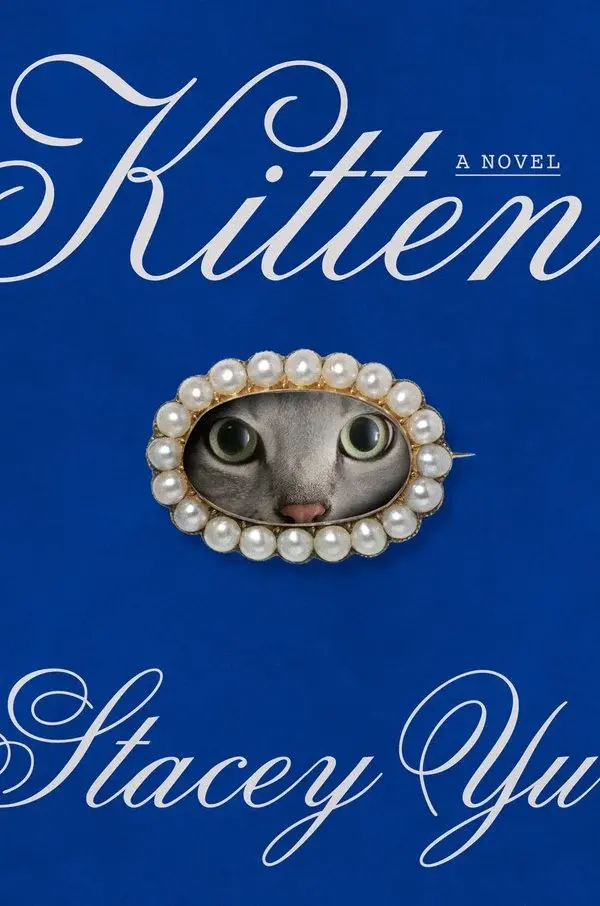
In an era where digital tastemaking frequently dictates editorial trends, Stacey Yu has accomplished a rare transition: evolving from a celebrated literary curator on social media to a formidable debut novelist. Best known to thousands of online bibliophiles for her meticulous spotlights on forgotten classics, translated literature, and subtle contemporary prose, Yu’s entry into original fiction comes by way of her debut novel, Kitten.
Published to critical intrigue, Kitten centers on Katie, a driftless college graduate grappling with post-graduate anxiety, social alienation, and an unsettled sense of identity. Set against the backdrop of an exclusive coastal retreat in a fictional New England enclave, the narrative pivots when Katie becomes deeply fixated on Silver, an extraordinary ocean-swimming cat belonging to her wealthy boyfriend’s family. Rather than devolving into conventional tropes of psychological obsession, Yu utilizes this human-animal relationship as a vehicle for emotional transference, examining how individuals seek refuge in non-human companionship when human structures fail them.
This long-form critical report examines Yu’s narrative architecture, exploring the underlying themes of class dysphoria, regional alienation, maritime motifs, and the evolving dynamics between digital literary creators and the broader publishing landscape.
Read Also
Detailed Chronology: From Literary Scouting to Debut Launch
The trajectory of Kitten reflects both the traditional mechanics of publishing and the modernized landscape of digital authorial transparency. Yu’s literary career began behind the scenes before expanding into public-facing commentary and fiction writing.
       [Early Career]
   Literary Scout Reader
   Analyzed manuscripts & industry trends
             │
             ▼
      [Digital Phase]
   BookTok Literary Tastemaker
   Curated translated & forgotten classics
             │
             ▼
    [Drafting & Conception]
   Conceived *Kitten* around themes of
   childhood, class, and transference
             │
             ▼
    [Publishing Pipeline]
   Cover design reveal & transparent
   sharing of debut author experience
             │
             ▼
       [Summer Release]
   Publication of *Kitten* to critical
   praise for prose and characterization
The Scouting Era and Digital Emergence
Before accumulating a dedicated following on TikTok, Yu worked as a reader for a literary scout—a role that required analyzing manuscripts and evaluating their commercial and artistic viability for international markets. This insider background provided Yu with a rigorous understanding of narrative construction and publishing mechanics. When she began producing digital content, she channeled this expertise into demystifying the industry for her audience, establishing herself as an authoritative, cozy, and intellectual voice within the online book community.
Conception and Manuscript Development
When drafting Kitten, Yu originally aimed to write a study on the reluctance of young adults to cross the threshold into full adulthood. The story evolved organically from a simple character study of a passive, socially awkward young woman into an intricate examination of emotional transference. Yu identified that her protagonist’s longing for childhood was intrinsically linked to a fractured maternal bond, prompting the introduction of Silver the cat as a surrogate vessel for unfulfilled intimacy.
The Transparent Cover Reveal
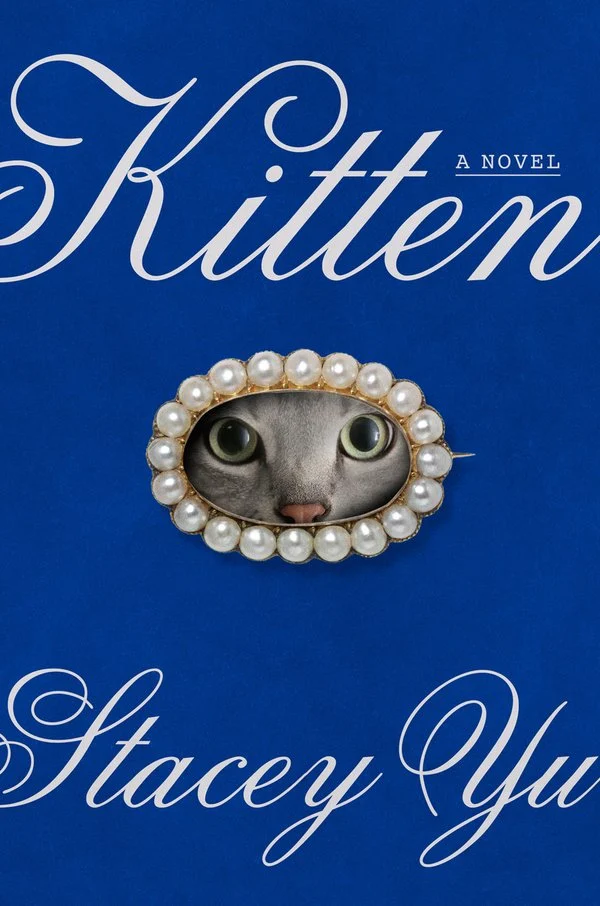
In the months leading up to the novel’s release, Yu posted a series of videos documenting the behind-the-scenes cover design process. The videos garnered widespread engagement, illustrating a public appetite for the mechanics of publishing. By treating the cover art not merely as a marketing tool but as a visual extension of the book’s atmospheric and thematic language, Yu bridged the gap between content creation and literary craftsmanship.
Supporting Context & Narrative Metrics
To understand Kitten’s place in contemporary literature, one must examine its thematic components, structural choices, and character dynamics. The novel navigates several interconnected thematic axes:
| Narrative Axis | Core Structural Focus | Narrative Manifestation in Kitten |
|---|---|---|
| Protagonist Psychology | Post-grad detachment and naïveté | Katie’s passive observational stance, socially off-putting sincerity, and emotional inertia. |
| Class & Regionalism | Invisible socio-economic divides | Contrast between Katie’s working-class Southern roots and her boyfriend’s elite New England environment. |
| Human-Animal Bond | Emotional transference & quasi-parenting | Katie treating Silver as both a protective refuge and a subject through which to process parental grief. |
| Maritime Symbolism | Convalescence vs. violence | The ocean acting as a site of physical healing, social posturing (swimming skills), and mortal threat. |
The Post-Grad "Detached Protagonist" Archetype
Katie joins a lineage of 21st-century female protagonists characterized by spatial grounding paired with emotional detachment. Drawing inspiration from figures like Selin in Elif Batuman’s The Idiot and Either/Or, Yu constructs Katie as a character whose absolute naïveté acts as a magnifying glass for the absurdities of adult social performance.
Katie is deliberately written without the sharp, spiky cynicism that often defines contemporary "dissociative" heroines; instead, her psyche leans into a frivolous, almost child-like sincerity. This specific trait makes her connection to an animal feel natural rather than eccentric, highlighting her unreadiness to perform the rigid social roles expected of her age.
       [Emotional Matrix of the Protagonist]
  ┌──────────────────────────────────────────┐
  │         Unresolved Childhood             │
  │     (Desire to be parented/loved)        │
  └────────────────────┬─────────────────────┘
                       │
                       ▼
  ┌──────────────────────────────────────────┐
  │       Post-Grad Disorientation           │
  │   (Class dysphoria & social isolation)   │
  └────────────────────┬─────────────────────┘
                       │
                       ▼
  ┌──────────────────────────────────────────┐
  │        Emotional Transference            │
  │    (Fixation on Silver the Cat)          │
  └──────────────────────────────────────────┘
Class Dysphoria and Invisible Geographies
Set in the fictional New England seaside town of Holm, Kitten addresses class as an invisible yet omnipresent force. Unlike explicit racial or cultural divides, socio-economic standing in America often operates through subtle behavioral codes, regional dialects, and inherited comfort.
Katie, hailing from a modest Southern background, experiences deep class dysphoria when immersed in her boyfriend James’s ultra-wealthy circle. The tension does not explode into melodramatic rivalry; rather, it manifests as a quiet, alienating displacement. Her friend Isabelle—wealthy yet struggling with profound mental illness—serves as a crucial foil. While Isabelle possesses access to therapeutic structures, medical care, and material stability, both women share a foundational sense of unfulfillment, demonstrating that privilege reshapes the context of suffering without eradicating it.
Human-Animal Symbiosis and Transference
The novel utilizes the animal presence to explore non-verbal emotional processing. Drawing parallels to Mary Gaitskill’s memoir Lost Cat and Marlon Haushofer’s dystopian classic The Wall, Yu’s depiction of Silver avoids anthropomorphism.
Silver—a cat capable of swimming in the ocean—represents a form of freedom and self-possession that Katie lacks. Because human relationships are fraught with social performance, expectation, and class signaling, Katie’s dialogue with Silver provides a rare outlet for absolute candor. Caring for Silver allows Katie to step into a quasi-parental role, attempting to give the animal the protective, unconditional love she feels deprived of in her own life.
The Dual Nature of the Sea
The novel engages with the literary trope of maritime convalescence—the historical practice of retreating to the seaside to heal physical or psychological ailments. However, Yu subverts this romanticization by emphasizing the sea’s inherent violence.
- Class Distinction in the Water: Swimming ability serves as a subtle marker of privilege. James learned to swim effortlessly as a child; Silver navigates the waves instinctively; Katie, lacking early exposure, remains alienated from the water.
- Geographic Reality vs. Idealization: Inspired by Yu’s move from California to London—and her encounters with the murky, chilly English coastline in the off-season—the fictional town of Holm reflects a bleak, moody maritime environment rather than a sun-drenched resort.
- Atmospheric Extreme: The ocean functions as a space where absolute safety and mortal danger coexist, mirroring the transition from protected childhood to unanchored adulthood.
Official Statements and Authorial Insights
In direct commentary regarding her creative process, structural choices, and thematic intentions, Stacey Yu provided the following insights during her interview with Amulya Tadimety.
On Publishing Transparency and Cover Design
Synthesizing her experience as both a content creator and debut novelist, Yu highlighted the value of demystifying the publishing industry for readers:
"It’s always fun when a video takes off… I didn’t realize that people would be so interested in the nuts and bolts of the process, but that’s kind of how I got myself online anyway. When I first started making videos, [they were] about [a] job that I had back then, when I was reading for a literary scout.
"The cover also is a way to talk about the book, because it’s not separate from the themes and the feeling of the book itself. In fact, a good cover is meant to build on that. Obviously, the old adage of not judging a book by its cover doesn’t really run true anymore, because there’s so much thought that designers put behind a cover and the way that it extends the language and the atmosphere of the books."
On Parent-Child Transference Through Animals
Addressing the psychological subtext of Katie’s fixation on Silver, Yu explained the distinction between human and animal caretaking:
"My main character, Katie, is so ill-prepared for what she sees as her adult self and the rest of her life that she wants to go back. She wants to stop time… When I started writing more, I realized the reason she misses childhood is because she misses her mother. And so then the parent and child transference became clearer to me as a theme.
"Animals give us an opportunity [for that]. They’re not like children. I feel like we have to get things right before we become ‘real’ mothers… And yet, an animal is also a living creature who needs love and care, and needs also to be parented in a way, just in a different way. So I thought it was a great experiment for my character to be a quasi-parent when she herself just wants to be parented."
On the Mechanics of Dialogue and Social Communication
Yu detailed the technical challenges of capturing spoken dialogue versus digital communications like text messaging:
"Some came more naturally than others. I think text messages came [most] naturally… Lou, she was always so easy to write. I loved writing her text messages, just so sharp and barbed and kind of snarky. What I found more difficult actually was the [spoken] dialogue between her and James. I want every single line to serve a purpose…
"When you’re speaking, you aren’t necessarily always saying what you’re thinking… Those miscommunications are so hidden behind what we’re trying to project ourselves as, and we’re trying to project confidence. We’ll try to project understanding, but we really fail to. Whereas with text messages, I feel like you are saying what you actually believe, because you can revise and control it."
On Artistic Influences: Cinematic Realism and Raw Poetry
Discussing unexpected influences during the drafting phase, Yu cited Yorgos Lanthimos’s film Poor Things and poet Jenny Zhang’s collection My Baby First Birthday:
"[Poor Things] did such a beautiful, chilling, haunting, gorgeous job of depicting development. The main character is a baby in a woman’s body… There is this one scene where she realizes that suffering exists and she just bursts out bawling. And I thought that was so beautiful and funny and scary, which are the three base animal emotions I wanted to tap into with Kitten…
"Her [Jenny Zhang’s] writing is always just so gross and beautiful at the same time, and I feel like she’s almost daring you to squirm. Sometimes we attribute more value to the beautiful and the descriptive and the verbose, but her writing is just so frank and blunt and base. It reminded me to squash the impulse to make [my writing] beautiful, and just to make it clear and powerful instead."
Future Outlook: The Evolution of Digital Tastemaking in Fiction
The reception of Stacey Yu’s Kitten marks a pivotal moment in the relationship between online literary communities and traditional publishing houses. Historically, content creators turned authors were often met with industry skepticism, categorized primarily as commercial or gimmick-driven releases. Yu’s debut, however, demonstrates a different paradigm: the emergence of authors whose deep, analytical engagement with world literature directly informs the artistic quality of their own creative output.
                  [Traditional Model]
Literary Scout ──► Editorial Reader ──► Author (Siloed Industry)

                  [Modernized Model]
Literary Scout ──► Social Tastemaker ──► Transparent Publishing ──► Author
                 (Audience Built via   (Cover Design/Drafting
                  Critical Analysis)    Documented Live)
Industry Trends and Predictive Implications
- Increased Demand for Structural Transparency: Yu’s success in sharing cover design iterations, editing challenges, and publishing realities indicates that modern readers value access to the artistic process. Future debut authors are likely to adopt similar strategies of open documentation.
- Refinement of the "Dissociative" Narrative: As literature moves beyond flat portrayals of detached young women, novels like Kitten point toward a nuanced wave of fiction. By combining spatial detachment with vulnerability, dark humor, and class critique, upcoming writers are re-energizing the modern coming-of-age narrative.
- Elevated Status of Human-Animal Narratives: The integration of animals as complex narrative catalysts—rather than mere background props—reflects a growing literary interest in non-human companionship as a lens for examining human isolation, urban solitude, and grief.
As Kitten continues to circulate among contemporary readers and critics, Stacey Yu’s trajectory offers a compelling blueprint for the modern author: grounded in literary tradition, attuned to class dynamics, and fully engaged with the evolving digital literary landscape.





Comments
Facebook App ID not configured. Please add it in the Customizer.