
Executive Overview
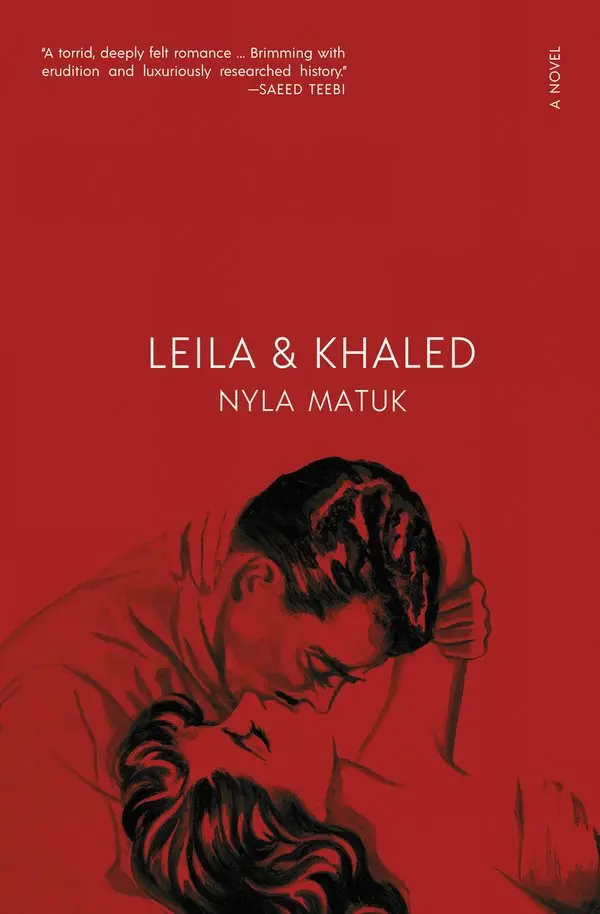
In her debut novel, Leila and Khaled, Canadian poet Nyla Matuk presents a literary intervention into the discourse surrounding Palestinian exile, diaspora consciousness, and life under Israeli military occupation. The novel centers on the encounter between Leila, a Palestinian-Canadian film scholar visiting the occupied West Bank as part of an academic delegation, and Khaled, a local tour organizer and guide. What begins as an immediate, quiet attraction evolves into a complex exploration of intimacy, ancestral grief, and political resistance set against the backdrop of checkpoints, segregation walls, and surveillance networks.
Matuk’s work interrogates the long shadow of the 1948 Nakba—the catastrophic displacement of over 750,000 Palestinians during the creation of the State of Israel—and its persistent denial in Western political discourse. Through the narrative, Matuk dismantles the ideological foundations of the Israeli state and explores how second- and third-generation diaspora Palestinians navigate identity, historical guilt, and belonging.
Drawing explicit literary inspiration from Alain Resnais and Marguerite Duras’s 1959 modernist classic Hiroshima Mon Amour, Leila and Khaled frames romantic love not as an escape from geopolitical reality, but as an assertion of historical materialism and cultural endurance. In a detailed interview with cultural commentator Bareerah Ghani, Matuk discusses the intergenerational shifts in diaspora political awareness, the burden of romanticized Palestinian resilience (sumud), and the role of art in liberation struggles.
Read Also
Detailed Chronology
[1948] ----------------> [1970s-1990s] -------------> [2000s-Present] --------> [Contemporary Narrative]
The Nakba:               Diaspora Assimilation:      Political Awakening:       Leila & Khaled:
Forced expulsion of      Assimilation pressure in    Critique of Western        Academic visit to Occupied
750,000+ Palestinians;   Western nations (Canada,    colonialism; rejection of  Palestine; reclamation of
erasure of villages.     US); identity suppression.  revisionist histories.    memory through romance.
The Arc of Dispossession and Identity Formation
- 1948 (The Nakba): The foundational event of modern Palestinian exile. Mass expulsions, destruction of over 500 villages, and the creation of an enduring refugee population across Gaza, the West Bank, Lebanon, Jordan, and Syria. The refusal of the right of return sets the structural terms for all subsequent diaspora generations.
- 1970s–1990s (The Era of Diaspora Assimilation): In Western countries such as Canada and the United States, official policies of multiculturalism often operated alongside systemic pressure for immigrant families to blend in. For many Palestinian families who fled colonial violence, identity was actively suppressed as a survival mechanism, framed in Western discourse through the lens of cold-war politics or anti-Arab prejudice.
- 2000s–Present (Intergenerational Reckoning): Younger diaspora generations, maturing in an era marked by access to digital media, global solidarity movements, and the unspooling of Western nationalist narratives, begin rejecting assimilationist paradigms. The awareness of Indigenous dispossession on Turtle Island (North America) creates parallel frameworks for understanding settler-colonialism in Palestine.
- The Contemporary Narrative (Leila and Khaled): Leila’s journey to occupied Palestine represents the physical convergence of these historical timelines. Her romance with Khaled serves as a bridge between the physical realities of living under military occupation and the internal, psychological terrain of the exiled diaspora.
Supporting Context & Metrics
The Socio-Political Landscape of the Diaspora
The landscape against which Leila and Khaled unfolds is defined by demographic displacement, state surveillance, and shifting Western public education frameworks.
       [Palestinian Diaspora & Dispossession Framework]
                              |
      +-----------------------+-----------------------+
      |                                               |
[Physical Displacement]                      [Ideological Infrastructure]
 - 1948 Nakba: 750,000+ expelled               - Surveillance of Diaspora Identity
 - Generations in Refugee Camps               - Revisionist History in Western Curricula
 - Loss of Land & Heritage                    - Myth-Making of the Settler-Colonial State
Historical Materialism vs. Western Myth-Making
Matuk frames her narrative through historical materialism—the perspective that cultural identity, art, and human relationships are shaped directly by economic, material, and spatial conditions. The contrast between the daily conditions of Palestinians and the privileges of Israeli settlers is rendered in spatial detail throughout the novel:
- Infrastructure of Segregation: The contrast between bypass roads designed for Israeli settlers and invasive checkpoints, segregation walls, and military observation towers restricting Palestinian mobility.
- Refugee Demographics: The lingering reality that millions of Palestinians remain internally displaced or confined to refugee camps across the Middle East due to the ongoing denial of their legal Right of Return under UN Resolution 194.
- Cultural Preservation: The localized practices of tatreez (traditional embroidery) and regional culinary variations (such as distinct za’atar blends) serve as material evidence of a continuous, unique relationship to specific geography.
Shifts in Western Public Perception
Historically, Western educational systems obscured colonial violence. Matuk notes that mid-to-late 20th-century Canadian history curricula sanitized settler history—focusing on benign narratives like the fur trade while erasing the genocide of Indigenous peoples and the Indian Residential School system.
However, recent shifts in public awareness, accelerated by social media coverage of military violence and institutional recognition—such as the Canadian Museum for Human Rights opening its first exhibit dedicated to the 1948 Nakba—have challenged historical revisionism. This institutional shift has sparked pushback from pro-state lobbies, highlighting the contestation over historical memory.
Official Statements & Author Insights
In conversation with Bareerah Ghani, Nyla Matuk provided critical insights into the novel’s thematic architecture, the psychological realities of diaspora existence, and her artistic philosophy.
On Generational Identity and Western Colonialism
Matuk highlights how younger generations of the diaspora are dismantling the assimilationist strategies adopted by their parents:
"Younger generations, whose parents are not from Western countries but who grew up here, are starting to identify more with their parental roots as opposed to wholeheartedly embracing Western culture and its nationalist myths, which have worn thin. These younger people are politically engaged, for example, with Palestine… They live under genocidal, racist governments—the US, Canada, the UK, Germany, etc. And in a way, it’s colonialism come home to roost in the sense that there isn’t a melting pot."
Matuk contrasts her upbringing in Ottawa during the early implementation of Canadian multiculturalism with the current political climate:

"My mother told me: ‘Don’t tell anyone you’re Palestinian.’ It was regarded, to put it mildly, as an identity that raises eyebrows… Divulging this information, I’ve come across crazy scenarios… Palestinians are surveilled in the diaspora—not as much, obviously, as they are surveilled in their own homeland, but there’s a whole surveillance mechanism that shadows them. It’s an identity that’s been suppressed."
On the Literary Models of Trauma and Romance
Addressing the narrative structure of Leila and Khaled, Matuk explains how Alain Resnais’s Hiroshima Mon Amour influenced her framing of love within historical trauma:
"In some ways, the character of Khaled is an allegory of Palestine itself—he’s narrating the history… I was inspired by Hiroshima Mon Amour… She’s living with this tremendous catastrophe and grief, and this grief is brought to bear in the context of being in Hiroshima… They struck me as two people living with mass trauma. I wanted to model both of the people in my novel after that, because, really, the novel is about the Nakba."
  Hiroshima Mon Amour (1959)                     Leila and Khaled (2024)
+----------------------------+                 +----------------------------+
| - French actress in Japan  |  Structural     | - Diaspora scholar in West |
| - Catastrophic war memory  |  Parallelism    |   Bank                     |
| - Intimacy amidst mass     | --------------> | - Nakba trauma & military  |
|   grief                    |                 |   occupation               |
| - Critique of peace myths  |                 | - Resistance through love  |
+----------------------------+                 +----------------------------+
On Diasporic Guilt, Western Naivety, and Sumud
When asked about the tension between local Palestinians and those in the diaspora, Matuk clarifies that Western-educated observers often view the occupation through theoretical or liberal frameworks that ignore material realities:
"I think even Palestinians outside can overthink because they can be full of Western ideas that are Zionist by default—like, what about a two-state solution? Khaled was referring to a certain naivety and brainwashing that takes over when you don’t live there."
Regarding the concept of sumud (صمود / steadfastness or resilience), Matuk pushes back against the Western tendency to romanticize Palestinian endurance into an unfeeling stoicism:
"There is a stoicism because otherwise how could you get through the day?… But then there’s a pushback, saying, yeah, we’re not okay because we’re highly traumatized by this. We’re extremely alarmed, as everyone should be, that these Western governments are just allowing this, not using the law to stop it…"
On Art, Materialism, and Resistance
Addressing the critique of artistic commercialization, such as Banksy’s The Walled Off Hotel in Bethlehem, Matuk emphasizes that aesthetic works rooted in material conditions play a crucial role in political struggles:
"At first, I was suspicious of The Walled Off Hotel… But then I ended up changing my mind because it does make people think. Material conditions, social conditions, depicted in art and/or design… have a role in struggle because they force viewers into a pragmatic understanding of day-to-day struggle, material loss, imprisonment… Art coming out of those material conditions is important as an assertion of unique social identity—it belongs to the land."
Future Outlook
Reclaiming the Right of Return through Literature
Leila and Khaled signals a broader shift in Palestinian diaspora literature—one that moves beyond passive nostalgia toward an assertion of political agency and historical continuity. By structuring the novel’s resolution around the imperative of return, Matuk aligns her fiction with the international legal frameworks governing displaced populations.
                  [Future Horizons of Palestinian Literature]
                                       |
    +----------------------------------+----------------------------------+
    |                                                                     |
[Dismantling Revisionism]                                      [Asserting Al-Awda]
 - Deconstructing liberal peace myths                           - The Right of Return as an
   (e.g., two-state discourse)                                    inalienable legal & moral right
 - Re-centering 1948 as the primary                            - Reconnecting diaspora identity
   catastrophe                                                   directly to geography
Implications for the Western Literary Landscape
- Deconstruction of the "Two-State" Paradigm in Fiction: Through characters like Dov Weiss—an Israeli journalist and former paramilitary member whose proponent stance on the two-state solution masks foundational complicity—Matuk’s novel challenges liberal frameworks that avoid addressing the root causes of 1948.
- Solidarity Across Colonial Contexts: The novel aligns Palestinian liberation with global anti-colonial movements, particularly Indigenous sovereignty on Turtle Island, signaling a broader coalition-building trajectory in post-colonial literature.
- Refusal of Cultural Erasure: As Western institutions face mounting pressure to address historical revisionism, works like Leila and Khaled serve as permanent cultural records. They affirm that Palestinian identity existed prior to 19th-century colonial projects and will persist beyond military occupation.
As Matuk emphasizes, the journey of her protagonist stands as a proxy for millions of displaced Palestinians worldwide: "The return is practically feasible. Leila’s return stands for the fact that the right of return cannot be derogated."



Comments
Facebook App ID not configured. Please add it in the Customizer.