
Executive Overview
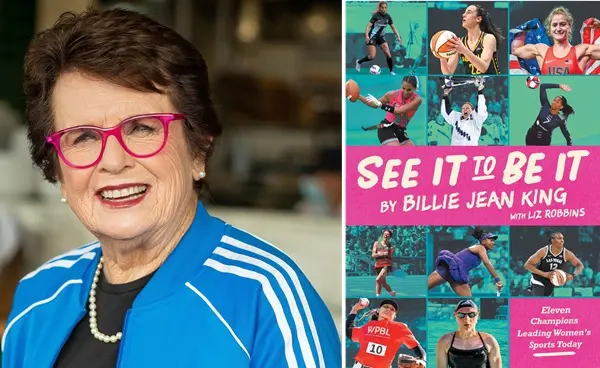
Tennis legend, trailblazer, and lifelong activist Billie Jean King has spent decades breaking barriers on and off the court. With an illustrious career boasting 39 Grand Slam titles, King’s influence extends far beyond her athletic achievements; she is a foundational architect of modern gender equity in sports. Now, adding to her impressive bibliography of five previous titles, King has partnered with co-author Liz Robbins to release her sixth book, See It to Be It (published by Calkins Creek). Aimed at young adult readers, the inspiring volume chronicles the extraordinary journeys of 11 modern sports champions who have overcome staggering obstacles to achieve athletic greatness and drive cultural change. Among the icons featured are basketball sensation Caitlin Clark, volleyball star Asjia O’Neal, tennis powerhouse Naomi Osaka, flag football pioneer Diana Flores, and Paralympic swimmer McKenzie Coan.
On the eve of the book’s publication, King sat down for an exclusive, wide-ranging Zoom conversation with fellow acclaimed author Elizabeth Rusch. Rusch, known for her deeply researched books for young readers—including the YALSA Excellence in Nonfiction finalist A Greater Goal: The Epic Battle for Equal Pay in Women’s Soccer—and Beyond (Greenwillow, 2024)—spoke with King about the ongoing, systemic fight for gender parity across all athletic arenas.
The resulting dialogue offers a masterclass in resilience, historical perspective, and unwavering optimism. From discussing the structural hurdles that still plague women’s athletics to examining the historical arc of sports economics, King and Rusch unpack what it truly means to cultivate the next generation of changemakers. This report examines their conversation through a journalistic lens, detailing the catalysts behind King’s new work, the persistent financial and media disparities facing women athletes, and the enduring roadmap for generational equity.
Read Also
Detailed Chronology: From a 12-Year-Old’s Epiphany to See It to Be It
To understand the urgency driving See It to Be It, one must look back at the foundational moments that shaped Billie Jean King’s worldview. During their conversation, Elizabeth Rusch drew a parallel between King’s mission and Rusch’s own literary debut, Generation Fix: Young Ideas for a Better World. This connection prompted King to reflect on the precise moment her life’s trajectory was permanently altered.
"I had my epiphany when I was 12," King shared with Rusch. "I had only been playing tennis for a year. Even at that age, I knew that as a girl, I was a second-class citizen. I sat there and thought, Maybe if I’m number one in tennis, people would listen to me, and I could help make this world a better place."
That childhood realization laid the groundwork for decades of activism, from founding the Women’s Tennis Association (WTA) and the Women’s Sports Foundation to clinching victory in the historic 1973 "Battle of the Sexes" match against Bobby Riggs. King’s latest literary endeavor is a direct extension of that 12-year-old’s ambition: passing the torch to young minds.
See It to Be It is meticulously designed to resonate with readers navigating their own formative years. By highlighting 11 diverse women who refused to accept the limitations placed upon them by society, King and Robbins aim to ignite a spark in the youth of today.
"That’s what we’re trying to do with this book: inspire other kids to take up the mantle," King explained. "If kids read the book, maybe it will spark them to do something special in the world. We also want to encourage kids to be who they want to be and to never give up. People told me I could never be number one because I wore glasses. If I took them to heart, I wouldn’t have made it. You’ve got to really listen to your own mind, your own soul."
Supporting Context & Metrics: The Reality of Underrepresentation and Underpayment
Despite surging attendance numbers, record-breaking television ratings, and unprecedented cultural visibility, women’s sports continue to grapple with systemic undervaluation. During their dialogue, Rusch and King confronted a sobering reality that plagues both of their respective literary works: the persistent wage gap and the severe lack of media coverage dedicated to female athletes.
The 20% Media Coverage Dilemma
One of the most striking statistics discussed by the authors is that women’s sports historically capture only about 20% of total sports media coverage. For modern advocates, this number is frustratingly low, especially given the explosive popularity of leagues like the WNBA, the NCAA women’s basketball tournament, and the newly established Professional Women’s Hockey League (PWHL).
When Rusch expressed her dismay at how slowly the needle moves regarding media representation, King offered a crucial historical counter-perspective. While acknowledging the frustration of living through the slow-moving gears of progress, King emphasized that lasting cultural shifts take time.
"When you look at history, it’s not slow," King noted. "It’s slow when we’re living it. ‘See it to be it’ takes time."
The Financial Landscape and Historical Parallels
Why do women’s sports competitions continue to face disparities in pay and sponsorship dollars despite pulling in record-shattering crowds? King points to a fundamental economic truth: the structural youth of women’s professional leagues.
"It’s because women’s sports are so young," King explained. "If you look at the history of men’s sports—which I did because I love history—they struggled, their teams went under… they went through all the same things we’re going through now."
To contextualize this, King pointed to the longevity of legacy men’s leagues, such as the National Hockey League (NHL), which was founded in 1917 and has spent over a century building its commercial infrastructure, broadcasting contracts, and fan loyalty. In contrast, newer ventures like the PWHL are operating in their infancy—the PWHL is currently in its fourth year of operation—yet they are already achieving remarkable attendance and competitive milestones. The takeaway, according to King, is clear: patience must be paired with aggressive, relentless momentum.
Official Statements and Highlights from the Dialogue
The conversation between King and Rusch was punctuated by moments of profound emotional resonance, mutual admiration, and sharp sports analysis. Below are key thematic highlights drawn from their Zoom exchange:
-
On Diana Flores and the Future of Flag Football:
Highlighting the book’s diverse representation of modern sports, Rusch praised the chapter dedicated to Diana Flores, the trailblazing flag football star known for her evasive footwork and tactical brilliance. King’s enthusiasm for Flores and the sport was palpable:"Flag football is going to be huge. It’s going to be in the Olympics in ’28. Diana is only 5’2”—and she’s the quarterback! She’s just so quick, she gets in and out, she sees an opening, and she has a great throw."
-
On McKenzie Coan and the Power of the Human Spirit:
Rusch lauded the "stunning" chapter on Paralympic swimmer McKenzie Coan, who lives with osteogenesis imperfecta—a genetic disorder characterized by brittle bones that has resulted in over 100 fractures. King shared a poignant behind-the-scenes moment regarding Coan’s mental resilience following a disappointing qualifying performance:"She told everybody to get out of her room. She turned out the lights and just lay there and thought about why she was swimming. And she said, ‘I just want to be free.’ And now she’s won all these gold medals, and I think it’s great."
-
On the Intersection of Athletics and Humanity:
Capturing the essence of King’s lifelong philosophy, Rusch observed: "When I read your books, I can’t tell if you love sports more or if you love people more."
King responded with a characteristic laugh:"[Laughs.] I love them both so much. And who plays sports? People!"
Future Outlook: Legacy, Urgency, and the Road Ahead
As the interview drew to a close, Elizabeth Rusch asked a pivotal question regarding how See It to Be It contributes to Billie Jean King’s monumental legacy. True to form, King deflected personal glorification in favor of immediate, actionable impact.
"I don’t worry about my legacy," King stated firmly. "I worry about what I need to do—how to get things done before I’m out of here."
This relentless urgency defines King’s ongoing crusade. Whether she is advocating for equal pay, championing LGBTQ+ rights, mentoring rising stars like Caitlin Clark and Naomi Osaka, or writing literature to captivate the next generation of readers, King views her work as an unfinished tapestry.
Elizabeth Rusch captured the sentiment of millions when she thanked King for her tireless labor on and off the court. King’s parting words serve as both a summary of her life’s work and a call to action for every reader picking up See It to Be It:
"Thank you, too. You’re doing the same kind of work. We’re just beginning, aren’t we?"
With See It to Be It now hitting bookshelves nationwide, the roadmap for modern sports equity has been handed down to a new generation. Through the inspiring stories of athletes who refuse to be sidelined, King ensures that the fight for equality will continue to inspire youth to envision a fairer, more inclusive world—proving once again that if you can see it, you can truly be it.





Comments
Facebook App ID not configured. Please add it in the Customizer.