In the autumn of 1942, a fleet of military trucks rumbled through the dusty gates of a coastal settlement in Gujarat State, Western India. Inside, eleven-year-old Wiesław Stypuła and hundreds of other children held onto the wooden benches for dear life. They were gaunt, hollow-eyed, dressed in tattered rags, and many were completely shoeless. Years of unimaginable trauma—first wrenched from their homes during the brutal Soviet deportations of World War II, then starved and brutalized in Siberian labor camps—had left them shadows of who they should have been.
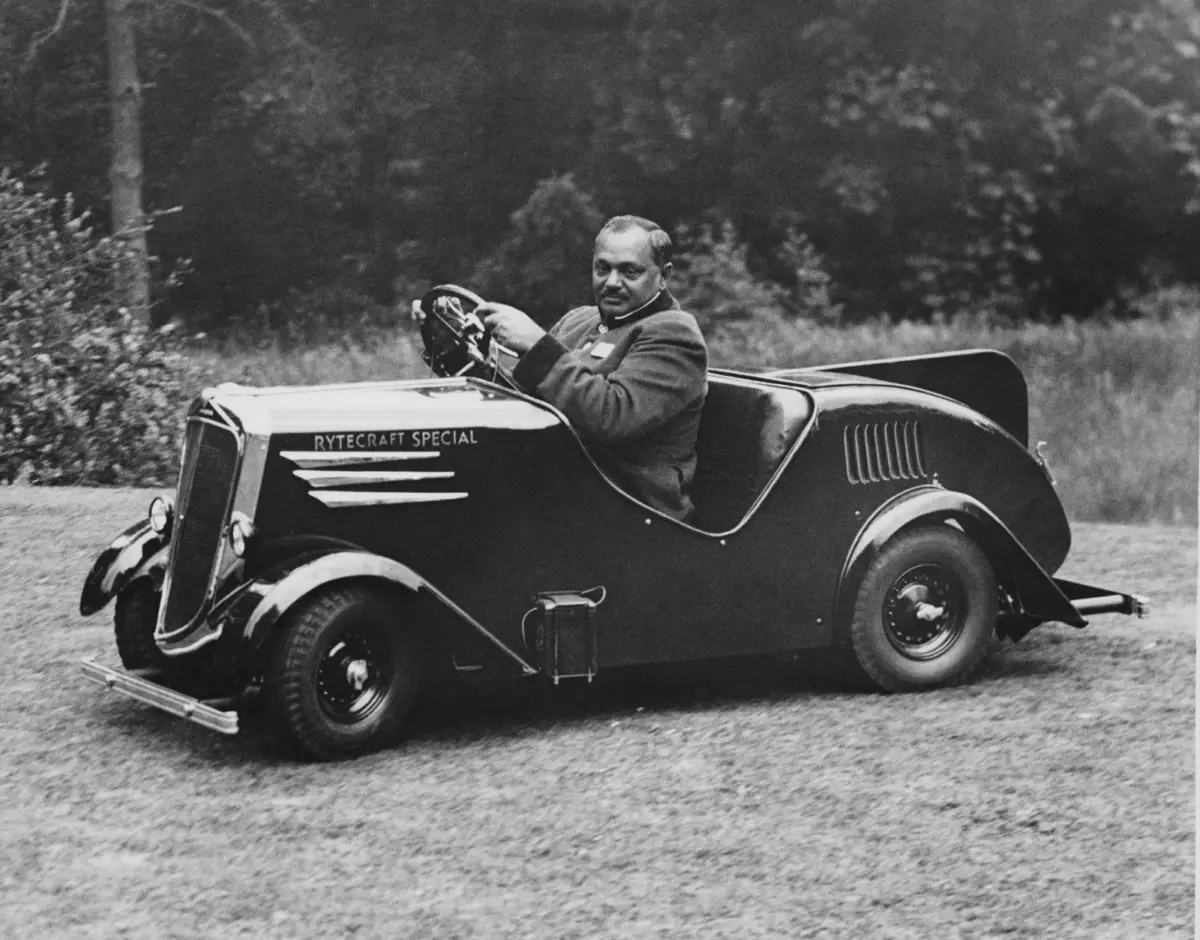
Waiting for them at the gates was a man in his late forties, wearing a tailored tunic and a welcoming smile. Maharaja Digvijaysinhji Ranjitsinhji Jadeja, the ruling monarch of the princely state of Nawanagar, stepped forward to greet the broken youths. With a booming, resonant voice that pierced the desert air, he delivered words that would anchor their fractured lives for generations:
"Do not consider yourselves orphans. You are now Nawanagaris, and I am Bapu, the father of all the people of Nawanagar, so also yours."
While global superpowers hesitated, bogged down by bureaucratic delays, financial anxieties, and wartime supply constraints, this sovereign Indian prince acted with radical, unvarnished human empathy. Defying the British colonial administration, Digvijaysinhji established a dedicated refuge in Balachadi, adopting nearly a thousand Polish children and young adults as his own.
Decades later, his legacy remains a towering monument of cross-cultural solidarity. From squares named in his honor in Warsaw to documentary retrospectives and prime-ministerial tributes, the "Good Maharaja" is remembered as a quiet savior in one of history’s darkest chapters.
Detailed Chronology of an Unlikely Sanctuary
1. The Fall of Poland and the Siberian Nightmare
The harrowing journey of these children began on September 1, 1939, when Nazi Germany invaded Poland from the west. Just sixteen days later, the Soviet Union breached Poland’s eastern borders under the secret protocols of the Molotov-Ribbentrop Pact, carving up Eastern Europe into totalitarian spheres of influence.
In February 1940, the Soviet secret police (NKVD) initiated mass deportations of the Polish intelligentsia. Between 320,000 and 500,000 civilians—families of military officers, civil servants, landowners, doctors, teachers, and intellectuals deemed "socially dangerous" by the regime—were loaded into unheated cattle cars in the dead of winter. Shipped thousands of miles east to brutal forced-labor camps (Gulags) in Siberia and Kazakhstan, thousands died of freezing temperatures, malnutrition, overwork, and disease before they even reached their destinations.
2. Operation Barbarossa and the Exodus to Iran
The geopolitical chessboard shifted dramatically in June 1941 when Adolf Hitler violated the nonaggression pact, launching Operation Barbarossa and invading the Soviet Union. Suddenly, Joseph Stalin’s regime transitioned from an aggressive Nazi partner to an uneasy member of the Allied coalition.
Under the terms of the July 1941 Sikorski-Mayski Agreement, imprisoned Polish citizens were granted a formal amnesty, and thousands were permitted to leave forced-labor settlements to form a new Polish army. With famine and disease rampant within Soviet borders, Allied authorities orchestrated the evacuation of tens of thousands of Polish refugees—primarily women and orphans—through Central Asia to Allied-occupied Iran.
3. The Bureaucratic Stalemate in London and Delhi
While Tehran provided a temporary breath of life, the question of long-term resettlement loomed large. The Polish government-in-exile, operating out of London, petitioned the British Foreign Office to relocate the refugees to British India.
However, British and Indian colonial authorities met the request with deep apprehension. India was grappling with catastrophic wartime inflation and severe food shortages—a crisis that would culminate in the devastating Bengal famine of 1943, which claimed an estimated three million lives. Officials in Delhi worried about the immense financial burden of treating traumatized children suffering from advanced tuberculosis, typhus, dysentery, and malnutrition. As bureaucrats debated logistics, the children languished in limbo.
4. Intervention by the Maharaja
Hearing of the orphans’ plight while serving as India’s representative in Britain’s Imperial War Cabinet, Maharaja Digvijaysinhji took matters into his own hands. Operating outside official diplomatic channels, he announced that he would unilaterally invite the children to stay in Nawanagar as his personal guests.
Nawanagar was one of more than 500 semi-autonomous princely states in colonial India. While technically under the overarching hegemony of the British Raj, these realms retained a degree of local sovereignty. Digvijaysinhji’s bold maneuver bypassed the sluggish, cash-strapped British bureaucracy entirely. As Indian filmmaker Anu Radha noted during her research for the documentary A Little Poland in India, the British were furious that the monarch acted without their explicit consent. The maharaja’s response was characteristically defiant:
"It’s my money. Where I spend it is my affair, and I don’t have to ask anybody."
Supporting Context & Metrics: Building "A Little Poland in India"
The settlement constructed by Digvijaysinhji at Balachadi—situated near his summer palace on the scenic Kathiawar Peninsula—was designed not merely as a survival camp, but as a holistic community.
Infrastructure & Scale: Built under the supervision of Nawanagar’s chief engineer, the Balachadi camp featured dozens of elongated barracks accommodating roughly 30 children each, supported by a school, a library, kitchens, and a Catholic church.
Demographics: Over the course of the war, nearly 1,000 children aged 2 to 15 passed through Balachadi. This included a small contingent of 12 young Polish-Jewish children who briefly found sanctuary before journeying onward to Palestine in 1943. Older youths (16 and above) were later transitioned to a larger camp in Valivade, financed by the Polish government-in-exile.
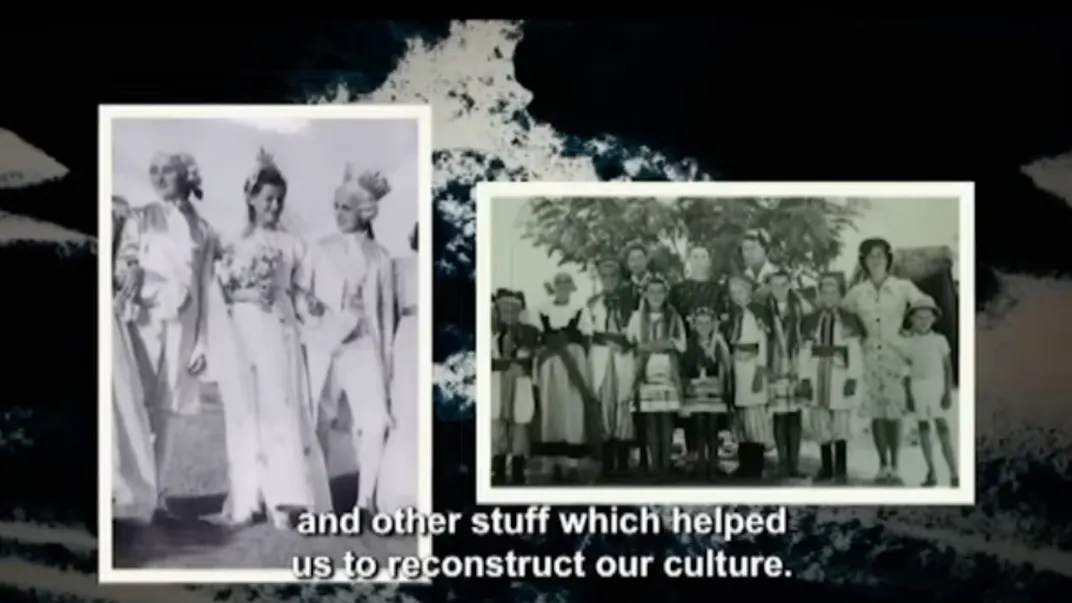
Cultural Preservation: To preserve their identity, the maharaja insisted that the Polish national anthem be sung daily and the Polish flag hoisted high above the camp. He personally distributed holiday gifts, famously dressing up as Santa Claus for Christmas celebrations.
Daily Life & Integration: Camp schools were staffed by evacuated Polish educators who hand-copied textbooks when printed materials were unavailable. To bridge culinary differences, local Indian cooks were trained to prepare milder versions of traditional food. Athletic programs flourished: lacking standard sporting goods, children fashioned soccer balls out of scavenged socks, eventually fielding competitive teams that played against British military and local Indian squads.
Official Statements and Historical Testimonies
The profound human impact of Digvijaysinhji’s actions is best captured through the memories of those who survived the ordeal and the historians who documented it.
Karolina Rybka, Camp Survivor (speaking to CBC News in 2019): "Nobody wanted us. I have no idea what would have happened to us, a thousand kids. The war was everywhere… He saved our lives."
Wiesław Stypuła, Former Resident:
Recall watching the maharaja sit in a deep armchair, applauding the children’s soccer victories with unfeigned joy: "And when we won the final match 2–1, he applauded for us, not his own team."
Princess Harshad Kumari, Daughter of the Maharaja:
Reflecting on the arrival of the refugees, she remarked, "They looked so miserable, and their clothes hung about their frames. And this was their state, we were told, after they had been fed and cared for at transit camps along the way."
Anu Radha, Documentary Filmmaker: "I could not believe that this one man, from an obscure land of Gujarat, had done this work. When the survivors heard the name ‘Gujarat,’ they became much younger."
As the war ended in 1945, a new threat emerged: Soviet-backed authorities in Poland demanded the repatriation of the orphans under international law. To shield the children from forced return to a communist-controlled homeland, the maharaja, alongside camp officials and British liaison officers, executed a formal, collective legal adoption through the Nawanagar court.
Future Outlook and Enduring Legacy
Following the dissolution of the camps in late 1946, the young refugees scattered across the globe, settling in the United Kingdom, the United States, Canada, Australia, and parts of Europe, while some returned to Poland. For decades, the story remained a relatively obscure historical footnote, preserved primarily in the oral histories of survivors and the archives of Nawanagar.
However, modern diplomatic and cultural initiatives have brought the "Good Maharaja" back into the global spotlight:
Monuments and Memorials: In recent years, public squares and schools in Warsaw have been named in honor of Digvijaysinhji Ranjitsinhji Jadeja ("Good Maharaja Square"), cementing his status in Polish national memory.
State Honors: In 2011, the Polish government posthumously awarded him the Commander’s Cross of the Order of Merit of the Republic of Poland. In 2016, Poland’s Parliament unanimously adopted a special resolution commemorating his humanitarian contributions.
High-Level Recognition: Modern political leaders, including Indian Prime Minister Narendra Modi during his visits to Poland, frequently invoke Digvijaysinhji’s legacy as a foundational pillar of historical friendship between India and Poland.
Ultimately, the story of Nawanagar transcends the traditional boundaries of wartime geopolitics. It stands as a timeless testament to moral courage—proving that in an era defined by mass destruction, one visionary leader with a deep sense of universal responsibility could rewrite the destinies of a thousand children and ensure that humanity prevailed over barbarism.

/https://tf-cmsv2-smithsonianmag-media.s3.amazonaws.com/filer_public/58/32/5832ce16-54a9-4a80-8f03-98ca18988ffb/gettyimages-961804192.jpg)
/https://tf-cmsv2-smithsonianmag-media.s3.amazonaws.com/filer_public/58/32/5832ce16-54a9-4a80-8f03-98ca18988ffb/gettyimages-961804192.jpg)
/https://tf-cmsv2-smithsonianmag-media.s3.amazonaws.com/filer_public/ae/6d/ae6d6f67-eeb6-452b-976e-2726706eb5d6/service-pnp-fsa-8d29000-8d29600-8d29620v.jpg)

/https://tf-cmsv2-smithsonianmag-media.s3.amazonaws.com/filer_public/dc/03/dc033d6f-145f-45fb-b015-4b3e0de43a21/jam-shri-digvijaysinhji-ranjitsinhji-jadeja-maharaja-jam-saheb-of-nawanagar.jpg)

Comments
Facebook App ID not configured. Please add it in the Customizer.