
Executive Overview
For aspiring authors, the moment of sitting down before a blank screen with the intention of chronicling one’s life is often fraught with a paradoxical anxiety. Writers frequently cycle through the entertaining anecdotes polished at dinner parties, testing them for structural integrity, only to run aground on a daunting existential question: How does one translate an entire human existence into a cohesive, compelling narrative?
This inquiry frequently gives rise to a debilitating form of literary impostor syndrome. Many writers conclude, often prematurely, that nothing of genuine consequence has ever happened to them. They reflect on their lives and measure themselves against the grand, harrowing narratives of survival and historical turbulence—noting that they were never child soldiers, did not survive a catastrophic plane crash in the Andes, and harbor no realistic aspirations toward a Nobel Prize. Instead, they recognize themselves as ordinary individuals: people who attended standard schools, secured conventional employment, paid their utility bills, navigated the mundane mechanics of domestic life, and perhaps stumbled into love.
However, contemporary literary critique and the success of foundational creative nonfiction suggest a profound truth: a great memoir relies less on the exceptional nature of external events and more on the singular architecture of the writer’s mind. Nonfiction offers a premier vehicle to highlight human consciousness.
Read Also
This comprehensive report examines the methodology of writing a memoir from an ostensibly "ordinary" life. Drawing upon insights from modern publishing, narrative theory, and the experiences of authors such as JI Daniels—whose memoir, My Monstrous Family Cookbook, navigates these very waters—this piece explores how to bypass the myth of the extraordinary event. Through a structured examination of character complexity, overlooked sensory details, linguistic precision, and the democratization of narrative value, we explore how any writer can transform the seemingly mundane into profound literature.
Detailed Chronology: The Evolution of the Memoir and the Myth of the "Big Event"
To understand why contemporary writers struggle with the ordinariness of their lives, one must examine how the genre of memoir has evolved over the past several decades. Historically, autobiographical writing was the exclusive purview of statesmen, military generals, explorers, and public figures whose lives directly intersected with major historical epochs. Their narratives derived their value from institutional access and monumental events.
[Historical Autobiography]
       │ (Focus on statesmen, military leaders, and historical epochs)
       ▼
[Late 20th Century Shift]
       │ (Rise of trauma narratives and extraordinary survival stories)
       ▼
[Contemporary Literary Realism]
       │ (Democratization of the genre; focus on interiority and the mundane)
       ▼
[The Modern Memoirist's Paradigm]
       (Translating ordinary existence into profound psychological art)
In the late twentieth century, the genre broadened significantly to encompass trauma memoirs, survival stories, and dramatic exposes of dysfunctional families. While these works expanded the boundaries of what could be published, they inadvertently established a new, pernicious benchmark for prospective authors. Aspiring writers began to believe that a life was only worth documenting if it featured extreme suffering, high-stakes drama, or exotic locales.
This cultural conditioning creates a specific chronology of self-doubt for the modern writer:
- The Initial Enthusiasm: The writer collects amusing or poignant anecdotes, assuming these narrative fragments are sufficient to anchor a full-length book.
- The Structural Crisis: Upon attempting to map out a complete life narrative, the writer compares their biography to high-profile trauma or adventure memoirs and finds their own experiences lacking in dramatic scale.
- The Stagnation Phase: Convinced that a life lacking catastrophes is unmarketable, the writer either abandons the project entirely or attempts to manufacture artificial drama, distorting authentic memories to fit a sensationalized template.
- The Epiphany of Interiority: Through careful mentorship, reading widely within literary nonfiction, or deep introspection, the writer realizes that the true subject of a memoir is not the external event, but the interpretive lens through which the writer experiences the world.
Navigating this chronology requires an active rejection of the narrative hierarchy that prioritizes external spectacle over internal depth. As writers like JI Daniels discovered during the composition of My Monstrous Family Cookbook, the path forward involves turning away from manufactured crises and turning inward toward the rich, unexamined textures of daily existence.
Supporting Context & Metrics: Deconstructing the "Ordinary" Life
When analyzing the modern market for creative nonfiction, the data reveals a fascinating shift in reader preferences. While blockbuster memoirs detailing extreme trauma or celebrity escapades continue to draw significant commercial attention, mid-tier publishing metrics indicate a massive surge in readership for literary memoirs centered on domesticity, psychological growth, and quiet revelation.
The Mechanics of Internal Landscape
Why do readers connect so deeply with accounts of ordinary lives? Cognitive literary studies suggest that readers do not read memoirs merely to gather information about external events; they read to experience radical empathy and psychological resonance.
- The Psychology of Identification: When a narrative focuses on an avalanche or a plane crash, the reader absorbs the information as a spectator. When a narrative focuses on the quiet tension of a family dinner or the nuanced psychological shifts of growing up alongside flawed parents, the reader participates as an active collaborator.
- The Scale of Experience: Statistically, less than 0.001% of the global population experiences extraordinary historical catastrophes or extreme survival scenarios. Conversely, 100% of the reading public navigates the complexities of family dynamics, financial stress, professional uncertainty, and quiet emotional evolution. Therefore, stories rooted in ordinary life possess an infinitely broader surface area for reader identification.
Case Studies in Mundane Mastery
Consider the foundational works of canonical essayists and memoirists who redefined the parameters of the genre:
- David Sedaris: Built an international literary empire not on tales of high adventure, but on the precise, darkly humorous observations of working bad jobs, completing crossword puzzles, and passive-aggressively interacting with airline passengers.
- Annie Dillard: Transformed a series of solitary walks in the woods (Pilgrim at Tinker Creek) into a Pulitzer Prize-winning meditation on nature, consciousness, and divinity.
- Anne Carson: Explored the quiet, devastating geometries of love and loss through poetry and essayistic prose, turning everyday emotional archaeology into universal art.
These writers demonstrate that the value of a memoir is directly proportional to the quality of the writer’s attention. The ordinary world, when filtered through a brilliant, observant mind, ceases to be ordinary.
Official Statements & Expert Perspectives on Memoir Craft
To further illuminate the techniques required to elevate personal narrative, we turn to pedagogical frameworks and insights from contemporary authors and writing instructors. Writing a memoir without a backdrop of historical trauma demands specific technical interventions.
1. Write About the People Who Surround You, Not Just the Person You Are
A common pitfall in amateur memoir writing is solipsism—an insular focus that reduces secondary characters to flat caricatures serving the protagonist’s emotional arc. An uncle becomes a static lesson in patience; a romantic partner becomes a symbol of heartbreak; a mother is flattened into either an angel of mercy or a villain of neglect.
Professional literary consensus dictates that friends and family members must be rendered as autonomous human beings with their own private histories, unarticulated struggles, and contradictory desires.
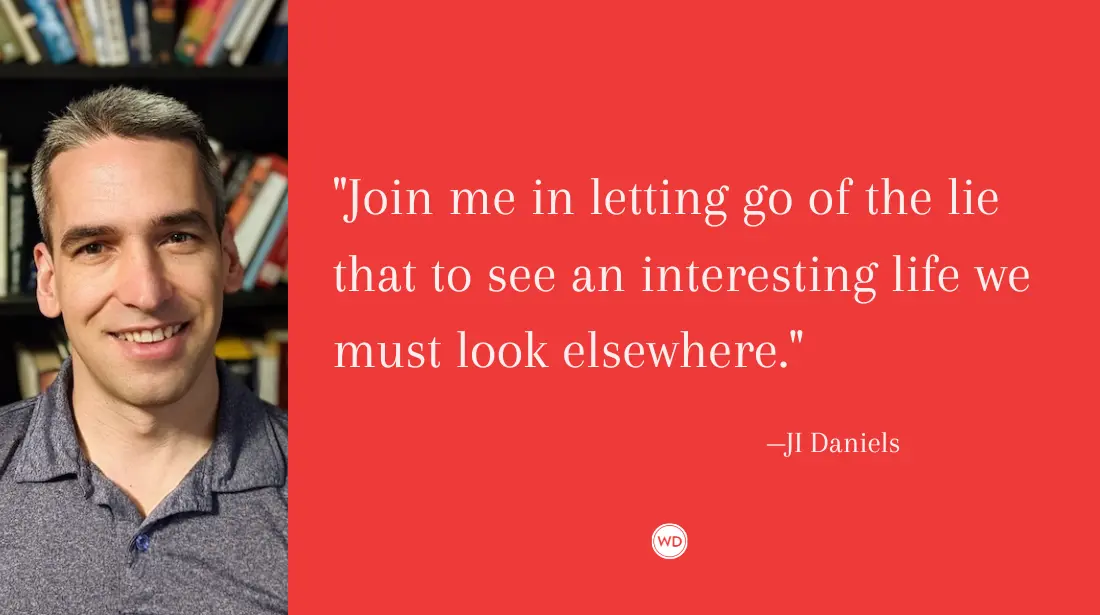
"Literature lives in that complication," notes JI Daniels in reflections on the creative process.
"Parents are more than mom and dad; they are people trying to tell their own stories. And so my mother is a liberal hippie that has grown more conservative over the years, that has found solace in religion. She is a person who has nurtured me in so many ways, and also someone that has hurt me. As a child, even a grown one, it is tempting to view her through the saintliness we attribute to mothers, or else a kind of evil of her failures, but the reality is more complicated."
2. Pay Attention to the Details You Hadn’t Noticed Before
Depth in nonfiction is achieved through sensory and situational specificity. Writers are frequently encouraged to revisit familiar memories and interrogate their blind spots: Who else was in the room? What were their motivations? How do external perspectives alter our understanding of our own domestic spaces?
For instance, a memory of a mother sitting at a sewing machine crafting a dress from a commercial pattern might initially register as a mundane domestic vignette. However, when viewed through a more mature analytical lens—perhaps recalled alongside the memory of a school friend visiting the home—that same detail can symbolize the intersection of resourcefulness and systemic poverty. It illustrates the precise psychological moment a child transitions from viewing their family as simply hard-working to recognizing the economic precariousness of their existence. This granular focus does not require the fabrication of conflict; rather, it demands an excavation of forgotten emotional landscapes.
3. The Sentence is Where Stories Live
A frequent structural failure in novice memoirs is the reliance on summary rather than scene. Authors often write: My father was difficult. My mother loved me. We were poor but made do. I was lonely. We were happy.
While these declarative statements may be factually accurate, they are narratively inert. They dictate conclusions to the reader rather than allowing the reader to experience the emotional reality of the scene. Professional editors emphasize that the writer’s task is to render scenes vivid through linguistic craftsmanship.
- How did an angry father manifest his frustration? Did he slam doors with such calibrated force that he later felt compelled, during sober moments of guilt, to quietly repair the loose hinges—performing an unacknowledged penance?
- Or did his silence plunge the household into an atmosphere where family members communicated in cautious whispers, fearing that normal vocal tones might trigger an explosion?
Through careful observation at the sentence level, prose transforms from a dry curriculum vitae into an immersive psychological space.
Future Outlook: The Democratization of Narrative and the Next Wave of Nonfiction
As the publishing industry continues to diversify its output, the future of the memoir points definitively toward the democratization of personal narrative. Readers are increasingly fatigued by hyper-sensationalized, algorithm-driven memoirs that prioritize shock value over emotional authenticity. The appetite for nuanced, contemplative, and stylistically rigorous accounts of everyday life is expanding.
Emerging Trends in Memoir Writing
- The Micro-Memoir and Essay Collection: Authors are finding immense success by structuring their lives not as monolithic, linear autobiographies, but as interconnected collections of essays and vignettes that explore specific thematic nodes.
- Domestic Realism in Nonfiction: The lines between literary fiction and creative nonfiction continue to blur, with memoirists adopting the pacing, imagery, and structural sophistication traditionally reserved for novelists.
- The Rejection of Manufactured Trauma: Writers are increasingly empowered to write about quiet triumphs, subtle generational shifts, and domestic complexities without feeling the need to inflate their experiences into epic dramas.
A Call to Action for Aspiring Authors
For those standing at the threshold of their own writing journeys, the message is clear: There is no such thing as an ordinary life.
Every human being sits at the gravitational center of a private universe—a personal cosmos replete with distinct mythologies, domestic rituals, quiet sacrifices, generational silences, and idiosyncratic affections. The work of the memoirist is not to search externally for validation through catastrophe, but to turn the gaze inward.
By abandoning the illusion that interesting lives belong exclusively to celebrities, historical figures, and survivors of extreme trauma, writers can begin to mine their own histories. Look closely at the details, listen to the cadence of everyday speech, examine the complex humanity of those who raised you, and commit those observations to the page with uncompromising linguistic precision. The ordinary world will inevitably open its doors, revealing the rich strangeness and profound beauty that has been quietly waiting there all along.





Comments
Facebook App ID not configured. Please add it in the Customizer.