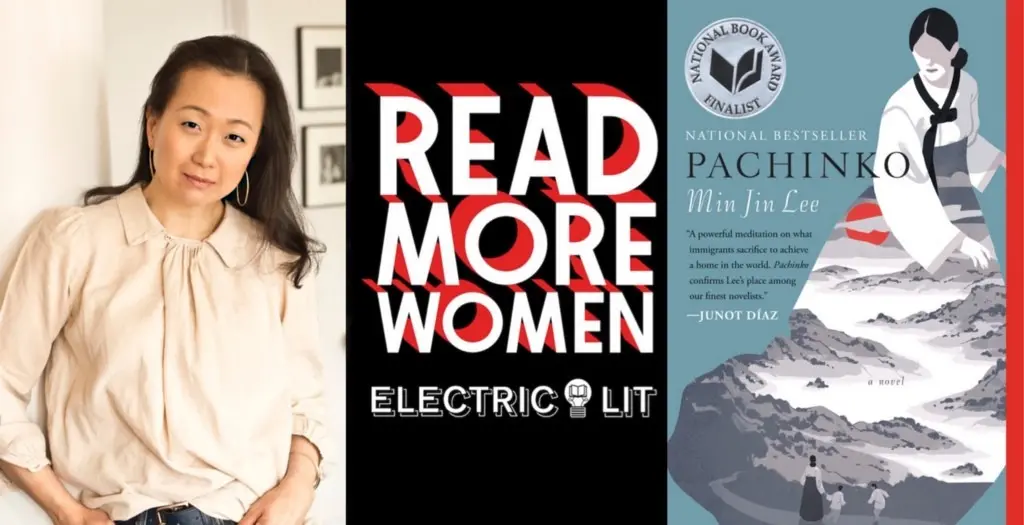
The literary landscape rarely witnesses authors who combine epic historical scope with exacting, highly disciplined craftsmanship quite like Min Jin Lee. Following the immense global resonance of her 2017 novel Pachinko—a sweepingly compassionate chronicle of a Korean family in Japan across four generations—Lee has established herself as a vital chronicler of diaspora, identity, and moral resilience.
In an illuminating exchange with Denne Michele Norris, Executive Director and Publisher of Electric Literature, Lee offers a rare glimpse into her creative mechanics ahead of her eagerly anticipated novel, American Hagwon. The conversation reveals an artist who rejects romanticized notions of instantaneous genius, advocating instead for systematic labor, financial pragmatism, and meticulous self-compassion.
From her strict "three-desk" physical workspace to her iterative process of writing dozens of preliminary drafts, Lee outlines a rigorous philosophy where literary authority is earned through sustained labor. As she prepares to launch American Hagwon, Lee’s insights provide both a masterclass in narrative construction and a candid assessment of the economic and psychological realities facing contemporary authors.
================================================================================
                               LITERARY TIMELINE
================================================================================
2017                • Publication of 'Pachinko'
                    • Garnered immediate critical acclaim and global audience
                    • Marked a turning point in diaspora literature

2017 – Present      • A decade-long research & drafting phase ("cooking for 10 years")
                    • Multi-draft iterative process (up to 15 drafts per manuscript)
                    • Ongoing work with top-tier editors in US, UK, & media outlets

Present Day         • Unveiling of 'American Hagwon'
                    • Detailed discussion with Electric Literature on craft & workspace
                    • Formal shift toward exploring modern educational ecosystems
================================================================================
2017: The ‘Pachinko’ Watershed
The trajectory leading to American Hagwon was set in motion during the release of Pachinko in the spring of 2017. As recalled by Denne Michele Norris, the novel ignited a word-of-mouth phenomenon across literary residencies and bookstores, culminating in long lines at iconic outlets such as New York’s Strand Books. Pachinko went on to achieve global critical acclaim, television adaptation, and widespread academic study, firmly establishing Lee’s reputation for deep research and narrative power.
2017–Present: A Decade of Research and Iteration
Over the subsequent decade, Lee embarked on the arduous creation of American Hagwon. Describing publication week as the culmination of "cooking for 10 years," Lee’s operational timeline highlights her commitment to long-form inquiry. Rather than rushing into market trends, her methodology relies on asking foundational thematic questions and working continuously until those questions are resolved within the narrative text.
The Present: Launching ‘American Hagwon’
As American Hagwon enters the public domain, Lee’s conversation with Electric Literature marks a critical transition. The novel addresses the contemporary phenomenon of private supplementary education, cultural pressure, and social mobility. The release encapsulates years of field research, interviews, and extensive drafting, demonstrating Lee’s sustained focus on Korean and Korean-American experiences.
Supporting Context & Metrics
The Architecture of Writing: Workspace Ergonomics
Lee’s creative method relies on a carefully organized workspace designed to maintain focus and separate different tasks.
By siloing administrative duties, reading, and deep creative work into separate spaces, Lee prevents digital fatigue and mental overlap, ensuring each step of the process gets her full attention.
                 MIN JIN LEE'S DAILY WRITING ROUTINE

  09:00 AM  +---------------------------------------+
            | Wake up, Coffee, & Family Interaction |
  10:00 AM  +---------------------------------------+
            | Meditation & Bible Reading (Cather)  |
  10:30 AM  +---------------------------------------+
            | Deep Work Block (5 - 6 Hours)         |
  04:30 PM  +---------------------------------------+
            | Nutrition & Exercise Bike             |
  06:00 PM  +---------------------------------------+
            | Reading & Administrative Maintenance  |
            +---------------------------------------+
The Crafting Protocol: Embracing the "Shitty Draft"
Contrary to the myth that literary prose arrives fully formed, Lee embraces an aggressive multi-drafting protocol:
Iterative Drafting: Progresses through numerous initial passes ("shitty first draft, shitty second draft…") until the material stabilizes.
Editorial Hand-Off: Refuses to submit work to publishers until reaching roughly her 15th draft.
Structural Tracking: Uses custom spreadsheets on secondary screens to log complex timelines, character arcs, and historical dates alongside her manuscript in Scrivener.
Financial and Operational Pragmatism
One of Lee’s core recommendations for emerging writers focuses on economic sustainability rather than stylistic flourish:
Core Metric for Sustainability:Keep a low overhead.
Lee emphasizes that because literary income is inherently unpredictable and creative work requires vast stretches of unpaid research time, keeping fixed expenses low is crucial for artistic independence.
Official Statements
On Creative Discipline and Inspiration
Lee dismisses the idea that writers must wait for artistic inspiration before sitting down to work:
"I write regularly, but it’s never about inspiration. I don’t believe in that. I believe motivation follows action." — Min Jin Lee
On the Physical Reality of Drafting
Addressing her isolationist writing process and her tendency to be visually distracted, Lee describes her need for solitary focus:
"I write alone. I don’t know how to do it with other people around. I’m like a really stupid bird. I’ll be like, ‘Oh, I really like your glasses! I really like your nail tips.’ I get so distracted by the visual. You’ve got to lock me up. I’ve got to be by myself, and then finally I’ll put out something." — Min Jin Lee
On Managing Writer’s Block
To overcome mental roadblocks during long writing projects, Lee practices deliberate self-compassion:
"Sit there and tell yourself it doesn’t matter. Just sit there and say, ‘It’s okay. It doesn’t matter.’ Try it for half an hour. I try really hard to be nice to myself. I just say, ‘There there, there there.’" — Min Jin Lee
================================================================================
                         EDITORIAL & LITERARY TOUCHSTONES
================================================================================
Key Editors:         • Reagan Arthur (US Publisher)
                     • Kishani Widyaratna (UK Publisher)
                     • Deborah Treisman (The New Yorker)

Literary Ancestors:  • Toni Morrison, James Baldwin, Ernest Hemingway, John Steinbeck

Essential Reading:   • 'The Velveteen Rabbit' by Marjorie Williams
                      • 'Middlemarch' by George Eliot (Personal Novel Archetype)

Preferred Presses:   • Weatherhead East Asian Institute
                     • New York Review Books (NYRB)
                     • Europa Editions
================================================================================
Future Outlook
The publication of American Hagwon marks another significant milestone in Min Jin Lee’s multi-decade examination of the global Korean diaspora. By shifting her focus from historical epics to the modern pressure-cooker of competitive education, Lee continues to expand her thematic reach while refining her classic, realistic storytelling style.
Looking ahead, Lee’s rigorous approach serves as a durable model for contemporary authors navigating an increasingly fast-paced literary market. Her process demonstrates that high-impact, enduring narrative art requires:
Uncompromising Patience: Giving complex ideas years to develop naturally.
Structural Discipline: Establishing clear boundaries and physical systems to support long-form work.
Financial Reality: Managing living expenses conservatively to preserve artistic independence.
Collaborative Trust: Seeking out rigorous editorial critique once the initial drafting phase is complete.
As American Hagwon reaches readers worldwide, Lee’s work stands as a powerful testament to the value of deep research, persistence, and disciplined craft. In an industry often lured by speed and convenience, her commitment to the long journey of storytelling remains a steady guiding light for modern literature.




Comments
Facebook App ID not configured. Please add it in the Customizer.