
The open highway has long occupied a legendary place in the American cultural imagination. From the romance of the early twentieth-century automobile boom to the nostalgia of roadside motels and neon diner signs, the journey across the landscape is a defining motif of exploration and freedom. Recently, the intersection of travel history and children’s literature has produced a rich genre of picture books and early readers designed to introduce young minds to the wonders of geography, history, and adventure.
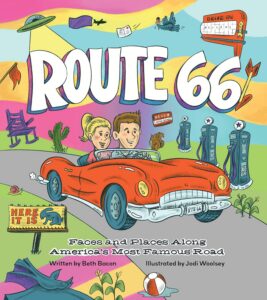
At the center of this movement is author and educator Beth Bacon, whose latest work, Route 66: Faces and Places Along America’s Most Famous Road, brings the historic "Mother Road" to life for young readers. Known for her humorous and accessible approach to children’s literature—most notably seen in her perennial favorite, I Hate Reading—Bacon now turns her creative lens toward the asphalt arteries of the United States.
To celebrate the launch of Bacon’s new book, this article explores the broader literary landscape of road trips, vehicular adventures, and historical journeys in children’s publishing. Featuring curated book recommendations, historical context, and an exclusive author giveaway, this comprehensive overview highlights how contemporary authors use the vehicle of the picture book to spark curiosity, foster patience, and instill a lifelong love of reading and discovery.
Read Also
Detailed Chronology: The Evolution of Road Trip Literature and History
The history of traveling across America is mirrored in the evolution of how these journeys are recorded, experienced, and shared with younger generations. Understanding the milestones of cross-country travel provides a vital backdrop for the books featured in Bacon’s curated list.
Early 20th Century: Breaking Ground and Hitting the Pavement
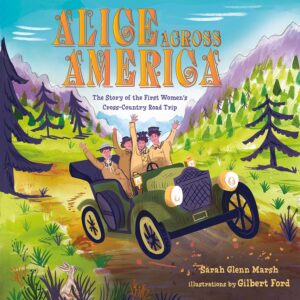
- 1909: Alice Ramsey becomes the first woman to drive an automobile across the United States, traveling from New York to San Francisco in a Maxwell model. Her pioneering journey—navigating unpaved roads, mechanical failures, and societal skepticism—serves as a cornerstone for modern historical picture books like Alice Across America.
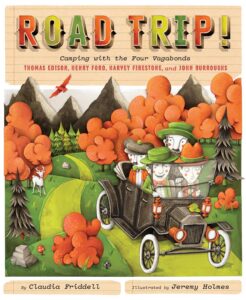
- 1911–1924: The era of the "Four Vagabonds"—Thomas Edison, Henry Ford, Harvey Firestone, and John Burroughs—begins a tradition of rustic, exploratory camping road trips across America, celebrating the intersection of American innovation and the great outdoors.
- 1926: Route 66 is officially established as part of the United States Numbered Highway System. Spanning nearly 2,400 miles from Chicago, Illinois, to Santa Monica, California, it quickly earns the moniker "The Mother Road" and transforms American commerce, migration, and tourism.
Late 20th to Early 21st Century: The Rise of Narrative Picture Books
- The Shift in Early Readers: As children’s publishing evolved past dry, instructional primers, authors began incorporating interactive dialog, absurdist humor, and emotional resonance into transit-themed stories. Works like Mo Willems’ Elephant & Piggie series introduced early readers to the comedic anxiety of packing for a trip.
- Modern Historical Nonfiction: Contemporary publishers began prioritizing untold or underrepresented stories from America’s transit history, ensuring that diverse historical figures—from early female motorists to quirky inventors—became accessible to elementary school audiences.
Supporting Context & Metrics: The Cultural Impact of Road Trip Books
Road trip stories do more than simply entertain; they support cognitive development, geographic literacy, and emotional resilience in children. According to developmental and educational literary frameworks, transit and travel books offer specific benefits:
- Geographic and Historical Literacy: Books that trace routes like Route 66 or cross-country bicycle paths provide spatial awareness. Children learn about directional flow (e.g., Chicago to Los Angeles), regional ecosystems, and historical infrastructure.
- Coping with Travel Anxiety: Long car rides can be daunting for young children. Titles that playfully address boredom, car sickness (such as Travel Guide for Monsters), or the eternal question—“Are we there yet?”—help children process travel-related stress through humor and imagination.
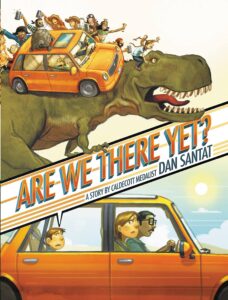
- Patience and Creative Diversion: As demonstrated in books like Dan Santat’s Are We There Yet?, boredom can be a powerful catalyst for imaginative play, inspiring children to look beyond the immediate car window into realms of history, fantasy, and futuristic thinking.
Curated Road Trip Book Recommendations
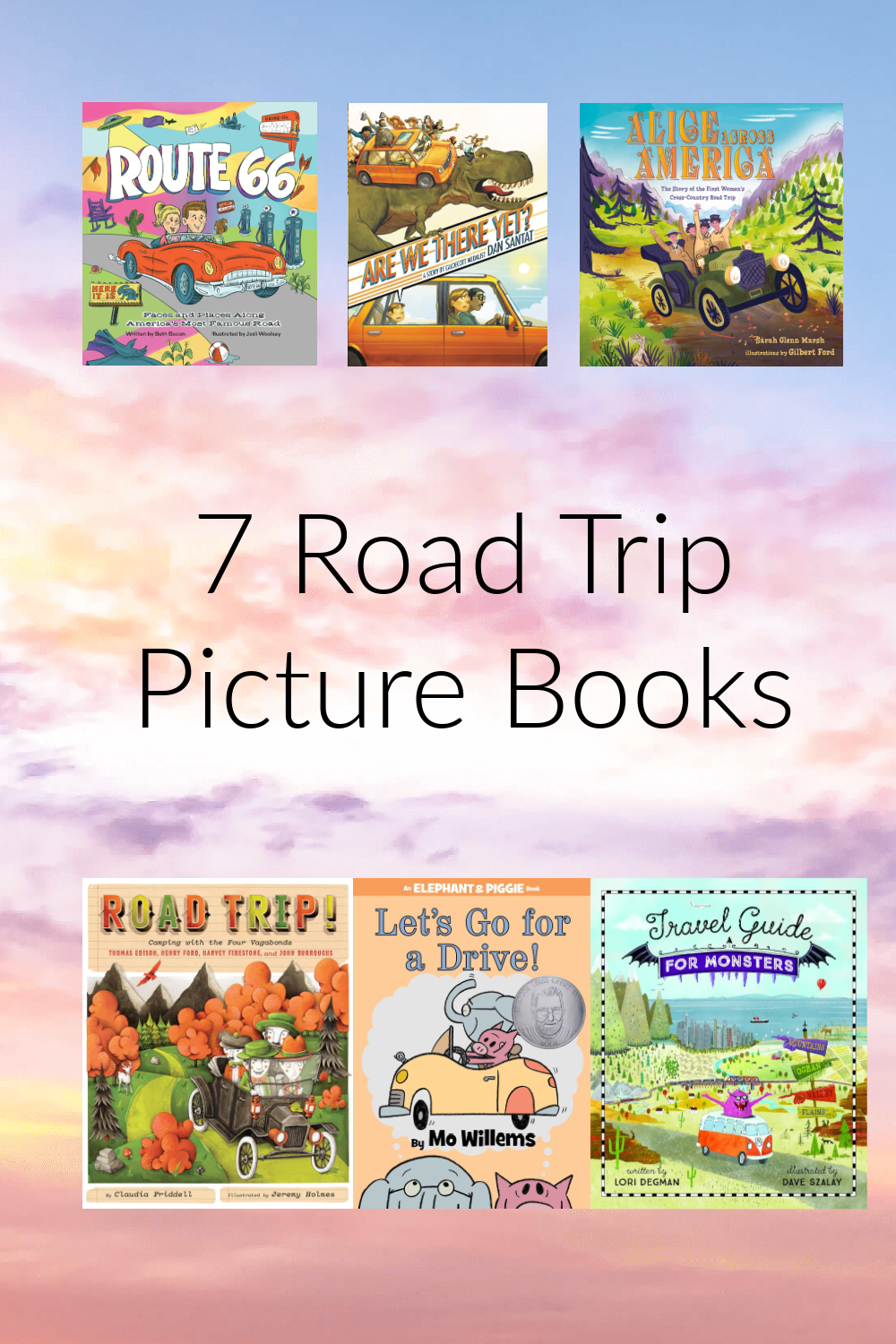
To celebrate the release of Route 66: Faces and Places Along America’s Most Famous Road, Beth Bacon has curated a special reading list of exceptional picture books and early readers for adventurous, traveling families.
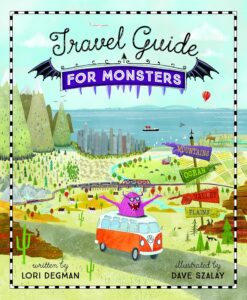
1. Travel Guide for Monsters by Lori Degman, illustrated by Dave Szalay
- Target Audience: Ages 5 and up
- Overview: Crafting a rhyming picture book that genuinely appeals to both children and adults is no small feat, but author Lori Degman and illustrator Dave Szalay achieve it effortlessly. In Travel Guide for Monsters, young readers are treated to a hilarious tour of iconic US locations, each paired with a specific monster visitor.
- Highlight: A standout stop occurs in San Francisco: "When riding on a cable car, your monster should be cautious. The ups and downs of Frisco hills can make a monster nauseous." While the monster may feel sick, the readers will be laughing out loud.
2. Road Trip! Camping with Four Vagabonds: Thomas Edison, Henry Ford, Harvey Firestone, and John Burroughs by Claudia Friddell, illustrated by Jeremy Holmes
- Target Audience: Ages 7 and up
- Overview: This historical non-fiction book bridges generations by offering rich layers of enjoyment for both kids and adults. Children are comforted by the core theme that people with vastly different life approaches can remain lifelong friends (for instance, Henry Ford loved strict routines, while Thomas Edison actively ignored them). Meanwhile, adults are treated to a fascinating look at the camaraderie of four towering historical figures. Who knew the inventor of the lightbulb loved sleeping under the stars?
3. Are We There Yet? by Dan Santat
- Target Audience: Ages 4 and up
- Overview: A masterclass in creative storytelling and illustration, Dan Santat’s book dives headfirst into the universal question: What happens when your brain becomes too bored during a long trip? Readers literally flip the book upside down, embarking on a wild journey that spans time and space—from the age of dinosaurs to futuristic robotics. It is part road trip narrative, part exploration of patience and curiosity.
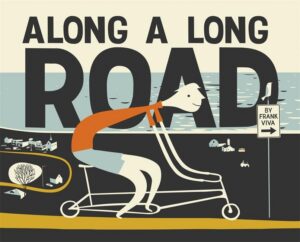
4. Along a Long Road by Frank Viva
- Target Audience: Ages 3 and up
- Overview: Told through charming, pun-adjacent language featuring phrases like "along a long road" and "around a round bend," this minimalist story follows a far-flung bicycle trip. The narrative style is brilliantly complemented by bold, colorful, and sophisticated graphic illustrations that remain entirely accessible to preschoolers. It is witty, whimsical, and utterly delightful.
5. Alice Across America by Sarah Glenn Marsh, illustrated by Gilbert Ford
- Target Audience: Ages 5 and up
- Overview: While many children learn about Amelia Earhart, fewer know the story of Alice Ramsey, the first woman to drive an automobile across the United States. In the early days of the 20th century, Ramsey piloted a roll-top car from New York to California. Facing flat tires, treacherous mud pools, bad weather, and persistent naysayers, Ramsey’s resourcefulness and grit make her an inspiring historical role model.
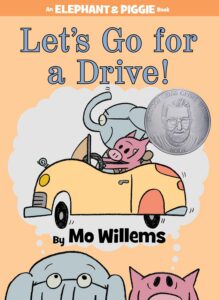
6. Let’s Go For a Drive by Mo Willems
- Target Audience: Ages 3 and up (Early Reader)
- Overview: Preparing for a long drive always raises the ultimate question: Do we have everything we need? In this uproarious early reader, Elephant (Gerald) and Piggie tackle this exact dilemma. Kids will giggle as the duo gathers travel essentials—a map, sunglasses, an umbrella, and a suitcase—before realizing a rather critical missing item: an actual car! Mo Willems’ signature call-and-response dialog makes this a read-aloud treasure.
Official Statements and Author Spotlight
Spotlight on Beth Bacon
Beth Bacon creates engaging books for young readers and teaches writing at Maryville University. Having grown up in New England, she has lived in six states and three different countries, an adventurous background that fuels her mission to make reading fun and accessible for every child. Bacon holds an MFA in Writing for Children and Young Adults from CalArts/VCFA, an MA in Communication from NYU, and a BA in Literature from Harvard University.
Reflecting on her career and her newest release, Bacon emphasizes the power of storytelling to transform mundane requirements into exciting journeys. Whether she is tackling reluctant readers with I Hate Reading or guiding children down the asphalt of Route 66, her work champions curiosity and exploration.
Official Giveaway Announcement
To celebrate the launch of Route 66: Faces and Places Along America’s Most Famous Road, a special book giveaway is currently underway!

- The Prize: A physical copy of Route 66: Faces and Places Along America’s Most Famous Road, personally signed and inscribed by Beth Bacon to the reader(s) of your choice.
- How to Enter: Leave a comment on the hosting blog post sharing your favorite family road trip memory or book.
- Shipping Limitations: Due to postal logistics, physical book prizes can only be mailed to U.S. and APO addresses.
Future Outlook: The Ongoing Journey of Children’s Transit Literature
As publishing continues to innovate, the genre of transportation and travel literature for young readers shows no signs of slowing down. By combining rigorous historical research—such as the preservation of Route 66’s cultural milestones and pioneering figures like Alice Ramsey—with imaginative fiction, creators are ensuring that the next generation of readers views travel not merely as transit from point A to point B, but as an opportunity for discovery, historical connection, and boundless creativity.

Hop in, turn the page, and read on!

Comments
Facebook App ID not configured. Please add it in the Customizer.