
Executive Overview
For centuries, the literary pseudonym has served as a shroud, a shield, and a sandbox for authors navigating the treacherous waters of public perception and commercial viability. From the Brontë sisters adopting male monikers to secure a hearing in a Victorian literary establishment, to Stephen King briefly writing as Richard Bachman to test the limits of his market saturation, pen names are among the most enduring instruments in an author’s toolkit. Yet, in the hyper-connected twenty-first century—an era dominated by personal branding, algorithm-driven discoverability, and relentless social media exposure—the decision to adopt a pseudonym is fraught with new complexities.
Enter bestselling novelist Zoje Stage. Known for psychological thrillers characterized by razor-sharp tension and complex human dynamics, Stage recently crossed a Rubicon familiar to many established writers: she decided to publish a book under a completely different identity. The result of this literary masquerade is Joe Zagets, an anagram of Stage’s own name and the credited author of the new satirical novel, #AUTHORLIFE.
In this comprehensive journalistic feature, we examine the motivations, professional risks, and cultural implications behind Stage’s adoption of a pseudonym. Through an in-depth exploration of the mechanics of modern publishing, the delicate politics of industry satire, and the persistent shadows of gender bias in the literary marketplace, this article unpacks why a well-established author chose to step behind the curtain—and what the creation of Joe Zagets reveals about the contemporary business of books.
Read Also
Detailed Chronology: From Concept to Cover Reveal
To understand the birth of Joe Zagets, one must first trace the psychological and logistical evolution that led Zoje Stage to the threshold of pseudonymity.
Phase I: The Lingering Allure of the Pseudonym
Long before the manuscript for #AUTHORLIFE was even conceptualized, Stage found herself captivated by the concept of writing under an assumed identity. As she reflects on her relationship with her public persona, the friction of becoming a brand to strangers became increasingly apparent.
- "You know how you refer to famous people by their full name? Stephen King, not Steve. Benedict Cumberbatch, not Ben. Olivia Rodrigo, not Liv," Stage observes.
While this full-name convention is often a matter of clarity in conversation, the psychological reality for the creator is far stranger. Over time, an author’s legal or chosen name transitions from a private identity into public property. For Stage, the name "Zoje Stage" increasingly belonged to a readership and a marketplace rather than to the private individual behind the keyboard.
Beyond the detachment of public branding, the idea of compartmentalization held immense appeal. The theoretical promise of having dedicated names for specific creative genres—isolating thrillers from satires, or literary fiction from commercial escapism—offers an author clean slates. However, in the modern publishing ecosystem, discarding an established name carries heavy commercial penalties. A new pen name is, by definition, a cold start: a brand with no historical sales data, zero reviews, and an absent follower base. For years, publishing advisors cautioned Stage against the commercial suicide of starting over from scratch, noting that at least some readers already recognized the name Zoje Stage.
Phase II: The Catalyst of Satire
The calculus changed entirely when Stage conceived #AUTHORLIFE.
The novel demanded a vehicle tailor-made for a nom de plume. As a work of satire, #AUTHORLIFE operates in the classic tradition of comedic tragedy, poking fun at the eccentricities of the literary world—even featuring carefully curated, humorous reader reviews at the opening of each chapter. Furthermore, the narrative necessitated a male protagonist, a departure from Stage’s usual character frameworks. Recognizing the thematic alignment between the protagonist’s perspective and the book’s tone, Stage realized the manuscript warranted a matching authorial facade.
The mechanics of the transformation were deceptively simple: by rearranging the letters of her own name, Joe Zagets was born.
Phase III: Navigating Industry Sensitivities
While the anagram provided a clever origin story, a more serious professional motivation underpinned the decision to initially shroud the book’s origins. Publishing is an infamously insular, sensitive, and protective industry. Authors, agents, editors, and publicists voraciously consume stories set within their own ecosystem, seeking validation and shared catharsis in the absurdity of the business.
However, Stage—as a commercially successful, bestselling author—was acutely aware of the professional hazards. She feared that marketing a "satire about the publishing industry" under her own well-known name would invite misinterpretation. Colleagues and critics might mistake a work of fiction for gossip, a petty takedown, or a thinly veiled settling of scores. By introducing Joe Zagets, Stage hoped to decouple her established commercial reputation from a project designed purely to skewer institutional quirks.
Supporting Context & Metrics: The Economics and Politics of Naming
To fully appreciate Stage’s strategic pivot, it is necessary to examine the broader economic and cultural context governing pseudonyms in the modern literary landscape.
+--------------------------------------------------------------------------+
|                     THE PSEUDONYM DECISION MATRIX                        |
+--------------------------------------------------------------------------+
|  PROS                                   |  CONS                          |
|-----------------------------------------+--------------------------------|
| • Freedom from reader preconceptions    | • Loss of existing brand equity|
| • Ability to explore new genres safely  | • Zero historical sales data   |
| • Protection against professional blowback| • Absence of established SEO   |
| • Subversion of gender/identity biases  | • Marketing friction & secrecy |
+--------------------------------------------------------------------------+
The Branding Dilemma vs. Creative Freedom
In contemporary publishing, authors are routinely urged to function as corporate entities. Personal branding on platforms like TikTok (BookTok), Instagram, and X (formerly Twitter) dictates that an author must cultivate a singular, easily digestible persona. Deviating from this persona can confuse algorithms and alienate core readerships.
Yet, this hyper-specialization often suffocates artistic experimentation. When an author is boxed into a specific genre—such as Stage’s renowned psychological thrillers—stepping outside those boundaries can result in commercial failure. A pseudonym offers a structural workaround, allowing creators to test untrod territory. As Stage notes, a pen name can appeal to an entirely fresh demographic of readers who approach the work devoid of preconceived notions about what a "Zoje Stage book" should contain.
The Mirror of Fiction: Drawing from Reality Without Autiobiography
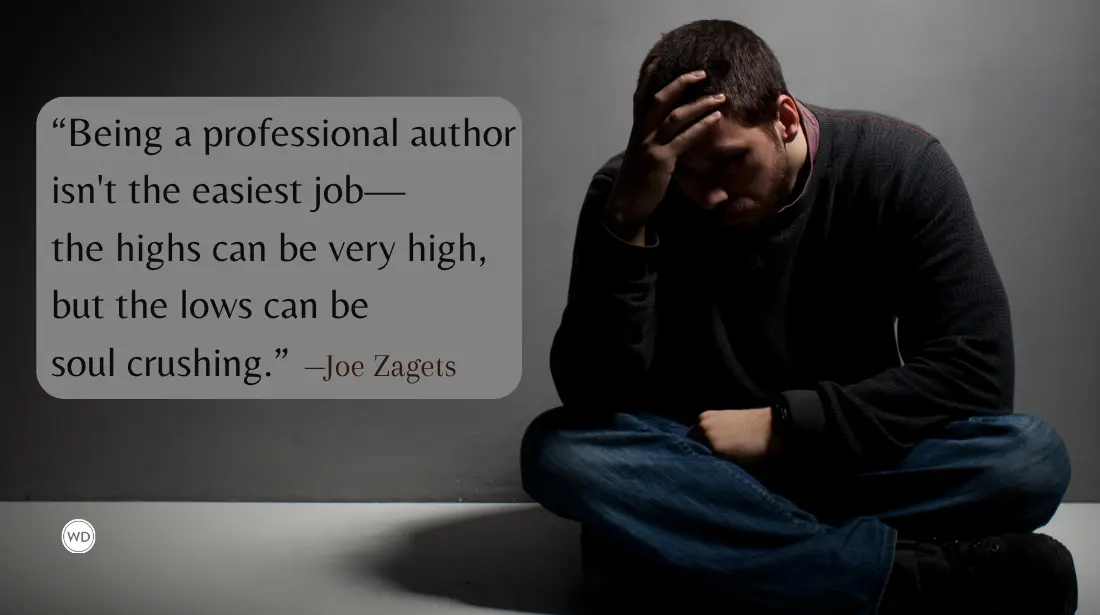
Writing a satirical novel about an industry one actively participates in is walking a tightrope. Professional authorship, while deeply rewarding, is characterized by extreme volatility—the career highs are euphoric, but the lows can be soul-crushing.
Stage insists that while she draws inspiration from her professional environment, #AUTHORLIFE is strictly non-autobiographical.
"Some authors may occasionally sneak bits of real people into their characters, but the only real person I ever draw on is myself," Stage explains. "And how could anyone totally avoid that, seeing how one’s writing is filtered through an amalgamation of everything you’ve thought, felt, seen, learned, experienced?"
Instead of targeting specific individuals, the novel’s protagonist, Mack—an "author gone rogue"—embodies the collective frustrations of creative workers laboring in a hyper-capitalist, attention-starved marketplace. The exaggerated behaviors and systemic absurdities depicted in the book hit close to home precisely because they tap into a universal, unspoken truth within the industry. As Stage dryly points out regarding her protagonist: "As offensive as he may be… he isn’t completely wrong."
Official Insights & Authorial Intent
Despite the initial layer of anonymity, the reality of the modern book market means that secrets rarely stay secret for long. With the name Joe Zagets emblazoned on the cover, casual readers disconnected from online literary gossip circles may never realize the book is pseudonymous. For Stage, that outcome is entirely acceptable; she maintains that knowing the true identity adds little to the reading experience itself, though publicity and marketing departments often view such transparency through a different commercial lens.
Regardless of whether readers encounter the text as a Joe Zagets or a Zoje Stage title, the author’s core objective remains steadfast: catalyzing discourse.
- The Economics of Creativity: Sparking necessary conversations about what it means to practice art within a deeply money-driven society.
- Technological Complicity: Examining how modern internet culture and digital shortcuts facilitate and amplify toxic professional behavior.
- Systemic Inequality: Unpacking the deep, structural roots of privilege and misogyny that continue to shape creative institutions.
Perhaps the most poignant—and provocative—reason behind the selection of the Joe Zagets moniker touches on a systemic reality of the literary world. As Stage reflects with biting irony: "It’s possible that his ideas will be taken more seriously than mine."
This candid admission underscores how gender bias continues to shadow female creators, even those who have achieved substantial commercial and critical success. By adopting a masculine anagram, Stage inadvertently constructed a fascinating social experiment regarding the reception of authority and satire across gender lines.
Future Outlook: The Legacy of Joe Zagets and the Evolution of Zoje Stage
As #AUTHORLIFE circulates among readers, critics, and industry insiders alike, the existence of Joe Zagets raises intriguing questions about the future of authorship in the digital age.
Will Joe Zagets remain a one-off literary experiment—a single-use vessel designed to safely deliver a sharp industry satire—or will he develop a sustained bibliography of his own? The publishing landscape is littered with temporary pen names that eventually took on lives of their own, outstripping their creators’ primary identities in unexpected ways.
For Zoje Stage, the journey of bringing Joe Zagets to life has demonstrated the liberating potential of shedding one’s brand equity, even if temporarily. It has opened up spaces for unfiltered humor, critical institutional examination, and a reclamation of the sheer joy of storytelling unburdened by expectations.
Ultimately, whether viewed through the lens of marketing strategy, feminist critique, or pure satirical entertainment, the creation of Joe Zagets stands as a masterclass in modern literary navigation. It reminds us that behind every polished author photo, algorithm-friendly brand, and bestselling spine lies a human mind wrestling with the absurdity of creation, commerce, and the eternal desire to tell the truth—even when hiding behind an anagram.


Comments
Facebook App ID not configured. Please add it in the Customizer.