
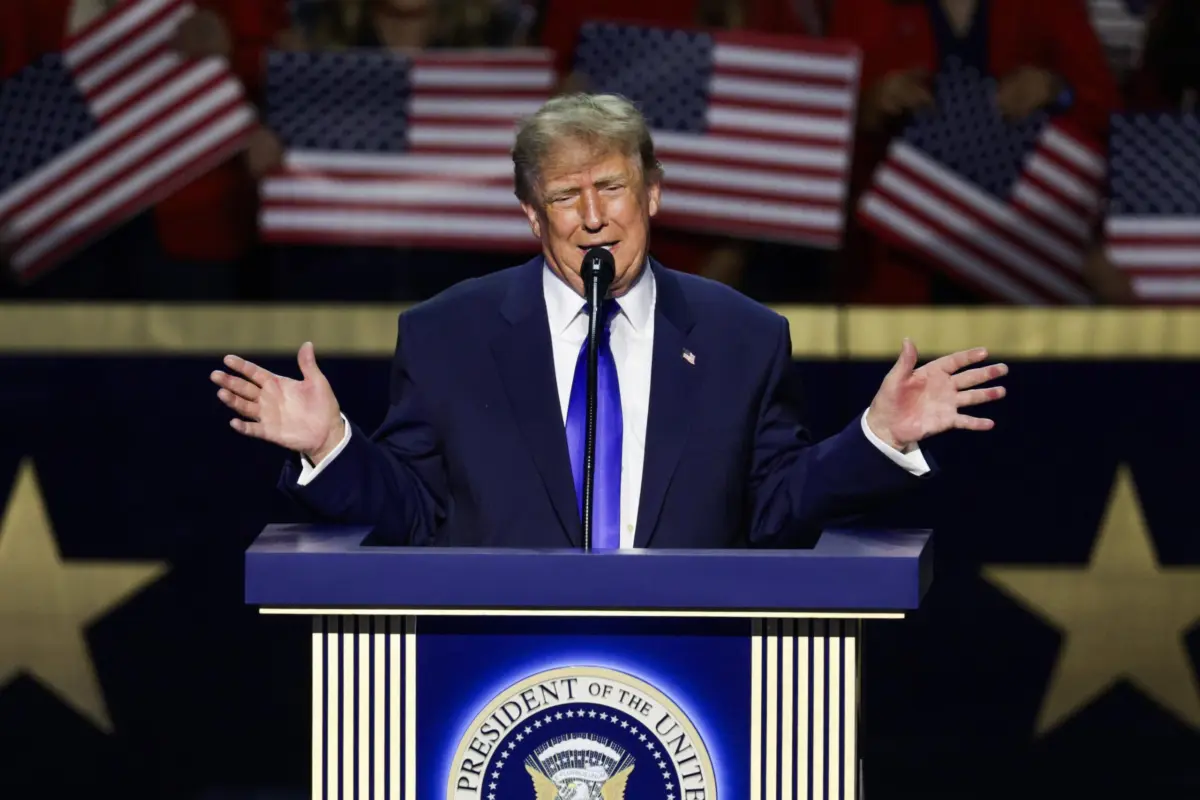
Executive Overview
As the nation hurtles toward the November 3 midterm elections, political prognosticators are broadly projecting a potential "blue wave." Yet, this conventional wisdom faces a monumental, cash-fueled caveat: the Republican Party holds an unprecedented, multi-hundred-million-dollar financial advantage.
While historical precedents—such as Democratic fundraising dominance in the 2016, 2020, and 2024 general cycles—suggest that public sentiment and grassroots energy often dictate outcomes, the current electoral landscape is telling a radically different story. Backed by a historic alignment of deep-pocketed institutional players, massive crypto interests, tech oligarchs, and billionaire financiers, the GOP has engineered a war chest of unprecedented scale.
At the center of this financial colossus is a pro-Trump super PAC boasting roughly $400 million earlier this fall, coupled with the Republican National Committee’s (RNC) $130 million cash reserve—a figure made all the more striking by the Democratic National Committee’s (DNC) reported cash-to-debt deficit. Meanwhile, tech titan Elon Musk has personally funneled upwards of $200 million into pivotal races, including a staggering $158 million poured into safeguarding Republican prospects in Texas alone.
Read Also
To dissect the mechanisms, implications, and hidden realities of this cash disparity, Vox’s Astead Herndon, host of America, Actually, sat down with New York Times national political reporter Shane Goldmacher. Their conversation exposes a fractured political battlefield: one where Democratic candidates rely heavily on small-dollar donors to stay competitive, while institutional Republican dollars dictate defensive strategies in historically safe states and force an agonizing re-evaluation of the limits of a traditional "blue wave."
Detailed Chronology & Financial Evolution
The trajectory of the current cycle’s fundraising environment did not materialize overnight; it represents a systematic accumulation of capital that began long before the traditional kickoff of the midterm season.
The 2025–2026 Fundraising Buildup
Throughout 2025—a period when Donald Trump’s approval ratings experienced considerable volatility—the political apparatus surrounding the former president engaged in an aggressive, uninterrupted fundraising blitz. Unlike previous eras where major donors waited for the heat of a campaign cycle to deploy capital, the GOP engineered an early mobilization strategy.
By strategically courting industries anticipating federal regulatory shifts, particularly the burgeoning cryptocurrency sector, the campaign amassed historic reserves well ahead of schedule. By September of the midterm election year, this coordination yielded an unmatched financial fortress: a single super PAC holding approximately $400 million, alongside an RNC war chest that dwarfed the liquid assets of its institutional Democratic counterpart.
The Texas Crucible and National Strategic Shifts
As the calendar turned toward the final stretch of the fall campaign, this unprecedented capital was systematically deployed to shore up vulnerable territory and expand the map in unexpected directions.
- The Texas Showdown: The epicenter of this financial deployment is Texas, which has shattered state campaign spending records. Republicans have poured over $200 million into the state to protect their incumbents, countered by an extraordinary small-donor grassroots movement behind Democratic Senate candidate James Talarico, who is projected to cross the $100 million mark. Despite Talarico’s fundraising prowess, outside institutional Democratic money has largely bypassed the Lone Star State.
- Shifting Defensive Lines: As the GOP assesses its federal map, tactical retreats and advances have revealed changing baseline assumptions. Notably, Republicans pulled resources out of North Carolina—a state that has not voted for a Democratic senator since 2008—to reinforce seats in traditionally safe territory, such as South Carolina (the former Lindsey Graham seat) and Kansas, a state that has not sent a Democrat to the U.S. Senate in nearly a century. This aggressive reallocation signals that the GOP is erecting a resilient red wall designed to withstand macroeconomic or political anti-incumbent waves.
Supporting Context & Metrics
To fully comprehend the magnitude of the current financial playing field, political analysts must evaluate the hard metrics governing contemporary American elections. The numbers reflect a paradigm shift from previous cycles.
| Campaign Entity / Figure | Estimated Financial Metric / War Chest | Strategic Impact & Notes |
|---|---|---|
| Trump-Aligned Super PAC | ~$400 Million (as of early Sept) | Largest single outside expenditure group; functions without a direct institutional Democratic counterpart of equal size. |
| Republican National Committee (RNC) | ~$130 Million | Functionally aligned with the party’s leadership; maintains a massive cash-on-hand advantage over the debt-laden DNC. |
| Elon Musk (Total Political Outlays) | ~$200 Million+ | The world’s richest individual; includes $158 million directed specifically toward Texas races and various congressional super PACs. |
| James Talarico (TX Senate Race) | Approaching $100 Million | Represents the apex of small-donor mobilization on the Democratic side, shattering state-level fundraising records. |
| Texas Senate Race Total Spend | Most expensive in U.S. history | A focal point where institutional GOP spending meets an organic, grassroots Democratic fundraising surge. |
The Mechanics of Modern Media Saturation
When examining how billions of dollars are converted into votes, the strategy relies heavily on overcoming voter fatigue. Modern political media consumption habits mean that a vast percentage of advertising dollars are spent targeting individuals who are actively trying to avoid political news.
Field reports from swing states like Pennsylvania indicate that digital streaming platforms—such as YouTube—frequently subject viewers to multiple pre-roll ads just to reach a single piece of political content. Consequently, the cost-per-impression has skyrocketed, making sheer financial volume a prerequisite for maintaining message saturation among low-engagement or cynical electorates.
Official Statements & Expert Analysis
The dialogue between Astead Herndon and Shane Goldmacher illuminates the structural imbalances and strategic philosophies driving both major political parties.
On the Scale of the GOP Advantage
Goldmacher emphasized the historic nature of the current financial gap, noting its divergence from recent cycles:
"It’s bigger than I’ve basically seen in the last 20 years, and it’s almost entirely coming from big donors… When you talk about how many seats can the Democrats gain, given how unpopular Trump is, the Republican money is seen as a real limiter on Democratic chances."
On the Motives of Major Institutional Donors
Addressing whether the influx of capital is purely transactional, Goldmacher noted that the fundraising success began during periods of differing political standing, driven by a mix of ideological alignment and expected regulatory outcomes:
"There are big crypto industries that are giving money that are expecting or hoping for favorable regulation from the administration… So it’s a lot of big businesses. It’s a lot of wealthy Republicans who generally support him anyway, and there are industry groups that see benefit to being in favor."
On Down-Ballot Neglect: The Governor’s Race Deficit
Both parties face structural blind spots, most notably in gubernatorial contests. While federal Senate and House races attract national media and donor fascination, state executive races often languish underfunded:
"Number one is governors’ races, actually. When you look at where Democratic donors swoon, it’s Senate races… If you don’t live in the state, it doesn’t impact you. If you’re a small donor and you live in California, you can be excited about a Senate candidate because you want Democrats to control the Senate. Are you as excited about a Democratic governor of Georgia?"
Future Outlook: The 2028 Horizon and Post-Trump Realities
As the political establishment looks past the immediate horizon of the midterms, the conversations surrounding campaign cash offer critical clues about the future of both major parties.
The Democratic Primary Money Myth
Looking toward the next presidential cycle, historical data suggests that raw spending power does not guarantee victory in a crowded primary. Goldmacher pointed to the stark reality of previous Democratic nomination cycles:
"Mike Bloomberg spent twice as much as Tom Steyer, who spent twice as much as Bernie Sanders, who spent twice as much as Joe Biden, who became the Democratic nominee. And so money isn’t gonna determine who wins the next Democratic presidential primary."
Instead, figures like Illinois Governor JB Pritzker—a billionaire utilizing personal wealth to support down-ticket Democrats—are quietly building cross-party and intra-party goodwill that may lay the groundwork for future national ambitions.
The Republican Small-Donor Succession Question
Perhaps the most significant underexplored narrative in modern American politics is the long-term sustainability of Republican fundraising once the Trump era concludes. While Donald Trump has proven uniquely capable of activating a massive base of small-dollar contributors, the party has yet to cultivate a successor with comparable grassroots magnetic pull.
Analyses of figures like JD Vance reveal that early political trajectories relied heavily on mega-donor backing—such as funding from Peter Thiel via super PACs—rather than an organic, self-sustaining small-donor digital ecosystem. As the GOP navigates the post-Trump transition in future cycles, the question of whether institutional billionaires can successfully manufacture grassroots enthusiasm remains one of the most vital, unresolved questions in electoral politics.





Comments
Facebook App ID not configured. Please add it in the Customizer.