
Executive Overview
For decades, the lifeblood of the independent literary community has been the intimate, irreplaceable alchemy of the author reading. A writer steps behind a podium in a cramped, fragrant storefront, reads a passage from their latest work, and answers questions from a room full of rapt readers. Yet, behind the romanticized veneer of these community gatherings lies a grueling logistical reality for both booksellers and authors: getting people through the door has never been harder.
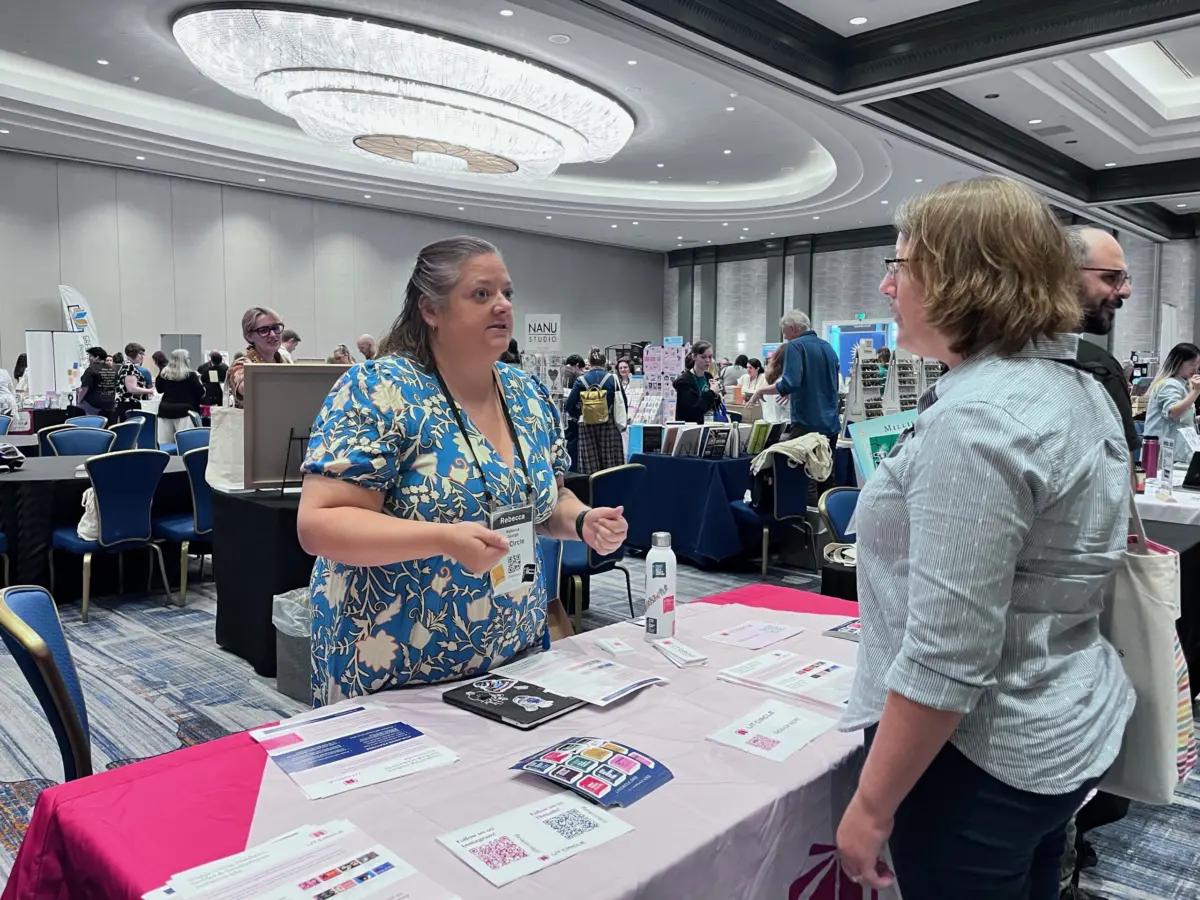
Enter Rebecca George. As the former co-owner of Chicago’s beloved Volumes Bookcafe—which shuttered its physical doors in January after more than a decade in business—George experienced firsthand the systemic friction of promoting local literary events in a fractured digital landscape. Rather than stepping away from the industry, George has pivoted to solve its most persistent distribution problem.
Alongside technology consultant and longtime Volumes customer Patrick DiMichele, George has launched Lit Circle, a centralized digital platform explicitly engineered to connect readers with independent bookstores, local authors, and literary events. Dubbed by its creator as “BandsInTown for the music industry,” Lit Circle is designed to track author readings, book signings, literary festivals, and book club gatherings nationwide, pushing automated, hyper-local alerts straight to consumers’ devices.
Read Also
Following a localized beta test in the Chicagoland area over the summer, Lit Circle is aggressively scaling its footprint. The platform expanded to Philadelphia ahead of a major metro-wide book crawl, with plans to systematically "open the gates" to metropolitan regions across the United States in the coming weeks. Crucially, the platform is entirely free for users and fiercely champions independent ecosystems over corporate-owned retail chains.
By bridging the gap between discoverability and attendance, Lit Circle aims to reverse years of declining event turnouts, secure critical revenue for independent vendors, and reinvent how the modern reading public engages with the written word.
Detailed Chronology: From Bookstore Closure to National Launch
The genesis of Lit Circle is rooted in the bittersweet closure of Volumes Bookcafe. For over ten years, George operated the Chicago cultural hub, weathering economic downturns, shifting consumer habits, and the existential shocks of the COVID-19 pandemic. However, the closure of the physical storefront in January 2024 did not quench George’s commitment to fostering literary community; instead, it clarified the structural deficiencies plaguing the broader trade.
During her tenure as a bookseller, George grew intimately familiar with the immense labor required to market author events. She watched as traditional avenues for cultural journalism dried up, forcing independent shops to fight an uphill battle for visibility. Recognizing that she was not alone in this struggle, George connected with Patrick DiMichele, a software and technology consultant who had spent years as a regular customer at Volumes. United by a shared passion for independent literature and technical infrastructure, the pair began conceptualizing a platform that could automate and streamline event discovery.
- Spring 2024 (Conceptualization & Development): George and DiMichele formalized their partnership, drafting the architecture for a database capable of parsing disparate literary calendars and standardizing them into a single, user-friendly feed.
- Summer 2024 (Chicagoland Beta Testing): LitCircle.org quietly went live in the beta testing phase across the Chicago metropolitan area. Independent bookstores in the region fed their event data into the platform, allowing the developers to iron out user-interface bugs and gauge local engagement.
- August 2024 (Philadelphia Expansion): Building on the insights gleaned from the Chicago rollout, Lit Circle officially expanded its geographic footprint to Philadelphia, timing the launch strategically ahead of a major metro-wide indie book crawl on August 22.
- Fall 2024 and Beyond (National Scaling): With the regional proof-of-concept validated, George and DiMichele are preparing to open platform access to independent bookstores, libraries, and literary organizations across all major U.S. media markets.
Supporting Context & Metrics: The Crisis of Discoverability in Modern Publishing
To understand why Lit Circle is positioned to make a profound impact on the literary ecosystem, one must examine the macro-level systemic failures currently undermining book promotion.
For generations, the traditional media apparatus served as the primary megaphone for literary events. Local newspapers maintained dedicated book review sections, published weekly calendar roundups of author appearances, and employed culture reporters who covered the local arts scene. Over the past twenty years, however, the collapse of local print journalism has decimated this infrastructure.
[Traditional Media Decline]
       │
       ▼
[Loss of Print Book Sections & Local Arts Calendars]
       │
       ▼
[Algorithmic Suppression on Social Media (FB/IG)]
       │
       ▼
[Information Overload & Newsletter Fatigue]
       │
       ▼
[Result: Empty Seats at Independent Bookstore Events]
According to George, relying on social media platforms like Facebook and Instagram is no longer a viable strategy for independent booksellers.
"Facebook and Instagram used to be great, but now you are at the mercy of their algorithms, whether or not people will see the event you’re posting," George explains. "And people can’t follow every single newsletter of every single author—and some authors aren’t good at self-promotion anyway."
Furthermore, the demographic realities of media consumption have shifted dramatically. Younger generations—the coveted demographic driving the recent resurgence in physical book sales, fueled by phenomena like "BookTok"—rarely consume legacy print media. As George notes, the return on investment (ROI) for placing paid advertisements in local legacy publications is practically non-existent for younger readers.
This fragmentation creates a painful paradox: millions of people are reading and buying books, yet independent stores struggle to put "butts in seats" for touring authors. When an event suffers from low attendance, it creates a cascading negative effect:
- Reduced Author Engagement: Authors are less likely to route tours through mid-sized cities if turnout cannot be guaranteed.
- Diminished Ancillary Sales: Bookstores rely heavily on event nights to drive high-margin impulse purchases, merchandise sales, and community loyalty.
- Weakened Cultural Infrastructure: Without robust live programming, bookstores risk losing their status as vibrant community hubs, devolving into mere retail transactional spaces.
Lit Circle seeks to short-circuit this feedback loop by cutting through the noise of algorithmic feeds and newsletter clutter, delivering hyper-targeted, location-based notifications straight to the pockets of active readers.
Official Statements & Platform Mechanics: How Lit Circle Operates
Lit Circle’s operational model is built on frictionless integration and a steadfast commitment to the independent trade.
Bridging Booksellers, Publishers, and Readers
In its current iteration, Lit Circle enables independent booksellers to seamlessly link author events directly to their official e-commerce platforms, or to ethical affiliate alternatives such as Bookshop.org and Audiobook platform Libro.fm.
Once the foundational network of independent stores is fully established nationwide, George plans to unlock enterprise-level capabilities for publishing houses. Major and independent publishers will be able to utilize the platform to coordinate, market, and amplify multi-city author tours, ensuring maximum visibility across local indie ecosystems.
A Strict "Indie-Only" Mandate
In a notable policy refinement, Lit Circle has drawn a hard boundary regarding who can utilize its promotional infrastructure. Initially, the platform contemplated including listings for corporate-owned chain bookstores—such as Barnes & Noble or BAM—while withholding direct purchasing links. However, following careful strategic re-evaluation, the founders opted for a zero-tolerance policy regarding corporate chains.
"We had a long thought about how those stores already have a massive online system with their customers," George stated in an interview with Publishers Weekly. "They don’t need us."
Consequently, Lit Circle will exclusively champion independent bookstores, comic book specialty shops, public libraries, literary festivals, conventions, and grassroots literary organizations. Chain store programming will find no home on the platform.
Customization and User Experience
For consumers, the user experience is designed to be entirely customizable. Subscribers can opt for broad, sweeping alerts that capture every literary happening within a designated radius, or they can fine-tune their notification preferences using granular filters. Users can track specific authors, genres, or event types (ranging from poetry readings and children’s story hours to high-profile fiction launches and writing workshops).
Future Outlook: The Roadmap Ahead for Lit Circle
As Lit Circle transitions from its regional rollout into a fully realized national platform, George and DiMichele have laid out an ambitious roadmap of technological and editorial expansions designed to cement the platform as an indispensable utility for readers.
- Dedicated Mobile Applications: While the platform currently operates smoothly via web browsers, native iOS and Android apps are deep in development to optimize push-notifications and on-the-go browsing.
- The Reader’s Digital Passport: Plans are underway to introduce a gamified "passport" feature. This tool will allow readers to digitally check into bookstores they visit, track the events they have attended, and store event tickets securely in one place.
- Targeted E-Blasts: Lit Circle will introduce curated email newsletters sent directly to subscribers, spotlighting major upcoming author tours and must-attend regional events.
- Editorial Content: Beyond serving as a sterile calendar database, the platform intends to integrate original journalistic content, including author interviews, literary essays, and curated book reviews.
Ultimately, George views Lit Circle not merely as a scheduling utility, but as a catalyst for cultural exploration. Beyond driving traffic to a user’s regular neighborhood haunt, the platform is designed to break down geographical inertia, inspiring readers to venture outward.
"I hope it introduces people to a bunch of new bookstores that they didn’t even know existed, and are not that far away from them," George says.
By marrying modern software architecture with the timeless tradition of the local author reading, Lit Circle is poised to give independent literature the digital megaphone it has long required—ensuring that the physical spaces keeping our literary culture alive continue to pack their rooms for years to come.




Comments
Facebook App ID not configured. Please add it in the Customizer.