
Executive Overview
France has endured a punishing meteorological season, marked by record-shattering successions of heatwaves that have tested the country’s infrastructure, public health systems, and natural landscapes. According to French public health services, these prolonged surges of high temperatures have triggered massive wildfires across multiple regions and driven a significant spike in excess mortality rates.
Beyond the human toll, the scorching conditions have placed an unprecedented strain on the nation’s agricultural and horticultural treasures. Among the hardest hit is one of France’s most cherished and internationally renowned cultural landmarks: the gardens of Claude Monet at Giverny, nestled in the picturesque countryside of Normandy.
For generations, the lush landscapes of Giverny have served as a living museum, directly channeling the visionary aesthetic of the master Impressionist who once tended them. Today, however, the horticulturists charged with preserving this fragile ecosystem find themselves on the front lines of a changing climate. Confronted with withered foliage, heat-stressed plants, and shifting seasonal rhythms, the garden staff are engaged in a delicate balancing act. They must innovate rapidly to protect vulnerable flora while remaining fiercely dedicated to preserving the historical authenticity that draws hundreds of thousands of visitors to Normandy every year.
Read Also
As France marks the centenary of Monet’s death with major commemorative exhibitions in Paris, the crisis at Giverny offers a sobering reminder of how contemporary environmental realities are reshaping even our most sacred historical and artistic institutions.
Detailed Chronology: The Summer of Extremes at Giverny
The unfolding crisis at Giverny cannot be understood in isolation; it is the culmination of an exceptionally volatile meteorological timeline that took root early in the summer and intensified through July and August.
Early Season Warning Signs
As spring transitioned into summer, meteorological agencies across Europe noted anomalous temperature patterns. Northern France, typically characterized by a temperate, oceanic climate that supports rich, moisture-dependent flora, began experiencing prolonged dry spells. While early-season warmth is generally welcomed in Normandy, the rapid escalation of temperatures in June created an accelerated demand for soil moisture. Gardeners at the Claude Monet House and Gardens museum began noticing signs of premature water stress among early-blooming perennials, prompting shifts in routine irrigation schedules well ahead of historical norms.
The July Heatwave Peaks
The situation escalated dramatically during the second major heatwave of July, a period that French public health authorities later linked to over 1,243 excess deaths nationwide. Temperatures in Normandy soared to blistering highs, overwhelming natural cooling mechanisms and severely taxing traditional watering systems.
It was during this peak intensity that the physical toll on the Giverny gardens became undeniable. Nasturtiums—staples of the mid-summer display that typically form vibrant carpets of color at this time of year—were wiped out entirely by the relentless thermal onslaught. Deputy head gardener Rémi Lecoutre and his team watched in dismay as leaves scorched, cellular damage set in, and the biological rhythms of the plants were abruptly short-circuited by extreme heat stress.
Emergency Interventions and the Dog Days of August
Throughout August, the garden operated under emergency horticultural protocols. Realizing that conventional watering methods were insufficient against the baking sun, Lecoutre and his staff mobilized a multi-layered defense strategy. They deployed mini-sprinklers, maximized underground irrigation capacity, and shifted intense watering operations to the dead of night to minimize evaporation loss.
By grouping more vulnerable plants together to create microclimates of mutual shade and humidity, the team managed to stave off total botanical collapse. Media reports confirmed that while close inspection still revealed scorched foliage and wilted blooms, the catastrophic losses seen in July had been successfully contained. As the summer draws to a close, the garden staff are shifting their focus from crisis management to long-term adaptation, charting a course for how Giverny must evolve to survive an increasingly volatile future.
Supporting Context & Metrics: Climate Change, Public Health, and Botanical Impact
The struggles at Giverny are symptomatic of a broader, systemic ecological shift transforming Western Europe. Understanding the magnitude of the challenge requires examining the intersection of climatology, public health data, and plant physiology.
National Toll and Meteorological Metrics
The summer of 2026 has etched itself into French climatological records as one of the most punishing on record. Consecutive heatwave cycles have locked high-pressure atmospheric domes over the continent, trapping hot air and preventing the nocturnal cooling periods that traditionally allow both humans and ecosystems to recover.
Public health reports released in August underscored the human cost of these meteorological anomalies, documenting 1,243 excess fatalities during the July heatwave alone. These figures echo the catastrophic lessons of the historic 2003 European heatwave, proving that extreme thermal events are no longer isolated anomalies but a recurring, systemic threat to public safety and environmental stability.
Plant Physiology Under Thermal Stress
To fully grasp the devastation witnessed by Lecoutre and his team, one must examine the cellular mechanics of plants under extreme stress. When temperatures cross critical thresholds and soil moisture plummets, plants experience severe water stress.
As Lecoutre explained to regional broadcasters, flora attempt to self-preservatively react by closing their stomata—microscopic pores on their leaves used for gas exchange and transpiration. While this mechanism prevents immediate desiccation, it halts photosynthesis and terminates the flowering cycle. The result is widespread wilting, leaf scorching, and premature defoliation. Without active human intervention through advanced irrigation and microclimate management, these physiological locks can prove fatal even to hardy perennial species.
The Resilience of Monet’s Water Lilies
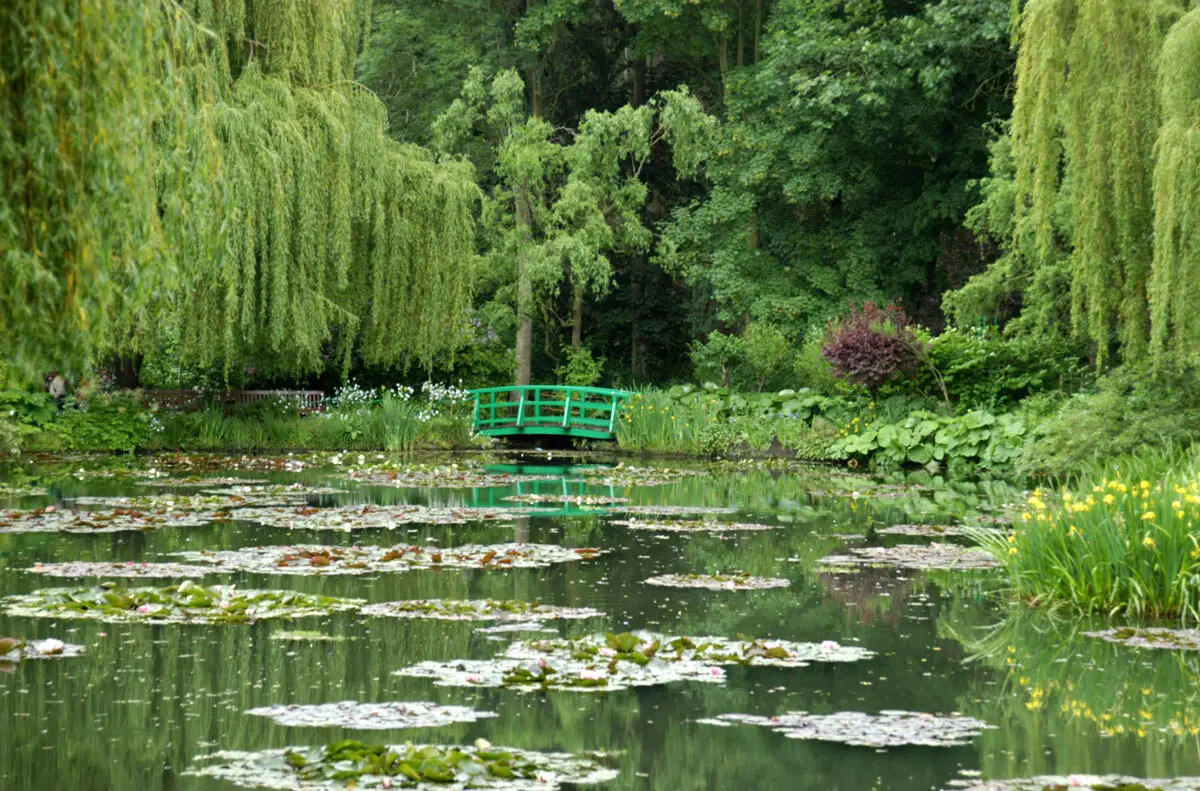
Amidst the widespread botanical distress across the dry-land beds of Giverny, one signature element of the estate has paradoxically thrived: Monet’s legendary water lilies (Nymphaea). While terrestrial plants struggled against parched soils and hyper-evaporation, the aquatic flora found themselves uniquely insulated by the thermal mass of the water bodies that inspired some of the artist’s most celebrated canvases. Thriving in the elevated water temperatures, the lilies have offered a rare bright spot for the estate’s botanists, demonstrating that even as traditional landscapes buckle, certain iconic elements of the garden continue to adapt and endure.
Official Statements and Horticultural Insights
The administration and operational staff of the Claude Monet House and Gardens have been transparent about the unprecedented nature of the crisis, balancing institutional responsibility with forward-thinking pragmatism.
Voices from the Ground
"It’s incredibly sad," Rémi Lecoutre, deputy head gardener, remarked in an interview with France 24. "This is the first time it has happened to this extent. It’s awful."
Lecoutre’s candor highlights the emotional and professional toll placed on horticulturists tasked with guarding a living historical archive. Yet, despair has quickly given way to tactical ingenuity. Discussing the battle against dehydration, Lecoutre detailed the technical measures deployed by his team:
"With mini-sprinklers and underground irrigation, we were able to fight against water stress. That said, some foliage still burned. There are physiological phenomena happening at the plant level. They close their stomata, and they stop flowering. So we had a lot of wilted flowers. It’s also the gardener’s job to adapt… and work out solutions for the heat."
Navigating Historical Authenticity vs. Ecological Pragmatism
Perhaps the most complex challenge facing the Giverny team moving forward is philosophical. The gardens are meticulously curated to evoke the exact Impressionist landscapes immortalized on Monet’s canvases. This requires a delicate negotiation between historical fidelity and modern environmental realities.
"Since it’s a historic garden, it’s best that these plants answer to the aesthetic criteria, and that they are as close as possible to the plants that Monet knew," Lecoutre noted. However, he was quick to emphasize that rigid dogmatism is a luxury the estate can no longer afford. "Ultimately, we are not a museum garden, but truly a space that evolves with its time."
This philosophy aligns remarkably well with Monet’s own approach to landscaping. Far from demanding a static, unchanging display, the artist himself orchestrated complex compositions featuring successive waves of plants with short blooming cycles, creating a dynamic, ever-shifting canvas of color and texture.
"That is the added value of this garden here in Giverny: lots of plants with a short cycle, but in very large numbers," Lecoutre observed, noting that honoring Monet’s legacy ultimately means embracing his spirit of experimentation and responsiveness to nature.
Future Outlook: Adaptation, Evolution, and Centenary Reflections
As Giverny looks beyond the immediate aftermath of the summer heatwaves, the garden’s leadership is implementing long-term strategic adjustments to ensure the estate’s survival for generations to come.
Horticultural Redesign for a Warmer Climate
Planning for future seasons now requires a fundamental rethinking of plant selection and scheduling. Lecoutre and his team are actively investigating heat-resilient cultivars that can withstand prolonged dry spells without compromising the lush, vibrant aesthetic expected by visitors. Furthermore, because rising temperatures have disrupted traditional phenological calendars, causing plants to break dormancy and bloom weeks ahead of historical averages, the gardening staff is recalibrating its cultivation schedules. Anticipating earlier seasonal shifts will be essential to maintaining continuous floral displays throughout the visitor season.
The Centenary Context: Monet in 2026
These botanical adaptations coincide with a profound milestone in the cultural calendar: the 100th anniversary of Claude Monet’s death. Rather than being overshadowed by environmental trials, the centenary is being marked by major exhibitions across Paris that celebrate the artist’s enduring preoccupation with light, time, and the natural world.
- Musée de l’Orangerie: Opening on September 30, the museum will present "Monet: Painting Time," an exhibition exploring the temporal dimensions of the artist’s late works, particularly his immersive Water Lilies cycles.
- Musée Marmottan Monet: Opening on September 24, this institution will host "Stories of Landscapes: From Monet to Hockney (1893 to 2026)," a sweeping comparative exhibition placing Monet’s pioneering landscape visions in dialogue with modern and contemporary artists who have similarly grappled with the representation—and transformation—of the natural environment.
Conclusion
The convergence of the centenary exhibitions and the climate-induced struggles at Giverny highlights a profound thematic continuity. Claude Monet spent his life capturing the fugitive, transient effects of light, atmosphere, and weather on the French landscape. Today, the gardeners of Giverny are confronting the ultimate manifestation of those atmospheric shifts. By fusing rigorous historical stewardship with courageous ecological adaptation, they are ensuring that Monet’s living masterpiece remains not a static relic of the past, but a resilient, breathing work of art for the future.




Comments
Facebook App ID not configured. Please add it in the Customizer.