
Executive Overview
The primary election results from Florida have once again demonstrated why the state remains the political equivalent of high-octane rocket fuel: unpredictable, volatile, and capable of producing results that defy traditional political gravity. While national media outlets often focus on standard narratives of incumbency and party discipline, the recent cycle revealed deep structural shifts within both major political parties. From high-profile upsets of establishment figures to shocking bids by disgraced national figures seeking political resurrection, Florida’s primary day offered a stark look at the evolving contours of American democracy.
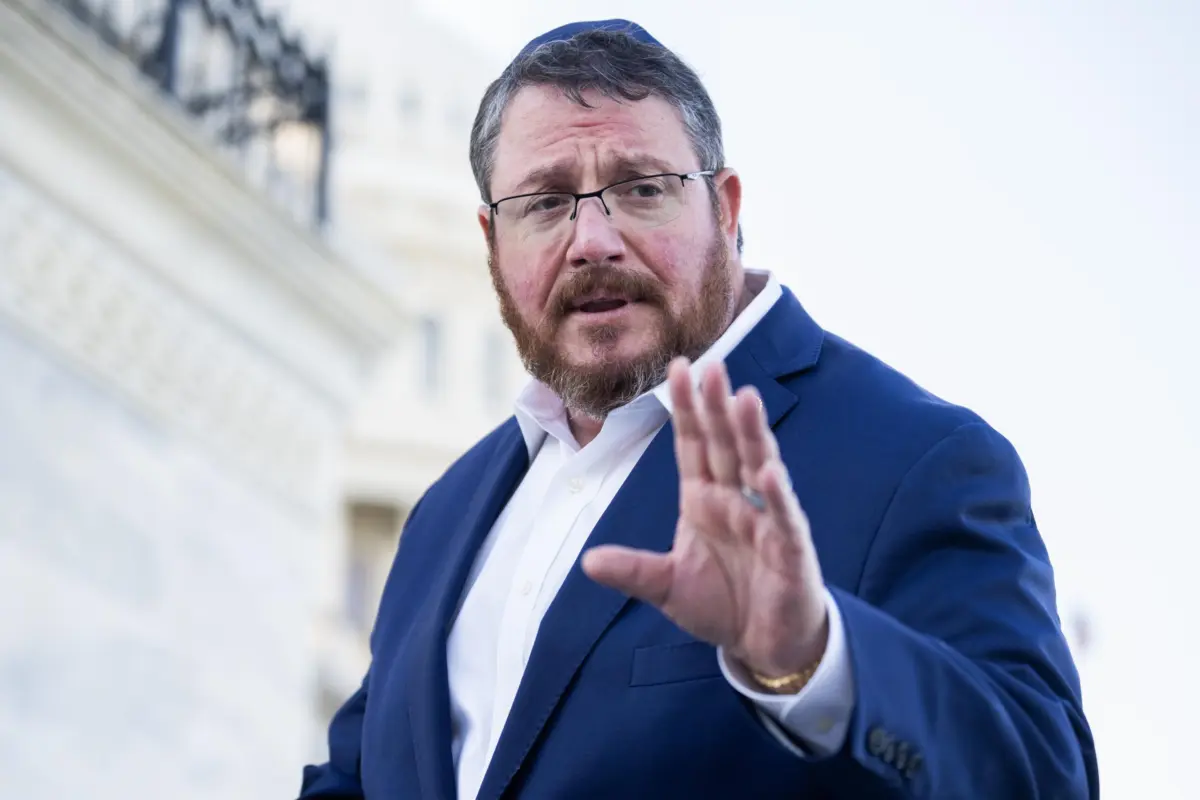
Chief among the most alarming takeaways was the Republican primary in Florida’s Sixth Congressional District. There, voters were presented with a contest that laid bare the dark undercurrents of contemporary right-wing factionalism: a matchup between an open Islamophobe and an avowed antisemite. The race culminated in a victory for state Representative Randy Fine over manosphere influencer and former professional poker player Dan Bilzerian.
This grotesque spectacle was not an isolated aberration. Across the state, voters witnessed bizarre political ghosts attempting comebacks—such as Madison Cawthorn and Chris Collins trying their luck in Florida’s 19th District—alongside sweeping ideological battles within both the Democratic and Republican parties. This comprehensive report breaks down the chaos of Florida’s primaries, examining the subterranean currents of extremism, the breakdown of internal party policing, and what these results signal for the broader American political landscape ahead of the midterms.
Read Also
Detailed Chronology: A Night of Surprises and Political Resurrections
The road to Florida’s primary election night was paved with controversy, heavy spending, and unconventional campaigns. When the polls closed, the results sent shockwaves through political headquarters in Tallahassee and Washington, D.C.
The FL-19 Ghost Town: When Disgraced Politicians Flock South
To understand the surreal nature of Florida politics, one need look no further than the Republican primary for Florida’s 19th Congressional District. In a twist that sounds like the setup for a dark political joke, two separate disgraced former members of Congress—neither originally from Florida—attempted to use the state’s chaotic political ecosystem as a launchpad for their respective political comebacks.
Madison Cawthorn, the former North Carolina wunderkind whose brief congressional tenure was derailed by a series of scandals, gaffes, and self-inflicted political wounds, joined forces on the ballot with Chris Collins, the former New York representative whose federal insider trading conviction and subsequent presidential pardon did little to quench his appetite for public office.
Yet, in a testament to the fact that even Florida’s famously permeable political market has limits, both Cawthorn and Collins were soundly rejected by voters. Even more ironic, Donald Trump’s hand-picked candidate in the district, Catalina Lauf, also fell short. Instead, the primary was won by Jim Schwartzel, the founder of a conservative talk-radio station, who navigated a costly and deeply personal primary fight to claim the nomination.
The Democratic Upheaval: David vs. Goliath in the Senate Primary
On the Democratic side of the ledger, the primary results proved that seismic shifts were not exclusive to the GOP. In the race for the Democratic nomination for the U.S. Senate, progressive socialist organizer Angie Nixon pulled off a stunning political earthquake. Nixon toppled her primary opponent despite being out-fundraised by a staggering margin of 16 to 1.
The upset underscored a growing restlessness among progressive voters who are increasingly willing to back grassroots, ideological fighters over well-funded, establishment-backed candidates. However, the broader Democratic primary night was mixed for the progressive wing. In other key races across the state, progressive challengers met decisive defeats, such as in the contest where incumbent Representative Lois Frankel successfully fended off progressive challenger Victoria Doyle in Florida’s 23rd District, and incumbent Representative Jared Moskowitz cruised to victory.
Republican Turmoil: Trump Endorsements and Incumbent Downfalls
Within the Republican Party, Donald Trump’s endorsements remained the ultimate golden ticket in most races, successfully propelling candidates to victory—most notably in the heated primary contest to succeed term-limited Governor Ron DeSantis.
However, Trump’s endorsement magic was not infallible. In a pair of shocking upsets, two high-profile pro-Trump figures were shown the door. Most notably, Republicans ousted Representative Cory Mills. Mills, who had enjoyed strong conservative backing, found his political career collapsing under the weight of severe personal scandals, including public accusations that he had assaulted one woman he dated and threatened another. In FL-19, as noted, the Trump-backed Lauf also suffered a stunning defeat.
Supporting Context & Metrics: The Anatomy of District 6 and the Rise of Bigotry
While statewide races commanded hefty headlines, the Republican primary in Florida’s Sixth Congressional District demands closer analytical scrutiny. It serves as a grim case study in how far political norms have eroded within conservative subcultures.
The Contest of Extremes: Fine vs. Bilzerian
The race for FL-6 pitted state Representative Randy Fine against Dan Bilzerian, a social media influencer boasting tens of millions of followers, known primarily for his ostentatious display of wealth, self-described sex addiction, and aggressive persona.
The ideological baseline of both candidates shocked even seasoned observers accustomed to the post-2016 political climate:
- Dan Bilzerian: Operating from the fringes of the "manosphere," Bilzerian used his vast digital platform to traffic in explicit antisemitism. During the campaign, he openly fantasized about "exterminating Israel" and explicitly called for "revisiting" the fascist and racial ideologies that fueled the Holocaust.
- Randy Fine: A sitting state lawmaker, Fine ran a campaign defined by unvarnished Islamophobia. Fine repeatedly compared Muslim populations to dogs on public digital forums and aggressively advocated that Israel should intentionally block humanitarian aid to force the starvation of civilians in Gaza.
That these two individuals emerged as the dominant finishers in a major American political party’s primary is not merely a statistical anomaly; it is a symptom of a systemic rot.
The Two Drivers of Modern Extremism
Political analysts point to two primary factors explaining how figures espousing such openly genocidal and bigoted views captured the mainstream of a major party primary:
- The Normalization of Prejudice: Comprehensive polling data from organizations like PRRI and the University of Massachusetts indicates that a deeply concerning share of the Republican primary electorate harbors latent or active Islamophobic and antisemitic views. For these voters, candidates expressing such sentiments are not crossing a red line; rather, they are voicing the quiet parts out loud.
- The Anti-Censorship Reflex: Perhaps more consequential is the broader ideological shift within the contemporary right regarding speech. Within modern conservative circles, any societal, institutional, or political limit placed on public rhetoric is reflexively condemned as an intolerable form of "woke censorship."
Consequently, party leaders and power brokers have become paralyzed. Condemning a candidate for vile bigotry is frequently treated by the base as a worse offense than the bigotry itself, as it invokes the dreaded specter of political correctness. As conservative intellectuals warned in recent commentary for The New York Times, this reflexive defense of absolute rhetorical license has successfully midwifed "a subculture of racism, sexism, and antisemitism" within the GOP infrastructure. While the Democratic Party is far from immune to internal ideological fractures and fringe elements, it retains internal norms that permit—and often demand—the policing of hate speech and overt bigotry.
Official Statements & Reactions
The fallout from the primary results has drawn sharp rebukes from civil rights organizations, political watchdogs, and party strategists alike.
- Condemning the FL-6 Primary: Civil rights groups, including the Anti-Defamation League (ADL) and the Council on American-Islamic Relations (CAIR), issued joint and separate statements condemning the mainstreaming of candidates like Fine and Bilzerian. A coalition spokesperson remarked: "When political parties normalize individuals who advocate for the starvation of entire populations or openly fantasize about the extermination of religious groups, they cease to be political organizations and become incubators for hate."
- The Establishment Defense vs. Silence: Conspicuously, major congressional leadership in Washington remained largely silent on the specific rhetoric deployed in Florida’s Sixth District, reflecting the fear of alienating a volatile base that views party interventions as an assault on grassroots sovereignty.
- Reflections on Incumbent Vulnerability: Commenting on the defeat of figures like Cory Mills, political strategists noted a growing pragmatism among certain segments of the electorate regarding personal conduct, even as ideological extremism paradoxically runs rampant. A Florida-based strategist noted: "Voters are showing a bizarre duality. On one hand, personal scandals involving violence or abuse can sink an incumbent like Mills. On the other hand, systemic, genocidal bigotry is being laundered through the defense of ‘free speech’ and rewarded at the ballot box."
Future Outlook: What Florida’s Primaries Mean for the Midterms
As the dust settles on Florida’s chaotic primary night, political scientists and campaign managers are staring at the tea leaves to forecast what these results portend for the upcoming general election and the broader future of American governance.
1. The Weaponization of the "Free Speech" Shield
The success of candidates who deploy shocking, hateful rhetoric under the guise of anti-censorship populism signals that this playbook is here to stay. Future primary challengers across the country will likely look to the Florida model—where pushing the envelope of acceptable public discourse draws enthusiastic digital engagement and financial backing from anti-establishment donors. Party leaders who hope to curb this trend will find themselves hamstrung by a base that punishes internal discipline more severely than external disgrace.
2. General Election Vulnerabilities
While extremist candidates can sometimes capture low-turnout, highly motivated primary electorates, the transition to a statewide or competitive general election frequently presents a different reality. Democrats are expected to heavily weaponize the rhetoric of candidates like Randy Fine, painting Republican nominees as outside the mainstream of American values. However, in heavily gerrymanered safe seats—such as FL-6—winning the primary is functionally equivalent to winning the general election, ensuring that extreme voices will secure legislative seats regardless of broader public revulsion.
3. The Continuing Mutation of the Florida Laboratory
Florida has long served as a political bellwether and an incubator for national trends. Once a quintessential swing state characterized by razor-thin margins, it has increasingly morphed into a one-party-dominated laboratory for political experimentation. The 2026 primaries demonstrate that this laboratory is churning out a brand of politics increasingly divorced from traditional norms of decorum, institutional accountability, and ideological moderation.
Ultimately, as the nation looks toward the midterms, the Florida primary serves as both a warning and a mirror. It reflects a political ecosystem where the boundaries of the unthinkable are daily pushed further outward, leaving voters, journalists, and democratic institutions struggling to keep pace with a system accelerating toward the extreme.





Comments
Facebook App ID not configured. Please add it in the Customizer.