
Executive Overview
The global musical landscape is undergoing a profound structural shift, characterized by the decentralization of pop hegemony and the rise of vibrant, hyper-localized audio economies. At the vanguard of this seismic cultural evolution is Pakistan’s domestic music industry, which has firmly transitioned from a regional powerhouse to a formidable global export. Validating this meteoric trajectory, streaming behemoth Spotify has officially unveiled its flagship editorial curation: "The Best Pakistani Songs of the Year So Far 2026."
Highlighting 50 standout tracks that defined the cultural zeitgeist during the first half of 2026, the comprehensive playlist acts as both a cultural barometer and an artistic ledger. It captures an industry caught in a dynamic tension between deep-rooted historical reverence and fearless sonic experimentation. Spanning soulful acoustic ballads, introspective pop anthems, avant-garde electronic soundscapes, and hard-hitting Pakistani hip-hop, the selection paints a portrait of a creative ecosystem that refuses to be boxed into rigid genre classifications.
Far from being an isolated moment of regional acclaim, this milestone underscores the increasing international appetite for South Asian narratives delivered through modern production pipelines. Tracks that blend Urdu, regional dialects like Shina, and global R&B cadences are no longer anomalies; they are charting the course for the future of contemporary world music. As streaming platforms continue to break down geographical barriers, Pakistan’s modern sonic architects are proving that vulnerability, poetic lyricism, and sophisticated cross-border collaborations possess universal resonance.
Read Also
This comprehensive analysis examines the curation of Spotify’s 2026 mid-year milestone, dissects the standout tracks and thematic currents driving the movement, contextualizes the broader geopolitical and economic dimensions of modern music streaming, and evaluates what this sonic renaissance signifies for the future of Pakistani soft power on the global stage.
Detailed Chronology & Track Analysis: The Sound of 2026
The first half of 2026 has been characterized by an astonishing degree of stylistic pluralism within the Pakistani studio ecosystem. Spotify’s editorial team combed through hundreds of releases to curate a 50-track definitive list, spotlighting the projects that pushed boundaries, shattered streaming records, and redefined contemporary emotional expression. Below is a detailed chronological and thematic examination of the marquee tracks anchoring this year’s collection.
1. Reimagining Accountability: Abdul Hannan and Samar Jafri’s "Khasara"
Few tracks have captured the bittersweet zeitgeist of modern romance quite like "Khasara," a collaborative triumph by singer-songwriter Abdul Hannan and rising star Samar Jafri. Historically, mainstream pop ballads dealing with heartbreak and separation have defaulted to narratives of blame, painting the ex-partner as an antagonist.
"Khasara" disrupts this tired paradigm by anchoring its emotional core in radical self-reflection and personal accountability. Hannan and Jafri weave silken vocal deliveries over a restrained, atmospheric production bed, forcing the listener to confront the collateral damage of their own relational shortcomings. The track’s resonance on streaming platforms points to a broader generational shift: contemporary listeners crave emotional maturity and nuance over melodrama, elevating music that treats heartbreak not as a tragedy inflicted upon the self, but as a complex psychological crucible for personal growth.
2. Vulnerability and Poetic Longing: Murtaza Qizilbash and Samar Jafri’s "Har Baar"
Continuing his streak of profound artistic contributions, Samar Jafri joins forces with Murtaza Qizilbash on "Har Baar," a masterclass in slow-burn sonic architecture. Built upon an unhurried, minimalist arrangement, the song serves as a modern vehicle for classical poetic themes of longing, profound vulnerability, and the haunting possibility of a future reunion.
Qizilbash’s vocal phrasing draws heavily from the rich lineage of South Asian ghazal delivery, yet it is framed within a contemporary indie-pop sonic palette. The result is a timeless composition that bridges generations. "Har Baar" demonstrates that modern Pakistani youth are not discarding their literary heritage; rather, they are actively revitalizing it, dressing classical poetry in contemporary instrumentation to forge deep, visceral emotional connections in an increasingly hyper-connected yet isolated world.
3. Cross-Generational Bridges: Asim Azhar’s "Tu Hai Wohi"
In a striking display of intergenerational homage, pop heavyweight Asim Azhar made waves in early 2026 with "Tu Hai Wohi," a bold contemporary reimagining of the iconic 1982 Bollywood classic of the same name. Rather than opting for a simple, nostalgic cash-grab cover, Azhar deconstructs the foundational melody and rebuilds it through a distinctly 21st-century lens.
The track showcases linguistic and cultural fluidity, seamlessly blending Urdu, Punjabi, and English verses. Furthermore, Azhar infuses the composition with contemporary R&B rhythms, lush vocal layering, and a modern electronic sheen. The strategy has paid massive dividends, successfully introducing a beloved historical melody to Gen Z listeners while showcasing the expansive technical versatility of Pakistan’s pop elite.
4. Global Hip-Hop Ascendancy: Talha Anjum, Talhah Yunus, and Jokhay’s "Shikaar"
No assessment of the contemporary Pakistani music landscape is complete without examining the unstoppable cultural force of the nation’s hip-hop movement. Leading the charge are Young Stunners members Talha Anjum and Talhah Yunus, alongside master producer Jokhay, whose collaborative track "Shikaar" stands as a towering achievement in modern South Asian rap.
"Shikaar" is celebrated by critics and fans alike for its intricate lyrical wordplay, multi-layered production, and uncompromising street poetry. For aficionados who have closely followed the duo’s career trajectory, "Shikaar" serves as a spiritual successor to monumental anthems like "Afsanay" and "Two Tone." However, it exhibits a sharper international focus. The crisp engineering, complex cadence switches, and hard-hitting trap-influenced beats position the track comfortably alongside global hip-hop heavyweights, cementing the notion that Pakistani rap is a dominant international genre in its own right.
5. Cultural Pluralism and Regional Expression: Hasan Raheem and Umair’s "Bewajah"
Closing out the marquee selections is "Bewajah," an innovative collaboration between indie-pop sensation Hasan Raheem and producer Umair. The track explores the multi-faceted dynamics of a strained relationship by presenting the perspectives of two lovers caught in an emotional stalemate.
What elevates "Bewajah" from a standard contemporary pop duet to a landmark cultural artifact is its linguistic diversity. Hasan Raheem incorporates the regional language Shina into his vocal delivery, adding a rich cultural dimension that highlights Pakistan’s immense ethnic and linguistic mosaic. By integrating regional tongues into mainstream, youth-driven pop formats, artists like Raheem are democratizing linguistic representation and proving that cultural authenticity is the ultimate currency in modern global music.
Supporting Context & Metrics: The Mechanics of Spotify and the Streaming Economy
To fully appreciate the significance of Spotify’s mid-year showcase, one must examine the operational scale of the platform itself and the economic structures governing modern music consumption. Understanding how streaming has transformed discovery provides vital context for why Pakistani artists are suddenly finding global audiences without relying on traditional western gatekeepers.
The Ecosystem of Spotify: Scale, Reach, and Architecture
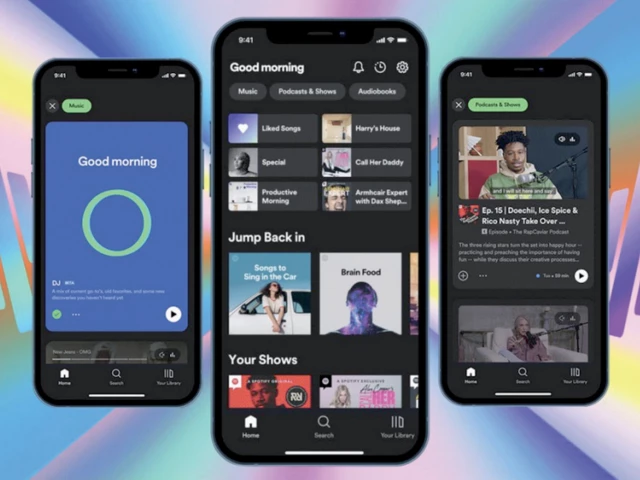
Founded in April 2006 by Swedish entrepreneurs Daniel Ek and Martin Lorentzon, Spotify has grown from a fledgling Scandinavian startup into the undisputed titan of the global music streaming industry. As of March 2026, the platform commands an astounding user base of over 777 million monthly active users, which includes a robust cohort of 300 million paying subscribers. Listed on the New York Stock Exchange via American Depositary Receipts (ADRs), the company’s financial health and market capitalization reflect the complete digitalization of human audio consumption.
Spotify’s operational architecture hosts a staggering repository of over 100 million DRM-protected songs and more than 7 million podcast titles, sourced from thousands of independent and major record labels, aggregators, and media companies globally. Operating on a freemium business model, the service offers basic, ad-supported audio playback with restricted controls for free-tier users, while locking premium features—such as offline listening, high-fidelity audio options, and ad-free playback—behind monthly subscription tiers.
Algorithmic Discovery and Social Integration
Beyond its sheer catalog size, Spotify has revolutionized how users unearth regional music through sophisticated machine learning algorithms and robust social sharing capabilities. Users can search and filter content based on granular metadata, including artist profiles, albums, genres, moods, and cultural tags.
Furthermore, the platform has evolved into an interactive social network. Features such as messaging, shared playlists, collaborative editing, and real-time group listening sessions known as "Jams" allow users across continents to co-curate musical spaces. This social architecture has been instrumental in the viral spread of Pakistani independent releases, allowing tracks originating in Karachi, Lahore, and Islamabad to find organic traction in London, New York, Toronto, and Sydney.
Global Footprint and Regional Dominance
As of December 2022, Spotify’s commercial availability spans 184 markets across Europe, Africa, the Americas, Asia, and Oceania. However, consumption patterns remain skewed; the United States and Europe jointly account for approximately 53% of total users and 67% of total platform revenue. Notably absent from its operational map is mainland China, where the domestic market is heavily dominated by local giants such as Tencent’s QQ Music.
From a hardware integration standpoint, Spotify is omnipresent. The service operates seamlessly across desktop operating systems (Windows, macOS, Linux), mobile ecosystems (iOS, Android smartphones and tablets), smart home appliances (Amazon Echo, Google Nest lines), and digital media streamers like Roku. According to traffic data provided by Semrush, Spotify maintained its position as the 47th most-visited website globally as of December 2023, drawing nearly a quarter of its massive web traffic from the United States, followed by Brazil at 6.51%.
In the realm of cultural marketing, Spotify has also leveraged high-profile sponsorships. Since 2022, the platform has served as the primary shirt sponsor for Spanish football powerhouse FC Barcelona, frequently executing high-impact promotional campaigns where legendary music icons—including Drake, Travis Scott, and Ed Sheeran—have their artist logos emblazoned on the club’s kits in tandem with major album rollouts.
The Economics of Streaming Royalties
For artists working within emerging markets like Pakistan, the transition from physical sales and television broadcasts to digital streaming has fundamentally altered income generation. Unlike historical models—such as physical vinyl, cassette, or CD sales, where artists received a fixed, one-off price per unit sold—Spotify operates on a pro-rata streaming royalty model.
Under this framework, royalties are calculated based on an artist’s total stream share relative to the aggregate number of all songs streamed across the entire platform during a specific payment period. Spotify distributes approximately 70% of its total gross revenue directly to rights holders—which typically include major record labels, independent distributors, and publishing houses. These entities subsequently disburse earnings to individual creators based on their respective, highly negotiated contractual agreements. While debates regarding the equitability of the per-stream payout rate continue to rage globally, the democratization of distribution ensures that a bedroom producer in Lahore can place their art directly onto a global playlist without requiring ancestral capital or traditional studio gatekeepers.
Official Statements and Industry Reception
The release of Spotify’s "The Best Pakistani Songs of the Year So Far 2026" has prompted widespread commentary from industry executives, music critics, and the artists themselves, underscoring a collective realization that South Asian music is entering a golden age of international recognition.
Editorial Vision: Capturing a Cultural Crossroads
Speaking on the methodology behind the curation, representatives from Spotify’s South Asian editorial division emphasized that the 2026 mid-year list was designed to reflect the hyper-dynamic nature of the region’s cultural output.
"The Pakistani music scene is currently defying easy categorization," notes a senior editorial lead at Spotify. "When you listen to the breadth of material coming out of the country in 2026—ranging from Abdul Hannan’s deeply introspective heartbreak ballads to the uncompromising global hip-hop cadences of Talha Anjum and the regional linguistic explorations of Hasan Raheem—it becomes evident that these artists are not just reacting to global trends; they are setting them. Our goal with this collection was to honor that fearless creative experimentation while providing a global megaphone for stories that deserve to be heard on the world stage."
Artist Perspectives: Breaking Boundaries and Exporting Culture
For the creators whose works populate the 50-track roster, the inclusion serves as both validation of their artistic risks and an invitation to push further into uncharted sonic territories.
Asim Azhar, whose genre-bending revival of "Tu Hai Wohi" captivated millions, reflected on the changing expectations of the contemporary listener: "Music is a universal language, but our audience today is smarter, more diverse, and less forgiving of creative stagnation. When we took a 1982 classic and filtered it through Urdu, Punjabi, English, and modern R&B, we were taking a massive gamble. Seeing it embraced so fiercely by listeners and highlighted by global platforms proves that people are hungry for nostalgia wrapped in futuristic packaging."
Similarly, the hip-hop vanguard views international playlisting as confirmation that South Asian rap has moved past its embryonic phase. Speaking on behalf of the burgeoning hip-hop community, producers and lyricists have repeatedly emphasized that linguistic barriers are dissolving. When tracks like "Shikaar" resonate globally, they validate the raw lived realities of urban South Asian youth, proving that authentic storytelling translates across every geographical border.
Future Outlook: The Next Frontier for Pakistani Audio Artistry
As the music industry looks beyond the horizon of 2026, the trajectory of Pakistani music points toward sustained global integration, institutional maturation, and unprecedented cross-cultural pollination. Several key structural trends will likely dictate the evolution of the country’s sonic landscape over the coming decade.
1. The Institutionalization of Independent Infrastructure
While digital platforms like Spotify have democratized global distribution, the next phase of growth will require the robust institutionalization of Pakistan’s domestic music infrastructure. This includes the development of world-class mixing and mastering facilities, transparent royalty-collection societies, specialized music business education, and robust legal frameworks for intellectual property protection. As independent labels mature and international record companies establish dedicated regional offices in Karachi and Lahore, Pakistani artists will secure greater leverage in global licensing and touring negotiations.
2. Accelerated Cross-Border and Intercontinental Collaborations
The success of tracks featuring complex linguistic fusions (such as Hasan Raheem’s incorporation of Shina or Asim Azhar’s multilingual verses) signals that polyglot music will become the industry standard. Looking forward, we can anticipate an exponential rise in cross-continental collaborations. Producers from South Asia will increasingly partner with electronic artists from Europe, hip-hop acts from North America, and traditional instrumentalists from the Middle East and Africa, creating a rich, hybrid global pop soundscape where regional Pakistani elements are foundational, rather than exoticized additions.
3. Synchronization, Sync Licensing, and Cinematic Synergy
Historically, the Pakistani music industry has been inextricably linked to its film and television (Drama) sectors. However, the future points toward the explosive growth of sync licensing in global video games, international television series, and Hollywood cinema. As streaming giants aggressively expand their localized content libraries, authentic South Asian soundtracks will increasingly find homes in global media productions, unlocking lucrative new revenue streams and elevating the cultural footprint of Pakistani composers on the world stage.
4. Live Touring Ecosystems and Global Festival Circuits
Finally, the transition from digital streaming metrics to tangible, physical live performance is the ultimate frontier. The rising international listenership of Pakistani artists will necessitate the expansion of robust global touring circuits. No longer confined to diaspora-heavy markets in the UK and North America, Pakistani headliners are poised to command stages at major international music festivals—such as Coachella, Glastonbury, and Primavera Sound—cementing their status as permanent fixtures of the global touring elite.
Conclusion
Spotify’s curation of the 50 outstanding Pakistani songs of 2026 is far more than a routine mid-year editorial playlist; it is a historical snapshot of an industry at the height of its creative powers. By masterfully balancing the weight of historical poetic traditions with the sharp edge of contemporary pop experimentation and global hip-hop production, Pakistani artists are redefining what modern South Asian music sounds like.
As streaming technologies continue to dismantle traditional geographic gatekeepers, and as global audiences demonstrate an insatiable appetite for authentic, linguistically diverse storytelling, Pakistan’s sonic renaissance is only just beginning. The artists shaping the soundscapes of 2026 have proven that vulnerability, accountability, and cultural pride are universally resonant themes—paving a luminous path toward a truly borderless global music future.





Comments
Facebook App ID not configured. Please add it in the Customizer.