
By Global Culture and Arts Desk
Published: September 12, 2026
Executive Overview
The journey of independent Indian cinema on the global stage has long been characterized by a stark paradox: international critical acclaim set against intense domestic scrutiny. Nowhere is this dynamic more acutely visible today than in the meteoric, yet turbulent, career of 28-year-old filmmaker Anuparna Roy. Last year, the self-taught director stunned the international film community by capturing the Best Director prize in the competitive Horizons (Orizzonti) section at the 82nd Venice International Film Festival for her debut feature, Songs of Forgotten Trees.
Yet, as Roy returns to the Lido this week for the world premiere of her sophomore feature, Lovers of the Blue Night, her triumph is deeply fractured. Back in India, the Central Board of Film Certification (CBFC) has officially barred the public release of Songs of Forgotten Trees, branding the tender, gritty portrait of urban female migration a "threat to society."
Read Also
This high-profile ban underscores a mounting crisis for independent voices within the world’s largest democracy. Roy’s plight is not an isolated incident; it mirrors a broader tightening of cultural oversight under Prime Minister Narendra Modi’s Hindu nationalist government. From Sandhya Suri’s critically lauded yet censored police drama Santosh to Payal Kapadia’s Cannes-winning All We Imagine As Light, a bold new wave of Indian female auteurs is capturing global imaginations while finding their stories silenced at home. This report examines the mechanics of Roy’s censorship, the socio-political pressures facing modern Indian artists, and the resilience of a cinematic underground refusing to be subdued.
Detailed Chronology: From the Call Centres of New Delhi to the Red Carpets of Venice
To understand Anuparna Roy’s cinematic vision is to understand a narrative of unlikely ascendance. Born in Purulia, a resource-rich yet economically depressed coal-producing district in the eastern Indian state of West Bengal, Roy’s early life was far removed from the glitz of Mumbai’s film studios. Lacking formal film school training—a luxury accessible to few outside the socioeconomic elite—she cultivated her craft through self-directed study, absorbing the advice of informal mentors and industry friends.
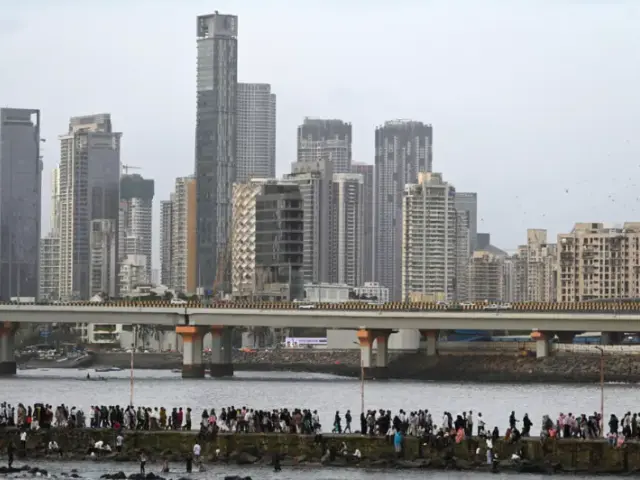
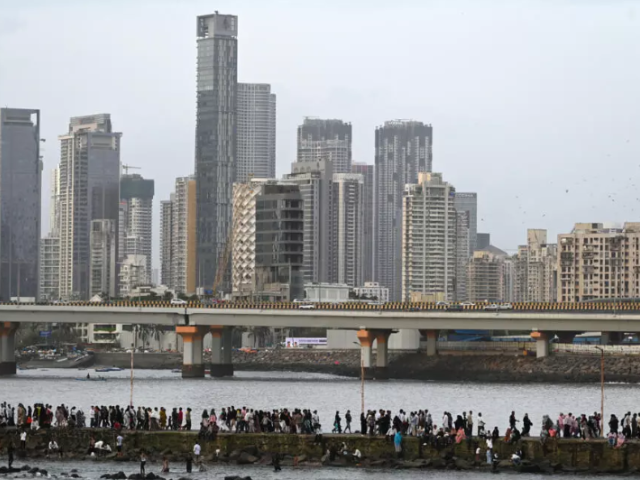
Before stepping behind the camera, Roy’s reality was defined by the grueling shifts of a New Delhi call centre. The experience instilled in her a profound sensitivity to the marginalized, overworked, and displaced strata of contemporary urban India. In 2023, she made a decisive leap, relocating to Mumbai—colloquially known as "Maximum City"—to immerse herself in its dizzying nexus of ambition, desperation, and grinding hardship.
- Late 2023 – 2024: Roy develops and shoots her micro-budget debut feature, Songs of Forgotten Trees. Working with a skeleton crew, she captures the intimate daily rhythms of two female migrants sharing a cramped Mumbai apartment: one a part-time sex worker, the other a call center employee navigating the alienation of modern capitalism.
- September 2025: In a stunning upset for the global film community, Songs of Forgotten Trees premieres at the Venice Film Festival to widespread critical praise. Roy captures the Best Director award in the Horizons sidebar, introducing a vital new voice to world cinema and drawing immediate comparisons to veteran social realists.
- Early 2026: Eager to secure a domestic theatrical and streaming release, Roy’s production team submits Songs of Forgotten Trees to the CBFC. Weeks later, the board rejects certification, delivering a verbal and written verdict that the film poses a "threat to society."
- Mid-2026: While dealing with the emotional fallout of the domestic ban, Roy completes her second feature, Lovers of the Blue Night, which shifts its focus to Bangladeshi migrants grappling with poverty, undocumented status, grief, and queer sexuality in the shadows of Mumbai.
- September 12, 2026: Roy returns to the Lido for the premiere of Lovers of the Blue Night in the Venice Horizons competition, speaking candidly to international press about the chilling effect of domestic censorship and political compliance in Indian arts.
Supporting Context & Metrics: The Shrinking Space for Independent Dissent
The censorship of Songs of Forgotten Trees is symptomatic of an increasingly hostile ecosystem for Indian filmmakers who refuse to align with state-sanctioned narratives. Under the administration of the Bharatiya Janata Party (BJP), which has held power since 2014, cultural institutions have experienced a pronounced ideological realignment.

The Economics of Compliance vs. Critique
India’s domestic box office remains heavily dominated by high-octane, mass-market Bollywood spectacles and regional blockbusters that often lean into hyper-nationalism, mythological revisionism, or sanitized historical narratives. For independent filmmakers operating outside this studio-industrial complex, securing independent financing is already an uphill battle. When domestic distribution is subsequently walled off by state censors, the economic model for indie cinema collapses entirely.
"It’s good for those who can praise the government and make a propaganda film," Roy remarked bluntly during her press interactions in Venice. "I am not somebody who can do that."
This sentiment echoes through the broader artistic community. Independent directors note that any narrative touching upon intersectional vulnerabilities—caste discrimination, minority rights, labor exploitation, or institutional corruption—is subjected to hyper-vigilant scrutiny.
The Ripple Effect: A Generation in the Crosshairs
Roy’s experience aligns uncomfortably with recent milestones achieved by her peers:
- Sandhya Suri’s Santosh (2024): Premiering to critical acclaim at the Cannes Film Festival, this British-Indian co-production investigated the nexus of misogyny, religious discrimination, lower-caste marginalization, and police corruption within rural northern India. Like Roy’s work, the film encountered insurmountable administrative hurdles and censorship blockades in its target domestic market.
- Payal Kapadia’s All We Imagine As Light (2024): Winning the prestigious Grand Prix at Cannes—a historic first for an Indian female director—Kapadia’s Malayalam-language masterpiece offered a poetic, empathetic look at the lives of two Mumbai nurses. While achieving international distribution triumphs, the film’s journey underscored the disconnect between global appreciation and domestic institutional support.
Furthermore, Roy believes her personal political advocacy—particularly her vocal stances supporting Palestinian rights and critiquing systemic inequalities—has painted a target on her back, inviting heightened scrutiny from cultural bureaucrats eager to preemptively sanitize public discourse.
Official Statements and Industry Reactions
The standoff between Roy and the CBFC has reignited fierce global debates regarding freedom of expression, state overreach, and the responsibilities of cultural regulatory bodies in democracies.
In statements to international media following the CBFC’s ruling, Roy expressed profound alienation:
"A few days back, they called us, and they said that it’s a ‘threat to society’. Can you believe that Songs of Forgotten Trees is a threat to society? I am terribly upset about the censorship. I represented the country here; I won for the country."
Industry watchdogs and human rights organizations have similarly condemned the decision. Amnesty International and PEN International have repeatedly noted that freedom of artistic expression in India has faced a steady erosion over the past decade, characterized by targeted harassment, intimidation of creators, administrative delays, and arbitrary bans.
The CBFC, for its part, operates under the Cinematograph Act, which empowers the board to refuse certification to films deemed against "the sovereignty and integrity of India, security of the State, friendly relations with foreign States, public order, decency or morality." Critics argue that these broad, amorphous legal parameters are increasingly weaponized to suppress dissenting socio-political perspectives rather than protect public welfare.
Future Outlook: Navigating the Labyrinth of "Maximum City"
As Lovers of the Blue Night competes for top honors at the Venice Film Festival, Anuparna Roy stands at a critical crossroads. Her trajectory embodies both the boundless potential of the contemporary Indian diaspora and indie art scene, and the heavy price paid by those who refuse to self-censor.
+-------------------------------------------------------------------+
|               THE PARADOX OF CONTEMPORARY INDIAN INDIE CINEMA     |
+-------------------------------------------------------------------+
|  GLOBAL STAGE (Venice, Cannes, Berlin)                            |
|    └── Critical Acclaim, Prestigious Awards, International Praise  |
|                                                                   |
|  VS.                                                              |
|                                                                   |
|  DOMESTIC REALITY (CBFC, Ministry of Information & Broadcasting)  |
|    └── Administrative Blocks, "Threat to Society" Labels, Bans    |
+-------------------------------------------------------------------+
Despite the barriers erected by her own government, Roy remains remarkably clear-eyed about her artistic mission. Rather than resorting to exoticized poverty porn—a trap she warns is often laid specifically to pander to Western festival circuits—she insists on a rigorous, empathetic realism.
"My mentors guide me, and they continuously told me that no language of sympathy should come out, an exaggeration of poverty, romanticising poverty," Roy explained. "It’s easy to sell poverty to Europe, right? It’s a continuous struggle."
Whether Lovers of the Blue Night will face the same administrative guillotine as its predecessor remains an open question. What is certain, however, is that Roy and her contemporaries are forging a resilient path forward. By holding a mirror up to the hidden gears of Mumbai—its migrants, its outcasts, and its quiet struggles—they are capturing truths that no amount of state-level censorship can permanently erase. As the awards ceremony in Venice approaches, the international film community watches closely, recognizing that Roy’s camera is not a threat to society, but rather the very pulse of its conscience.





Comments
Facebook App ID not configured. Please add it in the Customizer.