
Executive Overview
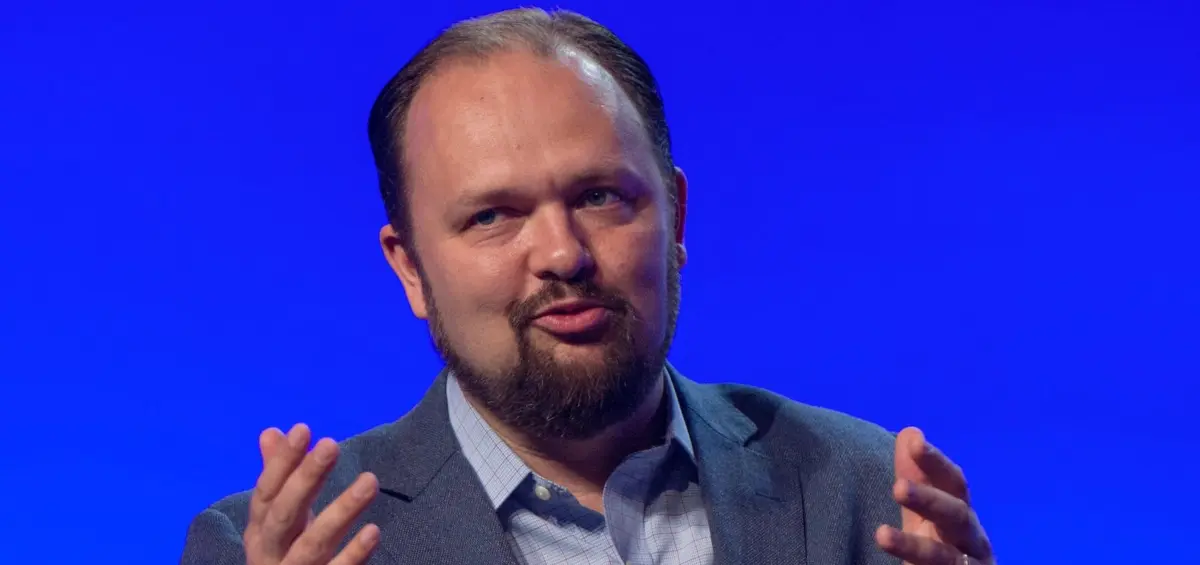
In the ecosystem of modern American commentary, few departures could register with the seismic finality of Ross Douthat leaving the New York Times opinion pages. For conservative Christian intellectuals, political nerds, and close observers of cultural discourse, the news is a hammer blow. To borrow an analogy: imagine the global grief and shock if Taylor Swift were to abruptly announce she was permanently shelving her songwriting career to focus entirely on dramatic acting. That faint, breathless sense of cultural disorientation captures the magnitude of Douthat’s transition from the Gray Lady to become a television correspondent for Bari Weiss’s newly minted iteration of 60 Minutes.
Since roughly 2015—a watershed epoch when the tectonic plates of Western politics and culture began their history-restarting quakes—Douthat’s column has served as a touchstone of rare, measured wisdom. Now, that voice has fallen silent on the op-ed page.
In media circles, the move is met with a uniquely weary distress. It fulfills what industry wags have come to call the iron law of contemporary journalism: every person of undeniable talent you know will eventually be absorbed into the expanding commercial and intellectual orbit of Bari Weiss. From the most obscure copy editor to the most celebrated public intellectual, they migrate one by one, swallowed whole by the Weiss enterprise. Try to commission an op-ed from them, and you are met with a nervous reply explaining that even responding to your electronic mail constitutes a professional hazard, politely begging you to never contact them again.
Read Also
Yet, rather than moping over the shifting sands of media real estate, this juncture demands a comprehensive assessment of Douthat’s remarkable decade of writing. Over the past ten years, his columns have functioned not merely as reactions to the news cycle, but as intellectual anchor points for a turbulent era defined by populism, cultural polarization, technological disruption, and theological anxiety.
Detailed Chronology: Defining Moments of the Douthat Decade
The Immigration Pragmatist (2016)
To understand the trajectory of modern conservative thought, one must revisit Douthat’s January 2016 essay, "Ten Theses on Immigration." Published at a time when elite consensus treated mass immigration as an unalloyed economic and moral good, Douthat meticulously laid out for the progressive reader the hard geopolitical and sociological reasons to weigh the policy with extreme care.
Even for those unconvinced by sociocultural arguments, he insisted, political realism demanded a sober reckoning with cause and effect:
"Native backlash against perceived cultural transformation is very powerful, and any politics that refuses to take account of it will fail."
History would validate this thesis with astonishing speed. While others shouted similar warnings from ideological megaphones, Douthat delivered his message with nuance, generosity toward opposing arguments, and a scholastic, almost Dominican habit of parsing fine distinctions—noting, for instance, that "punctuated immigration encourages assimilation; constant immigration limits it."
Forecasting the "Great Awokening"
During the zenith of what commentators dubbed the "Great Awokening," Douthat’s cautious, incremental approach often frustrated partisans on both sides. Yet, while cultural institutions surrendered wholesale to ideological uniformity, he argued that this quasi-religious hegemony carried the seeds of its own destabilization. In a 2022 lecture for the Morningside Institute—later published by First Things—he posed a pivotal question about the totalitarian impulses of the new cultural elite:
"It’s still an open question whether that intolerance will lead inexorably to greater power over the entire culture, or whether in a society as diverse and complex as ours the zeal of a hegemon has a self-limiting effect—generating stronger backlash when it uses power too overtly, creating new centers of resistance when it imposes theological conformity too explicitly, and imposing a Brezhnevian freeze that looks solid but can’t survive the heat of crisis."
At the time, skeptics wondered if this was wishful thinking. Subsequent political and cultural events have proved him correct, demonstrating that hyper-ideological overreach invariably triggers systemic resistance.
The Technological "Bottleneck"
As the decade progressed, Douthat trained his analytical lens on the civilizational threats posed by rapid technological advancement. Viewing the smartphone era and the dawn of artificial intelligence not as instruments of liberation, but as a mass-extinction "bottleneck," he warned of an epoch where the virtual eclipses the real. In a blistering 2025 New York Times essay, he cautioned that everything solid risks melting into the air:
"Languages will disappear, churches will perish, political ideas will evanesce, art forms will vanish, the capacity to read and write and figure mathematically will wither, and the reproduction of the species will fail—except among people who are deliberate and self-conscious and a little bit fanatical about ensuring that the things they love are carried forward."
While critics occasionally faulted Douthat for underplaying the role of corporate monopoly power and economic inequality in accelerating this cultural erosion, his formulation of the tech era remains one of the most vital diagnostic warnings of our time.
Supporting Context & Metrics: Navigating Faith in a Secular Age
Beyond politics and technology, Douthat’s most distinct contribution has been his sustained defense of Christian orthodoxy within the hostile secular environment of mainstream media.
For decades, modern religious apologetics has suffered from a defensive, utilitarian crouch. Apologists frequently lean on sociological data, arguing that churchgoers live nineteen months longer or report lower rates of loneliness, or retreating into the comforting subjective platitude that "there must be, you know, something more."
Douthat urged his fellow believers to abandon this timidity. His instruction was direct: make the case. Stop apologizing for dogma. Argue frankly that thoroughgoing atheism is a philosophical reach, and that belief in a purposeful, transcendent Creator remains intellectually robust and extremely plausible.
The Catholic Academy and the Francis Era
This intellectual fearlessness was tested during the early years of Pope Francis’s papacy, a period when foundational Catholic doctrines were intensely contested, sending shockwaves through the global church. Amidst an atmosphere where even Pope Emeritus Benedict XVI privately warned that the barque of Peter was "almost filled to the point of shipwreck," Douthat emerged as an improbable defender of orthodoxy.
Unsuited in many ways for the role of an ecclesiastical defender—handicapped by habitual irony, a complex relationship with the conservative Catholic establishment, and the necessity of addressing a secular readership largely indifferent to Scripture—Douthat nevertheless produced a masterclass in persistent, reasonable argumentation.
The high-water mark of this intellectual labor arrived with his 2015 essay, "Letter to the Catholic Academy." Remembering its release, readers across the globe treated the column not as a routine piece of journalism, but as an intellectual event. Moving seamlessly from gentle self-deprecation to a noble, righteous defense of the true, the good, and the beautiful, it stood as the definitive literary moment of the Douthat Decade.
Official Statements and Institutional Reactions
The announcement of Douthat’s departure has triggered widespread commentary across the media landscape, reflecting his unique standing as a bridge between elite institutions and heterodox thought.
- The New York Times Opinion Desk: While formal statements from leadership have emphasized the natural evolution of the opinion section, colleagues within the building have privately noted the immense shoes left empty by his departure. Douthat’s ability to anchor conservative arguments within a predominantly progressive institution provided the Times with crucial viewpoint diversity.
- Bari Weiss Enterprises: Welcoming Douthat to the growing 60 Minutes video platform, network representatives signaled a strategic push toward deep-dive, intellectual long-form journalism, positioning the hire as a cornerstone for future investigative and cultural programming.
- Fellow Intellectuals and Cultural Commentators: Writing in various cultural journals, peers have highlighted the irreplaceable nature of Douthat’s voice. First Things and other publications have run retrospectives praising his ability to maintain intellectual equilibrium while navigating the polarized minefields of contemporary public life.
Future Outlook: What the Departure Means for Public Discourse
As Ross Douthat trades his columnist’s soapbox for the roving camera of television journalism, the media landscape faces a noticeable deficit. In recent columns, Douthat has candidly admitted that he finds himself struggling to fully categorize the present confusing political and cultural moment—a humility that itself sets him apart from pundits prone to knee-jerk certainty.
His move to television signals a broader industry migration where legacy print columnists seek out dynamic, video-first platforms capable of reaching fragmented digital audiences. Yet, for followers of the written word, the loss of his weekly New York Times dispatch leaves a distinct void.
The "Douthat Decade" proved that thoughtful, unapologetic traditionalism could command an audience even within the most secular, fast-paced media empires of the twenty-first century. Whether he can replicate that unique intellectual gravity within the fast-moving currents of television remains to be seen. But as society navigates the ongoing technological bottleneck, cultural fragmentation, and political realignment he so accurately predicted, the insights he leaves behind will serve as an indispensable roadmap for the trials ahead.





Comments
Facebook App ID not configured. Please add it in the Customizer.