
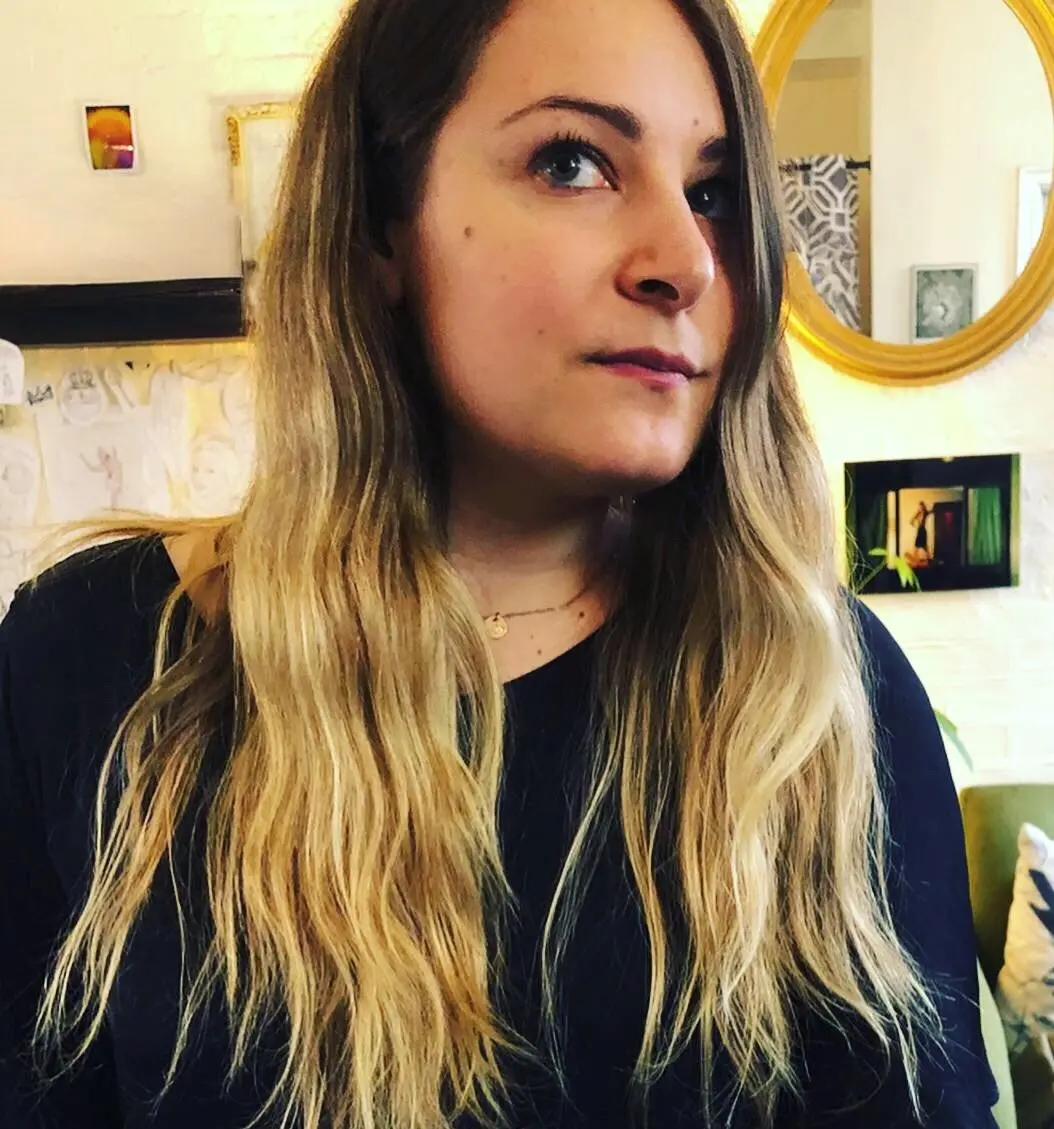
For over five decades, poet, activist, and human rights advocate Kathy Engel has navigated the complex intersection where art meets direct political action. In this extensive, newly enriched interview conducted by Tyler Barton—first published via Guernica—Engel reflects on a lifetime spent bridging the artificial divides between poetry and politics, self and community, nature and humanity.
Engel’s trajectory traces a powerful lineage of 20th and 21st-century resistance, from her early anti-nuclear awakenings at Seabrook and Shoreham to co-founding MADRE, the international human rights organization born out of solidarity missions to Nicaragua in the early 1980s. Her story is deeply interwoven with literary giants like June Jordan, Denise Levertov, and Grace Paley, all of whom modeled a radical intimacy between creative expression and systemic justice.
This article explores Engel’s philosophy of "horizontal leadership," her uncompromising insistence on merging personal lyricism with global solidarity, and her steadfast belief that poetry must refuse to be neutralized by neoliberal boundaries. As political landscapes grow increasingly fraught with out-loud fascism and systemic silencing, Engel offers a masterclass in persistence, community building, and the refusal to let the poem be stopped.
Read Also
Detailed Chronology: Five Decades of Poetry and Resistance
Formative Years and the Early Spark
Engel’s political and artistic consciousness was cultivated early. Raised in a family of educators and artists, her worldview was fundamentally shaped by her father, a documentary filmmaker whose 1970s film Dr. Spock and his Babies chronicled the pediatrician’s radicalization during the Vietnam War. Meeting Dr. Ben Spock in her family’s Upper West Side apartment served as a pivotal realization for young Engel: artists and intellectuals possessed an inherent obligation to step into the public square.
Though she began writing poetry at a very young age—studying under luminaries like Jane Cooper, Galway Kinnell, and Jean Valentine as an undergraduate—her early career was marked by a crisis of voice. Like many writers of her generation, she initially believed that political urgency and personal intimacy needed to be surgically removed from verse to achieve "legitimacy." That illusion shattered at the end of the 1970s.
The Seabrook Epiphany (1978–1979)
A phone call from her father changed the trajectory of Engel’s life. Invited to join an anti-nuclear occupation at the Seabrook Nuclear Power Plant in New Hampshire alongside writers like Grace Paley, Engel found her spiritual and political home.
Walking among the dusty, bug-ridden tents, she encountered poet Denise Levertov sitting in a circle on the ground, reading poetry to a gathered crowd. The moment was an epiphany: These are my people, this is my place. This immersion catalyzed an unshakeable commitment to direct action, leading to subsequent protests, organizing, and her eventual arrest at the Shoreham Nuclear Power Plant.
The "Moving Towards Home" Watershed (November 1982)
In November 1982, amid Israel’s second invasion of Lebanon and the catastrophic massacres of Palestinians at Sabra and Shatila, Engel, alongside Sara Miles, Kamal Boulata, and June Jordan, organized a landmark poetry benefit at the New York City Society for Ethical Culture.
When the celebrated Palestinian poet Mahmoud Darwish was unjustly denied a US visa to attend, the organizers refused to let his absence pass in silence. They co-authored and read a powerful statement:
"We are diminished by the absence of Mahmoud Darwish from this stage tonight. Our poems cannot be complete while his voice is banned… The poet has been barred, but the poem continues."
The evening culminated in June Jordan reading her searing indictment of the massacres, "Moving Towards Home." The backlash was swift and severe. An opposing poet hurled racist attacks from the stage, PEN America faced internal fractures and disavowed its sponsorship, and long-standing personal relationships—including Engel’s mentorship with Galway Kinnell—were permanently severed. Yet, out of the fire of censorship and attack, the infrastructure for international human rights solidarity was forged.

The Birth of MADRE and Cultural Organizing
Following the fallout of the 1982 event, Michael Ratner of the Center for Constitutional Rights approached the organizers to design a cultural program amplifying the atrocities committed by US-backed Contra forces against Nicaraguan citizens.
This collaboration gave birth to Talking Nicaragua, a multimedia theatrical production featuring Susan Sarandon, Giancarlo Esposito, and Ed Herrmann, which was slated for PBS broadcast before being suppressed due to its critical stance on US foreign policy. This censorship directly inspired delegations to Nicaragua, leading to the creation of MADRE in 1983, the Coffee Brigades, and a lifetime of transnational organizing.
Supporting Context & Metrics: The Architecture of Integration
Engel’s body of work—spanning seven poetry collections, including We Begin Here: Poems for Palestine and Lebanon (2006) and her recent collection Dear Inheritors—is defined by an unwavering refusal to compartmentalize human experience.
Metrics of Engagement
- 50+ Years: The span of Engel’s active career combining poetry, human rights advocacy, and grassroots organizing.
- 7: Published collections of poetry exploring personal grief, ecological wonder, and geopolitical resistance.
- 1983: The founding year of MADRE, established in the wake of solidarity missions to Central America.
- Weekly: The cadence of the Sag Harbor vigil for Palestinian sovereignty, maintained consistently by Engel and a dedicated intergenerational group since October 2023.
The War Against Compartmentalization
In the interview with Tyler Barton, Engel critiques the neoliberal impulse that seeks to quarantine art:
- Separating poems about nature from poems about political oppression.
- Dividing intimate domestic love from collective rage against police brutality and historical erasures, such as the systematic violence inflicted upon Indigenous children in Canadian "reform" schools.
Engel argues that this artificial fragmentation serves power structures: "You have to think, anytime there’s a separation between things in life, who’s making money from that? Who gets some power from that? That domination that says, ‘Put the mind here, and the heart over here.’"
Official Statements and Literary Lineage
Throughout her life, Engel has been shaped by mentors who viewed art not as a luxury, but as an absolute necessity for human survival. Chief among them was the poet and essayist June Jordan.
Lessons from June Jordan
Jordan taught Engel how to read the world through the critical lenses of race, class, and gender:
- Grammar and Accountability: Jordan instructed Engel to read newspaper headlines and articles not as passive occurrences, but as intentional acts tied to perpetrators and systems of power. "You know, the writer of the article doesn’t get to write the headline."
- Prose as Poetry: When Engel doubted her ability to write prose statements and fundraising letters for MADRE, Jordan advised: "Just write the way you write, and use everything you know about poetry."
- The Role of Youth: Countering the paralyzing despair young people often feel regarding the news, Jordan famously reminded students: "You’re the news. You are. That’s good news."
Grace Paley and the Metric of Love
Echoing the wisdom of Grace Paley, Engel centers her creative and political output around a fundamental question: "Did you say it with love?" For Engel, engaging with the horrors of war, displacement, and fascism is not mutually exclusive with writing into the beauty of a mimosa tree, the loyalty of canine companions, or the democratizing flight patterns of geese. Beauty is not an escape from politics; it is the core fuel of resistance.
Future Outlook: Horizontal Leadership in an Age of Fascism
As contemporary political structures tilt toward vocal authoritarianism and polarization, Engel’s philosophy offers a vital blueprint for the future. Her critique of traditional hierarchical leadership—preferring instead a "horizontal" model where anyone can act as a spark, a guide, or a catalyst—challenges both mainstream political movements and insular literary enclaves.
Refusing to be silenced by local harassment at weekly vigils in Sag Harbor or deterred by cultural fatigue surrounding political art, Engel maintains a rigorous daily practice. Her mornings begin with listening to the natural world, writing a daily haiku (a practice learned from Sonia Sanchez), affirming positive counters to self-limiting negativity, and reading the work of her contemporaries.
Engel’s enduring legacy proves that the poet’s task is neither despair nor detached aestheticism. It is the courageous act of showing up, breaking down false separations, and insisting—against every bomb, border, and veto—that another future remains entirely possible.


Comments
Facebook App ID not configured. Please add it in the Customizer.