
Executive Overview
In contemporary culture, the literary zeitgeist leans heavily toward the morally ambiguous, the gritty, and the deeply cynical. The traditional hero has frequently been supplanted by the antihero—a structural protagonist driven by personal survival or raw ambition rather than virtue or moral clarity. While these deconstructionist narratives serve a vital purpose in cathartizing modern anxieties, an overreliance on cynicism risks denigrating the archetype that arguably matters most: the genuinely heroic.
This tension between the structural protagonist and the moral hero forms the core of a broader cultural and creative debate. Through a unique intersection of pop-culture consumption—specifically the global phenomenon of Asian historical dramas like Pursuit of Jade—and real-world peril during an unprecedented drought and wildfire season in the American Midwest, storytellers and audiences are being forced to re-examine the utility of mythic fiction. Far from mere escapism, heroic narratives operate as a subconscious technology, priming the human nervous system for resilience long before real-world crises demand it.

Detailed Chronology: From Fiction to Flame
The profound psychological impact of heroic storytelling was recently underscored by a startling personal sequence of events that bridged the gap between immersive art and immediate, tangible danger.
Read Also
The Immersion: Discovering Pursuit of Jade
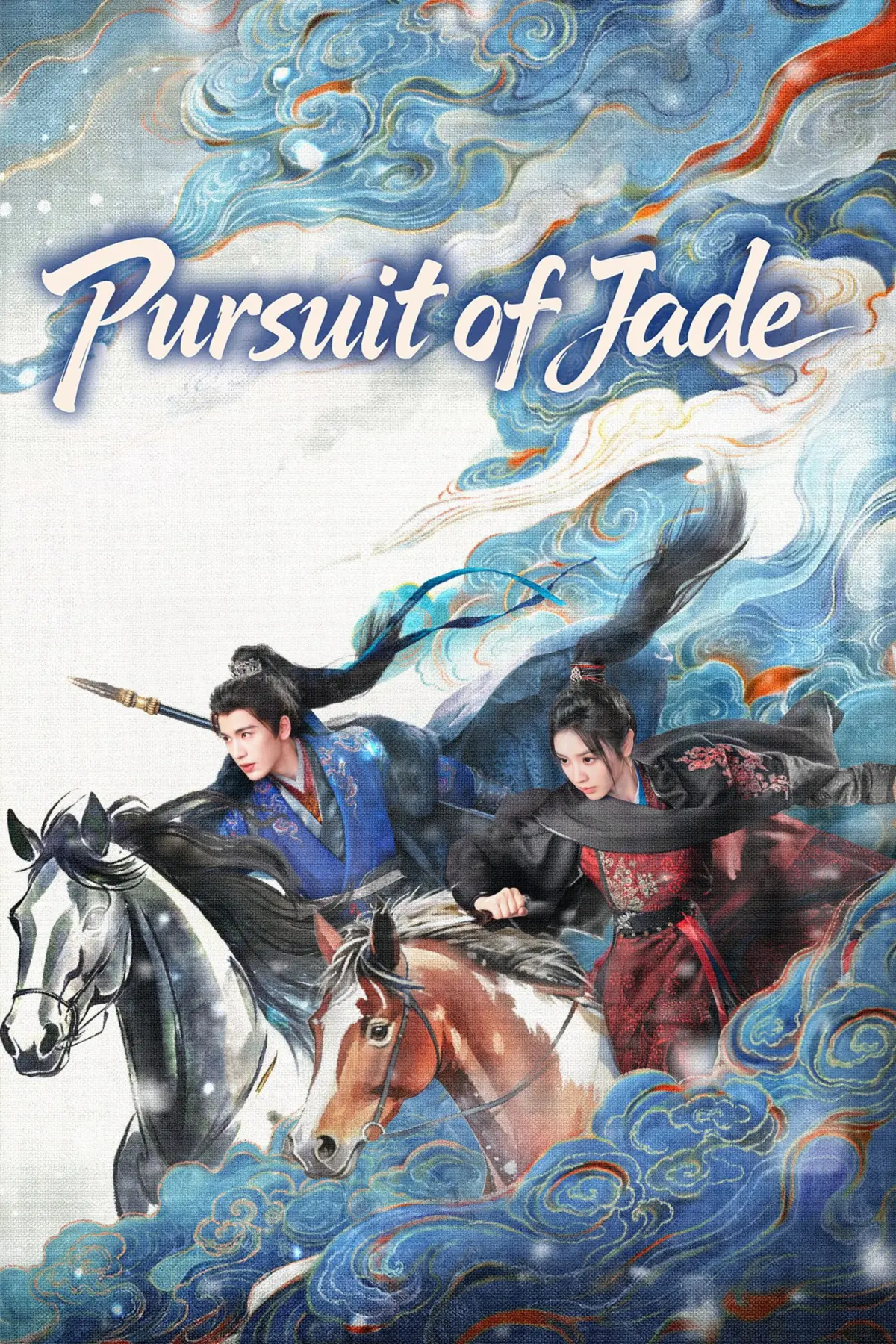
For years, mainstream Western viewing habits have overlooked the vast, intricate ecosystem of Asian historical dramas (C-dramas). This paradigm shifted dramatically with the release of Pursuit of Jade, a sprawling 40-episode Chinese historical epic taking international streaming platforms by storm. Set in a fantasy-inflected medieval China, the narrative follows Fan Changyu, a young commoner continuing her family’s trade as a pig butcher—an intentionally ignominious start for a protagonist—to protect her younger sister following the murder of their parents.

Changyu’s life alters irreversibly when she discovers Xie Zheng, a mortally wounded nobleman and military general, dying in the snow. Exhibiting radical sincerity and goodness, she nurses him back to health. To protect her home from a predatory uncle through legal loopholes, Zheng enters into a name-only marriage, eventually sparking a slow-burn romance complicated by war, a sweeping quest for personal sovereignty, and a grand political conspiracy.
Despite minor pacing fluctuations in its latter half, the series delivered an intoxicating blend of grand orchestration, high-stakes loyalty, and unabashedly sincere heroism, captivating audiences over a breathless three-day binge-watch.

The Escalation: A Midnight Emergency
The cultural resonance of this narrative journey was tested within hours of the show’s completion. Living on the edge of a high-risk timbered canyon in Nebraska—a region gripped by an intensifying multi-year drought comparable to historical Dust Bowl metrics—the author received an ominous phone call at 12:30 AM from her father: “You’ve got fires around you.”
Fueled by fierce winds on a designated Red Flag Day, a wildfire had erupted in the hills just two miles away, featuring flames scaling higher than neighboring structures and tracking directly toward the local canyon community. Emergency applications failed to register the localized threat, leaving word-of-mouth communication as the primary warning system.

The Resolution and Reflection
In a stroke of meteorological fortune, the high-altitude winds unexpectedly died down for a critical hour at dusk, affording local volunteer firefighters and residents a narrow window of opportunity to contain the blaze before total evacuation became mandatory. Though the physical emergency proved mercifully brief, the psychological aftermath triggered a profound realization. As the emergency plan was executed under high-adrenaline conditions, it was not abstract survival manuals that echoed in the mind, but the steady, resolute ethos of the characters from Pursuit of Jade. The mythic framework of the story had seamlessly translated into a real-time reservoir of calm and resolve.
Supporting Context & Metrics: The Intersection of Myth, Drought, and Psychology
To understand why a fictional streaming series could yield such tangible psychological scaffolding during a crisis, one must examine the broader environmental and psychological landscape of 2026.

The Environmental Backdrop
The wildfire scare was not an isolated incident but part of a punishing climatic reality. Throughout the year, extreme drought conditions have plagued the American Plains and the Rocky Mountain snowpack feeder zones. Meteorological assessments indicate that certain regions require upwards of 14 inches of precipitation within a single month to mitigate the moisture deficit. With historical blazes like the Morrill Fire—the largest in state history—having already scorched nearly a million regional acres, the psychological weight of potential environmental catastrophe is heavy. In an era where ecological collapse feels increasingly imminent, the human mind desperately searches for frameworks of endurance.
The Psychology of Archetypes
In psychological terms, as outlined by analytical psychologist Carl Jung, symbols and archetypes are not intellectual constructs invented by authors; they are natural, spontaneous products of the unconscious mind.

- The Tuning Fork Effect: Just as a tuning fork causes a corresponding string to vibrate across the room, powerful mythic narratives strike a chord within the human psyche, activating pre-conscious archetypes of courage, sacrifice, and steadfastness.
- Protagonist vs. Hero: While a protagonist is merely the structural engine driving a plot forward—allowing for the current popularity of deeply flawed antiheroes and morally gray figures—the hero operates on an entirely different moral and psychological plane. The hero embodies the transformative arc of shedding the false, enduring trials, and emerging reborn.
[Morally Gray Antihero] -> Explores the Shadows / Cathartizes Suffering
[The True Hero]        -> Navigates the Dark Night -> Emerges Reborn (Provides Hope)
Official Statements and Industry Insights on Narrative Structure
Industry experts and writing theorists increasingly emphasize that the mechanics of storytelling extend far beyond entertainment, functioning as an essential evolutionary survival tool.
According to literary analyses centered around narrative architecture, the fundamental shape of the story arc is inherently mythic. Whether utilizing a four-act structure characterized by the classic life-death-rebirth cycle or exploring advanced paradigms such as Ego-Driven vs. Soul-Driven Character Arcs, the core objective remains consistent: taking the reader through the symbolic darkness of the night and returning them to the dawn.

"A symbol always stands for something more than its obvious and immediate meaning… [it] is a direct ability to communicate with a deeper part of ourselves," notes psychological literary theory, highlighting why mechanical perfection in prose matters less than a story’s ability to spark a genuine emotional resonance.
Narrative theorists advocate for several foundational principles when crafting stories designed to leave an enduring psychological imprint:

- Channeling Inner Conviction: Writers must access their own creative intuition, treating the writing process as an empty vessel waiting to be filled by archetypal forces.
- Prioritizing Archetypes Over Tropes: Merely executing "heroic actions" produces a checklist; infusing characters with raw, authentic sincerity elevates tropes into true mythic resonance.
- Leaving an Enduring Feeling: As Aristotle observed regarding tragic catharsis, the ultimate measure of a story is not its intellectual resolution, but the emotional fortitude it leaves etched into the reader.
- Confronting the Abyss: True heroism cannot exist without genuine darkness; the depth of the trial directly dictates the magnitude of the triumph.
- Embracing Sincerity: In a market oversaturated with calculated irony and hyper-complexity, unabashed goodness and steadfast moral clarity possess immense, disruptive power.
Future Outlook: The Role of Mythic Fiction in a Complex World
As society navigates an increasingly volatile future—marked by economic uncertainty, ecological shifts, and pervasive digital cynicism—the demand for narrative art that offers more than temporary distraction will only escalate.
The renaissance of sweeping international epics, historical dramas, and myth-driven literature signals a cultural hunger for a return to meaning. Audiences are signaling that while deconstructionist and dark narratives have their place in exploring the shadows of human nature, they cannot permanently sustain the human spirit.

Ultimately, heroic stories do not merely reflect reality; they construct the psychological armor required to face it. By anchoring readers in archetypes of courage, integrity, and unyielding hope, storytelling remains humanity’s most enduring technology—a bridge built from imagination that safely carries us across the darkest chasms of existence.




Comments
Facebook App ID not configured. Please add it in the Customizer.