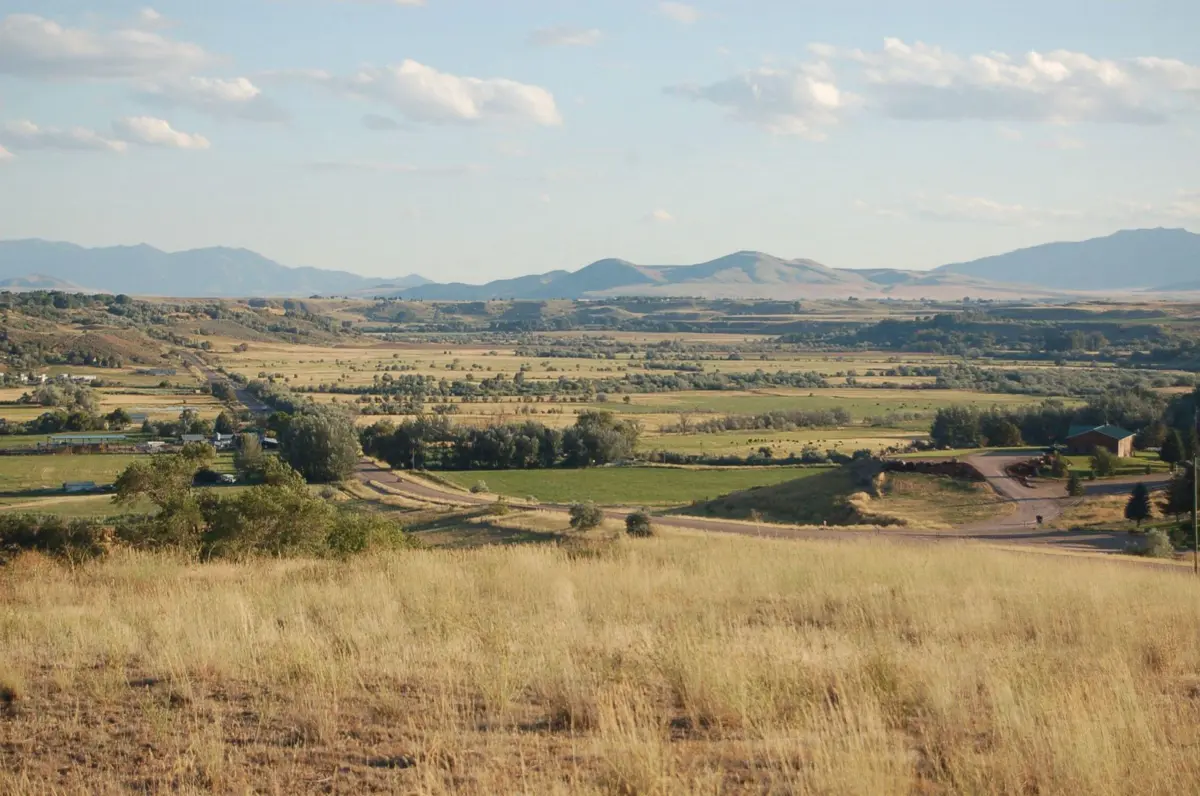
On January 29, 1863, in a snow-choked river valley in what is now southeast Idaho, soldiers of the 3rd California Volunteer Infantry executed one of the most devastating assaults in the bloody history of the American frontier. Under the direct command of Colonel Patrick Edward Connor, Union forces descended upon a peaceful winter encampment of the Northwestern Band of the Shoshone Nation. Within a matter of hours, an estimated 250 to 500 Indigenous men, women, and children were systematically slaughtered.
Despite suffering a death toll that vastly exceeded better-known American tragedies such as the Sand Creek Massacre (1864) or the Wounded Knee Massacre (1890), the Bear River Massacre has long remained an obscure footnote in mainstream American history. Overshadowed by the concurrent violence of the American Civil War and marginalized by historical revisionism, the event was deliberately obscured for generations.
Today, however, a profound transformation is underway at the site of this historic atrocity. Rather than merely preserving a graveyard of the past, the Northwestern Band of the Shoshone Nation has reclaimed the land—purchasing 350 acres of the historic grounds and launching an ambitious, multi-million-dollar ecological and cultural restoration initiative. By restoring native flora, unchaining the Bear River from agricultural dams, reintroducing beavers, and reviving traditional lifeways, the tribe is proving that healing historical trauma requires deep, restorative engagement with the land itself.
Detailed Chronology: The Escalating Tensions and the Bear River Massacre
The Seeds of Conflict (1840s–1862)
For millennia, the nomadic Shoshone people roamed a vast expanse stretching from modern-day Wyoming, Utah, and Idaho into Nevada and California. The Eastern Shoshone developed a robust horse culture tailored to the high plains, following migrating herds of American bison. Meanwhile, the Western Shoshone thrived within the challenging terrain of the Great Basin, utilizing seasonal cycles of hunting, fishing, and gathering wild plants.
The fragile balance of this ancestral territory fractured irreversibly with the relentless influx of white settlers, particularly the arrival of Mormon pioneers in the Great Salt Lake Valley starting in 1847. Initially, Mormon leader Brigham Young advocated a policy of peaceful coexistence, famously instructing his followers to "feed them rather than fight them."
However, as thousands of settlers encroached upon traditional Shoshone foraging grounds, native ecosystems were devastated. Livestock grazed native grasses down to the dirt, agricultural developments diverted life-giving water, and traditional hunting and fishing grounds were fenced off. Driven to desperation by imminent starvation, small groups of Shoshone began poaching cattle and raiding settler food supplies.
In retaliation, white authorities and settlers began viewing the entire Indigenous population through a hostile lens. Tensions reached a boiling point following a minor skirmish that resulted in the deaths of two white men and two Native Americans—none of whom even belonged to the Northwestern Shoshone. Despite this, the entire tribal community was collectively blamed for the violence.
The Attack: January 29, 1863
By late 1862, territorial authorities turned to military force. Colonel Patrick Edward Connor, an Irish immigrant and veteran of the Mexican-American War, was dispatched to secure the overland mail and telegraph routes and to neutralize what he perceived as a "treasonous" Native threat. Armed with arrest warrants for three Shoshone leaders—including Chief Sagwitch—Connor publicly announced his intention to take no prisoners. Local newspapers, such as the Deseret News, inflamed public sentiment further, openly editorializing that the military volunteers would "wipe them out."
On the bitterly cold morning of January 29, 1863, Connor’s troops surrounded the Shoshone winter encampment at the confluence of Beaver Creek and the Bear River. The location had been chosen by the tribe for its natural hot springs and shelter, offering a vital reprieve during the harsh winter months.
Without issuing a demand for surrender or offering an opportunity for negotiation, the Union soldiers opened fire on the sleeping village. Armed with only a few muzzle-loading rifles and quickly exhausting their limited ammunition, the Shoshone fought desperately with bows, arrows, spears, and tomahawks.
+-------------------------------------------------------------------------+
|                  THE BEAR RIVER MASSACRE: AT A GLANCE                   |
+---------------------------+---------------------------------------------+
| Date                      | January 29, 1863                            |
| Location                  | Southeast Idaho (Near present-day Preston)  |
| Perpetrators              | 3rd California Volunteer Infantry (Union)   |
| Commander                 | Colonel Patrick Edward Connor               |
| Estimated Casualties      | 250 to 500+ Shoshone men, women, & children |
| Historical Significance   | Deadliest mass killing of Native Americans  |
|                           | in U.S. history                             |
+---------------------------+---------------------------------------------+
As the carnage unfolded, survivors sought desperate means of escape. Mothers drowned crying infants in the freezing river to prevent their noises from exposing hiding spots under the icy banks. Twelve-year-old Yeager Timbimboo—son of Chief Sagwitch and grandfather of future tribal historian Mae Timbimboo Parry—survived the massacre by playing dead beneath the freezing bodies of his fallen kin.
By early afternoon, between 250 and 500 Native Americans lay dead across the snowy landscape. For his efficiency in executing noncombatants, Colonel Connor was promoted to brigadier general.
Supporting Context & Metrics: Erasure and Historical Revisionism
The Bear River Massacre occurred at a time when the nation’s collective attention was entirely consumed by the American Civil War. Consequently, the event received minimal national press coverage, and for over a century, it was largely ignored by mainstream American historians.
This historical erasure was compounded by institutional efforts to eradicate Native culture. Throughout the late 19th and 20th centuries, Indigenous children were routinely separated from their families and forced into the federal Indian boarding school system. Guided by the brutal assimilationist motto "Kill the Indian, and save the man," these institutions punished children for speaking their native languages or practicing ancestral traditions.
Despite these oppressive measures, matriarchs like Mae Timbimboo Parry preserved the history of the Northwestern Shoshone. Having learned Shoshone in quiet defiance of her boarding school supervisors, Mae recorded the firsthand accounts passed down by survivors like her grandfather. Her diligent documentation became foundational to modern historical works, including:
Shoshoni Frontier and the Bear River Massacre (1985) by Brigham D. Madsen.
The Bear River Massacre: A Shoshone History (2019) by Darren Parry, former chairman of the Northwestern Band of the Shoshone Nation.
Through these works, the historical narrative shifted away from sanitized pioneer myths, forcing the American public to confront the brutal reality of the frontier wars.
Official Statements and Indigenous Perspectives
The modern era has seen the Northwestern Shoshone step forward not as victims of historical tragedy, but as active stewards of cultural and environmental renewal.
"The Bear River Massacre does not define us today," shares Darren Parry, former tribal chairman and author, in an interview with Smithsonian magazine. "The loss has made us stronger, more resilient. It’s a horrific thing. I can’t even imagine what my ancestors suffered. But playing the veteran victim here and becoming bitter is not the way to honor our ancestors. We honor them by telling their story."
This perspective emphasizes resilience over retribution. In 1990, the site was officially recognized as a National Historic Landmark, and following tribal lobbying, it was formally renamed the Bear River Massacre Site in 1993 to reflect the true nature of the event.
"When you attack a sleeping village of Indian men, women, and children, you can’t call that a battle," notes Brad Parry, vice chairman of the Northwestern Band of the Shoshone Nation and Darren’s cousin. "The settlers honored their ancestors by building monuments and putting up statues. Our way of honoring them is in the dirt, by bringing nature back into balance."
Future Outlook: Ecological Restoration and Cultural Rebirth
The most striking chapter of the Bear River site’s history is unfolding today. In 2018, with backing from the tribe, Brad Parry spearheaded the purchase of 350 acres of the historic massacre grounds—making it the largest single landholding owned directly by the Northwestern Band of the Shoshone Nation.
This acquisition catalyzed the Wudaogwa (meaning "Flowing Waters") restoration project, an ambitious ecological healing initiative that earned Brad Parry the inaugural Schnitzer Prize of the West.
Key Elements of the Restoration Initiative:
Eradication of Invasive Species: Crews systematically removed water-hogging invasive plants, such as the Russian olive tree, which choked out native riparian life.
Revegetation of Native Flora: The landscape has been replanted with indigenous species including willows, milkweed, cedar, Indian tobacco, and chokecherries, restoring traditional gathering resources.
Hydrological Restoration: The Bear River, which had been artificially channelized and dammed for decades to serve agricultural interests, was freed to meander naturally across the floodplain, reviving vital wetlands.
Wildlife Reintroduction: Beavers are being brought back to the watershed to naturally engineer dams, stabilize riverbanks, and improve water quality.
Beyond local ecosystem repair, the project has regional implications. As the single largest tributary to the ecologically distressed Great Salt Lake, the restored Bear River is projected to return up to 13,000 acre-feet of water to the lake annually, providing a crucial lifeline to the dwindling water body.
Ultimately, the leaders of the Northwestern Band of the Shoshone Nation view dirt, water, and native plants as the ultimate monuments to their ancestors. By healing the land, they are actively building a living, breathing classroom where future generations can learn ancestral medicine-making, language, and ceremony—serving as an undeniable testament to a fundamental truth: the Shoshone are still here.

/https://tf-cmsv2-smithsonianmag-media.s3.amazonaws.com/filer_public/7c/51/7c51535e-f62b-4688-80a7-40a744294846/2m5hrrj.jpg)
/https://tf-cmsv2-smithsonianmag-media.s3.amazonaws.com/filer_public/7c/51/7c51535e-f62b-4688-80a7-40a744294846/2m5hrrj.jpg)
/https://tf-cmsv2-smithsonianmag-media.s3.amazonaws.com/filer_public/69/e7/69e7f694-785c-404a-89aa-2cb657394b3a/bighorn.jpg)
/https://tf-cmsv2-smithsonianmag-media.s3.amazonaws.com/filer_public/dc/ea/dcea2226-df95-48e7-85b2-6a207729ad6b/ft_washakie.jpg)
/https://tf-cmsv2-smithsonianmag-media.s3.amazonaws.com/filer_public/6e/f9/6ef9d1ec-746e-46cc-8e8a-19abe817821b/2m5hnpg.jpg)
/https://tf-cmsv2-smithsonianmag-media.s3.amazonaws.com/filer_public/08/43/08437d68-9801-4406-8b01-ef68c49949e6/pioneer_historic_byway_-_bear_river_massacre_overlook_-_nara_-_7721060.jpg)
/https://tf-cmsv2-smithsonianmag-media.s3.amazonaws.com/filer_public/33/e7/33e72814-5b00-4c51-bb69-6203a254595e/cc_chief_sagwitch_and_beawoacheejpg-web.jpg)

Comments
Facebook App ID not configured. Please add it in the Customizer.