
Executive Overview
In the annals of antiquity, few figures command as complex a legacy as Paul of Tarsus—historian, theologian, missionary, and, as modern analysis reveals, a master tactician of identity. Traversing the volatile sociopolitical landscape of the first-century Roman Empire, Paul operated not merely as a zealous preacher of a burgeoning faith, but as a sophisticated geopolitical operator. His methodology was defined by a deliberate, calculated adaptability: he was a Roman citizen when demanding due process, a strict Pharisee when debating the Sanhedrin, an observant Jew when navigating cultural sensitivities, and a fluent intellectual when addressing the philosophical elite of Athens.
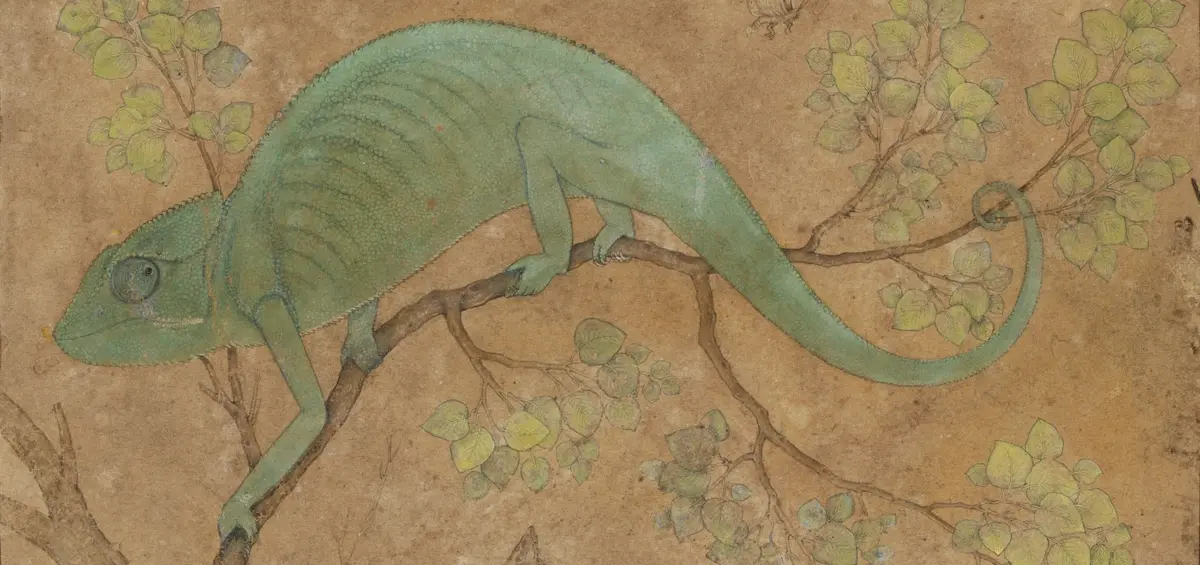
This multifaceted approach has frequently been misinterpreted by casual observers as duplicity or opportunism. However, a deeper examination of the historical record—primarily derived from the Book of Acts and his own epistles—suggests an entirely different reality. Paul’s shifting personas were the instruments of a singular, unyielding devotion. He was a strategic chameleon whose mercurial public identity served a monolithic, transcendent mission: the propagation of the Gospel.
For contemporary believers and political observers alike, Paul’s career offers a profound masterclass in tactical engagement. In an era marked by rigid partisan tribalism and culture-war polarization, the apostle’s dynamic relationship with institutional power, civil rights, and cultural assimilation provides a compelling blueprint. By examining how Paul leveraged his rights, cultural identities, and civic privileges without ever compromising his ultimate allegiance to Christ, modern audiences can glean invaluable lessons on navigating the complex intersections of faith, citizenship, and public witness.
Read Also
Detailed Chronology: From Philippian Riot to Athenian Discourse
To understand the mechanics of Paul’s strategic adaptability, one must trace the chronological milestones of his missionary expeditions, where his tactical deployment of identity repeatedly altered the course of Christian history.
The Philippian Episode: The Power of the Roman Card
The second missionary expedition brought Paul and his companion Silas to Philippi, a leading colony of Macedonia and a fiercely proud outpost of Roman culture. What began as a routine ministry disrupted the local economy and social order. Paul exorcised a "python spirit" from a slave girl whose masters profited heavily from her divination. Stripped of their revenue stream, the owners manufactured a populist riot, framing Paul and Silas as subverters of Roman customs (religio licita violations).
Without trial or due process—a direct violation of Roman legal protections afforded to citizens—local magistrates ordered them beaten with rods and cast into the inner dungeon, their feet secured in heavy wooden stocks. Yet, the midnight hours saw a miraculous rupture: an earthquake shook the foundations of the prison, flinging open doors and loosening bonds, culminating in the historic conversion of the Philippian jailer.
By dawn, the magistrates—likely realizing the legal exposure of having unlawfully flogged Roman subjects—were desperate to quietly sweep the incident under the rug and release the prisoners. Here, Paul executed his first major geopolitical maneuver. Refusing to slink away quietly, he delivered a stunning revelation:
"They have beaten us publicly, uncondemned, men who are Romans, and have cast us into prison; and do they now thrust us out secretly? No! Let them come themselves and take us out." (Acts 16:37)
The magistrates were forced into a humiliating public climbdown, escorting the prisoners out personally. This calculated demand was not born of petty spite; it was a tactical shield. By extracting a public concession from the municipal government, Paul legitimized the vulnerable fledgling house church—centered around the newly baptized Lydia and the jailer—ensuring that this "alien" religious community could take root without immediate legal annihilation from hostile local authorities.
The Jerusalem Interrogation
Years later, a similar dynamic played out in Jerusalem. Surrounded by an incandescent Jewish mob and subsequently detained by Roman military tribunes, Paul faced an interrogation under scourging—a brutal form of torture designed to extract confessions. As the centurions stretched him out against the whipping post, Paul casually dropped his citizenship status with chilling bureaucratic innocence:
"Is it lawful for you to scourge a man who is a Roman and uncondemned?" (Acts 22:25)
The effect was instantaneous. The commander halted the proceedings in sheer panic, acutely aware that violating the civil rights of a Roman citizen carried capital penalties in imperial Rome.
Cultural Morphing Across the Empire
Beyond legal maneuvers, Paul’s cultural dexterity was breathtaking in its scope:
- The Jewish Adaptations: To preempt objections from conservative Jewish believers, Paul took Timothy—whose mother was Jewish and father Greek—and circumcised him. Later, to prove his ongoing respect for the Mosaic Law, he financed the purification rituals of four men undergoing Nazirite vows in the Jerusalem temple.
- The Theological Division: When facing the hostile Sanhedrin, Paul recognized that a unified front would crush him. With razor-sharp discernment of his audience, he threw a theological grenade into the council: "Brothers, I am a Pharisee, a son of Pharisees. It is with respect to the hope and the resurrection of the dead that I am on trial" (Acts 23:6), instantly igniting a fierce theological civil war between the Pharisees and the Sadducees that paralyzed the court.
- The Athenian Intellectual: On Mars Hill (the Areopagus) in Athens, Paul pivoted entirely. Discarding Hebrew idiom, he engaged Stoic and Epicurean philosophers on their own turf, quoting Greek poets like Aratus and Epimenides to build a bridge from pagan altar inscriptions to the resurrection of Jesus Christ.
Supporting Context & Metrics: The Anatomy of a Cultural Chameleon
Paul’s tactical fluidity was underpinned by a sophisticated theology of engagement. To dismiss him as a political opportunist is to misunderstand the deep intentionality behind his behavior. He articulated this philosophy explicitly in his correspondence with the Corinthians:
"To the Jews I became as a Jew, in order to win Jews. To those under the law I became as one under the law (though not being myself under the law) that I might win those under the law. To those outside the law I became as one outside the law (not being outside the law of God but under the law of Christ) that I might win those outside the law. To the weak I became weak, that I might win the weak. I have become all things to all people, that by all means I might save some. I do it all for the sake of the gospel, that I may share with them in its blessings." (1 Corinthians 9:20–23)
Metrics of Engagement Across the Mediterranean World
- Legal Jurisdictions Navigated: Municipal law (Philippi), Imperial Roman law (Jerusalem/Caesarea), and traditional Mosaic jurisprudence (Sanhedrin).
- Audience Demographics Addressed: Hellenistic philosophers, Roman military officials, Jewish religious elites, municipal magistrates, and working-class gentiles.
- Primary Objective: Zero compromise on core theological dogma (the Kerygma), paired with 100% tactical flexibility regarding cultural idioms, rhetorical styles, and civic privileges.
This matrix demonstrates that Paul’s identity was never anchored in his temporary earthly affiliations. Being a Roman was a tool; being a Jew was a platform; being a Greek intellectual was a bridge. None of these identities defined his ultimate ontology—they were strategic masks worn in the theater of mission.
Official Statements & Historical Analysis
Eminent historians and biblical scholars have long marveled at the legal and rhetorical brilliance displayed in the Pauline corpus and historical narratives.
Dr. Eldon Epp, a prominent scholar of New Testament history, notes regarding Paul’s citizenship claims:
"Paul’s utilization of his Roman civic status is not an act of secular integration, but a brilliant deployment of imperial apparatus to carve out breathing room for an illegal, counter-cultural movement. He understood the bureaucratic mind of Rome better than the provincial leaders understood their own laws."
Furthermore, theological commentators emphasize the ethical boundaries of Paul’s chameleon-like existence. While he adapted to his cultural environment with astonishing fluidity, he maintained an uncompromising ethical core. As noted by early church historian Eusebius, and echoed by modern theologians, Paul’s adaptability never crossed the threshold of moral compromise or doctrinal syncretism. He could act like a Greek or like a Jew, but he never bowed to Caesar nor offered sacrifice to idols. His shifting exterior concealed a bedrock of unyielding loyalty to the crucified and risen Christ.
The paradox of Paul’s public life is encapsulated by his ability to maintain absolute inner conviction while practicing radical external elasticity. He was thoroughly unimpressed by the pomp of empire, yet he did not hesitate to invoke its mechanisms to preserve the fragile communities of faith he left in his wake.
Future Outlook: Lessons for Modern Believers and Public Institutions
What does the "Apostle as Chameleon" teach the contemporary church and modern public participants? As society navigates increasingly fractured ideological landscapes, hyper-partisan politics, and shifting cultural norms, Paul’s model offers urgent, transformative guidance.
1. Primary Allegiance vs. Secondary Tools
In modern discourse, believers and citizens often make the fatal error of conflating secondary affiliations (political parties, national identities, cultural movements) with primary ultimate loyalties. Paul demonstrates that earthly political identifications—whether identifying as a Roman, a Jew, a Democrat, a Republican, a nationalist, or an internationalist—must always remain strictly instrumental. They are tools of mission, not articles of faith.
There are historical and cultural moments when proclaiming alignment with a particular political platform serves the broader good of protecting the vulnerable, securing justice, and preserving peace. At other times, advancing the mission requires distancing oneself from institutional power structures, or operating quietly behind the scenes. The maturity of a movement is measured by its willingness to pick up or put down these identity cards strictly based on how effectively they advance truth and human flourishing.
2. Navigating the Culture Wars Without Fear or Tribalism
Paul did not scream at the culture from a safe, insular bunker, nor did he completely assimilate into the decadent philosophies of Athens or the brutal legalism of Rome. He infiltrated cultural spaces with intellectual rigor and situational awareness. Modern institutions and faith communities facing cultural hostility would do well to adopt this posture. Shouting slogans from the sidelines ("Away with him!") rarely converts a culture. True influence requires the intellectual stamina to speak the language of the audience—whether that language is secular philosophy, legal rights, or economic justice—without compromising foundational principles.
3. The Balance of Wisdom and Innocence
Jesus famously instructed His disciples to be "wise as serpents and innocent as doves" (Matthew 10:16). Paul lived out this paradoxical command to perfection. He was wily enough to exploit the fractures in the Sanhedrin and shrewd enough to weaponize his Roman citizenship against corrupt magistrates, yet his motives remained pure: the unadulterated expansion of the Gospel.
As modern societies grapple with complex questions of civic duty, religious liberty, and political engagement, the legacy of Paul of Tarsus stands as an enduring beacon. It challenges us to look past superficial tribalism, master the mechanisms of our cultural moment, and deploy every legitimate tool at our disposal—not for the preservation of self, but for the service of a higher kingdom.





Comments
Facebook App ID not configured. Please add it in the Customizer.