
Executive Overview
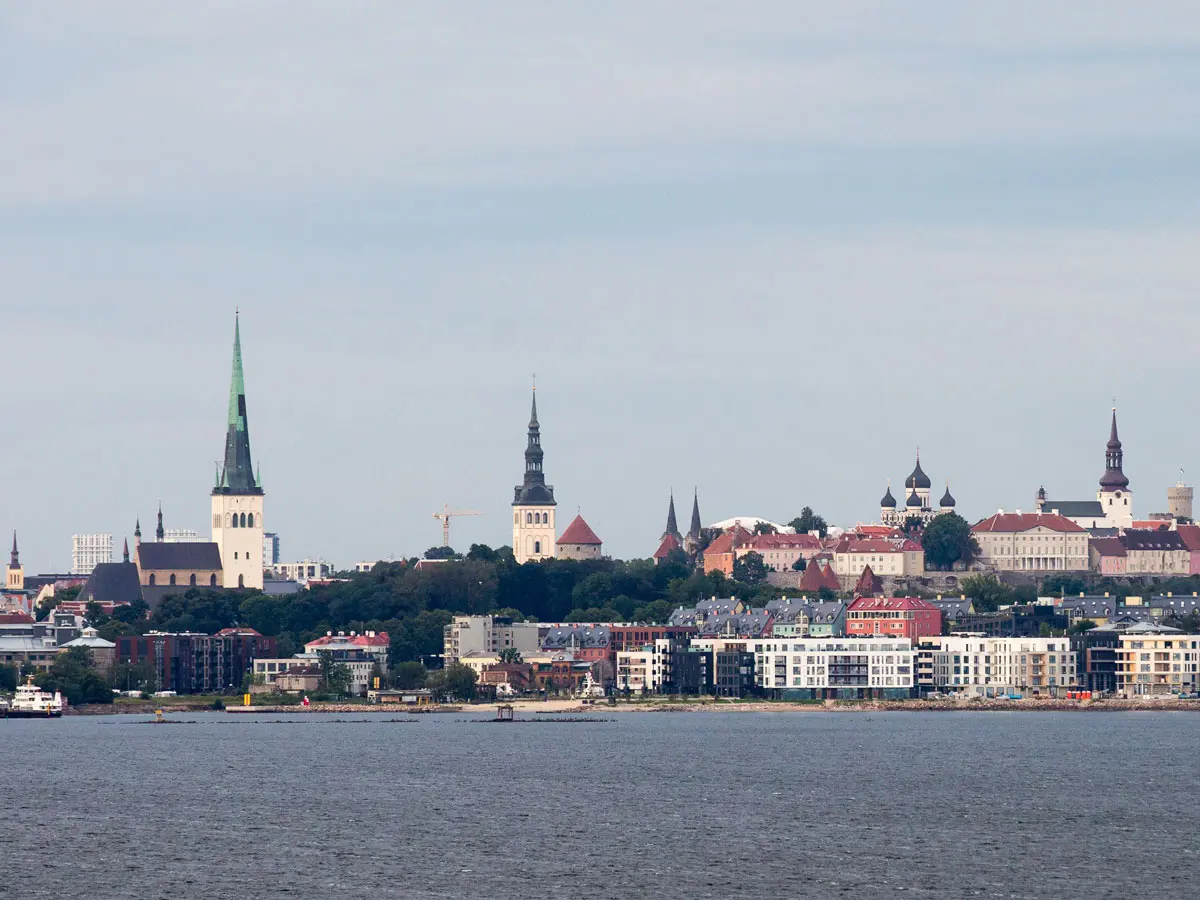
In the heart of Tallinn’s vibrant creative district, a profound act of solidarity is quietly unfolding. The Estonian Artists’ Association (Eesti Kunstnike Liit, or EKL)—the foundational pillar of the Baltic nation’s contemporary visual arts community—was brought to the brink of financial collapse earlier this year following an elaborate, devastating banking scam. Fraudsters looted nearly €700,000 (approximately $816,400 USD) from the organization’s accounts, draining vital government subsidies meant to sustain artists’ livelihoods and keep independent galleries afloat.
Rather than succumbing to despair, the Estonian creative community has mounted an extraordinary counteroffensive. A coalition of artists, curators, and cultural stewards is banding together to donate 124 works of art for a high-stakes charity auction. Supplemented by choice pieces from the EKL’s prestigious institutional collection, the upcoming sale represents a lifeline for an organization that has championed Estonian creators for over a century.
Scheduled to take place from October 8 to 10 at ARS Art City—preceded by a major public exhibition opening on September 18—the auction is far more than a simple fundraising drive. It is a powerful testament to the resilience of the human spirit, an exercise in communal self-preservation, and a rare cultural event where the market converges with civic duty. With stringent safeguards in place to protect both the artists and the national heritage, this crisis has inadvertently catalyzed a profound renaissance of unity within Estonia’s close-knit art world.
Read Also
Detailed Chronology
The Anatomy of a Heist: How €700,000 Vanished
To understand the gravity of the upcoming auction, one must examine the cascading events that paralyzed the EKL in the spring of this year. The nightmare began to unfold on May 15, when senior leadership at the association made a chilling discovery: their primary operating accounts at Swedbank and SEB had been systematically hollowed out.
Through a sophisticated cyber-enabled social engineering scheme, bad actors managed to manipulate the EKL’s financial infrastructure by acting through—or deeply compromising—their chief accountant. Over the course of the operation, the scammers diverted nearly $800,000 in vital state subsidies. This was not discretionary capital or revenue from past exhibitions; it was earmarked operating funding specifically designated for artist salaries, emergency welfare support, and operational grants for vulnerable independent galleries across Estonia.
The loss struck at the jugular of the organization. As one of the largest and most influential cultural associations in the Baltic region, the EKL supports nearly 1,000 individual members spread across 18 distinct "sub-associations" dedicated to various mediums, ranging from monumental sculpture and printmaking to avant-garde performance and painting. The sudden disappearance of their liquid reserves threatened to immediately halt operations, leaving dozens of creators without anticipated stipends and plunging galleries into deep administrative crisis.
The Mobilization: From Paralysis to Purpose
In the immediate aftermath of the May disclosure, internal crisis meetings dominated the EKL’s headquarters. Law enforcement agencies were immediately notified, and forensic accountants were brought in to trace the digital footprints of the stolen funds. However, as investigators cautioned that the recovery of international cyber-fraud assets is often a protracted, uncertain endeavor, leadership realized they needed an immediate internal solution to bridge the catastrophic budgetary gap.
Enter the artistic community. Almost organically, whispers of institutional crisis transformed into a deafening roar of mutual aid. Artists who had weathered Soviet occupation, post-independence economic transitions, and the shifting tides of the global art market recognized that the EKL was the infrastructure holding their collective ecosystem together.
By early summer, a coordination committee spearheaded by prominent local artist Jaanus Samma was established. The mission was clear: curate a collection of donated artworks powerful enough to attract serious international and domestic collectors, while honoring the dignity of the creators who built Estonia’s modern art canon.
Supporting Context & Metrics
The Financial Stakes and Distribution Model
The mathematics of the upcoming October auction have been meticulously designed to balance institutional survival with fair compensation for the participating living artists. The 124 donated works span generations, capturing the breadth of Estonian creative output from the late 20th century to the present day.
To ensure that the artists themselves are not unfairly exploited during this emergency, the EKL structured a transparent remuneration framework. Participating creators who donate their works will receive 15 percent of the primary sale proceeds. Furthermore, recognizing the long-term value of these contributions, the association has implemented a secondary market royalty clause: artists will be paid a 5 percent share for any future secondary sales of works originating directly from the EKL’s own collection that are included in the event.
While estimated market values for the lots were kept under wraps during the initial announcements—with the EKL preparing comprehensive online catalogues complete with price guidance—industry analysts anticipate robust bidding. Estonian modern and contemporary art has enjoyed a steady, albeit under-the-radar, rise in the European secondary market over the past decade, driven by institutional re-evaluations of Baltic modernism.
Preserving the National Heritage
One of the most delicate aspects of the crisis management strategy involved dipping into the EKL’s own permanent collection. For decades, the association has acquired and preserved masterpieces by some of the most celebrated figures in Estonian art history.
An expert commission was hastily convened to select pieces from this institutional treasury for sale. The roster reads like a definitive encyclopedia of Estonian modernism, featuring masterworks by:
- Jüri Arrak (renowned for his striking, mythic figuration)
- Enn Põldroos (a titan of monumental and philosophical painting)
- Tiit Pääsuke (celebrated for his vibrant chromatic explorations)
- Leonhard Lapin (a pioneer of Estonian constructivism and avant-garde art)
- Jüri Kask
- Olev Subbi (master of poetic, light-drenched realism)
- Mari Kurismaa
However, the EKL has drawn a hard boundary to protect its cultural soul. Representatives stressed to local media that they are not liquidating their entire collection. Crucially, the association has firmly refused to part with works that intimately document the personal lives, diaries, and singular working methodologies of the artists who created them—materials considered too culturally sacred to monetize, even under the threat of financial ruin.
Furthermore, to alleviate public anxiety regarding the permanent loss of national treasures, a strict legal covenant has been attached to the sale. A special clause mandates that every single artwork sold through the auction must remain accessible for future public exhibitions. As EKL Vice President Tüüne-Kristin Vaikla emphasized, these pieces "will not disappear from public view," ensuring that Estonia’s rich visual heritage remains preserved for scholars, students, and the general public long after the hammers fall in October.
Official Statements & Community Perspectives
The public narrative surrounding the crisis has remarkably shifted from one of victimization to one of profound communal reinvigoration.
Reflecting on the grueling months spent visiting artist studios across the country to collect donations, coordinator Jaanus Samma shared a poignant perspective with reporters:
"Difficulties have a unifying effect. Artists bring in works, ask how things are going, wish success, and offer help. Preparing the auction has been very exciting; I have met many artists, visited studios, and felt a sense of community."
This sentiment of grassroots solidarity stands in stark contrast to the clinical, bureaucratic coldness of the cyber-scam that triggered the emergency. While the EKL leadership maintained a tight-lipped stance on the ongoing police investigation—declining formal requests for comment regarding the specifics of the forensic trace—the warmth within the artistic trenches has been palpable.
Tüüne-Kristin Vaikla underscored the dual mission of the auction: financial recovery coupled with cultural stewardship.
"This way, Estonia’s art heritage remains accessible even after the sale," Vaikla explained to ERR News, highlighting the innovative exhibition clause that guarantees future public access to the dispersed lots. By turning a private institutional vulnerability into a public celebration of art, the association has managed to reinforce its social contract with the citizenry.
Future Outlook
As the countdown to the September 18 exhibition opening and the October 8–10 auction at ARS Art City ticks down, the Estonian art world stands at a critical crossroads.
The immediate financial injection from the sale will not single-handedly erase the €700,000 deficit, but it is expected to provide the crucial operational bridge necessary to keep galleries staffed, grants flowing, and administrative lights on through the winter months. More importantly, the crisis has forced the EKL and institutional partners across the Baltic state to completely overhaul their digital security architectures. Enhanced multi-factor authentication, decentralized financial approval protocols, and rigorous state-subsidy auditing frameworks are being rapidly implemented to ensure that a betrayal of this magnitude can never happen again.
Beyond the balance sheets, the legacy of this episode will likely be measured in cultural cohesion. The 2024 art auction at ARS Art City will be remembered not merely as a desperate garage sale born of a crime, but as a historic moment when Estonia’s creative community locked arms. In transforming stolen funds into a renewed canvas of solidarity, Estonian artists have proven that while bank accounts can be plundered by anonymous algorithms, the collective soul of a national art movement cannot be so easily erased.

Comments
Facebook App ID not configured. Please add it in the Customizer.