
Executive Overview
History is rarely written solely in textbooks; it is carved into the collective consciousness through literature, visual arts, and the haunting, fragmented memories of those who survived totalitarian machinery. The recent resurgence of public discourse surrounding early 20th-century Russian avant-garde art and the chilling realities of the Stalinist purges has brought forth a profound re-examination of how totalitarian states consume their own architects.
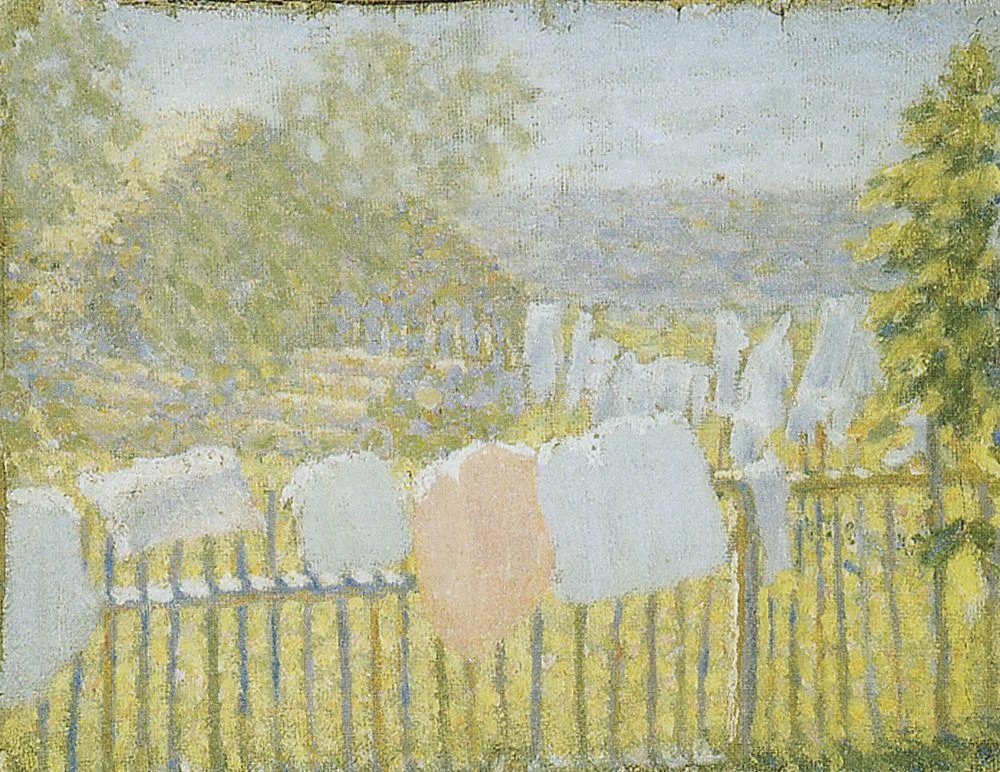
At the center of this cultural and historical retrospection is a striking juxtaposition: the vibrant, geometric liberation of Kazimir Malevich’s artistic vision—epitomized by works like Underwear on the Fence—and the grim, inescapable shadow cast by the political terror of the 1930s. Decades after high-ranking Bolshevik figures like Nikolai Bukharin faced execution, the metaphorical and literal ghosts of the Kremlin continue to haunt contemporary artistic expression.
This article provides an in-depth exploration of this intersection between high modernism and historical trauma. By examining the domestic isolation of children of the Soviet elite, the systemic purges that transformed neighbors and colleagues into "enemies of the people," and the enduring psychological landscape of generational grief, we uncover the heavy price paid by a society that turned its own history into a pair of scissors and paper dolls. Through rigorous historical context, structural analysis of the era, and a look toward how modern cultural institutions grapple with this legacy, we trace the persistent footsteps of the fox that still runs the Kremlin’s grounds.
Read Also
Detailed Chronology: From Revolutionary Vanguard to the Great Terror
To understand the weight of the imagery associated with this era, one must trace the rapid, volatile trajectory of the Soviet Union from its idealistic revolutionary foundations to the paranoid totalitarianism of the mid-20th century.
1917–1924: The Revolutionary Dawn and Avant-Garde Freedom
In the wake of the October Revolution, the Russian avant-garde experienced a brief, brilliant golden age. Artists like Kazimir Malevich, the pioneer of Suprematism, believed that art should break free from the traditional constraints of representation to reflect a new, liberated society. Geometric shapes, pure color fields, and radical spatial concepts mirrored the perceived restructuring of human consciousness. At this stage, political leaders and avant-garde creators frequently found common ground in their desire to dismantle old imperial structures.
1928–1932: The First Five-Year Plan and Cultural Consolidation
As Joseph Stalin consolidated power and introduced the First Five-Year Plan, the relative pluralism of the 1920s began to disintegrate. State control tightened over all facets of public and private life, including artistic production. The avant-garde was increasingly labeled as "formalist," bourgeois, and disconnected from the needs of the proletariat. Malevich found his exhibitions restricted, his work condemned by official critics, and his artistic freedom systematically curtailed, foreshadowing the physical purges that would soon engulf the political sphere.
1936–1938: The Great Purge and the Show Trials
The darkest chapter of the Soviet domestic landscape unfolded during the Great Terror. The Moscow Show Trials targeted legendary figures of the Bolshevik Revolution, old guard intellectuals, and military leaders who had once stood shoulder-to-shoulder with Vladimir Lenin.
- Nikolai Bukharin, a leading theoretician, economist, and editor of Pravda, was arrested, subjected to intensive interrogation, and executed in March 1938.
- The execution of figures like Bukharin marked a decisive psychological turning point for the nation. No one—regardless of their historical contribution to the Party—was safe.
Post-WWII to Modern Era: The Long Shadow of Silence
Long after the physical executions ceased, the institutional trauma remained deeply embedded in the Soviet psyche. Families of the repressed lived under a veil of silence, their histories rewritten or erased entirely. The children of "enemies of the people" were often placed in state-run orphanages or forced to disavow their parents to survive. The legacy of this era persisted through underground literature (samizdat), whispered testimonies, and the haunting realization that the machinery of state terror leaves no domestic space untouched.
Supporting Context & Metrics: The Mechanics of Erasure
The terror of the Stalinist era was not merely a series of isolated political assassinations; it was a vast, industrialized apparatus of social atomization and historical revisionism.
The Scale of Repression
- The Gulag System: Between the late 1920s and the death of Stalin in 1953, millions of Soviet citizens passed through the Gulag forced labor camp system. Hundreds of thousands perished from exhaustion, starvation, and exposure.
- The NKVD Order 00447: Issued in July 1937, this directive established quotas for the arrest, execution, or imprisonment of "former kulaks, criminals, and other anti-Soviet elements," turning political purging into a bureaucratic quota system managed at the regional level.
- Cultural Annihilation: Thousands of artists, writers, poets, and scientists were silenced. Journals were purged, libraries censored, and entire artistic movements driven underground or into exile.
The Psychology of Childhood Under the Terror
For the children of the elite—those who lived within the heavily guarded confines of the Kremlin or elite residential complexes—the experience of the terror was uniquely surreal. As captured in the poignant reflections of survivors:
- The Disappearing Family: Summers that once featured long tables, fragrant birch leaves, and leisurely family gatherings abruptly ended when neighbors or family members simply failed to arrive.
- The Metaphor of the Paper Doll: The psychological burden on the surviving children often manifested as an exhausting, compulsive attempt to make sense of sudden shifts in reality. Relatives and former comrades were re-labeled overnight—shifting fluidly between the roles of "double agent," "provocateur," and "enemy of the people."
- The Domestic Sphere as a Panopticon: Even within private homes, children learned the art of silence. Toys were confiscated or given away; spaces contracted into arenas of constant surveillance and anticipation of the midnight knock at the door.
Artistic Interpretation and the Aesthetic of Trauma
Art from and about this era serves as a vital repository for historical truth when official archives were falsified or destroyed.
Kazimir Malevich and Underwater / Underwear on the Fence
While Malevich is globally renowned for stark geometric abstractions like Black Square, his broader oeuvre and the visual culture of his contemporaries reveal a complex dialogue with domesticity and observation. Works that touch upon everyday scenes—such as laundry drying on a fence—take on profound allegorical weight when viewed through the lens of a society exposed to relentless public scrutiny. In a police state, even the most mundane domestic acts (the airing of private garments, the gathering in a courtyard) exist under the watchful eye of the collective.
Poetry and the Politics of Nostalgia
Literary responses to the purges, both contemporary and retrospective, often rely on sensory contrasts to heighten the tragedy of the loss. The warmth of summer sunbeams, the aroma of fresh berries, and the fragrance of birch leaves atop a banya (Russian bathhouse) act as fragile counterweights to the brutal efficiency of the firing squads.
Writers and poets who survived the era utilized nostalgia not as a sentimental retreat, but as an indictment of what was stolen. The imagery of cutting out clothes for the dead—a surreal, heartbreaking metaphor—illustrates the endless, futile labor demanded of survivors: trying to dress the memory of those whom the state had stripped of their humanity, their dignity, and their lives.
Official Statements and Cultural Retrospection
In recent years, historians, cultural archivists, and international human rights advocates have continued to debate the preservation and interpretation of Soviet-era historical sites and archives.
The Stance of Historical Preservationists
Leading scholars of Eastern European history emphasize that understanding the micro-level trauma of the purges is just as critical as analyzing macro-level political maneuvers.
"When we study the execution of Nikolai Bukharin or the silencing of the avant-garde, we are looking at the destruction of the intellectual DNA of a century," noted an international coalition of archival researchers in a recent joint statement on historical transparency. "The tragedy is compounded when societies attempt to sanitize these memories, treating human lives as disposable paper dolls in a grand political theater."
Institutional Challenges in Russia and Abroad
Museums and cultural foundations dedicated to the victims of political repression—such as the former Memorial society in Russia—have faced significant legal and political hurdles in recent years. Authorities have increasingly sought to frame the Stalinist period through the lens of state modernization and victory in World War II, often downplaying or suppressing the internal terror that claimed the lives of millions of loyal citizens, party members, and artists.
Despite these containment efforts, international digital archives, independent publishing houses, and contemporary artists continue to ensure that the testimonies of survivors and the victims of the purges remain accessible to global audiences.
Future Outlook: Guarding Memory in the 21st Century
As the living witnesses of the mid-20th-century totalitarian era pass away, the responsibility for maintaining historical integrity shifts entirely to institutions, cultural artifacts, and the critical engagement of younger generations.
Key Imperatives for the Future
- Digital Archiving and Open Access: Ensuring that NKVD logs, interrogation transcripts, personal diaries, and confiscated artworks are digitized and preserved across multiple international jurisdictions to prevent historical revisionism or destruction.
- Educational Curricula: Integrating the psychological and social histories of totalitarianism into school curricula worldwide, focusing not only on political figures but on the everyday experiences of ordinary families caught in the machinery of state terror.
- Interdisciplinary Artistic Engagement: Encouraging contemporary poets, visual artists, and musicians to engage with historical archives, translating dry statistical metrics of terror into resonant human narratives that pierce emotional indifference.
Conclusion
The fox that runs the Kremlin’s grounds long after the execution of figures like Bukharin serves as a timeless metaphor for paranoia, persistence, and the haunting nature of unresolved historical trauma. Whether viewed through the geometric precision of Malevich or the heartbreaking imagery of a child sitting on a father’s lap just before the world shatters, the past demands our unwavering attention. By refusing to let the victims be reduced to mere paper dolls, society preserves the fragile, essential truth of what it means to be human in the shadow of tyranny.

Comments
Facebook App ID not configured. Please add it in the Customizer.