
Executive Overview
The landscape of American independent bookselling is undergoing a profound evolution, underscored by both community revitalization and ideological fracture. On Saturday, August 29, booksellers across the nation will celebrate the inaugural Black Bookstore Day, an event spearheaded by Latasha Eley Kelly, co-owner of Left on Read Bookstore in Topeka, Kansas. Conceived as a celebration of culture, resilience, and economic empowerment, the holiday arrives just months after the National Association of Black Bookstores (NABB) launched its own similarly named initiative, National Black Bookstore Day, on April 7.
While the proliferation of dedicated retail holidays signals a booming public interest in Black-owned literary spaces—echoing the immense economic success of the annual Independent Bookstore Day—the dual-launch highlights underlying tensions within the community. For many prominent Black booksellers, the creation of an independent holiday in August is a deliberate choice. It reflects not only alignment with historical markers like Black Business Month and Black August, but also a pointed distancing from the NABB and its leadership, which has faced significant industry scrutiny.
This piece explores the origins of Black Bookstore Day, the logistical and ideological friction between competing national organizations, the vibrant ways independent stores are marking the occasion, and what this critical moment means for the legacy and future of Black entrepreneurship in the literary world.
Read Also
Detailed Chronology: The Road to August 29
The timeline leading up to the inaugural Black Bookstore Day reveals a grass-roots effort born from a desire for community and historical preservation, rapidly colliding with established organizational bodies.
- November 2024: Latasha Eley Kelly and her spouse, Corinthian Kelly, open Left on Read Bookstore in Topeka, Kansas, stepping into the realm of independent bookselling as newcomers seeking mentorship and institutional connection.
- Late 2024 to Early 2025: As Kelly searches for established networks, she discovers a void in the national calendar: despite the rich, century-old legacy of Black-owned bookstores in the United States, there is no unified annual day dedicated specifically to celebrating them. She begins quietly laying the groundwork for a dedicated celebration.
- June 19, 2025: The National Association of Black Bookstores (NABB) is officially established on Juneteenth under the leadership of CEO Jill Gibson and founder Kevin Johnson.
- July 2025: Following its inception, NABB identifies the creation of a celebratory retail day as a primary objective. By mid-summer, the organization drafts official resolutions for National Black Bookstore Day and begins pitching them to various municipal jurisdictions.
- August 2025: Kelly formalizes her plans for Black Bookstore Day, setting the date for the final Saturday of August to coincide with Black Business Month and Black August. She begins publicly championing the initiative.
- March 2026: According to NABB leadership, the organization first becomes aware of Kelly’s independent planning. NABB reaches out to propose a partnership to unify the efforts, though these discussions do not result in a combined holiday.
- April 7, 2026: NABB hosts its inaugural National Black Bookstore Day, drawing participation from some stores while facing a deliberate boycott from others within the broader Black bookselling ecosystem.
- Late August 2026: Left on Read Bookstore relocates to a retail space double the size of its original footprint, setting the stage for a dual celebration of its physical expansion and the first annual, independent Black Bookstore Day on August 29.
Supporting Context & Metrics: The Economics and Ideology of Indie Retail
To understand the weight of Black Bookstore Day, one must examine the economic blueprint it follows, as well as the deep cultural soil from which it grows.
The Independent Bookstore Day Model
Modeled after Independent Bookstore Day—which traditionally falls on the final weekend of April—Black Bookstore Day aims to replicate a proven economic engine. For many indie booksellers nationwide, Independent Bookstore Day has evolved into a financial watershed, frequently outperforming traditional November and December holiday sales periods. By driving foot traffic, encouraging exclusive merchandise purchases, and fostering local community engagement, these retail holidays transform bookstores from quiet retail shelves into vibrant cultural hubs.
Why August? Choosing the Month of Resistance and Enterprise
The choice of late August for Kelly’s iteration of the holiday was far from accidental. August carries a dual significance within the African American historical and socio-economic lexicon:
- Black Business Month: August is widely recognized nationally as a time to honor Black entrepreneurs, support Black-owned small businesses, and address the systemic capital disparities that have historically hindered minority-owned enterprises.
- Black August: Originating in California prisons in the 1970s to commemorate political prisoners and resistance to racial and systemic oppression, Black August is a month of deep political education, historical reflection, and solidarity.
Kelly notes that these intersecting themes mirror the historical function of Black bookstores. "Black bookstores have always been a place where people can gather and collaborate on how do we resist… That is what Black means. It’s about resisting those forces that maintain the status quo in ways that are discriminatory and prejudiced."
Local History and Accountability
For Kelly, the necessity of the day was brought home immediately upon opening Left on Read. Early patrons frequently assumed her shop was the absolute first Black-owned bookstore in Wichita, Kansas. Committed to historical accuracy, Kelly immediately sought out and honored her predecessors, discovering two previous Black-owned bookstores that had paved the way.
This ethos of "giving credit where it’s due" also explains why many independent operators chose to bypass the April NABB event entirely. Several booksellers spoke out regarding deep-seated concerns over NABB’s organizational history. Specifically, they cited discomfort with NABB founder Kevin Johnson’s past controversies—including historical reports of financial mismanagement during his mayoral tenure in Sacramento and sexual abuse allegations dating back more than a decade—as well as alleged improprieties in NABB’s partnerships with authors and publishers. Furthermore, independent booksellers expressed frustration that NABB frequently overlooked grassroots announcements like Kelly’s 2025 rollout while claiming credit for historical milestones achieved by independent Black booksellers long before NABB’s inception.
Official Statements and Industry Perspectives
The divide between the official organizational efforts of the NABB and the decentralized, grassroots movement championed by Kelly and the broader independent community has prompted distinct public positions from key stakeholders.
The National Association of Black Bookstores Responds
Addressing the friction, NABB CEO Jill Gibson defended the organization’s timeline and motives. In a statement, Gibson clarified that NABB was "established on Juneteenth 2025; shortly thereafter we identified creating a day to celebrate Black-owned bookstores as one of our priorities." By July of that year, NABB had already drafted legislative resolutions for the holiday.
Regarding the overlap with Kelly’s initiative, Gibson noted that NABB first learned of the Topeka bookseller’s plans in March 2026 and reached out proactively. "We reached out then to suggest partnering, rather than have competing efforts," Gibson explained. In response to accusations that NABB has co-opted or claimed credit for the historical accomplishments of other Black booksellers, Gibson dismissed the assertions as "simply false and inconsistent with our mission, which is to support, strengthen and celebrate Black-owned bookstores."
Grassroots Support: The Black Bookstore Coalition and Retailers Speak Out
Despite the administrative friction, independent bookstores nationwide have rallied enthusiastically around the August 29 date, emphasizing solidarity with Kelly’s year of rigorous labor.
Hannah Oliver Depp, owner of Loyalty Books in Washington, D.C., and a prominent voice within the Black Bookstore Coalition (founded in 2020), expressed unequivocal support for the grassroots holiday.
"We are super excited and fully support and want to put our energy behind Black Bookstore Day this Saturday," Depp said.
Loyalty Books has planned a robust slate of activities for the day, including steep discounts, refreshments, an interactive journaling workstation, and a community drag storytime. Emphasizing the independent spirit of the event, Depp added, "It is not the coalition’s creation, but we are here to help support this incredible bookseller, who has done so much labor this past year, out of her desire to educate people and to celebrate the work that Black bookstores have done."
Similarly, Ramunda Lark Young, co-owner of Mahogany Books in Oxon Hill, Maryland, found her store’s milestones serendipitously aligned with the holiday. Mahogany Books is marking August 29 by officially cutting the ribbon on its brand-new second location in Glenarden, Maryland, featuring a live DJ, photo booth, and community celebration.
"I love that our grand opening happened to coincide with Black Bookstore Day," Young shared. "I really wanted to open in August—Black August, Black Business Month. It’s also the birth and death month of my father, who was an entrepreneur."
Meanwhile, at Left on Read, the celebration doubles as a dual housewarming. Having expanded into a new retail footprint twice the size of its original space just two months prior, the store is hosting an all-day extravaganza featuring spin-the-wheel giveaways, gift cards, and signed copies of prominent literature like Percival Everett’s acclaimed novel James. The venue will also host a formal, hour-long program featuring remarks from the women who operated Wichita’s historical Black-owned bookstores, alongside local Black entrepreneurs showcasing their products and services.
Future Outlook: A Movement Poised for Longevity
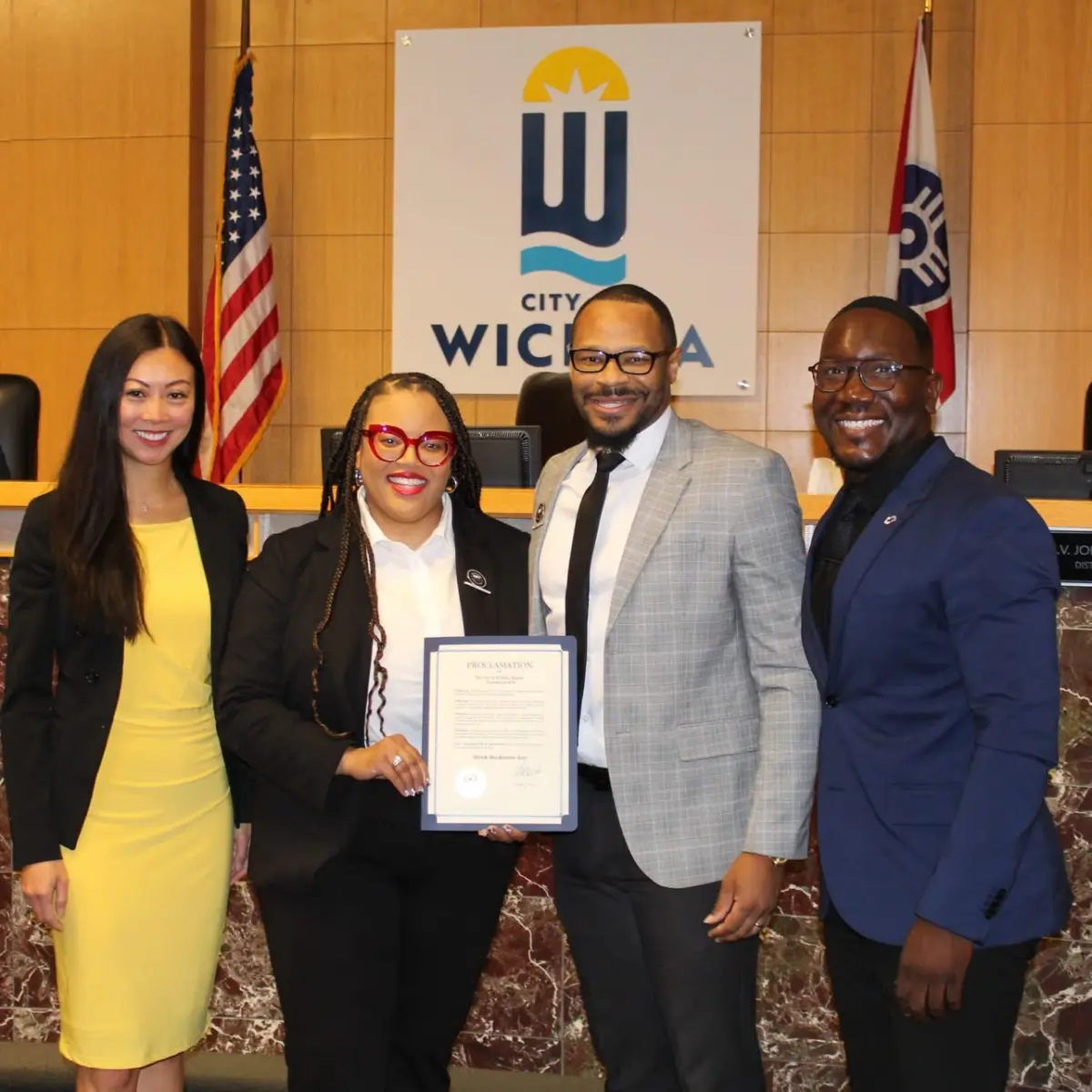
As the inaugural Black Bookstore Day unfolds across the United States—backed by official proclamations from the State of Kansas and the City of Topeka—the event stands as a testament to the tenacity of independent booksellers.
While the existence of two distinct dates on the literary calendar points to ongoing structural debates within the Black business community, the primary mission of Black Bookstore Day remains crystal clear to its founders and participants: driving meaningful economic support, preserving under-told literary histories, and solidifying bookstores as sanctuaries of community resistance and joy.
Latasha Eley Kelly remains steadfast in her long-term vision. "We hope that one day Black Bookstore Day will grow to the level of Black August and Black Business Month in terms of recognition," she reflects. By encouraging everyday consumers to patronize stores through whatever means are available to them—whether through major celebratory festivals or quiet digital amplification—Black Bookstore Day seeks to ensure that the vital labor, financial risk, and cultural vision of Black booksellers are permanently woven into the fabric of American commerce and literature.





Comments
Facebook App ID not configured. Please add it in the Customizer.