
Executive Overview
As the cinematic landscape prepares to celebrate the silver anniversary of Richard Kelly’s psychological science-fiction masterpiece, Donnie Darko, fresh production secrets continue to surface from the depths of early-2000s indie filmmaking. Fathom Events’ upcoming national re-release has prompted a wave of retrospective analyses, shedding new light on the existential dread, surreal rabbit motifs, and intricate time-travel mechanics that cemented the film’s status as an enduring cultural touchstone. Yet, beneath the philosophical musings and passionate fan theories lies a precarious Hollywood near-miss that could have fundamentally altered one of the movie’s most atmospheric sequences.
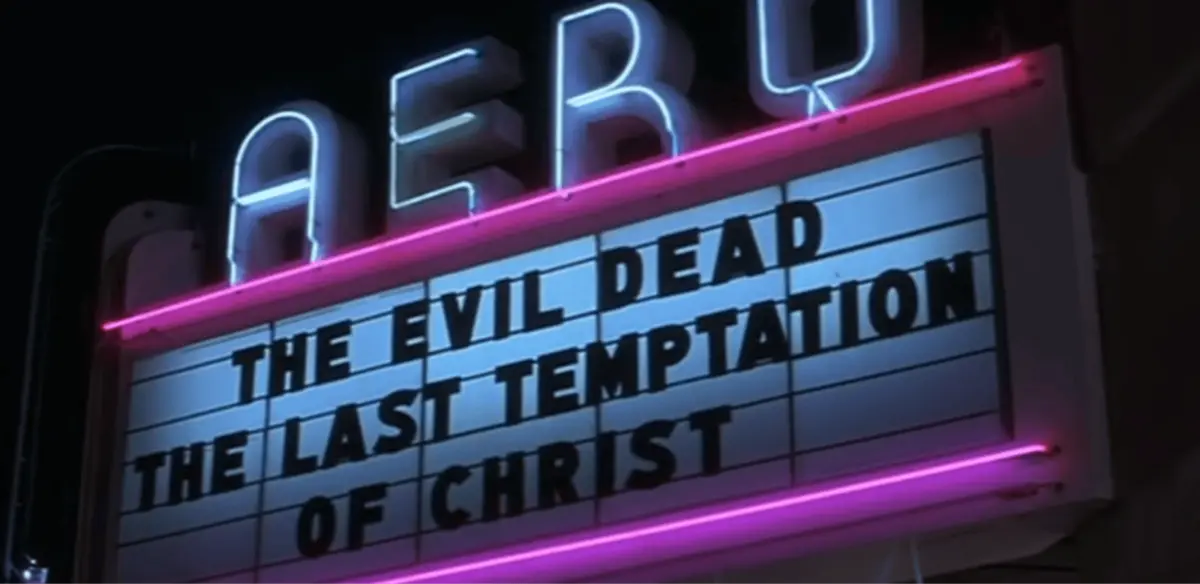
In a recent, wide-ranging retrospective interview with Wired, writer and director Richard Kelly divulged a behind-the-scenes crisis that threatened the production a mere 72 hours before cameras were scheduled to roll at the historic Aero Theatre. The sequence in question—where the troubled protagonist Donnie Darko and his classmate Gretchen Ross sit inside a dimly lit auditorium watching a gritty horror feature—was originally slated to showcase the cult 1984 creature feature C.H.U.D.
However, a bureaucratic wall of prohibitive licensing fees and uncooperative studio gatekeepers plunged the production into an eleventh-hour scramble. What followed was a classic Hollywood tale of resourcefulness, industry networking, and a timely intervention by Flower Films executive Linda McDonough. By leveraging personal connections with the team behind Sam Raimi’s low-budget horror phenomenon The Evil Dead, the production successfully swapped subterranean mutants for the relentless demonic forces of the woods. This article provides a comprehensive, chronologically detailed investigation into how this iconic cinematic pivot transpired, analyzing the legal complexities of indie film rights, the cultural footprint of the films involved, and the lasting legacy of a masterclass in crisis management.
Read Also
Detailed Chronology: The 72-Hour Countdown to a Rights Catastrophe
To fully understand the gravity of the crisis that struck the Donnie Darko production team in the year 2000, one must first examine the high-wire act of independent filmmaking. Operating on a modest budget of approximately $4.5 million, Kelly’s directorial debut relied heavily on authentic period-specific set dressing, licensed music, and carefully selected pop-culture artifacts to establish its distinct 1988 suburban aesthetic.
The Original Vision: C.H.U.D. in the Suburbs
In Kelly’s original screenplay, the choice of cinematic backdrop was deliberate. Donnie and Gretchen attend a local theater screening to escape the psychic weight of their suburban alienation, with C.H.U.D. (Cannibalistic Humanoid Underground Dwellers) playing on the silver screen.
"In the original script, Donnie and Gretchen went to go see C.H.U.D., just because I thought it was a funny ’80s horror movie," Kelly recalled during his discussion with Wired.
The selection was pitch-perfect for the film’s ironic, slightly off-kilter tone. Released in 1984, C.H.U.D. epitomized the wonderfully bizarre creature-feature excess of the decade, making it an ideal choice for teenagers passing the time in a sleepy suburban picture house.
Striking a Brick Wall
As production dates loomed closer, the logistics of securing the intellectual property rights fell to Linda McDonough, an executive at Drew Barrymore’s Flower Films (which served as a vital production partner helping to secure financing and industry clout for the rookie director). McDonough began tracking down the legal custodians of C.H.U.D. as the crew prepared to shoot on location at the Aero Theatre in Santa Monica, California.
What should have been a standard transactional clearance quickly devolved into an administrative nightmare.
"Linda McDonough… was trying to track down the licensing permission for the movie C.H.U.D. as we were approaching the shoot date here at the Aero Theatre, and she was getting nowhere," Kelly explained.
The rights were held by a major legacy studio, where an unyielding licensing representative stonewalled the production at every turn. According to Kelly, the attitude from the studio gatekeeper was uncompromising and blunt: "You’re never getting this."
Hitting the Panic Button
With principal photography rapidly advancing and the schedule unyielding, the production found itself backed into a corner. The difficulty of clearing a seemingly niche 1980s B-movie confounded the young director, who noted the absurd disparity between the film’s cultural footprint and its fiercely guarded legal status.
"You would think we were trying to license Lawrence of Arabia or Citizen Kane," Kelly remarked, highlighting the exorbitant financial demands made by the studio. "They wanted so much money, and we were three days from shooting the scene, and we didn’t have a movie to show."
With just 72 hours standing between the crew and the execution of a pivotal narrative scene, the production faced a stark choice: pay an extortionate, budget-breaking fee or completely rewrite and redesign the theater sequence on the fly.
Supporting Context & Metrics: The Economics of Archival Clearance
The near-disaster faced by the Donnie Darko team underscores a frequently overlooked aspect of cinematic production: the complex, high-stakes economics of intellectual property clearance. For independent filmmakers working within tight financial parameters, securing copyrighted material—ranging from hit pop songs to archival film clips—can make or break a project.
The Landscape of Indie Licensing in 2000
At the turn of the millennium, digital asset management systems were in their infancy, and clearing archival footage often required navigating a labyrinth of physical paper trails, dormant corporate entities, and aggressive legal departments. Major studios frequently maintained rigid tariff structures for the use of their intellectual property, regardless of whether a production was a multi-million-dollar blockbuster or a precarious independent venture.
- Budgetary Constraints: Donnie Darko’s $4.5 million budget left virtually no room for unexpected legal expenditures. A massive licensing fee for a minor background movie clip would have forced severe compromises elsewhere in the production.
- Time Sensitivity: In film production, time is inextricably linked to capital. A three-day countdown meant that union crew members, equipment rentals, and location permits at the Aero Theatre were already locked in, accumulating substantial daily overhead.
- The Power of Personal Networks: As Kelly’s account demonstrates, institutional bureaucracy is frequently bypassed not through formal corporate channels, but through executive-level relationships and industry goodwill.
Official Statements & Industry Perspectives
The resolution of the C.H.U.D. standoff highlights the crucial role played by experienced executive producers and industry veterans in salvaging troubled indie productions. Linda McDonough’s swift pivot saved the sequence and introduced an element that arguably enhanced the film’s thematic resonance.
The Evil Dead Intervention
Recognizing that negotiations with the major studio controlling C.H.U.D. had hit a dead end, McDonough leveraged her professional network to secure an alternative solution that was both economically viable and creatively inspired.
"Linda, to her enormous credit, said, ‘Richard, I am friends with the producers at the studio that owns The Evil Dead, they own the negative,’" Kelly recalled.
The connection opened doors that had previously been welded shut. Sam Raimi’s seminal 1981 supernatural horror masterpiece, produced independently before being picked up for wide distribution, operated under a different paradigm of rights management.
"Sam Raimi is a great guy, and they will let us have the poster to show at the front in the lobby of the theater," Kelly continued. "They’ll let you show any clip from The Evil Dead you want, the music, you can have it basically for free."
A Masterclass in Deus Ex Machina Filmmaking
The transition from C.H.U.D. to The Evil Dead proved to be a masterclass in serendipity. Not only did the production gain access to high-quality archival elements without straining its limited budget, but the inclusion of Raimi’s film also elevated the scene’s aesthetic pedigree.
Furthermore, Kelly noted that The Evil Dead shared a theatrical marquee within the film alongside Martin Scorsese’s The Last Temptation of Christ. Because the production was merely displaying the titles and promotional posters rather than executing complex narrative integrations across multiple studios for active moving footage, the clearance process became "an easier ask."
Future Outlook: The 25th Anniversary and Enduring Legacy
As Donnie Darko approaches its silver anniversary, its cultural footprint continues to expand. The upcoming Fathom Events re-release offers a new generation of cinemagoers the opportunity to experience the film’s haunting atmosphere on the big screen—complete with the fateful theatrical marquee featuring The Evil Dead.
Hindsight and Gratitude
Reflecting on the near-miss decades later, Richard Kelly views the administrative ordeal not as a production scar, but as a fortuitous turning point. The inclusion of The Evil Dead fits seamlessly into the nightmarish, reality-bending trajectory of Donnie’s psychological descent. The visceral terror of Raimi’s cabin-in-the-woods masterpiece serves as an effective thematic mirror for the unseen forces manipulating the film’s protagonist.
The Ongoing Study of a Cult Classic
As film historians, critics, and dedicated fans continue to dissect every frame of Donnie Darko ahead of its 25th-anniversary celebrations, stories like the C.H.U.D. substitution serve as a reminder of the chaotic, unpredictable nature of filmmaking. Behind every iconic cinematic moment lies a web of logistical hurdles, legal negotiations, and last-minute saves that transform happy accidents into legendary art.
Whether viewed through the lens of science fiction, adolescent mental health, or late-1980s Americana, Donnie Darko remains a towering achievement of independent cinema—one that owes its terrifying theater sequence just as much to Sam Raimi’s generosity and Linda McDonough’s tenacity as it does to Richard Kelly’s singular vision.


Comments
Facebook App ID not configured. Please add it in the Customizer.