
Executive Overview
In the quiet corners of post-Soviet dachas and across the expanding industrial peripheries of Eastern Europe, a silent botanical conquest is underway. Heracleum sosnovskyi—commonly known as Sosnovsky’s hogweed—stands as a monument to ecological hubris. Reaching heights of over five meters with umbrella-like white inflorescences, this towering perennial is far more than an invasive weed. It is a living artifact of mid-century state planning, scientific miscalculation, and the unintended consequences of aggressive agricultural intervention.
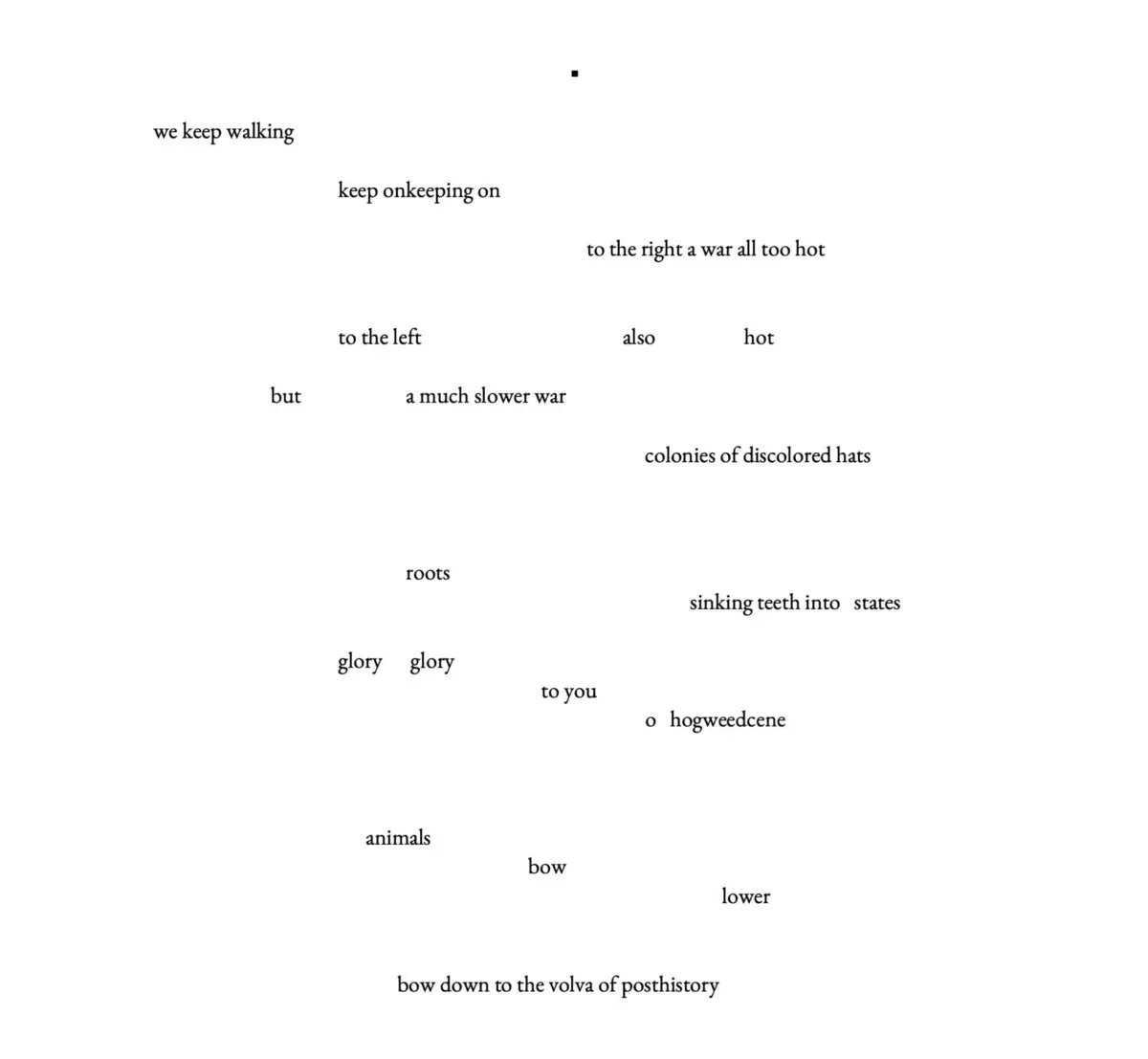
This investigative report examines the historical trajectory of Sosnovsky’s hogweed, tracing its movement from the rugged Caucasus mountains to experimental fields, and ultimately into the wild ecosystems it now dominates. By analyzing its biochemical mechanisms—specifically its potent furanocoumarins that react violently with sunlight—we explore how the plant inflicts severe phototoxic burns on human skin and mucous membranes. Furthermore, this article introduces the conceptual framework of the "Heracleocene" (or the "hogweedcene"), a speculative geological and ecological epoch defined by monoculture, toxicity, and environmental resilience.
Drawing from contemporary literary-ecological reflections translated by Venya Gushchin, original texts by author Tatiana Krasilnikova, and historical botanical records, we trace the intersections of authoritarian politics, colonial botany, and the enduring search for ecological hope from beneath the weight of anthropogenic degradation.
Read Also
Detailed Chronology: From Mountain Native to State-Sponsored Invader
1. The Pre-Soviet and Caucasus Origins
Long before its notoriety across European Russia and the Baltic states, Sosnovsky’s hogweed led an unpretentious, localized existence within the subalpine meadows and forest edges of the Caucasus mountains. Here, the plant was integrated into a complex, balanced ecosystem where herbivores, fungi, and native competition kept its vigor in check. Named in honor of the prominent Russian botanist Dmitriy Sosnovsky by his colleague Ida Mandenova in the mid-20th century, the plant was initially cataloged as a subject of regional biodiversity rather than a geopolitical threat.
2. The Post-World War II Agrarian Crisis and the Soviet Experiment
The turning point in the history of Heracleum sosnovskyi arrived in the late 1940s and early 1950s. Emerging from the devastation of the Second World War, the Soviet Union faced a profound agricultural and economic crisis. The livestock sector was severely depleted, and party leadership urgently sought high-yield, robust fodder crops to rapidly rebuild the rural economy.
Agricultural scientists turned their attention to the Caucasus, identifying the towering hogweed as a candidate for mass cultivation. Proponents argued that its massive biomass could serve as nutrient-rich silage for cattle, which would in turn feed the population and fuel the state’s agricultural quotas. Wrenching the plant out of its native ecosystem, agronomists transplanted it into experimental fields across central Russia, Belarus, Ukraine, and the Baltics.
3. The Escape and the Unraveling of Control
The grand biological experiment was fundamentally flawed. While cattle could indeed consume the silage under controlled conditions, the plant proved nearly impossible to manage agriculturally. It exhibited aggressive germination rates, prodigious seed production—with a single mature plant capable of dispersing tens of thousands of seeds—and an astonishing resistance to standard herbicides and mechanical removal.

Crucially, the plant began to escape cultivation. Carried by wind, water, and human transport, Sosnovsky’s hogweed breached the boundaries of experimental plots. It colonized abandoned agricultural lands, roadside ditches, riverbanks, and neglected dacha plots. The totalitarian machine that sought to harness the plant’s biological energy found itself powerless to contain its escape. By the late 20th century, the hogweed had quietly transitioned from an experimental asset to a national ecological emergency.
Supporting Context & Metrics: The Biology of Toxicity and Cultural Trauma
The Biochemical Weapon: Furanocoumarins and Phototoxicity
The ecological dominance of Sosnovsky’s hogweed is driven by its sophisticated chemical defense system. The sap of the plant is rich in furanocoumarins—organic chemical compounds that are inert in the dark but undergo a violent photochemical reaction upon exposure to ultraviolet (UV) radiation from sunlight.
When human skin comes into contact with the sap and is subsequently exposed to sunlight, these compounds penetrate the nuclei of epidermal cells, binding with DNA and disrupting cellular division. The clinical result is acute phototoxic dermatitis (often categorized as second- or third-degree burns):
- Immediate Phase: A painless contact phase where the sap is absorbed invisibly into the skin.
- Latent Phase (24–48 hours): Erythema (redness), intense burning sensations, and the formation of large, fluid-filled blisters.
- Long-term Phase: Post-inflammatory hyperpigmentation that can persist for months or even years, accompanied by permanent scarring of the skin and potential damage to mucous membranes and corneal tissue if ingested or rubbed near the eyes.
The Pedagogy of Risk: Soviet Textbooks and Dacha Folklore
The cultural footprint of hogweed in the post-Soviet space is paradoxical. On one hand, generations of children raised in rural dachas learned of the plant through cautionary tales—warnings of improvised telescopes made from hollow stalks that led to blinded eyes and chemically burned faces.
On the other hand, the cultural apparatus occasionally suffered from staggering misidentifications and institutional amnesia. As reflected in contemporary literary critiques of mid-century school curricula, state-sanctioned textbooks occasionally confused aggressive species like Sosnovsky’s hogweed with milder, native variants like the Siberian hogweed (Heracleum sibiricum). Texts promoted the plant’s misleadingly benign characteristics—describing hollow stalks that could be carved into toy pipes and comparing the crisp, hollow stems to cucumbers—inviting children into a dangerous proximity with toxic biology. This dissonance between official state ignorance and grassroots reality underscores the profound disconnect that characterizes human interaction with invasive flora.
Official Statements & Expert Perspectives
Botanists, environmental historians, and cultural theorists have increasingly framed the spread of Heracleum sosnovskyi not merely as an agricultural nuisance, but as a symptom of deeper systemic failures.
Dr. Elena V. Snetkova, an evolutionary botanist specializing in invasive species in Eastern Europe, notes:

"Sosnovsky’s hogweed is the ultimate biological metaphor for uncalibrated state intervention. It was bred to be obedient to human utility, yet its evolutionary resilience far outstripped the ideological frameworks that deployed it. When you disrupt evolutionary boundaries for short-term political expediency, nature does not simply comply—it reconfigures the landscape on its own terms."
In cultural and literary analyses, such as those explored by Tatiana Krasilnikova and translated by Venya Gushchin, the plant transcends its botanical classification to become a physical embodiment of systemic oppression. Krasilnikova conceptualizes the potential future dominance of the plant as the Heracleocene—an epoch defined by totalitarian uniformity, ecological monotony, and toxicity.
Yet, within this dystopian framing, theorists emphasize the persistence of resilience. As expressed in contemporary ecological poetry, hope does not manifest in grand geopolitical restorations, but quietly—“from under the floorboards / of authoritarian regimes / from under the mycelium / of actor-network theory / from under oil arteries.” A mere handful of soil on a neglected plot of land retains the capacity to unseat anthropocentric narratives and foster new vocabularies of survival.
Future Outlook: Managing the Heracleocene
As global temperatures rise and shifting climatic zones alter migratory and botanical patterns, invasive species are accelerating their footprint. While coral reefs bleach and marine ecosystems collapse under thermal stress, terrestrial invaders like Sosnovsky’s hogweed continue to adapt, expanding northward and occupying disturbed soils with impunity.
Mitigating the legacy of Heracleum sosnovskyi requires a multi-pronged, long-term commitment that moves beyond eradication toward systemic ecological restoration:
- Integrated Mechanical and Chemical Control: Continued deployment of targeted herbicides, deep root-cutting before seed maturation, and black-out geotextile mulching in high-density infestation zones.
- Public Education and Safety Infrastructure: Upgrading public awareness campaigns to ensure that children and recreational visitors are educated on the dangers of furanocoumarins, eliminating the outdated folklore that once compared the plant to edible garden crops.
- Ecosystem Regeneration: Recognizing that hogweed thrives primarily on disturbed, degraded, or abandoned agricultural lands. True containment depends on re-establishing competitive native perennial cover, forest margins, and diverse plant communities that prevent the weed from re-establishing dominance.
Ultimately, the story of the hogweed serves as an enduring warning. Whether viewed through the lens of Soviet agro-industrial history, biochemical pathology, or speculative ecological philosophy, Heracleum sosnovskyi forces humanity to confront the limits of control over the living world—and reminds us that from the deepest layers of toxicity and historical trauma, resilient forms of life and language will always find a way to break through the surface.





Comments
Facebook App ID not configured. Please add it in the Customizer.