
Executive Overview
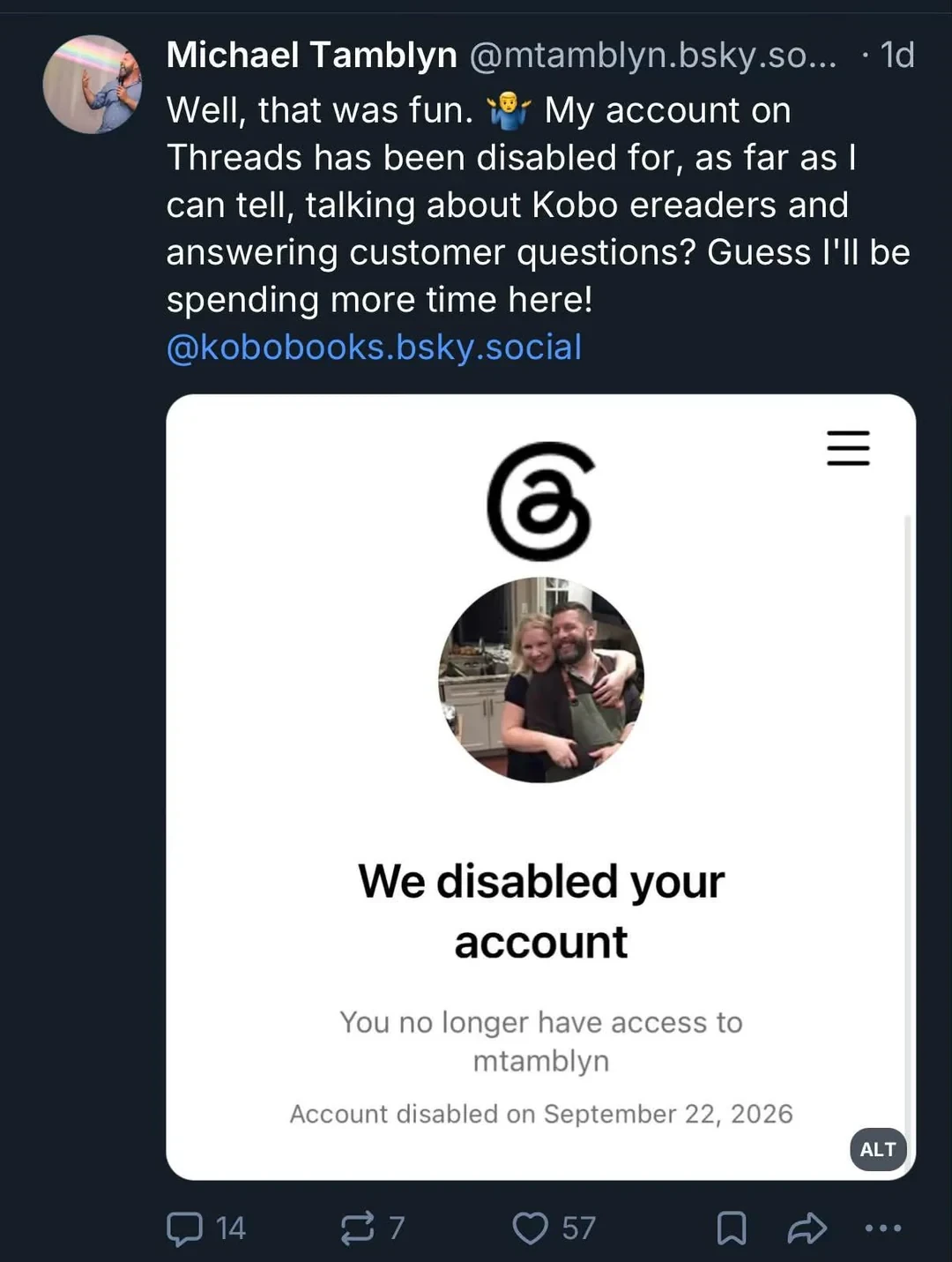
In an era where social media algorithms wield unprecedented power over digital communication, even chief executive officers are not immune to the capricious nature of automated moderation. Michael Tamblyn, the CEO of Rakuten Kobo—one of the world’s leading e-reader and digital bookstore brands—has found himself abruptly locked out of Meta’s text-focused social network, Threads.
The suspension of Tamblyn’s account highlights a growing crisis within major social media ecosystems: the over-reliance on opaque, automated artificial intelligence (AI) systems to police user behavior. For months, digital creators, journalists, and corporate leaders have complained about a rising tide of false-positive bans sweeping across Instagram and Threads. However, the targeting of a high-profile executive who actively used the platform to bridge the gap between a major tech corporation and its consumer base marks a significant escalation in the ongoing friction between automated safety protocols and authentic digital community-building.
Tamblyn was not using Threads to broadcast corporate press releases or run sterile marketing campaigns. Instead, he utilized the microblogging platform as an interactive town square, directly answering customer inquiries regarding Kobo hardware, clarifying complex supply chain and logistics questions, and debating literary trends with avid readers. His sudden ban cuts off a vital, human-centric channel of corporate transparency. As the tech community watches to see if Meta’s bureaucratic appeals process will rectify the error, this incident serves as a glaring case study in the vulnerabilities of modern algorithmic governance.
Read Also
Detailed Chronology: How the Ban Unfolded
While automated moderation systems rarely provide granular explanations for suspensions at the moment of execution, the fallout from Tamblyn’s removal has drawn immediate scrutiny from tech analysts, book lovers, and digital rights advocates alike.
The Accessible CEO
For years, executive presence on social media has largely been curated by public relations teams, resulting in sanitized, predictable feeds. Michael Tamblyn broke this mold. On Threads—Meta’s text-first competitor to platforms like X (formerly Twitter)—Tamblyn established an approachable, hands-on digital footprint.
When users encountered software bugs on their Kobo Clara Colour or Kobo Libra Colour devices, they didn’t just submit a support ticket; they could often tag the CEO directly and receive a thoughtful, context-rich response. When supply chain bottlenecks delayed the global rollout of new e-reader hardware, Tamblyn took to Threads to explain international shipping logistics in plain English.
The Sudden Digital Exile
The suspension occurred without warning. Users attempting to navigate to Tamblyn’s profile were met with the familiar, jarring notification indicating that the account was no longer available or had violated community standards.
Because Threads is deeply integrated into the overarching Meta ecosystem—sharing infrastructure, login credentials, and cross-platform reporting tools with Instagram—a ban at the Threads level often points toward automated triggers embedded deep within Meta’s core safety architecture. Whether the suspension was triggered by a disgruntled user filing malicious mass reports, an overzealous AI mistaking a corporate discussion for commercial spam, or an algorithmic misinterpretation of a routine post remains entirely unclear.
As of press time, Meta has not issued a manual override, leaving Tamblyn’s account in digital limbo. In the corporate world, where executive communication channels are heavily scrutinized for compliance and brand safety, the inability of a Fortune-tier tech executive to secure a speedy resolution through official channels underscores the Kafkaesque reality of dealing with platform support desks.
Supporting Context & Metrics: The Anatomy of Threads and Automated Moderation
To understand the weight of Tamblyn’s ban, one must examine the operational landscape of Meta’s Threads and the structural flaws plaguing its content moderation systems.
What is Threads?
Launched by Meta’s Instagram team in July 2023, Threads was designed as a real-time, text-centric conversational space. Key features of the platform include:
- Character Limits: Up to 500 characters of text per primary post.
- Multimodal Sharing: Integration of embedded web links, high-resolution photos, and videos up to 5 minutes in length.
- Community Interaction: Seamless threading, quoting, reposting, and liking mechanisms modeled closely after classic microblogging frameworks.
- The Instagram Bridge: By allowing users to sign up directly via their Instagram credentials, Threads rapidly scaled to over 100 million users within its first week, making it one of the fastest-growing software launches in history.
The Algorithmic Crisis
However, rapid scaling has come with severe growing pains. Meta has increasingly leaned on automated AI models to handle content moderation, copyright enforcement, and spam detection. While human moderation teams are largely reserved for high-stakes geopolitical or safety crises, day-to-day enforcement is dictated by machine learning classifiers.

These systems operate on probability, searching for linguistic patterns, engagement anomalies, and keyword triggers. Unfortunately, they frequently lack contextual understanding. For instance:
- The Satire Trap: AI models frequently fail to recognize sarcasm, insider tech jargon, or lighthearted corporate banter.
- Impersonation Flags: Executives with high visibility are frequently targeted by bad actors creating clone accounts. Ironically, automated systems sometimes ban the legitimate account while letting fraudulent profiles persist.
- Mass Reporting Vulnerabilities: Coordinated groups or automated bot networks can weaponize the reporting function, tricking AI filters into executing mass suspensions without human review.
Industry watchdogs note that high-profile creators and executives are disproportionately affected because their high volume of daily interactions trips automated velocity filters designed to catch bots and spammers. When a CEO replies to hundreds of customers in a single afternoon, naive algorithms often flag the behavior as automated bot activity.
Official Statements and Industry Impact
The silencing of a prominent voice in the e-reader space has sent ripples across the publishing and consumer technology industries. Rakuten Kobo, a subsidiary of the Japanese e-commerce giant Rakuten, has long positioned itself as the primary consumer-friendly alternative to Amazon’s sprawling Kindle ecosystem. A core pillar of Kobo’s brand identity is its responsiveness to open standards (such as widespread EPUB support and OverDrive/Libby library integration) and its willingness to listen to the enthusiast community.
Industry observers have been quick to comment on the broader implications of the ban:
"When platforms rely entirely on black-box algorithms to police accounts, they don’t just catch bad actors—they dismantle the bridges that make social media genuinely valuable. Michael Tamblyn wasn’t just a corporate user; he was a living customer service touchpoint." — Digital Media Analyst
While Rakuten Kobo’s corporate communications team has refrained from escalating the issue into a public diplomatic feud with Meta, sources close to the company express frustration over the lack of direct communication channels available to enterprise partners. For a company that relies heavily on digital engagement to market specialized hardware—such as waterproof e-readers and color e-ink displays—losing a direct line to digital advocates is a tangible handicap.
Future Outlook: Accountability and the Future of Executive Presence on Social Media
The incident involving Michael Tamblyn and Threads raises urgent questions about the sustainability of executive engagement on centralized, algorithmically governed platforms. As we look toward the future of digital communication, several critical themes emerge:
1. The Decentralization Exodus
Incidents like this continually drive high-profile creators, tech leaders, and journalists to explore decentralized protocols such as Mastodon, Bluesky, and the broader Fediverse. Unlike Meta or X, decentralized networks cannot arbitrarily lock out a user via a centralized corporate decree without community consensus or server-level autonomy. If corporate leaders find their primary customer-outreach channels perpetually vulnerable to unpredictable AI bans, the exodus from walled-garden platforms will only accelerate.
2. Demands for Algorithmic Transparency
Regulatory bodies in the European Union (through the Digital Services Act) and emerging frameworks globally are beginning to crack down on platform arbitrariness. Companies like Meta will increasingly be forced to provide clear, human-reviewed appeals pathways for account suspensions—particularly for verified accounts and enterprise stakeholders. The current standard—where a user vanishes into an appeals void with no recourse—is becoming legally and ethically untenable.
3. The Re-evaluation of Corporate Social Strategy
For Kobo and similar mid-to-large-scale tech companies, the ban serves as a cautionary tale. Relying heavily on third-party social platforms for primary customer engagement is a high-risk strategy. Moving forward, brands are likely to double down on owned media properties—such as dedicated community forums, blogs, and direct-to-consumer feedback loops—where they retain absolute sovereignty over their digital presence.
Conclusion
Whether Michael Tamblyn’s account is ultimately restored remains to be seen. However, the damage to the narrative of seamless digital connectivity is already done. As artificial intelligence takes a heavier hand in steering online public discourse, the digital town square risks becoming a ghost town of sanitized corporate broadcasts, devoid of the human warmth and direct accountability that made platforms like Threads attractive in the first place. For now, Kobo enthusiasts and tech commentators alike are left waiting to see if Meta’s algorithms will grant permission for a CEO to speak to his community once again.





Comments
Facebook App ID not configured. Please add it in the Customizer.