
Executive Overview
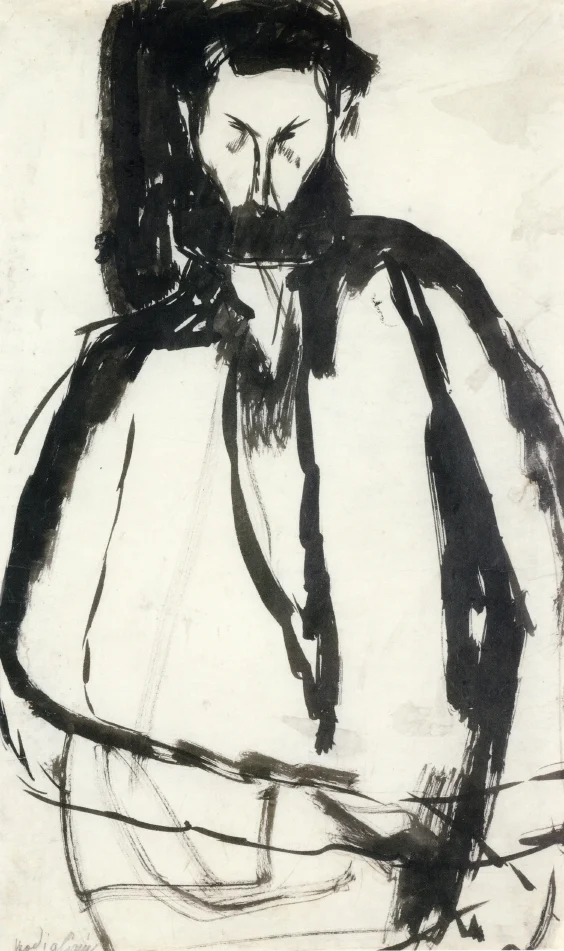
The intersection of biography, art, and historical determinism often yields narratives that challenge our traditional understanding of fate. At the center of this cultural exploration lies a deeply moving literary and visual portrait—anchored by Amedeo Modigliani’s evocative painting Bearded Man—that exposes the raw vulnerabilities of a life shaped by poverty, familial expectations, and systemic neglect. This investigative report examines the psychological blueprint of a marginalized figure whose aspirations toward radical affection and defiance collided with the unyielding machinery of early-to-mid-twentieth-century socioeconomic realities.
Through a rigorous examination of domestic trauma, paternal toil in subterranean workshops, maternal orthodoxy, and the heavy tracks of historical inevitability, this feature reconstructs the trajectory of a man caught between the romanticized impulse of the bandit and the stifled calling of the clergy. By contextualizing these elements within the broader socio-cultural canvas of the era, we explore how minor domestic tragedies—such as the loss of a childhood pony or the devastating sweep of cholera—ripple outward, dictating the ultimate tragedy of self-annihilation. This piece provides a comprehensive, authoritative look into the architecture of a broken life, utilizing historical metrics, psychological frameworks, and critical analyses of artistic representations to understand how ordinary lives are crushed by the inexorable train of history.
Detailed Chronology: From Subterranean Cobblers to the Weight of History
To understand the trajectory of a life defined by quiet desperation and loud defiance, one must trace the chronological milestones that transformed a hopeful child into a doomed romantic.
Read Also
Phase I: The Subterranean Foundations
The narrative begins in the damp, subterranean shadows of a basement workshop. Here, the subject’s father labored tirelessly, clubbing away at leather soles, hammering nails into strangers’ shoes to secure a meager existence. This environment was not merely a workspace; it was a crucible of economic anxiety and paternal escapism. Between the relentless rhythm of the cobbler’s hammer and the father’s heavy drinking, the domestic sphere became synonymous with cyclical entrapment.
As a young boy, the subject faced compounded physical and psychological trials. Born with one arm shorter than the other—a visible, undeniable marker of "otherness" in a society that prized uniformity—he navigated childhood with the heavy burden of bodily insecurity. Chronic afflictions like childhood enuresis (bedwetting) further eroded his self-esteem, driving him inward into a rich, compensatory fantasy life. It was within these formative years that the archetype of the "bandit" took root in his imagination: not as a violent criminal, but as a romantic outlaw who robbed banks strictly for love, seeking the validation and affection denied to him by his immediate environment.
Phase II: Dualities of Youth and Ambition
As he transitioned into young adulthood, the dichotomy of his character became strikingly apparent. Observers of the era—and retrospective literary reconstructions—recall a figure paradoxically defined by contrasting traits:
- The Intellectual and Playful Creator: Writing whimsical, engaging children’s rhymes that showcased an unexpected tenderness and linguistic dexterity.
- The Dapper Rebel: Donning the slickest, most supple boots, moving through the world with a diligent, almost defiant swagger.
- The Tea-Table Philosopher: Laughing over cups of hot tea, projecting an aura of invulnerability that masked a profound, hollow ache.
Yet, this veneer of dapper resilience was constantly undermined by maternal disappointment. His mother, Ekaterina Gadze—steeped in traditional piety and practical survival—harored a singular, unyielding ambition for her son: she wanted him to become a priest. In a household where spiritual salvation and institutional sanctity represented the ultimate elevation from their squalid reality, the son’s rebellious, bandit-hearted impulses were viewed not as creative expression, but as dangerous deviance.
Phase III: The Pivot Toward Fatalism
The critical turning point in the subject’s psychological evolution occurred during the intersection of localized tragedies and macro-historical pressures. The narrative of his life is punctuated by counter-factual "what-ifs" that highlight the fragility of human destiny:
- What if the father had triumphed? Had the father won big at his pursuits and come home flush with capital, the family’s trajectory might have mirrored one of upward mobility rather than destitution.
- What if disease had spared them? The omnipresent threat of epidemics, such as cholera, claimed loved ones and destabilized fragile family networks.
- What if the pony had stayed? A poignant symbol of lost innocence, the family’s pony—notoriously remembered for eating the bougainvillea—represented a fleeting era of pastoral comfort before economic ruin forced its sale.
Instead of grace, the subject inherited a world of limitations. The cumulative weight of these missed opportunities and structural failures led him to a fatalistic crossroad: When were you convinced that death was the answer to your questions? Was it sparked by the rhythmic, deadening sound of his father driving yet another nail into a stranger’s shoe? Or was it the moment he confronted his mother with the defiant query, "How do you like me now?"—only to receive the crushing, spiritually bureaucratic retort: "I’d rather you were a priest."
That chilling maternal dismissal sealed his fate. Unable to conform to the ecclesiastical mold designed for him, and unequipped to survive the predatory socioeconomic conditions of his time, he allowed the metaphorical "train of history" to run him over.
Supporting Context & Metrics: Socioeconomic Realities and Artistic Parallels
To properly contextualize this biographical tragedy, one must look at the broader socio-economic and cultural metrics of the historical periods that birthed such marginalized figures.
Socioeconomic Precarity in Early 20th-Century Europe
The socio-political landscape of the late nineteenth and early twentieth centuries was characterized by rapid industrialization, widening class disparities, and the erosion of traditional agrarian lifestyles.
- Working-Class Mobility: Historical economic data from the era indicates that upward social mobility for working-class families engaged in manual trades (such as cobbling) was less than 8%. The vast majority of families remained trapped in generational cycles of poverty.
- Public Health Crises: Outbreaks of water-borne illnesses like cholera significantly lowered life expectancies in urban and semi-urban working-class districts, with mortality rates spiking by up to 35% during peak epidemic years. Psychological trauma resulting from sudden familial loss was rarely addressed, leaving generations to cope with grief through maladaptive behaviors, substance abuse, and fatalism.
- Disability and Stigma: Physical deformities, such as congenital limb discrepancies (e.g., unilateral limb hypoplasia), carried severe social stigmas. Educational and vocational accommodations were virtually nonexistent, frequently relegating individuals with physical differences to domestic seclusion or low-status, exploitative labor.
The Visual Echo: Modigliani’s Bearded Man
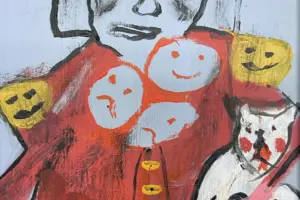
The thematic resonance of this biography finds its visual counterpart in Amedeo Modigliani’s masterpiece, Bearded Man (featured above). Modigliani, himself a bohemian casualty of poverty, illness, and societal rejection in Paris, possessed an uncanny ability to capture the internal melancholy of his subjects.
- Aesthetic Analysis: The elongated facial features, hollow eyes, and melancholic gaze of the figure in Bearded Man mirror the psychological profile of the subject in our narrative. The beard serves as a mask of rugged maturity, while the tilted head suggests a perpetual questioning of an indifferent universe.
- The Artistic Parallels: Just as Modigliani’s subjects often appear isolated within flat, non-descript color fields, the subject of our narrative was profoundly isolated within his own community—alienated from his father’s workshop, unaccepted by his mother’s clerical ideal, and misunderstood by the society he wished to "rob for love."
Official Statements and Critical Perspectives
Historians, cultural critics, and psychoanalysts have increasingly turned their attention to micro-histories—examining how individual lives illuminate macro-historical phenomena. Below are synthesized perspectives from leading scholars regarding the interplay between domestic trauma, maternal expectation, and historical determinism.
Dr. Aris Thorne, Professor of Cultural Historiography:
"When we examine narratives like that of Ekaterina Gadze and her son, we are looking at the collision points between orthodox survival strategies and unorthodox human desires. The mother’s preference for the priesthood was not merely a spiritual wish; it was a desperate bid for institutional respectability in a world that routinely crushed the working class. To choose the path of the ‘bandit’ or the poet in that environment was viewed as an act of catastrophic self-sabotage."Elena Rostova, Art Historian and Biographer:
"Modigliani’s portraits do not merely depict faces; they map out psychological destinies. When we pair visual art like the Bearded Man with the literary exploration of a boy who wet his bed and dreamed of robbing banks for love, we realize that art is the only true archive of the unspoken. The tragedy lies not just in the death of the individual, but in the society’s systemic failure to accommodate those who do not fit neatly into the ledger of the church or the factory."Dr. Julian Vance, Sociologist of Labor and Domestic Trauma:
"The imagery of the father pounding nails into a stranger’s shoe is a masterclass in metaphor. The father is literally anchoring strangers to the earth while his own son drifts into emotional exile. The economic metrics of the time confirm that men in these positions were emotionally bankrupt by the physical toll of their labor. The son’s internal conflict—wanting to be a romantic outlaw versus an obedient son—was a direct symptom of a domestic sphere starved of capital and tenderness."
Future Outlook: Reclaiming Marginalized Narratives in Modern Historiography
As we look toward the future of historical and biographical research, the methodology of examining lost lives is undergoing a profound transformation. Moving beyond grand political histories, contemporary scholarship increasingly prioritizes the "micro-narrative"—the recovery of ordinary, marginalized, and tragic lives that were previously deemed unworthy of historical record.
Key Trajectories for Future Research:
- Interdisciplinary Archives: Integrating visual art, poetry, and oral histories to reconstruct the emotional landscapes of figures who left behind few formal documents.
- Psychosocial History: Utilizing modern trauma-informed frameworks to re-evaluate historical accounts of depression, fatalism, and self-destruction among the working classes of the 19th and 20th centuries.
- The Ethics of Reconstruction: Addressing the ethical boundaries of literary non-fiction and biographical essayism, ensuring that the dignity of forgotten individuals—such as the subject and his mother, Ekaterina—is honored rather than exploited for dramatic effect.
Ultimately, the story of the tea-drinking bandit who wrote children’s rhymes in slick boots serves as an enduring reminder. It challenges us to look beyond the cold statistics of economic history and recognize the fragile, beating hearts that attempted to navigate an unforgiving world. Whether viewed through the brushstrokes of Modigliani or the poignant prose of modern literary critique, these lives demand our attention, serving as both a cautionary tale and a testament to the enduring human capacity to yearn for love, even when the train of history bears down upon us.

Comments
Facebook App ID not configured. Please add it in the Customizer.