
By Michael Kozlowski
Published in Technology & Hardware
Executive Overview
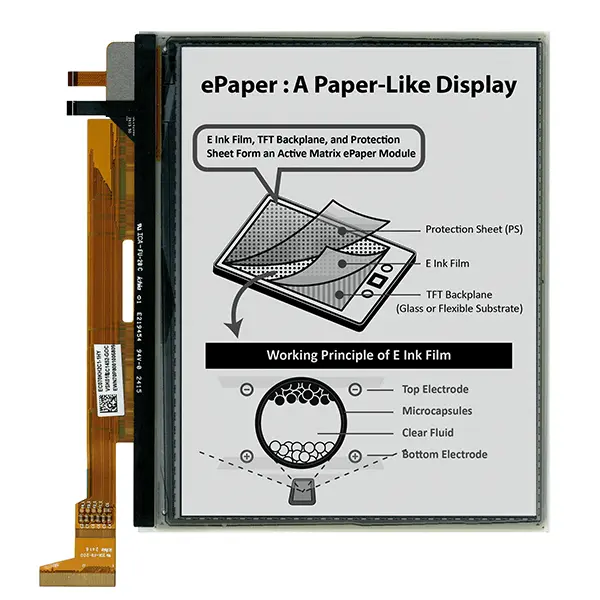
The anticipated rollout of E Ink’s next-generation monochrome display technology, the Carta 1400, has hit a significant roadblock. While industry whispers previously pointed toward a late-stage market debut in the near future, highly placed supply-chain sources have revealed to Good e-Reader that mass production will not be ready until 2027.
This unexpected delay is more than a minor scheduling hiccup for e-reader enthusiasts; it creates a cascading ripple effect across the entire electronic paper ecosystem. Major hardware manufacturers—including Foxconn (which produces the Amazon Kindle line), Netronix (responsible for manufacturing Kobo and Barnes & Noble NOOK devices), and Linfiny (specializing in business-to-business digital paper hardware)—have already received early evaluation samples of the Carta 1400 screen technology. These partners are currently assessing how to integrate the panels into their future product roadmaps, even as manufacturing schedules are pushed back.
Read Also
Furthermore, because color electronic paper technologies such as Kaleido 4 and Gallery 4 rely on the foundational black-and-white panel architectures developed in parallel with Carta generations, this delay will inherently stall the release of next-generation color e-readers. Devices like future iterations of the Amazon Kindle Paperwhite and other premium monochrome and color e-paper devices will remain anchored to existing display technologies for longer than initially expected.
Detailed Chronology of the Carta 1400 Development
To understand why the postponement of Carta 1400 is causing ripples across the consumer electronics landscape, it is helpful to examine how E Ink has systematically iterated on its monochrome electrophoretic displays over the past several years.
The Foundation: Carta 1200 and Carta 1300
When E Ink introduced Carta 1200, it marked a seismic, ground-up architectural overhaul for the industry. Prior generations of electronic paper suffered from sluggish refresh rates that made interactions outside of turning a static book page feel cumbersome. Carta 1200 changed the paradigm by significantly accelerating refresh speeds, paving the way for fluid scrolling, faster user interfaces, and vastly improved stylus latency for digital notepads like the Kindle Scribe and Kobo Elipsa.
Following Carta 1200, E Ink released Carta 1300 as an incremental, generation-on-generation refinement. Interestingly, E Ink never published official white papers or prominent product listings for Carta 1300 on its public website, despite the technology quickly finding its way into mainstream flagships from Amazon, Kobo, and other major brands. Carta 1300 focused strictly on squeezing micro-improvements out of the existing Carta 1200 blueprint: it delivered slightly better contrast metrics and marginally lower input latency, keeping the market satisfied while engineering teams worked on more profound architectural leaps.
The Road to Carta 1400 and the 2027 Shift
The Carta 1400 was originally conceptualized to represent a much larger step forward than the modest bridge between 1200 and 1300. Industry insiders anticipated that the panels would transition from prototype testing to commercial manufacturing within the next year.
However, recent evaluations by manufacturing giants Foxconn, Netronix, and Linfiny have highlighted technical hurdles in scaling mass production while maintaining the strict quality control and yield rates required for global consumer electronics distribution. As a result, supply-chain constraints have forced E Ink to revise its timeline, pushing full-scale manufacturing out to 2027. This ensures that the technology will undergo rigorous real-world durability, temperature tolerance, and power-efficiency testing before commercial devices hit retail shelves.

Supporting Context, Metrics, and Technological Expectations
Although E Ink has kept official technical specifications under wraps, leaked industry insights and historical improvement trends provide a clear picture of what the Carta 1400 aims to achieve.
1. Optical Contrast Ratios Past 20:1
One of the primary goals for Carta 1400 is to push the standard optical contrast ratio past the 20:1 threshold. Higher contrast ratios are the Holy Grail for e-paper technology, translating directly into crisper, more legible text that mimics traditional black ink printed on high-grade white paper. This improvement will drastically enhance reading comfort in both ultra-bright outdoor sunlight and low-light indoor environments.
2. Reduced Latency for Tablet-Like Interactivity
While e-readers have historically prioritized battery conservation over raw processing speed, modern users demand tablet-like responsiveness. Carta 1400 targets significantly lower latency. This reduction in input lag will make page-turning, rapid document scrolling, and digital handwriting feel remarkably closer to writing on physical paper or interacting with a high-refresh-rate LCD/OLED tablet like an Apple iPad.
3. Waveform Refinement and the Elimination of the "Black Flash"
Anyone who has used a modern e-reader is familiar with the full-screen refresh—often colloquially referred to as the "black flash"—where the entire screen inverts to clear away stubborn text ghosting. Carta 1400 implements heavily refined waveform technology designed to drastically minimize text ghosting natively. By controlling microcapsule pigment movement more precisely at the pixel level, the display reduces the frequency and intrusiveness of full-screen refreshes, creating a much more seamless, uninterrupted reading experience.
The Ripple Effect: Color E-Paper (Kaleido 4 and Gallery 4)
The delay of the Carta 1400 monochrome panel has immediate consequences for the future of color electronic paper.
Color e-ink technologies do not exist in a vacuum; they are built upon monochrome backplanes. Innovations in contrast, refresh rate, and light transmission achieved in black-and-white panels directly dictate the optical performance of color filter arrays (such as E Ink Kaleido) and particle-mixing color systems (such as E Ink Gallery).
- Kaleido 4: Currently in the prototyping stage, Kaleido 4 aims to solve the historical trade-offs of color e-paper—namely, the darkened, muted pastel tones caused by the color filter layer placed on top of the monochrome screen. Because Kaleido 4 depends on the sharper base contrast and faster pixel response of the underlying Carta architecture, it cannot proceed to mass production until Carta 1400 is fully baked and deployed in foundational devices like the Amazon Kindle Paperwhite.
- Gallery 4: Similarly, advanced full-color AC-driven particle technologies like Gallery face parallel development holds. Until manufacturing lines are secured for the next generation of monochrome base panels, commercial color releases utilizing these advanced frameworks will remain on the drawing board.
Industry Implications and Future Outlook
The decision to delay Carta 1400 to 2027 reflects a broader maturation trend within the e-paper industry. Rather than rushing incremental upgrades to market—as was somewhat the case with the quiet rollout of Carta 1300—E Ink and its manufacturing partners are opting for stability, reliability, and guaranteed supply chain volume.
For consumers, this means that current-generation devices—such as those utilizing Carta 1200 and Carta 1300—will remain the gold standard for reading and note-taking for a longer tenure than previously anticipated. Buyers currently holding off on purchasing a new Kindle, Kobo, or BOOX device in anticipation of an imminent "next-gen screen revolution" can rest assured that their current hardware investments will remain technologically competitive for several more years.
As we look toward 2027, all eyes will remain on Foxconn, Netronix, and Linfiny as they transition the first commercial Carta 1400 prototypes out of testing laboratories and onto assembly lines. When the technology finally arrives, it promises to redefine what consumers expect from digital paper—bridging the psychological gap between physical print and digital convenience more effectively than ever before.




Comments
Facebook App ID not configured. Please add it in the Customizer.