
Executive Overview
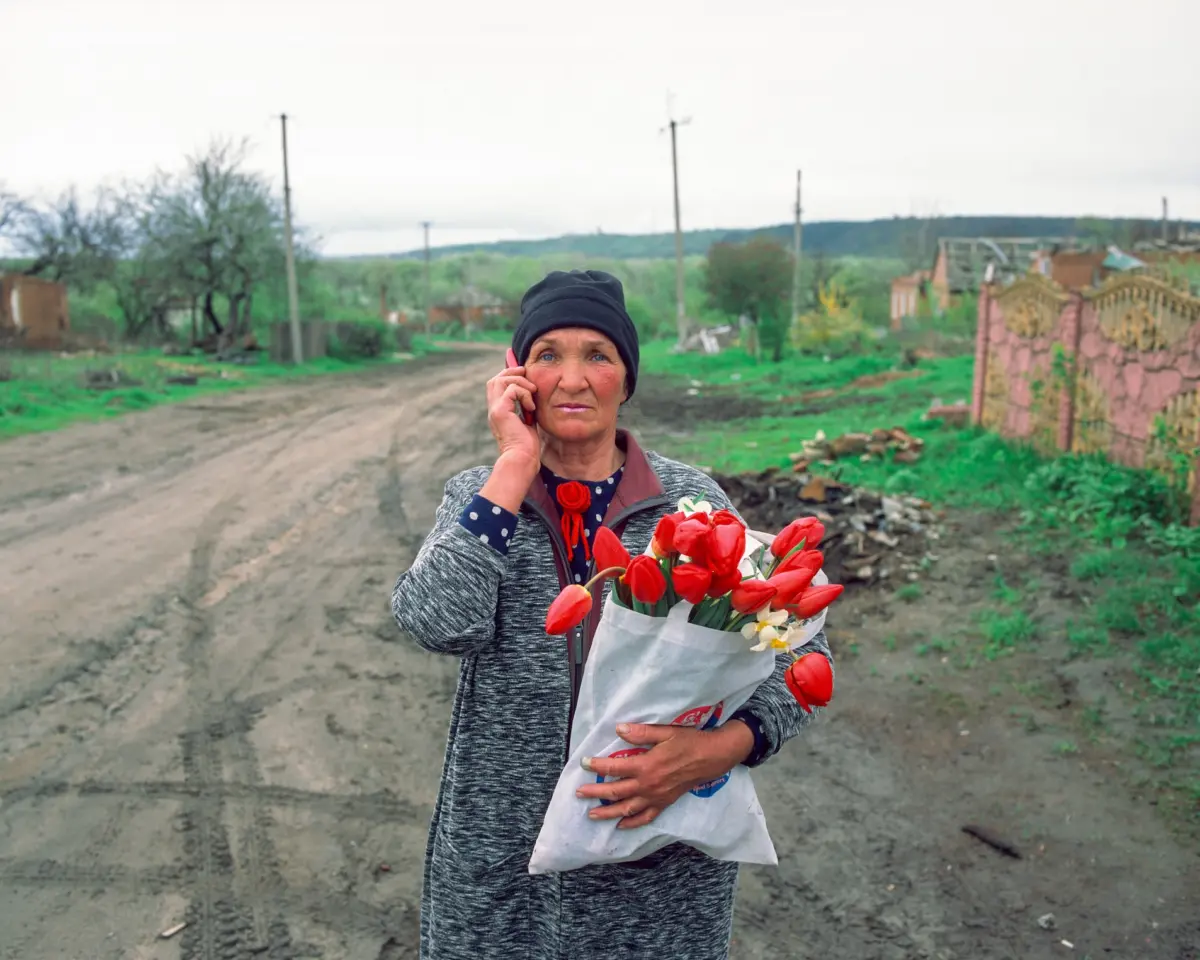
In an era defined by twenty-four-hour news cycles, digital fatigue, and the numbing ubiquity of global conflict headlines, the art world continues to serve as an indispensable vehicle for moral clarity and emotional recalibration. Beginning September 11, the Westwood Contemporary gallery in Los Angeles will host a powerful fundraising photography exhibition titled “Postcode Ukraine: Diary of a Volunteer.” The show features the searing, empathetic documentary work of British artist Mark Neville, who has been based in Kyiv since the launch of Russia’s full-scale invasion.
What elevates this exhibition from a standard gallery showing to a significant global cultural event is its high-profile roster of guest curators. A diverse and influential coalition of international public figures—including writer and broadcaster Sir Stephen Fry, Hollywood icons Sharon Stone and Alyssa Milano, Prince Harry, Nobel Peace Prize laureate Oleksandra Matviichuk, renowned Ukrainian authors Andrey Kurkov and Kateryna Babkina, and Wende Museum founder Justin Jampol—have lent their voices and platforms to the project. Each curator has personally selected a photograph from Neville’s extensive archive and authored a dedicated reflection explaining its emotional resonance and socio-political weight.
Rather than focusing exclusively on the geopolitical machinations of the battlefield or the fiery devastation of frontline bombardments, Postcode Ukraine shines a piercing light on the subterranean rhythms of everyday survival. It documents the volunteers, families, medical workers, and ordinary citizens who, under extraordinary and harrowing circumstances, endeavor to preserve their humanity, communities, and dignity.
Read Also
Proceeds from the exhibition will directly benefit the Postcode Ukraine charity, a grassroots humanitarian organization co-founded by Neville. Since the escalation of the conflict in 2022, the NGO has funneled more than $500,000 into local, boots-on-the-ground aid initiatives—delivering vital food supplies, potable water, electrical generators, and emergency relief directly to the communities most acutely impacted by the ongoing violence. As the war stretches into a grueling multi-year ordeal, this Los Angeles exhibition serves as a vital reminder that behind every grim statistic lies an irreplaceable human life fighting to retain a sense of normalcy, joy, and hope.
Detailed Chronology and Exhibition Genesis
To fully grasp the magnitude of Postcode Ukraine: Diary of a Volunteer, one must examine the genesis of Mark Neville’s artistic intervention in the region and the timeline of how this unique international collaboration came to fruition.
The Artist on the Ground: Neville’s Kyiv Residency
Mark Neville has long established a reputation as a socially engaged documentary photographer and artist willing to embed himself deeply within communities facing profound crises, ranging from post-industrial towns in Great Britain to frontline zones in Afghanistan. However, with the onset of Russia’s full-scale invasion of Ukraine, Neville shifted his permanent base of operations to Kyiv. Unlike parachute photojournalists who fly in for high-intensity skirmishes and depart when the news cycle shifts, Neville made a commitment to long-term observation.
For years, he traversed the length and breadth of Ukraine, documenting the unglamorous, exhausting, and often overlooked labor of civilian volunteers. These are the individuals who organize makeshift supply chains, bake bread in shell-damaged bakeries, rescue pets from flooded basements following dam collapses, and deliver medicine to elderly residents trapped in high-rise apartments without power or heat.
Conceptualizing the Exhibition
As Neville’s archive expanded, it became clear that traditional gallery exhibitions in Europe needed to be scaled up and carried across the Atlantic to ensure American audiences did not succumb to Ukraine fatigue. The concept for Postcode Ukraine was born out of a desire to bypass the abstract nature of news reporting and force viewers into a direct, unmediated confrontation with the reality of civilian resilience.
To maximize the reach of the exhibition, Neville and his collaborators conceived the guest curator model. By inviting prominent international voices from various sectors—human rights advocacy, cinema, literature, and royalty—the project aimed to bridge cultural and geographic divides. Each curator spent weeks reviewing Neville’s vast library of images, selecting a single frame that spoke to their personal ethos, and drafting a bespoke commentary.
The partnership with the Westwood Contemporary gallery in Los Angeles, working in tandem with the Wende Museum, cemented the exhibition’s institutional footing. Scheduled to open its doors on September 11, the show brings a vital piece of living European history directly to the American West Coast, transforming a commercial gallery space into a sanctuary for global empathy and historical accountability.
Supporting Context and Metrics: The Anatomy of Civilian Resilience
The urgency of Postcode Ukraine cannot be separated from the staggering humanitarian metrics that define the ongoing war. While military analysts obsess over territorial gains and artillery shell expenditures, the civilian population bears the brunt of a calculated strategy of attrition designed to break the nation’s collective spirit.
Quantifying the Humanitarian Crisis
According to United Nations human rights monitors and domestic Ukrainian NGOs, tens of thousands of civilians have been killed or injured since the 2022 invasion, though true casualty figures in occupied territories remain impossible to verify. Millions more have been internally displaced or forced to flee abroad as refugees, creating the largest displacement crisis in Europe since World War II.
Critical infrastructure—including electrical grids, water treatment facilities, hospitals, and educational institutions—has been systematically targeted, plunging millions into freezing darkness during harsh winter months. Yet, within this landscape of manufactured despair, grassroots civil society has emerged as the spine of Ukrainian resistance.
The Role of Postcode Ukraine
It is precisely this grassroots ecosystem that the Postcode Ukraine charity was established to support. Eschewing large, bureaucratic international aid frameworks that can suffer from administrative bottlenecks, Postcode Ukraine operates with surgical precision.
- Direct Impact Metrics: Since its inception, the organization has successfully funded and executed more than $500,000 in targeted local aid projects.
- Resource Distribution: Funds are rapidly deployed to acquire and distribute life-sustaining resources, including high-capacity electrical generators for hospitals and community centers, mobile water filtration units, emergency medical kits, and basic foodstuffs for vulnerable populations in de-occupied and frontline regions.
- The Power of Micro-Donations: Every dollar raised through the sale of prints and direct contributions at the Westwood Contemporary exhibition will flow directly into these localized channels, ensuring that the artistic documentation of the war translates into immediate, tangible relief for those enduring it.
Official Statements and Curatorial Reflections
The emotional core of Postcode Ukraine rests in the profound synergy between Neville’s photography and the written reflections of its guest curators. Their statements illuminate the multi-layered significance of the project.
Oleksandra Matviichuk: Restoring the Human Dimension
Oleksandra Matviichuk, head of the Center for Civil Liberties—which was jointly awarded the Nobel Peace Prize in 2022—emphasized the dangerous tendency of modern conflicts to reduce human suffering to cold, numeric data points.
"War turns people into numbers, but behind every number is a name, a face and a life that matters," Matviichuk stated. "Neville’s photographs restore this human dimension, showing ordinary Ukrainians who, in extraordinary circumstances, continue to help others, protect their communities and defend human dignity."
Sharon Stone: The Crucial Need to Listen
Hollywood icon Sharon Stone underscored the moral imperative of artistic expression and active listening during global crises, praising the project for providing a megaphone to those whose voices are systematically threatened by aggression.
"It’s an honor and a privilege to hold space for those whose need to speak is so dire, particularly in a time when the need to listen is at its most crucial," Stone remarked.
Mark Neville: Documenting Refusal
Reflecting on the philosophy underpinning his work, Neville pushed back against the reductive narrative that defines Ukrainian existence solely through the lens of victimization and rubble.
"Ukrainians’ lives are often defined by conflict, but these photos tell a more nuanced story: one of strength, endurance and hope," Neville explained. He noted that the exhibition seeks to capture "what people refuse to surrender: family, friendship, creativity, joy, and a sense of normal life."
Alyssa Milano: Combating Compassion Fatigue
Actress and activist Alyssa Milano focused her remarks on the insidious danger of compassion fatigue as the conflict approaches its grim five-year milestone since the full-scale escalation.
"Nearly five years in, it is easy to lose sight of the resilience it takes to keep living through it," Milano observed, framing the exhibition as an essential antidote to global apathy.
Justin Jampol: Confronting History in Real Time
Justin Jampol, founder of the Wende Museum—an institution dedicated to preserving Cold War history—pointed out the unique pedagogical and historical weight of Neville’s photographic archive.
"Museums often help us understand history after the fact," Jampol noted. "Neville’s photographs ask us to confront it while it is still unfolding."
Future Outlook: Art as a Catalyst for Sustained Solidarity
As “Postcode Ukraine: Diary of a Volunteer” prepares to open at Westwood Contemporary, its implications extend far beyond its Los Angeles run. The exhibition stands as a blueprint for how the global artistic and humanitarian communities can mobilize in the face of protracted conflicts where public attention naturally wanes.
Sustaining Global Attention
The inclusion of high-profile figures such as Prince Harry, Sir Stephen Fry, and international film stars ensures that media outlets outside the traditional art press will turn their gaze toward Ukraine’s ongoing humanitarian plight. In an interconnected media landscape, celebrity advocacy functions as a crucial bridge, drawing casual observers into deeper, more meaningful engagement with complex geopolitical issues.
The Legacy of Grassroots Archiving
Furthermore, Neville’s work challenges traditional archival practices. By merging fine art photography with direct, community-level fundraising, the project redefines the responsibilities of the contemporary artist. Neville is not merely an outside observer extracting tragedy for aesthetic consumption; he is an active participant embedded within a mutual aid network, utilizing his craft to replenish the very communities he documents.
Conclusion
When visitors walk through the doors of Westwood Contemporary beginning September 11, they will not merely be viewing static images on a wall. They will be stepping into a living dialogue with the men and women of Ukraine who refuse to let their humanity be erased by the machinery of war. Through the lens of Mark Neville and the passionate advocacy of its guest curators, Postcode Ukraine delivers an enduring message: that solidarity is an active practice, that art can pierce the armor of indifference, and that even in the darkest hours of human history, the refusal to surrender joy, dignity, and community remains an invincible force.

Comments
Facebook App ID not configured. Please add it in the Customizer.