
For decades, international football functioned as a rare, subversive theater where the rigid hierarchies of geopolitics and economics were inverted. While superpowers dictated terms in trade, diplomacy, and military interventions, the global game offered developing nations a cultural superpower status. Countries grappling with economic underdevelopment, historical asymmetries, and post-colonial struggles could suddenly command the attention of billions on the pitch. No geopolitical relationship encapsulates this dynamic better than the tumultuous sporting and diplomatic tango between the United States and Mexico.
The historical trajectory of North American soccer is a tale of shifting fortunes, bureaucratic maneuvers, and the ultimate corporate capture of the world’s most popular pastime. From Henry Kissinger’s backroom lobbying in the spring of 1983 to the co-hosting arrangement of the 2026 FIFA World Cup, the intersection of football and geopolitics reveals how economic dominance eventually conquered the sport’s independent spirit. What was once a realm capable of challenging North American asymmetry has, in the twenty-first century, been thoroughly integrated into the corporate and geopolitical hegemony of the United States.
Detailed Chronology: From Kissinger to the Azteca and Beyond
The 1983 Bidding War and Kissinger’s Miscalculation
In the spring of 1983, a retired Henry Kissinger surveyed the geopolitical landscape and decided the United States needed to host a FIFA World Cup. The 1986 tournament had originally been awarded to Colombia, but the Bogotá government was crippled by economic instability and unable to contain the rising menace of Pablo Escobar, forcing the country to relinquish its hosting duties.
Read Also
To Kissinger, securing the vacant seat for the United States seemed like child’s play. With the championship only three years away, he argued that organizing the world’s premier sporting event could not be left to a "banana republic." In a Washington Post op-ed, Kissinger readily admitted, "Soccer has never taken hold in the United States." Yet, as a veteran diplomat, he understood that national sporting culture mattered less than the sheer temperament of those wielding power. Having grown up an avid fan in Fürth, Germany, and viewing soccer as the ultimate test of individual skill, teamwork, and strategic sense, Kissinger mobilized global football legends Pelé and Franz Beckenbauer to back the American bid.
His confidence, however, crashed against the formidable political machinery of Mexican negotiators. Led by FIFA Vice President Guillermo Cañedo de la Bárcena—a veteran executive at the media giant Televisa and the mastermind behind Mexico’s successful 1970 World Cup—Mexico outmaneuvered Washington. Cañedo leveraged his alliance with FIFA President João Havelange and a vast network of international business ties to win over the votes of Global South nations wary of U.S. overtures. While the U.S. presented grandiose, expensive blueprints for new stadiums, Cañedo secured the tournament. A bewildered Kissinger offered a telling post-mortem: "The politics of soccer make me nostalgic for the politics of the Middle East."
The Ascent of Mexican Football and the Legacy of the Azteca
Cañedo’s triumph over Kissinger subverted the traditional 19th- and 20th-century asymmetry between the two nations. While the U.S. consolidated its economic and military hegemony across the Western Hemisphere, Mexico’s trajectory was repeatedly hampered by internal instability. Yet, football inverted these disparities. Success in soccer relies on popular culture and grassroots identity rather than state-sponsored administrative apparatuses.
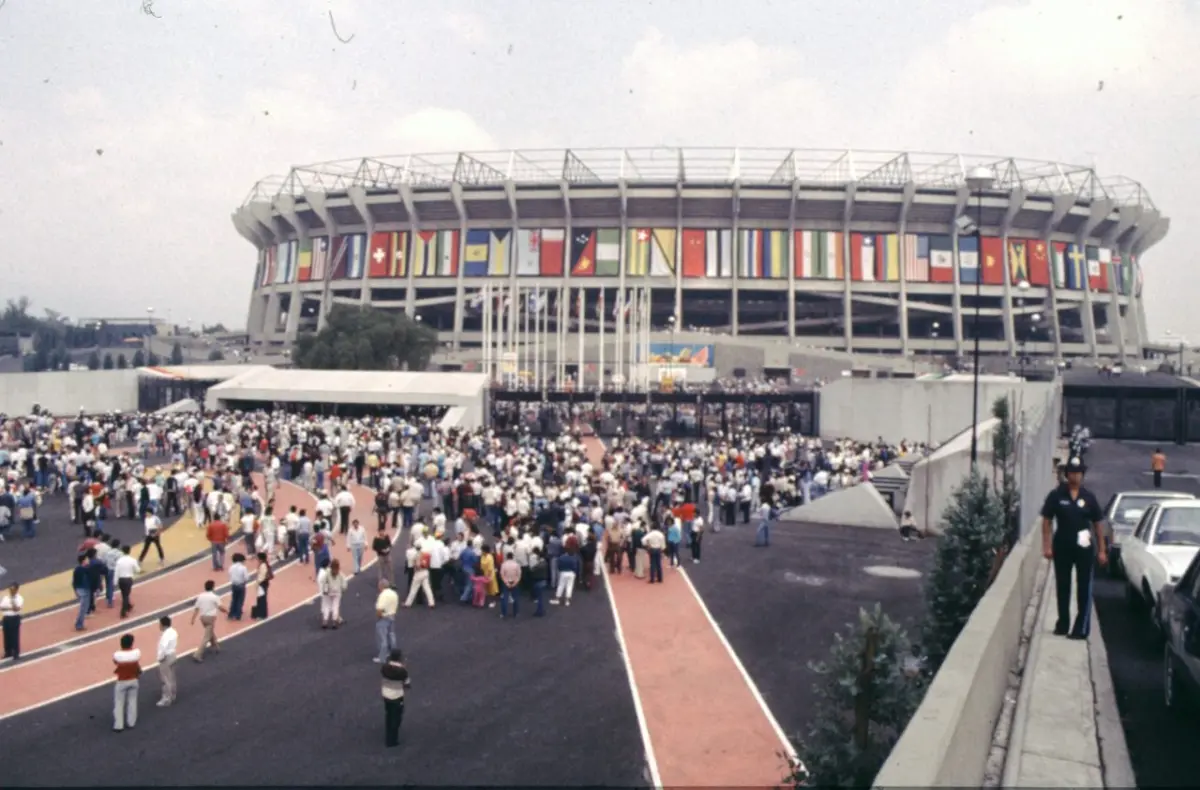
For much of the 20th century, football was marginalized in the United States by baseball, basketball, and American football. In Mexico, by contrast, soccer became an all-encompassing religion and a central pillar of national identity. The ultimate expression of this cultural preeminence arrived with the 1970 World Cup. Financed entirely by private capital from Televisa and designed specifically as a technological marvel, the Estadio Azteca revolutionized sports media. It was the first World Cup broadcast globally via satellite, introducing audiences worldwide to the legendary Pelé and projecting an image of Mexico as a modern nation capable of commanding the global stage.
Sixteen years later, despite a devastating earthquake in September 1985, Mexico successfully hosted the 1986 World Cup, becoming the first nation to host the tournament twice. The Azteca Stadium cemented its mythical status as the battleground where Argentina’s Diego Armando Maradona achieved immortality with both the "Hand of God" and the "Goal of the Century."
The 1994 Turning Point and the Corporate Capture of the Game
By the 1990s, the paradigm shifted. FIFA finally granted Kissinger’s long-held wish, awarding the United States the 1994 World Cup. This decision marked a watershed moment for the financialization of sports, defined by unprecedented coordination between FIFA and corporate sponsors such as Coca-Cola, McDonald’s, MasterCard, and Budweiser.
The 1994 tournament also signaled the twilight of football’s romantic, counter-cultural era. The controversial doping suspension of Diego Maradona—who lamented that authorities had "cut off my legs"—heralded the aggressive globalization of European leagues. Elite European clubs began stripping Latin America of its working-class talent, subordinating the joy of the game to transnational market demands.
This commercialization neatly coincided with the implementation of the North American Free Trade Agreement (NAFTA) in 1994. As neoliberal policies displaced millions of Mexicans northward, Mexican football authorities capitalized on the diaspora’s emotional need for cultural connection. The Mexican national team was effectively transformed into an export product, turning U.S. stadiums in Los Angeles, Houston, Chicago, and Dallas into sacred sites of diasporic belonging through annual fixtures like the MexTour.
The Shift in the Balance of Power
For decades, the statistical gulf between Mexican and American soccer was staggering. Between 1934 and 1985, the U.S. managed a mere two wins against Mexico. However, the 2002 World Cup in South Korea and Japan shattered the old hierarchy. A U.S. team engineered by Bruce Arena and spearheaded by Landon Donovan defeated Mexico 2–0 in the Round of 16.
This on-field pivot was mirrored by institutional changes. While Major League Soccer (MLS), launched in 1996, successfully built soccer-specific stadiums, developed youth academies, and attracted global icons like David Beckham, Zlatan Ibrahimović, and Lionel Messi, Liga MX increasingly mirrored American franchise logic. The creation of the Leagues Cup and the adoption of closed-league mechanics underscored how Mexican football had organized itself along American corporate lines.
Supporting Context & Metrics
The transformation of North American soccer is best illustrated through long-term performance metrics and structural shifts over the past century:
- Head-to-Head Dominance: From 1934 through 1985, the United States secured a meager 2 victories against Mexico. From 1986 through 2025, the dynamic shifted drastically, with the U.S. defeating Mexico 22 times across various competitions. By 2025, the all-time series stood at 38 Mexican wins, 24 U.S. wins, and 17 draws.
- Regional Championships (CONCACAF): Prior to 1986, Mexico had claimed five continental titles (1947, 1949, 1965, 1971, 1977), while the U.S. had won none. In the era of the modern Gold Cup (established in 1991), the U.S. surged forward, capturing 7 titles against Mexico’s 5 post-1986 championships, bringing their modern totals into a much tighter balance.
- Domestic League Evolution: The North American Soccer League (NASL) of the 1970s and 80s burned bright and fast, folding in 1984. In contrast, MLS (founded in 1996) achieved systemic permanence, culminating in contributing more players to the 2026 World Cup than any other league in the Western Hemisphere.
Official Statements & Historical Perspectives
The ideological clash between political ambition and sporting culture is immortalized in the public record:
"Soccer has never taken hold in the United States… I have been an avid soccer fan ever since my youth in Fuerth, a soccer-mad city in southern Germany."
— Henry Kissinger, The Washington Post, Spring 1983.
Following his defeat by Mexican soccer architect Guillermo Cañedo, Kissinger offered a wry assessment of international sports administration:
"The politics of soccer make me nostalgic for the politics of the Middle East."
— Henry Kissinger, reacting to Mexico winning the 1986 World Cup bid.
Reflecting on his abrupt and controversial dismissal from the 1994 World Cup stage, Diego Maradona captured the changing political economy of the sport:
"They cut off my legs."
— Diego Maradona, on his controversial doping suspension.
Future Outlook: The 2026 World Cup and Beyond
The 2026 FIFA World Cup, co-hosted by the United States, Mexico, and Canada, serves as a stark barometer of how far the North American footballing landscape has evolved. On the surface, a tri-national tournament is billed as a celebration of regional integration. In practice, however, the allocation of matches mirrors contemporary geopolitical power dynamics. The United States hosts the vast majority of matches and the entire decisive knockout phase—not necessarily due to an organic, historical soccer culture, but because of its unmatched logistical infrastructure, financial muscle, and corporate sponsorship apparatus.
Mexico’s role has been relegated to that of an important historical satellite rather than the center of the global stage. Notably, the legendary Estadio Azteca was assigned an opening ceremony rather than the tournament final, offering a polite nod to its legacy while firmly ceding economic and operational control to the north.
Furthermore, the socio-political backdrop of the 2026 tournament marks a profound departure from the sunny neoliberal cosmopolitanism that promised open borders during the 1994 World Cup. Today’s sporting environment operates under the shadow of stringent immigration restrictions, geopolitical tensions, and trade friction. The treatment of the Iranian national team—denied permission to remain on U.S. soil overnight and forced to commute from Tijuana under grueling conditions—demonstrates that modern geopolitical hostility easily overrides any remaining illusions of sporting equality.
At the same time, the complete financialization of football has neutered player activism. Where figures like Maradona once challenged governing bodies and global power structures, contemporary icons operate as risk-free corporate assets. When the greatest player of the modern era, Lionel Messi, is photographed smiling and applauding at the White House alongside political leaders launching military campaigns, it illustrates the profound difficulty of individual defiance when a career depends entirely on transnational corporate ecosystems. Even prominent European stars like Kylian Mbappé must calibrate their socio-political stances to avoid alienating reactionary commercial networks.
Ultimately, the 2026 World Cup symbolizes the culmination of a four-decade process. International football has become fully integrated into the global market. While the sport continues to unite the world and provide moments of brilliance, it now operates entirely under the hegemonic auspices of the United States—a nation that may never have fully embraced the soul of soccer, but ultimately ensured it would never let any other nation capture the global spotlight uncontested.





Comments
Facebook App ID not configured. Please add it in the Customizer.