
The 2026 FIFA World Cup, jointly hosted across North America (en América del Norte), arrived under the heavy machinery of an expanded 48-team format. Designed to maximize both the global ambitions of emerging football nations and FIFA’s insatiable appetite for broadcast revenue, this tournament sits at a strange crossroads. It balances the tedious, sprawling realities of modern international association football against the hyper-accelerated dopamine delivery of viral social media clips.
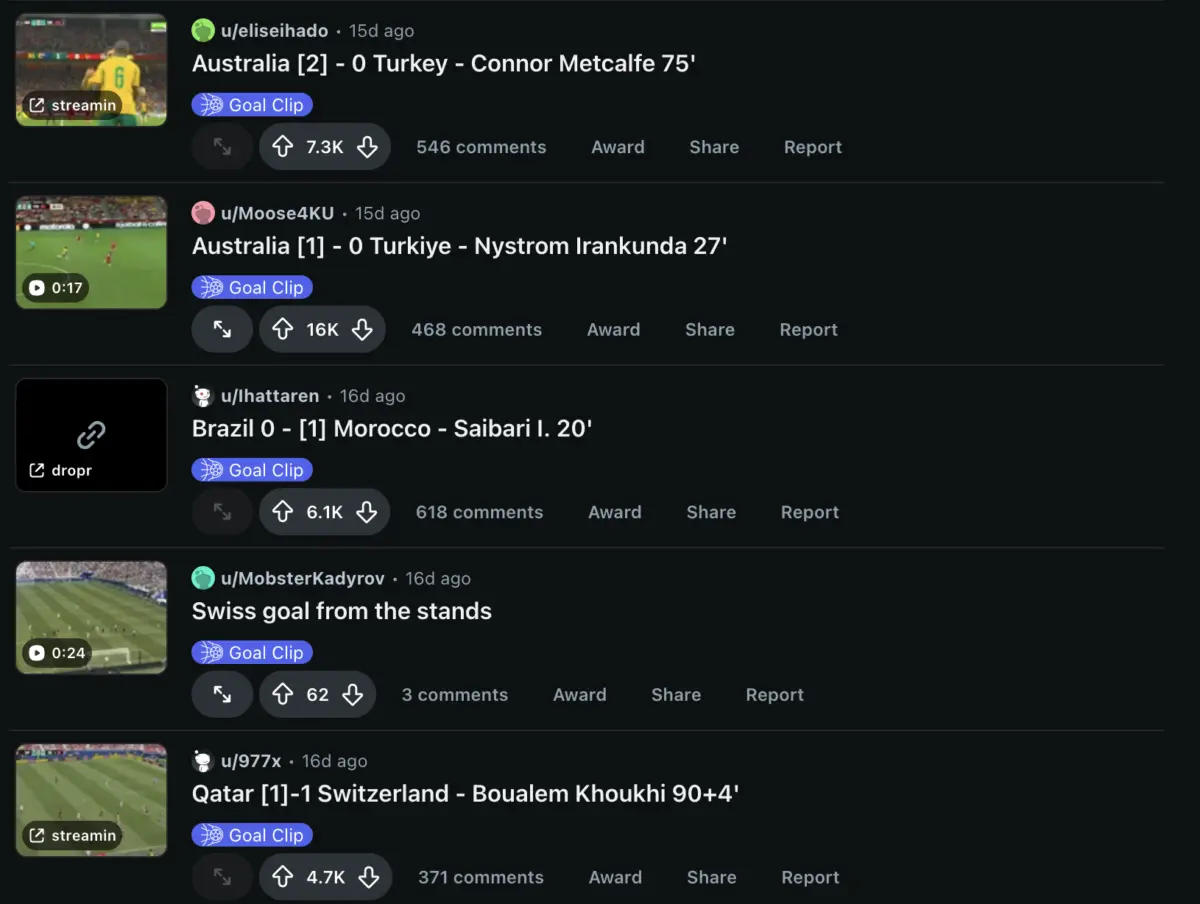
Before Lionel Messi seized the tournament’s primary narrative focus during its opening week, the undisputed darling of internet communities—specifically Reddit’s sprawling r/soccer forum—was not a tactical masterclass or a geopolitical triumph. It was a seventeen-second loop of 20-year-old Australian winger Nestory Irankunda scoring against Türkiye during the group stage.
This single play encapsulates the central paradox of contemporary football consumption. The full tournament offers an exhausting gauntlet of 72 group-stage matches spanning roughly 120 hours of game-clock runtime. It features lumpy, semi-coherent squads thrown together by happenstance passport rules and truncated training camps.
Read Also
Yet, out of this prosaic, defensive mass emerges the occasional viral distillation of pure sporting poetry. This article examines the anatomy of Irankunda’s viral strike, the structural and financial contradictions of the expanded 2026 World Cup, and the cultural evolution of football as experienced through the prism of the 17-second digital clip.
Detailed Chronology: The Anatomy of a Seventeen-Second Masterpiece
To understand why a short video loop can captivate millions of fans who may never watch a complete 90-minute group-stage match, one must dissect the micro-narrative of Irankunda’s 27th-minute strike during Australia’s 2–0 victory over Türkiye.
Phase One: The Unpromising Genesis
The sequence begins with Irankunda receiving a lofted pass in the left channel, roughly 35 yards from the Turkish goal. By all conventional metrics of modern defensive coaching, this is a dead-end position. Turkish central defender Merih Demiral is aggressively stepping out from the central defensive block, while midfielder İsmail Yüksek is rapidly recovering ground from the midfield line. Irankunda’s sole supporting teammate, Touré, is positioned at an awkward, unproductive angle.
In most professional scenarios, a wide winger in this situation is tasked simply with retaining possession: absorbing the defensive pressure, winning a cheap throw-in or tactical foul, or recycling the ball safely backward to an advancing central midfielder.
Phase Two: The Deceptive Non-Touch
Instead of slowing down to gather the dropping ball—the instinctual choice that would have allowed Demiral to close the space and force him toward the sideline—Irankunda executes a counter-intuitive masterpiece of non-action. He lets the ball bounce across his body, spinning instantly to chase it toward the Turkish goal line.
Demiral reads the initial movement, dropping deep while maintaining inside leverage. It is textbook, principled positional defending designed to shepherd the attacker into the unproductive real estate of the sideline. However, as the ball descends toward its second bounce, Irankunda extends his right toe. He executes a delicate, disguised nudge back inside—directly past the sprinting Demiral, using the defender’s own forward momentum against him.
Phase Three: The Coup de Grâce
Irankunda drives laterally across the penalty box, moving from left to right as a convergence of Turkish defenders closes in from all angles. Turkish goalkeeper Uğurcan Çakır steps off his line to narrow the angle. Expecting traditional footballing convention—where momentum and geometry dictate that a sprinting winger must cross the ball across the face of goal toward the far post—Çakır commits his weight preemptively in that direction.
With absolute serenity, Irankunda ignores convention. He rolls a straight, precise shot inside the near post. It is a saveable effort in a vacuum, but entirely un-saveable against a goalkeeper whose weight is already shifting irrevocably in the opposite direction.
As the ball ripples the net, Irankunda sprints to the corner flag, executing a knee-slide before delivering five symbolic punches to the foam padding—a direct homage to Tim Cahill, Australia’s legendary talisman. Australia secures a 2–0 victory, but the true victor is the digital ecosystem, where the goal is instantly clipped, misattributed by a user to a nonexistent player named "Nystrom Irankunda," and blasted across global social media feeds.
Supporting Context & Metrics: The Mechanics of an Expanded World Cup
The viral proliferation of the Irankunda clip highlights a fundamental structural shift in how the 2026 World Cup is being consumed. With 48 teams competing across an unprecedented schedule, the volume of competitive football has outstripped the capacity of the average fan to digest it linearly.

The Group Stage Math and Tournament Dilution
- Total Group Stage Matches: 72 games
- Total Group Runtime: Approximately 120 hours of live match play
- Knockout Qualification Rate: 32 teams advance to the first knockout round (the top two teams from each of the 12 groups, alongside the majority of third-place finishers).
This expansive format means that roughly two-thirds of the tournament field survives the group stage. Consequently, many matches function as low-stakes administrative hurdles rather than existential struggles. Teams are often merely jockeying for a marginally more favorable bracket path in a knockout phase they are statistically likely to exit eventually.
The Prosaic Reality vs. Viral Poetics
Away from the viral highlights, association football remains a stubbornly difficult, grinding sport. Key metrics and structural realities define the modern game:
- Limited Possession: Even elite players maintain direct contact with the ball for a mere two to three minutes out of a sprawling 90-minute fixture.
- The Antinomy of the Sport: A match devoid of goals devolves into frustrating, thwarted running. Conversely, a match entirely devoid of defensive resistance ceases to be football and approaches basketball.
- The Defensive Tax: Elite defensive blocks—anchored by players like William Saliba, Moisés Caicedo, and Thibaut Courtois—are handsomely compensated precisely to intercept, suffocate, and prevent viral clips from ever occurring.
[The Sprawling 120-Hour Group Stage]
       │
       ├──> Prosaic Reality: 88+ minutes of tactical pressing, recycling, and defensive suffocation.
       │
       └──> The 17-Second Exception: Spontaneous, poetic brilliance (e.g., Irankunda's strike).
                    │
                    └──> Amplified globally via digital clips (Reddit, X, TikTok) as the "Primary Episteme."
Official Statements and Institutional Perspectives
The intersection of hyper-commercialized international tournaments and digital fan culture has drawn commentary from governing bodies, analysts, and cultural observers alike.
FIFA’s Commercial Strategy:
Defending the expansion to 48 teams, FIFA representatives have repeatedly emphasized the democratization of the global game. An official tournament spokesperson noted prior to kickoff:
"The expansion of the FIFA World Cup is not merely an administrative adjustment; it is a historic fulfillment of our mandate to grow the game globally. By welcoming new nations to the world stage, we ensure that the transformative power of football reaches communities that have historically been excluded from elite competition."
Tactical Analysts on International Coaching:
The tournament has also exposed the friction between elite club management and national team setups. Commenting on the lumpy, semi-coherent tactical displays of tournament favorites like England, France, and Argentina, veteran sporting analysts have pointed to systemic structural limitations:
"International coaching is fundamentally less intense and less lucrative than the club game. We are seeing major nations experiment with elite club managers, but the reality remains: national teams are hurriedly assembled units operating on stolen training time, often heavily beholden to aging icons rather than tactical coherence."
The Socio-Political Undercurrents:
Beyond the white lines of the pitch, matches like Australia versus Türkiye carry heavy biographical and geopolitical subtexts. Observers noted the sharp contrast between 20-year-old Nestory Irankunda—born in a Tanzanian refugee camp to Burundian parents before immigrating to Perth—and his primary marker, 28-year-old Merih Demiral, a veteran defender associated with nationalist political currents. These invisible human histories rarely surface in standard broadcast packages, yet they form the rich, complicated soil from which momentary sporting brilliance sprouts.
Future Outlook: The Clip Culture and the Future of Football
As the 2026 World Cup progresses past its group stage and into the high-stakes theater of the knockouts, the sport faces an existential reckoning regarding its consumption model.
The traditionalist lament—that younger generations are abandoning the granular, meditative endurance of a full 90-minute match in favor of bite-sized, algorithmically optimized highlights—misses the deeper truth of modern fandom. The 17-second clip does not necessarily replace the match; rather, it acts as a cultural lightning rod, validating the exhaustive, grinding labor of the sport’s prosaic hours.
For hours on end, fullbacks cover ground, goalkeepers safely gather routine crosses, tactical systems hold firm, and through-balls roll harmlessly out of bounds. But the persistence of the game guarantees that disruption will occur. Whether through an improbable solo run by a young winger from Adelaide, an unexpected display of international solidarity in the stands, or a moment of pure tactical farce, football continues to puncture the heavy, commercialized machinery surrounding it.
Ultimately, the World Cup in North America is proving that football’s true genre is neither rigid poetry nor flat prose, but something closer to a sprawling, arduous journey punctuated by sudden, shivering moments of transcendent beauty. The clips will continue to circulate, serving as digital proof that amidst the corporate sponsorship, petrostate sportswashing, and administrative bloat, the world still holds a capacity for spontaneous, unscripted joy.





Comments
Facebook App ID not configured. Please add it in the Customizer.