
Executive Overview
Long before her soaring vocals on "I Will Always Love You" became an international anthem—subsequently cemented as a pop-culture juggernaut by Whitney Houston—Dolly Rebecca Parton was simply a barefoot child navigating the rugged terrain of Pittman Center, Tennessee. Born into the stifling economic reality of post-Depression Appalachia, Parton’s ascent from a one-room cabin along the Little Pigeon River to the glittering heights of global superstardom represents one of the most compelling cultural trajectories in modern American history.
Yet, to understand Dolly Parton solely as a vocalist, actress, and philanthropist is to overlook the complex machinery of her public identity. Parton’s life and career offer a profound case study in the triumphs and tragedies of late-stage capitalism. She utilized the free market to escape rural poverty, transforming herself from a marginalized "farmer’s daughter" into a billion-dollar brand. In doing so, however, she became a canvas upon which American culture projected its deepest desires, anxieties, and ideological contradictions.
This investigative profile examines Parton’s journey through the lens of cultural history, economic realities, and sociological theory. By analyzing her roots in the Pentecostal Holiness tradition, her complex navigation of second-wave feminism, her evolution into a hyper-real simulacrum, and the enduring legacy of her musical output, we uncover the true architecture of an American icon.
Read Also
Detailed Chronology: From the Smoky Mountains to Global Stardom
The Crucible of Appalachia (1946–1964)
Born on January 19, 1946, Dolly was the fourth of twelve children born to Robert Lee Parton and Avie Lee Owens. Her father was a subsistence farmer who sharecropped poor soil before eventually acquiring a modest plot, supplementing his income with grueling manual labor in construction. The family home—a cramped, one-room cabin—stood near the Little Pigeon River, snaking northward from the Smoky Mountains east of Gatlinburg.
Spirituality formed the bedrock of early Parton family life. Her maternal grandfather, a preacher in the House of Prayer, anchored the family in Pentecostal and Holiness traditions characterized by intensely emotional worship services. Like many mid-century American musical legends, including Elvis Presley, Parton’s initial public performances took place within the tight-knit, highly moralistic confines of a rural church congregation. Though she would later diverge from the rigid moral codes of her youth, the underlying spiritual framework remained; as Parton noted decades later upon releasing her 42nd studio album, a foundational belief in a higher power and the miraculous potential of human endeavor remained central to her worldview.
The Nashville Arrival and the Cultural Fault Lines (1965–1975)
Parton’s migration to Nashville in the mid-1960s coincided with a period of profound domestic and international upheaval. On September 9, 1967, she released her debut studio album, Hello, I’m Dolly. Just one day prior, The Doors appeared on The Ed Sullivan Show, defiantly singing the uncensored lines of "Light My Fire" despite network directives.
This juxtaposition captures the cultural fracture of the era: traditional, wholesome American family life was being rapidly challenged by the countercultural hippie movement. Simultaneously, racial tensions were reaching a boiling point across American cities, while the Vietnam War exacted a devastating human toll overseas.
Amid this turbulent backdrop, Parton emerged as a voice for the marginalized working class of the American South. Her early albums—including foundational records like Just Because I’m a Woman (1968), Coat of Many Colors (1971), and Jolene (1974)—bore the unmistakable weight of authentic lived experience. These records established her not merely as a country singer, but as a chronicler of human vulnerability and resilience.
The Rise of the Persona and the Hyper-Real (1976–1986)
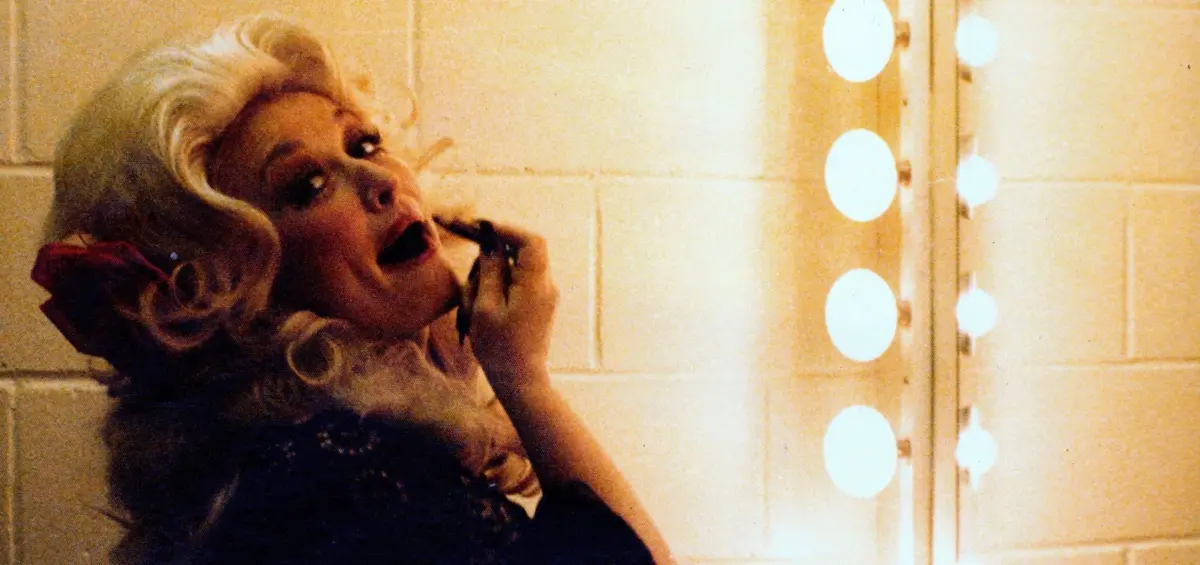
As Parton’s mainstream crossover success accelerated through television variety shows and pop-infused country records, her physical presentation underwent a radical transformation. Leaning heavily into the exaggerated aesthetics of platinum wigs, heavy makeup, and surgically enhanced features, Parton constructed an intentional caricature of Southern womanhood.
Rather than fleeing the derogatory "hillbilly" or "white trash" stereotypes prevalent in post-Bellum American culture, Parton embraced and weaponized them. In a famous 1977 interview with Barbara Walters, when asked if she would have been labeled a hillbilly in Walters’ exclusive circles, Parton famously quipped that she would have "kicked your shins," defending her upbringing as one defined by "country class."
This self-conscious manufacturing of identity reached its physical culmination in 1986 with the opening of Dollywood in Pigeon Forge, Tennessee. Designed to celebrate Appalachian heritage, the theme park offered visitors a curated, highly marketable version of mountain life—a development that fundamentally shifted the economic landscape of Sevier County from traditional blue-collar labor to low-wage tourism.
Supporting Context & Metrics: Sociological and Economic Dimensions
To fully grasp the cultural weight of Dolly Parton, one must examine the intersection of her economic strategy, her feminist positioning, and the theoretical implications of her public image.
The Feminist Paradox and Working-Class Liberation
During the height of second-wave feminism in the late 1960s and 1970s, Parton inadvertently became a beacon of female liberation. Writers like Betty Friedan argued that personal fulfillment for women required creative, autonomous work. Parton embodied this ethos, taking total control of her songwriting catalog, business ventures, and career trajectory.
Her hyper-feminine, cartoonish aesthetic served a dual purpose: it was both an homage to the brassy country women who came before her and a subversive middle finger to patriarchal expectations. By leaning into an exaggerated visual style, she signaled to housewives and working women that femininity could be performed, manipulated, and owned. This trailblazing path laid the groundwork for modern country artists like Kacey Musgraves, Maren Morris, and Cam, who continue to challenge traditional norms within the genre.
Yet, Parton’s political and cultural stances frequently placed her at odds with traditionalist factions. Her vocal support for the LGBTQ+ community and her advocacy against discriminatory legislation (such as North Carolina’s controversial bathroom bills) demonstrated a progressive universalism that often clashed with the conservative baseline of her historic core audience.
The Baudrillardian Lens: Simulacra and Simulation
French theorist Jean Baudrillard argued in Simulacra and Simulation that modern society has replaced all reality and meaning with symbols and signs, to the point where the representation takes on a life of its own. Parton’s public persona mirrors this trajectory precisely.
What began as a genuine rural upbringing wrapped in a heightened entertainment costume eventually swallowed the original reality whole. The "Dolly Parton" encountered by the public—a glittering, self-aware artifact of pop culture—bears little resemblance to the impoverished child of Pittman Center.
Dollywood operates on this exact Baudrillardian principle. Much like Baudrillard’s critique of Disneyland—which exists to convince visitors that the surrounding urban sprawl is "real"—Dollywood presents an impeccably polished, hyper-real simulation of Appalachian life. Ironically, this engineered nostalgia makes the surrounding economic reality—where coal mines and textile mills have been entirely replaced by precarious, low-wage service jobs—feel less authentic by comparison.
Official Statements and Public Discourse
Dolly Parton’s cultural omnipresence has generated decades of commentary from cultural critics, sociologists, and the artist herself.
Reflecting on her relentless drive to transcend her origins, Parton has frequently addressed the motivations behind her career choices:
"I’m not a dumb blonde, I’m just smart enough to look like one."
"You’ve got to be willing to leave your comfort zone if you want to be successful. If you stay in the safe zone, you’ll never know what greatness feels like."
Addressing her balancing act between conservative roots and progressive social advocacy, Parton maintained a consistent philosophy of radical empathy during a 2014 interview with Billboard:
"I think everybody should be treated with respect. I don’t judge people. I try to love everybody… We are all God’s children, or we are all people. And we need to live together with some kind of harmony and respect."
Cultural critics, however, note the growing chasm between her timeless early catalog and her later-stage corporate ubiquity. Cultural historian and media analysts frequently cite her transition from a voice of dirt-road reality to a universal corporate brand as a masterclass in modern reputation management—one where the mask ultimately became the face.
Future Outlook: The Enduring Legacy of an American Institution
As Dolly Parton’s career spans over half a century, the questions surrounding her cultural footprint remain as vibrant as ever. Her philanthropic initiatives—most notably the Imagination Library, which mails free books monthly to millions of children worldwide—ensure a tangible, generational impact that transcends her musical output.
Moving forward, Parton’s legacy will likely be viewed through two distinct lenses:
- The Musical Pioneer: Her songwriting catalog, particularly the raw, confessional masterpieces recorded between 1968 and 1974 (Coat of Many Colors, Jolene, In the Good Old Days), secures her position in the pantheon of American roots music alongside Hank Williams and Johnny Cash.
- The Cultural Architect: Her mastery of media, branding, and postmodern self-invention serves as a blueprint for modern celebrity.
Ultimately, America’s sweetheart from the Smoky Mountains successfully navigated the treacherous waters of the entertainment industry without ever truly losing the populist affection of the public. Whether viewed as a feminist icon, a capitalist success story, or a hyper-real simulation of Southern culture, Dolly Parton remains an indelible fixture of the American consciousness—a living monument to the power of grit, glamour, and great storytelling.





Comments
Facebook App ID not configured. Please add it in the Customizer.