
Executive Overview
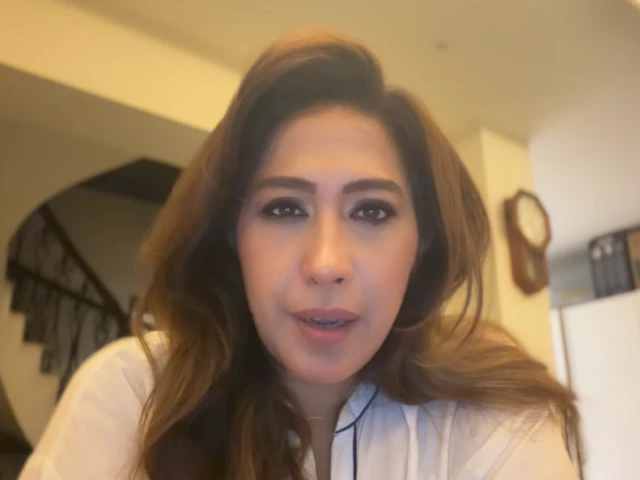
In a society where cultural norms often relegate discussions of bodily autonomy, human development, and intimate behavior to the shadows of taboo, prominent Pakistani news anchor and media personality Meher Bokhari has sparked a national conversation that is both long-overdue and profoundly uncomfortable. Through a viral video shared on her official Instagram account, Bokhari addressed the uncomfortable intersection of modern parenting, juvenile delinquency, and the alarming rise of sexual violence within Pakistan. Her core thesis is as stark as it is challenging: parents can no longer afford to bury their heads in the sand, assuming that moral instruction can be entirely outsourced while ignoring the harsh realities of the digital age.
Bokhari’s remarks did not exist in a vacuum; they were delivered against the grim backdrop of real-world atrocities—high-profile cases of assault and murder involving privileged youth, minors, and vulnerable victims—that have shaken the collective conscience of the nation. By pointing out that perpetrators of these heinous acts are sometimes under the age of eighteen, she forcefully raised a critical question: What are we teaching our children about consent, boundaries, and respect within the four walls of our homes?
The response to Bokhari’s candid critique has been both swift and polarizing, yet notably resonant among a segment of the country’s cultural elite. High-profile Pakistani celebrities, including actors Imran Abbas, Tauseeq Haider, and Amar Khan, have publicly thrown their weight behind her messaging, amplifying a call for systemic change in domestic education. Across social media platforms, ordinary citizens, educators, and mental health advocates have joined the chorus, demanding the introduction of comprehensive sex education and open dialogues about puberty and desire. This in-depth feature explores the contours of Bokhari’s viral commentary, the societal reactions it has catalyzed, the historical taboos surrounding sex education in South Asia, and what this pivotal moment means for the future of parenting and child protection in Pakistan.
Read Also
Detailed Chronology
The Catalyst: Meher Bokhari’s Instagram Address
The discourse began when Meher Bokhari took to her verified Instagram account to publish a video message directed squarely at parents and societal gatekeepers. Recognizing the rising tide of sexual violence and criminality, Bokhari chose to bypass standard journalistic neutrality, adopting instead the tone of an impassioned public intellectual and concerned citizen. She argued that a culture that inadvertently normalizes or turns a blind eye to rape and murder is cultivated when fundamental conversations about human biology, psychological urges, and interpersonal boundaries are treated as shameful.
While conceding that parents cannot act as absolute, fail-safe shields against every external influence their children encounter, Bokhari insisted that primary caregivers retain an inescapable moral duty. That duty involves teaching the rising generation how to distinguish right from wrong, how to process difficult emotional and physical changes, and how to respect the dignity of others.
Highlighting Real-World Atrocities
To ground her abstract critique in undeniable reality, Bokhari cited specific, high-profile criminal cases that have horrified the Pakistani public in recent years:
- The Elite School Assault (Lahore): Bokhari recalled an alleged incident at a prestigious, high-end educational institution in Lahore. According to reports, a group of senior students bribed a facility cleaner to block access to a school washroom for an hour while they sexually assaulted a female classmate. Bokhari used this case to dismantle the classist myth that education and socio-economic privilege insulate youth from committing vile acts.
- The Aizal Ali Case: She referenced the tragic case involving a 17-year-old cousin who allegedly raped a young girl, a horror discovered only when the victim’s mother noticed blood in her diaper.
- The Murder of Ayat Noor: Bokhari also touched upon the brutal killing of five-year-old Ayat Noor, highlighting the escalating brutality manifesting in crimes against children.
By drawing attention to the fact that some of the accused perpetrators in these and similar dockets are minors under the age of 18, Bokhari forced her audience to confront an uncomfortable truth: children are not born predators; they are shaped by their environments, the content they consume, and the absence of moral and structural guidance at home.
The Taboo of Desires and Digital Exposure
Bokhari directed sharp criticism at the domestic double standards prevalent in Pakistani households. She noted that while parents readily enlist religious tutors (Quran teachers) to impart spiritual education, they consistently balk at discussing human anatomy, puberty, and emerging sexual desires.
"If you think that your kid is not seeing hardcore porn and is respectful, please understand if he is going through puberty and has access to social media. Boys have urges and don’t know what to do with their whims, fantasies, desires and wants," Bokhari stated in her video address.
She warned that leaving adolescent boys to navigate the unregulated wild west of the internet—where violent pornography and misogynistic content are readily accessible—without parental intervention is a recipe for disaster. The reluctance of parents to speak up out of personal embarrassment or perceived cultural propriety, she argued, is actively endangering young women and boys alike.
Celebrity Endorsements and the Digital Wave
Within hours of the video going live, it transcended standard social media metrics, sparking intense debate across Instagram, X (formerly Twitter), and Facebook. Prominent names in the Pakistani entertainment industry were among the first to signal their support. Acclaimed actor Imran Abbas shared Bokhari’s video on his Instagram Story, appending the emphatic endorsement: "YES!!! Every single word!" He was quickly joined by fellow luminaries Tauseeq Haider and Amar Khan, who praised the anchor for stepping outside traditional broadcasting boundaries to address a critical social failing.
Concurrently, netizens flooded comment sections and digital forums with testimonials and demands for institutional reform. One widely shared comment asserted, "Sex education needs to be taught in every educational institute," while another thanked Bokhari directly, writing: "Thank you for educating the people of Pakistan. I don’t know when we are going to discuss such things with our children when we still consider such a thing as a TABOO!"
Supporting Context & Metrics
The Societal Landscape of Taboos in Pakistan
To understand the gravity of Meher Bokhari’s intervention, one must examine the socio-cultural architecture of Pakistan regarding sex, puberty, and bodily autonomy. Historically, discussions surrounding human reproduction, sexual health, and consent have been shrouded in absolute silence across traditional South Asian households. This silence is largely enforced by cultural constructs of izzat (honor) and haya (modesty), which often conflate the suppression of knowledge with the preservation of morality.
However, sociologists and child psychologists point out that ignorance does not equal innocence; rather, it equals vulnerability. In the absence of structured, medically accurate, and morally grounded education from parents or schools, children turn to unregulated digital spaces.
Digital Access and the Adolescent Brain
The proliferation of high-speed mobile internet across Pakistan has fundamentally transformed how children and adolescents consume information. According to data from the Pakistan Telecommunication Authority (PTA), broadband subscribers have crossed the 130 million mark, with mobile broadband forming the vast majority of connections. Smartphones are now ubiquitous among teenagers, providing unfettered, unmonitored access to global digital platforms.
Without parental filters or conversations about digital literacy, consent, and healthy relationships, adolescent boys are routinely exposed to hyper-violent, degrading, and misogynistic pornography. Research consistently demonstrates that unmitigated exposure to such content during formative developmental years distorts a young person’s understanding of intimacy, reduces empathy, and normalizes coercion. Bokhari’s commentary directly targets this vulnerability, framing parental engagement not as an optional luxury, but as a critical line of defense.
Official Statements & Public Discourse
While no government ministry or official legislative body has formally issued a policy statement in direct response to Bokhari’s viral commentary, the discourse has reignited debates among educators, child rights activists, and legal experts.
- Child Rights Advocates: Organizations dedicated to child protection in Pakistan have long advocated for age-appropriate life-skills-based education (LSBE) in schools. Representatives from these organizations noted that Bokhari’s intervention brings mainstream media visibility to a topic that non-governmental organizations have struggled to champion against conservative pushback.
- The Entertainment Community: The vocal backing of actors like Imran Abbas, Tauseeq Haider, and Amar Khan signals a shifting tide within Pakistan’s media and cultural elite. By using their substantial social media platforms—reaching millions of impressionable followers—these celebrities are helping to de-stigmatize conversations that were previously considered career suicide or socially unacceptable to discuss publicly.
- Conservative Pushback: Despite the wave of support, the commentary has inevitably drawn muted criticism from traditionalist circles. Detractors argue that introducing topics of sexual health and urges too early can corrupt youth or undermine religious values. However, supporters of Bokhari’s stance counter that it is precisely the failure of the conservative status quo to protect children from abuse that necessitates a radical pivot toward open communication and education.
Future Outlook: Navigating the Path Forward
Meher Bokhari’s viral remarks and the subsequent celebrity-backed solidarity movement represent a watershed moment for public discourse in Pakistan. Yet, the transition from a viral moment to sustainable social reform is fraught with challenges. Several key steps must be taken to convert this momentum into actionable protection for children:
- Curriculum Reform in Educational Institutions: Schools in Pakistan must move beyond the archaic biological instruction found in standard biology textbooks and integrate comprehensive, age-appropriate life-skills and consent education. This curriculum must teach children about bodily boundaries, recognizing inappropriate behavior, and understanding the legal and moral weight of consent.
- Parental Empowerment and Digital Literacy: Workshops, community seminars, and media campaigns should be launched to equip parents with the vocabulary and tools needed to talk to their children about puberty, digital consumption, and respect. Parents must be encouraged to view themselves as trusted guides rather than authoritarian figures who rely on fear and silence.
- Institutional Accountability for Juvenile Offenders: The legal and penal systems must address crimes committed by minors with a balanced approach that combines rehabilitation with strict accountability, ensuring that societal privilege does not shield perpetrators of sexual violence from justice.
- Sustaining Public Dialogue: Media figures, journalists, and influencers must continue to keep these uncomfortable conversations in the public eye, breaking the cycle of shame and stigma that has historically protected abusers at the expense of victims.
Conclusion
Meher Bokhari’s courageous decision to address the uncomfortable realities of modern parenting, juvenile criminality, and societal taboos has pierced the armor of collective denial in Pakistan. By rallying behind her message, influential cultural figures have signaled that the status quo of silence is no longer acceptable. As the nation grapples with the harrowing stories of victims like Ayat Noor and the systemic failures highlighted by Bokhari, the path forward is clear: protecting the next generation requires dismantling taboos, fostering open domestic dialogue, and teaching young men that autonomy, dignity, and safety are non-negotiable human rights.





Comments
Facebook App ID not configured. Please add it in the Customizer.