
Executive Overview
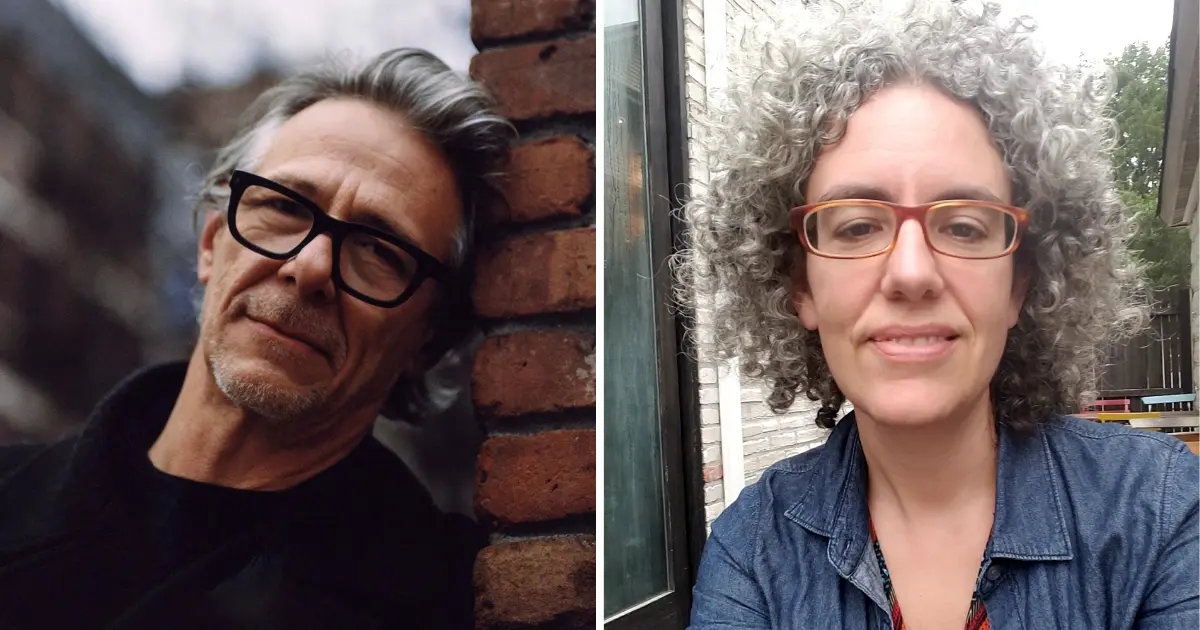
Literary translation is frequently mischaracterized as a solitary, mechanical exercise in linguistic substitution—a matter of pulling words from one language and dropping them into another like items on a conveyor belt. Yet, when an exceptional translator collaborates with a visionary author, the process transforms into an act of profound artistic co-creation. This dynamic is brought into sharp relief through the partnership of acclaimed translator Natasha Wimmer and celebrated Mexican novelist Álvaro Enrigue, whose latest literary endeavor has garnered international critical acclaim, including a coveted spot on The New York Times Top 10 Books of the Year list for You Dreamed of Empires.
In a revealing joint window into their creative process, Wimmer and Enrigue recently discussed the arduous, exhilarating journey of bringing a complex Spanish-language manuscript into English. Their narrative dismantles romanticized notions of instantaneous inspiration, replacing them with a gritty, intellectually rigorous portrait of cross-cultural negotiation. From frantic drafting sessions in the back seat of a car amidst a family road trip to meticulous debates over biblical cadence, regional dialects, and pop-culture cross-references, the evolution of this book showcases the invisible labor required to bridge two distinct literary traditions.
This article explores the anatomy of that collaboration. By examining the precise chronological hurdles of the translation, the cultural and stylistic hurdles overcome by the creative team, and the unique author-translator dynamic that defined the project, we gain a rare insider’s perspective on how contemporary masterpieces cross the linguistic divide.
Read Also
Detailed Chronology: From Spanish Seed to English Incarnation
The Dramatic Genesis and the "Biblical" Turning Point
Every translation has its crucible, but few begin with the abrupt, jarring realization that an entire foundational tone must be re-engineered. For Natasha Wimmer—renowned for her definitive English renditions of Roberto Bolaño’s monumental works, including The Savage Detectives and 2666—the project began under intense pressure. Working against a rigid deadline to produce a sample translation, Wimmer completed an initial pass and submitted it to Álvaro Enrigue for his customary review.
Enrigue’s reaction was immediate and dissatisfied. Rather than validating the early draft, his editorial doubts triggered a deep structural epiphany: the novel’s underlying prose required a decidedly biblical resonance. While the Spanish-language manuscript was still winding its way through the final stages of the domestic publishing pipeline, Enrigue went to work revising the source text. Simultaneously, he challenged Wimmer to reimagine the English phrasing to match this elevated, sacred register.
The turning point of this transatlantic collaboration crystallized around a single, unassuming sentence. In the early draft, a descriptive line read: "In the middle of the plain, add some Spanish missionaries and a church."
Enrigue baulked at the auxiliary verb. Unhappy with the administrative dryness of "add," he posed a deceptively simple question to his translator: "What verb would the Reverend Dr. Martin Luther King Jr. use?"
Working under remarkably chaotic conditions—hunched over a laptop in the front seat of a car while her two small children clamored in the back—Wimmer experienced an epiphany. The answer flashed instantly: "Let there be."
With those three words, the conceptual lock clicked open. That single phrase served as the stylistic master key for the entire passage, establishing a cadence that would inform the rhythm, gravity, and tone of the rest of the book. Despite the cramped conditions and looming deadlines, Wimmer recalls this high-stakes exchange as one of the most intellectually satisfying moments of her professional career.
Navigating Nonstandard Speech and Character Voice
Once the macro-tone of the manuscript was established, micro-level stylistic challenges immediately surfaced. Chief among them was the dialogue assigned to two unforgettable secondary characters: a pair of Yaqui twins who are temporarily released from prison to aid a search party hunting for a captured woman.
These characters operate in a delicate narrative space. They are relentless pranksters, prone to clowning around at every turn, yet they are simultaneously deeply dangerous men. Compounding this challenge, they do not speak standard, textbook Spanish. Their speech patterns are colloquial, localized, and rough around the edges.
For a translator, attempting to render nonstandard foreign speech into English is a notorious minefield. Translators frequently default to heavy-handed regional American dialects—such as Southern drawls or Appalachian vernacular—which can inadvertently flatten foreign characters, making them sound uneducated, caricature-driven, or dim-witted. This was a trap Wimmer was determined to avoid, particularly because these twins are secretly the sharpest, most perceptive members of the search party.
To resolve this, Wimmer walked a tightrope of calculated risk. She avoided anchoring the characters to any single, hyper-specific geographic dialect. Instead, she selected generic markers of country speech—such as "’ain’t" and "’cause"—and heavily layered the dialogue with unusual, rhythmic contractions. Examples included lines like, "And nobody yet’s offered us tobacco" and "half the horse’ll have died on us."
This deliberate stylistic choice achieved a dual purpose: it successfully preserved the humorous, folksy flavor of the original Spanish without diminishing the characters’ intelligence, while amplifying the biting, underlying sarcasm that permeates nearly all of their dialogue.
Supporting Context & Metrics: The Mechanics of Modern Translation
The Anatomy of Authorial Involvement
The relationship between an author and their translator is famously variable. Some authors prefer a hands-off approach, viewing translation as a distinct, autonomous art form and preferring to keep their distance from the English-language reincarnation of their work. Others hover nervously, micro-managing every lexical choice.
Álvaro Enrigue firmly belongs to a third, highly collaborative category: an author who not only relishes involvement in the translation process, but actively champions it as an extension of his own creative output.
Throughout the translation of the novel, Enrigue served as an active co-pilot. His input extended far beyond theoretical discussions about tone; he provided exhaustive, highly detailed marginal notes that functioned as brilliant, standalone literary riffs. These notes proved essential in decoding complex Mexican cultural references that initially threw Wimmer for a loop.
In some instances, Enrigue’s editorial interventions playfully bridged cultural divides by schooling Wimmer in her own cultural heritage. Wimmer recalls being completely baffled by the phrase "Logia de los Bufalos Mojados" as it appeared in the text. It was Enrigue who stepped in to explain that this mysterious "Lodge of Wet Buffalos" was none other than the Water Buffalo Lodge—the fictional secret society immortalized by Fred Flintstone and Barney Rubble in American pop culture. Through such interventions, Enrigue ensured that the translation maintained a rich, multi-layered resonance capable of engaging readers across linguistic and cultural boundaries.
Official Statements & Artistic Vision
Defining the Aesthetic: From Spaghetti Western to Met Opera
To truly understand the unique texture of Enrigue’s fiction, one must look past standard literary categorizations and examine the author’s own conceptual metaphors. When asked to describe the book through an image, metaphor, or musical piece, Enrigue and Wimmer offered starkly different yet complementary perspectives.
Wimmer redirected the spotlight squarely onto Enrigue’s mastery and the collaborative alchemy that brought the text to life, acknowledging that the recognition their work received was a direct product of the author’s vision combined with the enigmatic art of translation.
Enrigue, however, provided a vivid cinematic and musical metaphor for the novel’s stylistic DNA:
"I wanted to write a spaghetti western, but it ended up becoming something more lyrical. And somehow it’s both things at the same time. Like Clint Eastwood with his sarape, his cigarette, and his gun, but in the Met Opera proscenium."
This striking juxtaposition—the gritty, dusty nihilism of Sergio Leone’s cinematic West colliding with the high-art, acoustic grandeur of the Metropolitan Opera House—encapsulates the stylistic friction that makes Enrigue’s work so compelling. It is a world where raw, violent historical realities share space with elevated, almost operatic prose, demanding a translation team capable of capturing both the grime of the frontier and the poetry of the stage.
Future Outlook: The Enduring Legacy of Cross-Cultural Collaboration
As the publishing landscape increasingly globalizes, the visibility of literary translators has slowly begun to rise. No longer relegated to anonymous line items on copyright pages, translators like Natasha Wimmer are rightfully recognized as literary artists in their own right, shaping the contours of contemporary world literature.
The success of You Dreamed of Empires—and the rigorous, joyful partnership between Enrigue and Wimmer that birthed it—sets a high-water mark for contemporary fiction. It demonstrates that when translation is approached not as a mechanical chore, but as an intimate, high-stakes dialogue between author and translator, the resulting work transcends its original language to achieve something universal.
As Enrigue continues to write from New York City, and Wimmer continues to translate from her home in Brooklyn, their ongoing collaboration stands as proof that the finest literature is often born in the spaces between languages—forged in the back seats of cars, debated through brilliant marginal notes, and unified by the timeless artistic command of "Let there be."





Comments
Facebook App ID not configured. Please add it in the Customizer.