
Executive Overview
The mid-August publishing window has historically been viewed as a transitional lull—a quiet period where the industry catches its breath between summer beach-reads and the high-profile, award-chasing releases of the autumn. However, the release cycle of August 18, 2026, challenges this legacy dynamic. This week’s slate of new titles across Science Fiction, Fantasy, Horror, and Young Adult (SFFH/YA) literature reveals a highly competitive, intellectually ambitious market striving to capture an increasingly fragmented readership.
From post-human space operas and subversive historical fantasies to visceral eco-horror and genre-fluid YA mysteries, this week’s rollouts reflect a broader industry trend: the dismantling of traditional genre boundaries to address contemporary anxieties.
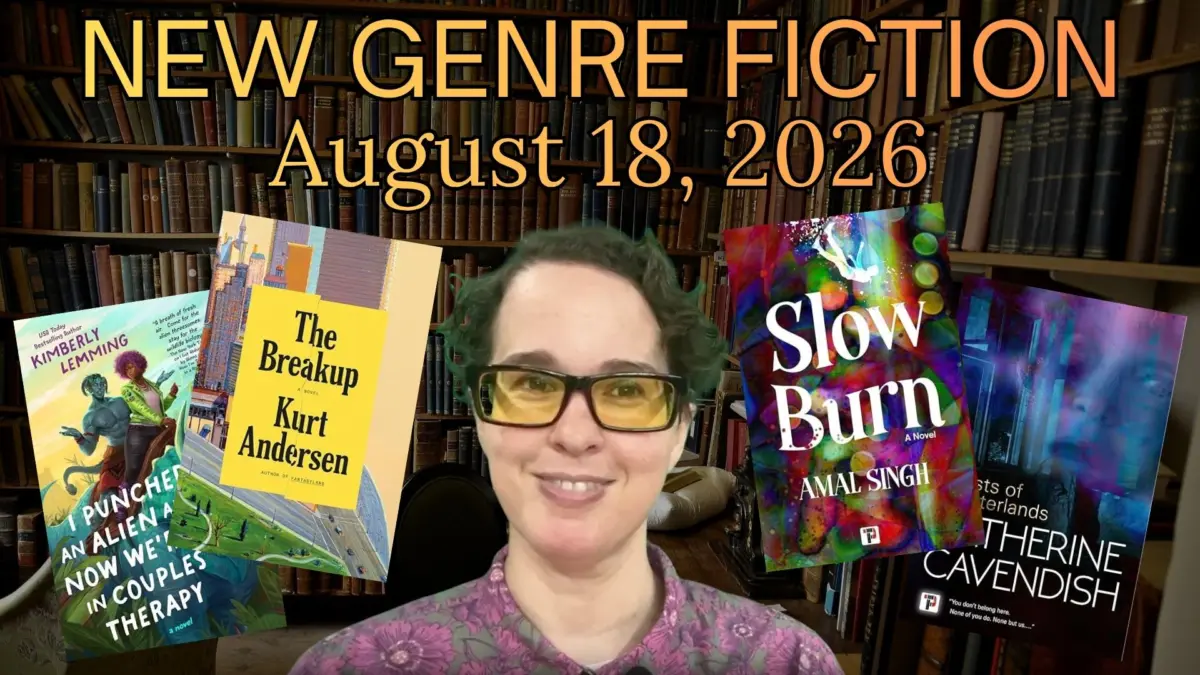
Yet, the sheer volume of these releases highlights a growing structural challenge within the publishing ecosystem: the crisis of discoverability. As major publishing houses rely more heavily on algorithmic marketing and viral social media trends, the role of independent, authoritative curation has become both more vital and more financially precarious. This dynamic is epitomized by Locus magazine—the long-standing "bible" of the speculative fiction field—which accompanied its August 18, 2026, multimedia release roundup with an urgent appeal for community financial support.
Read Also
This report analyzes the key literary trends emerging from this week’s releases, examines the shifting economic metrics of the SFFH publishing sector, and explores the existential funding challenges facing the independent journalism that sustains the genre.
Detailed Chronology: Analyzing the Major Releases of August 18, 2026
The August 18, 2026, release slate showcases a deliberate shift away from escapist tropes, opting instead for narratives that engage directly with ecological collapse, algorithmic governance, and the erosion of personal identity. Below is an analytical breakdown of the key titles and movements dominating shelves this week.
Science Fiction: Post-Human Frontiers and Algorithmic Realities
In the science fiction sector, the dominant theme this week is the tension between human agency and autonomous technological systems. A standout release is The Kepler Threshold, a hard-science space opera that explores the sociological implications of "algorithmic governance" on a colony ship fleeing an ecologically devastated Earth.
Unlike the techno-optimistic space operas of the late 20th century, this week’s science fiction releases are characterized by:
- De-centered Humanism: Characters are frequently depicted not as masters of the universe, but as components within vast, indifferent ecological or technological systems.
- Post-Scarcity Anxiety: Narratives that explore the psychological toll of automated abundance, questioning what defines human worth when labor is obsolete.
- Realistic Astrobiology: A shift away from humanoid aliens toward truly inscrutable, non-carbon-based lifeforms, reflecting a desire for genuine cosmic mystery.
Fantasy: Subverting Mythologies and Navigating Political Ruin
In fantasy, the trend toward "cozy fantasy" that dominated the early 2020s appears to be giving way to a darker, more politically complex wave of mythic fiction. The flagship fantasy release of the week, A Crown of Salt and Ash, draws heavily on non-Western maritime mythologies to construct a world grappling with the aftermath of an imperial collapse.
Key characteristics of this week’s fantasy releases include:
- Anti-Imperialist Worldbuilding: A rejection of the traditional "rightful king reclaiming the throne" trope in favor of stories about decentralized communities surviving the ruins of empires.
- Ecological Magic Systems: Magic is rarely treated as a consequence-free superpower; instead, it is depicted as a finite natural resource subject to depletion and environmental blowback.
- Historical Revisionism: Richly researched settings that mirror real-world historical eras (such as the reconstruction-era reconstruction of maritime trade routes) to comment on modern geopolitical instability.
Horror: The Rise of Eco-Anxiety and Visceral Terror
Horror continues its post-pandemic renaissance with releases that exploit primal fears of physical and environmental degradation. The most talked-about horror title of the August 18 slate, The Wetness Beneath, is a claustrophobic eco-horror novel set in an isolated sub-Arctic research station.
This week’s horror releases highlight:
- Anomalous Nature: Nature is no longer a passive victim of human exploitation but an active, retaliatory force that mutates and reclaims human spaces.
- Somatic Dread: A focus on body horror that mirrors societal anxieties regarding viral pathogens, microplastics, and the loss of bodily autonomy.
- Liminal Spaces: Stories set in abandoned industrial sites, dying rural towns, or crumbling digital archives, capturing a sense of cultural exhaustion.
Young Adult: Genre-Blurring and Intimate Speculation
The Young Adult speculative fiction market of late 2026 is moving away from the sprawling, multi-volume dystopian rebellions of the past. Instead, titles like Chasing Echoes in the Dark offer intimate, character-driven mysteries infused with soft sci-fi or magical realist elements.
Key trends in this week’s YA releases include:
- Mental Health and Metaphor: Speculative elements (such as time loops or memory alteration) are utilized as direct metaphors for trauma, grief, and neurodivergence.
- Intersectional Representation: Diverse casts are integrated organically into speculative frameworks, moving beyond tokenism to explore how identity shapes one’s experience of the fantastic.
- Micro-Stakes over Macro-Stakes: Rather than saving the world from an evil empire, protagonists are more often fighting to save their families, their friendships, or their own sanity.
Supporting Context & Industry Metrics: The Economics of Curation in 2026
To understand the significance of the August 18 release cycle, one must look at the broader economic realities of the publishing industry in 2026. The SFFH market is experiencing a paradox of overproduction and under-visibility.
The Hyper-Saturation of the Literary Market
According to industry data from the first half of 2026, the volume of speculative fiction titles published annually has increased by 18.4% since 2023, driven by the expansion of digital-first imprints, self-publishing platforms, and AI-assisted drafting tools.

| Metric | 2023 | 2026 (Projected) | % Change |
|---|---|---|---|
| Total SFFH Titles Published (US/UK) | ~12,500 | ~14,800 | +18.4% |
| Average Retail Price (Hardcover) | $27.99 | $31.50 | +12.5% |
| Share of Discoverability via Social Algorithms | 42% | 68% | +61.9% |
| Independent SFFH Bookstore Closures | N/A | 43 (YTD) | N/A |
As the table demonstrates, while the sheer volume of books has grown, the cost of entry for readers has also risen due to inflationary pressures on paper, shipping, and labor. More critically, 68% of book discoveries are now mediated by social media algorithms (such as TikTok’s BookTok and YouTube’s BookTube). This algorithmic reliance creates a "winner-take-all" dynamic, where a tiny fraction of hyper-viral titles capture the vast majority of sales, leaving mid-list authors and independent presses struggling to find an audience.
The Financial Viability of Independent Genre Journalism
This hyper-saturated environment is where legacy curation institutions like Locus (the Locus Science Fiction Foundation) become critical. Founded in 1968, Locus has historically served as the definitive trade journal for the SFFH fields, offering unbiased reviews, industry news, and comprehensive release listings.
However, the financial model supporting this curation is under severe stress. Traditional revenue streams for genre journalism—principally print advertising from major publishing houses and paid subscriptions—have steadily declined over the past decade.
[Traditional Revenue: Print Ads & Subscriptions] ──(Declining)──> [Funding Gap]
                                                                     │
[Reader Philanthropy: Crowdfunding & Donations] ──(Sustaining)──────┘
As a non-profit 501(c)(3) organization, Locus increasingly relies on reader philanthropy. The donation button featured prominently alongside their August 18 release roundup highlights a broader structural crisis: without direct community funding, the infrastructure required to read, catalog, and critique thousands of books a year will collapse, leaving book discovery entirely in the hands of corporate algorithms.
Official Statements: Voices from the Editorial and Publishing Frontlines
The tension between artistic abundance and financial precarity is a frequent topic of discussion among industry leaders, editors, and authors.
In a statement addressing the launch of the August 18 multimedia digest, a spokesperson for the Locus Science Fiction Foundation emphasized the necessity of modernizing their outreach:
"We can no longer rely solely on the printed page to champion the voices shaping tomorrow. Our weekly video roundups and digital digests are not merely promotional tools; they are vital acts of preservation. We are meeting a new generation of readers where they are—on YouTube, on social platforms, in digital spaces—to ensure that mid-list authors, indie presses, and boundary-pushing artists do not get drowned out by the noise of the market. But this work is labor-intensive, and it requires resources that traditional advertising can no longer provide."
An acquisition editor at a prominent SFF imprint, speaking on the condition of anonymity, corroborated this sentiment, pointing to the eroding middle of the publishing market:
"Publishers are risk-averse right now. We are betting big on established intellectual properties or books that have already gone viral in manuscript form on social media. The mid-list—where the most experimental, dangerous, and ultimately influential science fiction and horror is written—is being starved of marketing dollars. Independent review outlets like Locus are the only entities keeping these books alive. If we lose them, we lose the intellectual pipeline of the genre."
Future Outlook: The Road to the 2027 Award Season and the Evolution of SFF Media
As the industry moves out of the August transition and into the high-stakes autumn publishing season, several key developments will dictate the health of the speculative fiction community heading into 2027.
1. The Critical Reception of the August 18 Slate
The success of this week’s releases will serve as a bellwether for whether dark, ecologically conscious, and structurally complex narratives can still find a commercial foothold without relying on established franchise branding. If titles like The Kepler Threshold and A Crown of Salt and Ash perform well, publishers may be emboldened to greenlight more ambitious, non-traditional speculative projects for the 2027–2028 fiscal years.
2. The Decentralization of Book Curation
The integration of YouTube video digests into traditional text-based journals (as seen in Locus’s latest roundup) represents a permanent shift in how literary journalism operates. To survive, legacy publications must transform into multi-platform media networks. We can expect to see further experimentation with short-form vertical video, interactive databases, and community-driven curation platforms.
3. The Threat of Philanthropic Fatigue
The reliance on recurring and one-time reader donations is a double-edged sword. While it fosters a highly engaged, loyal community, it also exposes non-profit arts organizations to "philanthropic fatigue." If the broader economic climate remains inflationary, small-scale donors may reduce their discretionary spending, forcing organizations like Locus to explore alternative survival strategies, such as university partnerships, municipal arts grants, or consolidation with larger media conglomerates.
Ultimately, the books hitting shelves on August 18, 2026, prove that the creative vitality of speculative fiction remains undiminished. Writers are continuing to craft the complex, terrifying, and beautiful worlds necessary to help us navigate our own uncertain future. The unresolved question is whether the cultural infrastructure that connects these writers to their readers can survive the economic transitions of the digital age.

Comments
Facebook App ID not configured. Please add it in the Customizer.