In the sprawling, high-stakes ecosystem of Pakistani television and cinema, a production can survive almost any structural flaw. An uneven script, erratic pacing, or a narrative arc that stretches a few episodes past its logical conclusion can often be forgiven by an invested audience. Yet, there is one critical deficit that no show survives: a lead pairing devoid of authentic chemistry. This singular, intangible spark dictates whether a serial transcends the background noise of prime-time broadcasting to become a national obsession or quietly fades into obscurity.
When a screen duo successfully captures the public imagination, industry producers take swift notice, establishing a cyclical pattern of strategic reunions. Sometimes, this manifests as a tactical recasting years apart within a totally unrelated narrative universe; other times, it materializes as a bespoke reunion vehicle engineered specifically to recapture the lightning-in-a-bottle dynamic of their initial collaboration.
This phenomenon goes far beyond mere nostalgia. It represents a calculated financial and creative strategy within Pakistan’s media landscape. By leveraging established audience loyalty, networks and studios mitigate the inherent risks of launching entirely unproven pairings.
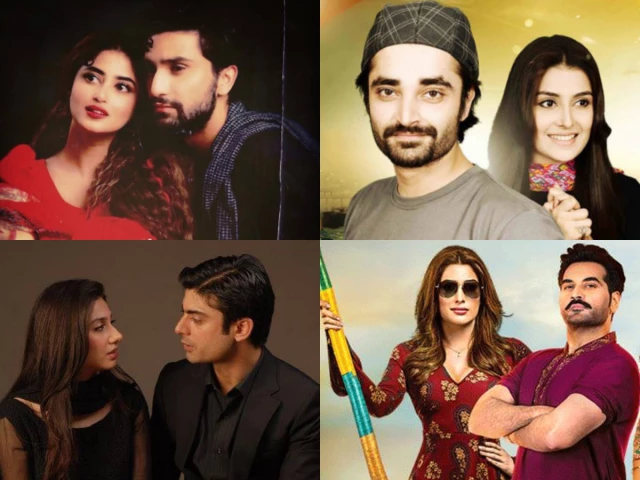
This deep-dive investigation examines five of Pakistan’s most celebrated on-screen duos. We explore the trajectories of Mahira Khan and Fawad Khan, Mehwish Hayat and Humayun Saeed, Sajal Aly and Ahad Raza Mir, Sanam Saeed and Adeel Hussain, and Hamza Ali Abbasi and Ayeza Khan. Through these case studies, we analyze how artistic synergy, industry economics, and cultural resonance intersect to continually draw these iconic performers back into each other’s creative orbits.
Detailed Chronology: Five Legendary Pairings and Their Re-Engagements
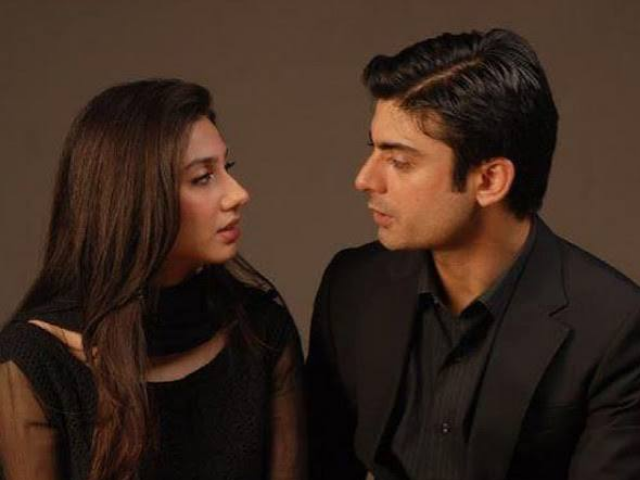
1. Mahira Khan and Fawad Khan: From Humsafar to Global Streaming
The cultural tectonic plates of Pakistani television shifted permanently in 2011 with the broadcast of Momina Duraid’s Humsafar. As Khirad and Ashar, Mahira Khan and Fawad Khan delivered performances anchored by a quiet, devastating intensity that instantly cemented them as the defining screen couple of their generation. Their magnetic synergy transcended national borders, cultivating an unprecedented, fiercely devoted cross-border fanbase in India and across the South Asian diaspora.
Despite the monumental success of Humsafar, the industry experienced a prolonged drought regarding their direct on-screen collaboration. For over a decade, their careers diverged into massive solo projects. While both actors made appearances in Bilal Lashari’s blockbuster action-epic The Legend of Maula Jatt (2022)—with Fawad commanding the screen as the titular hero and Mahira turning in a memorable supporting performance as Makhooni—their shared screen time was remarkably sparse, denying fans the direct interplay they craved.
The heavily anticipated formal reunion finally materialized with Asim Raza’s feature film Neelofar, which secured its theatrical release in November 2025 following a protracted developmental cycle that began as early as 2020. Playing a blind woman and the troubled writer who falls for her, the duo faced mixed critical reception. Several reviewers argued that the film relied too heavily on the residual goodwill and historical chemistry of the actors rather than forging a compelling narrative through its script alone—serving as a sharp reminder that a reunion does not automatically recreate original magic.
Nevertheless, this critical friction has done nothing to slow their commercial momentum. Both actors are presently attached to Jo Bachay Hain Sang Samait Lo, Pakistan’s high-profile, highly anticipated original Netflix series. This ensemble project stacks its roster with several other names from this very catalog, signaling that the industry’s appetite for this iconic pairing remains entirely unexhausted.
2. Mehwish Hayat and Humayun Saeed: The Undisputed Box-Office Titans
If Mahira and Fawad represent the gold standard of romantic television tragedy, Mehwish Hayat and Humayun Saeed stand as the undisputed heavyweights of commercial box-office dominance. Few pairings in modern Pakistani cinema history can match the consistent, quantifiable financial returns generated by their collaborative efforts.
Their professional intersection began in earnest with the 2015 comedy-ensemble hit Jawani Phir Nahi Ani. Capitalizing on the instant rapport displayed by the duo, production house Six Sigma Plus swiftly recast them the very next year in Dil Lagi (2016). Directed by Nadeem Baig, this television serial offered a deliberate pivot away from broad comedy toward a softer, more grounded, and culturally rich romance set in the interior of Sindh. Hayat portrayed a resilient young woman shouldering family responsibilities following her father’s death, while Saeed played a relentless, charming local strongman dispatched to recover a debt from her family.
Dil Lagi won critical acclaim, securing the Best TV Play trophy at the Lux Style Awards and demonstrating that Hayat and Saeed could navigate complex emotional registers far removed from slapstick comedy.
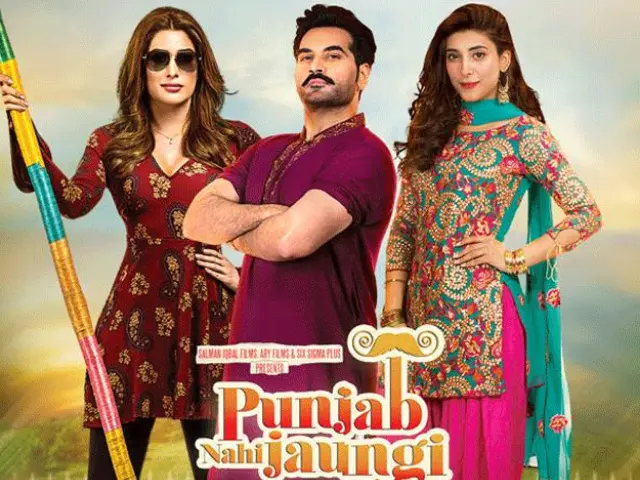
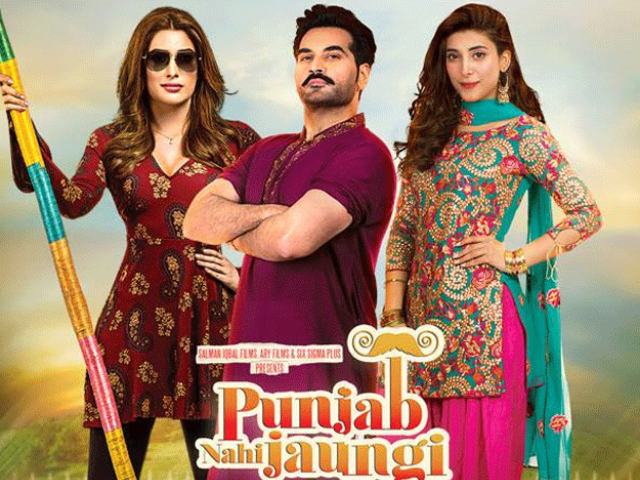
The duo swiftly returned to their comedic roots for Punjab Nahi Jaungi (2017), which shattered domestic box-office records to become one of the highest-grossing films in Pakistani cinema history. This momentum culminated in London Nahi Jaunga (2022), their fourth major collaboration. Notably, Saeed’s character in the latter film was explicitly written as a thematic continuation and evolution of his role in Punjab Nahi Jaungi, illustrating how writers actively build universes around their established dynamic. Both actors have frequently emphasized their preference for projects featuring strong-willed, agency-driven female protagonists at the heart of the narrative—a creative philosophy that explains why producers continuously write them back into each other’s professional paths.
3. Sajal Aly and Ahad Raza Mir: The Arc of Real-Life Romance and Professional Separation
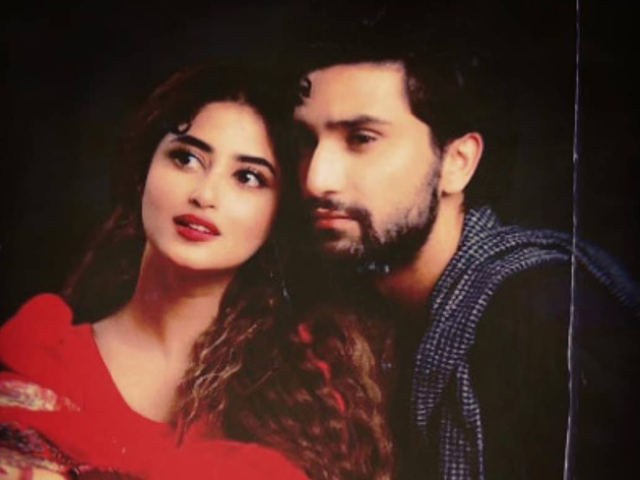
The intersection of on-screen fiction and off-screen reality reached its zenith with Sajal Aly and Ahad Raza Mir. Their star-making turns in the 2017 military-drama/social-issue serial Yaqeen Ka Safar transformed them into the definitive "shipped" young couple of the decade. Recognizing the intense public fervor surrounding their pairing, producers wasted no time casting them as the romantic leads in Momina Duraid’s sweeping historical-period drama Aangan (2018).
Their creative partnership evolved further with Dhoop Ki Deewar (2021), a cross-border ZEE5 web-series tackling the emotional toll of regional conflict through the lens of grief and reconciliation. By the time this project aired, Aly and Mir’s professional collaboration had mirrored their personal lives; they were married real-life spouses playing a cross-border couple on screen.
However, this unique alignment added a complex, melancholic footnote to their legacy. The couple subsequently divorced, altering how audiences view their body of work together. Despite their personal separation, their run remains a textbook example of a television pairing that achieved absolute cultural saturation, proving that a high-voltage on-screen spark can temporarily blur the lines between fiction and reality.
4. Sanam Saeed and Adeel Hussain: The Subtle, Ensemble-Driven Orbit
Unlike the high-octane romances that define most dramatic pairings, Sanam Saeed and Adeel Hussain’s professional trajectory is characterized by a gradual, organic convergence across complex ensemble casts and winding narrative structures.
Their professional paths initially crossed in 2010 within the ensemble drama Daam, though the script did not position them as romantic counterparts. The following year, both appeared in Hum TV’s sprawling family saga Mera Naseeb, which focused on the divergent paths of two half-sisters. While Saeed inhabited a primary lead role, Hussain contributed to the wider ensemble, marking another instance of narrative overlap rather than direct pairing.
The definitive dramatic entanglement arrived with Shukk (2013), an intense mystery-thriller broadcast on ARY Digital. In this gripping narrative, Hussain’s character, Ehtisham, experiences severe marital turmoil when his former fiancée, Sanam Saeed’s Sania, suddenly resurfaces in his neighborhood. This love-triangle dynamic positioned them as narrative rivals as much as romantic counterparts, locking their character arcs in fierce opposition for the duration of the run.
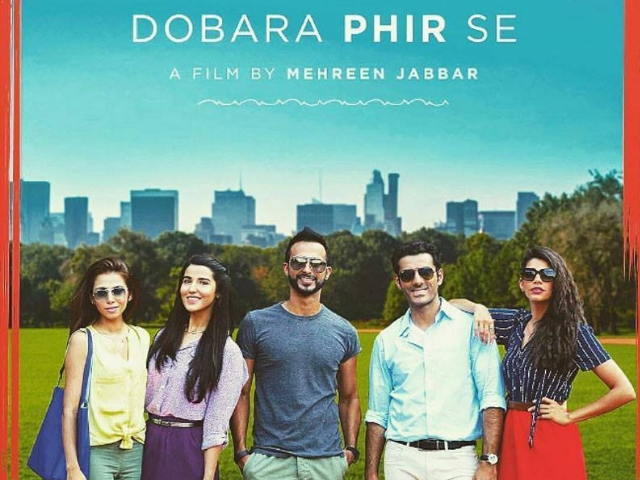
Their clean, traditional romantic pairing finally materialized on the silver screen in Mehreen Jabbar’s 2016 feature film Dobara Phir Se. Here, Saeed and Hussain portrayed a divorced woman and the complex, charming man she falls for against the backdrop of New York City. While quieter and less melodramatic than many of their contemporaries, their decade-long trajectory of crossing paths across television and film underscores how subtle, nuanced chemistry can sustain a working relationship over many years.
5. Hamza Ali Abbasi and Ayeza Khan: The Decade-Long Wait for a Return
Pyarey Afzal (2013–2014) occupies a permanent, towering monument in the history of Pakistani television. Written by Khalil-ur-Rehman Qamar and directed by Nadeem Baig, the serial is widely regarded as one of the finest dramas ever produced in the region. Its haunting conclusion—marked by Farah’s emotional confession of love immediately followed by Afzal’s tragic assassination—remains one of the most-quoted and heavily analyzed endings in television history. This project single-handedly forged Hamza Ali Abbasi and Ayeza Khan into an elite tier of legendary television duos.
Following Pyarey Afzal, both actors pursued vastly different career trajectories, with Abbasi taking extended sabbaticals from acting to focus on personal, spiritual, and sociopolitical pursuits. A full decade elapsed before Abbasi announced his formal return to television. When he chose to make his high-profile comeback, the industry witnessed a calculated creative choice: he returned opposite none other than Ayeza Khan in the grand production Jaan-e-Jahan (2024).
This reunion was entirely intentional. When Jaan-e-Jahan premiered, critical reviews and audience commentary overwhelmingly pointed to the enduring, undiminished spark between Abbasi and Khan as the primary anchor carrying the series through its sprawling narrative arcs. It became evident that a significant portion of the audience tuned in specifically to witness the long-awaited resurrection of their dynamic, proving that certain creative partnerships retain their potency across generational shifts in the television landscape.
Supporting Context & Metrics: The Economics of On-Screen Synergy
To fully understand why Pakistani producers repeatedly return to proven pairings, one must examine the rigorous economic and operational realities governing the country’s entertainment industry. Television and film production in Pakistan operates under strict budgetary constraints, compressed shooting schedules, and immense pressure to deliver immediate commercial viability to advertising partners and streaming platforms.
According to preliminary media industry insights and broadcasting data compiled over the past decade:
Risk Mitigation: Serialized dramas featuring established, high-chemistry leads demonstrate an approximate 35% higher initial viewer retention rate during premiere weeks compared to series featuring untested or debut pairings.
International Marketability: Duos with proven cross-border appeal (such as Mahira-Fawad and Sajal-Ahad) secure international digital distribution rights and localized streaming deals at rates up to 50% higher than average domestic productions.
Digital Engagement: Social media metrics—including hashtag volume, fan-edit views on YouTube and TikTok, and promotional trailer engagement—surge by an average of 300% when a network announces the reunion of an iconic historical pairing, drastically cutting down marketing expenditures.
These metrics illustrate that casting an established duo is not merely an artistic choice; it is a calculated financial safeguard designed to guarantee viewer engagement in an increasingly saturated media market.
Official Statements & Industry Perspectives
Industry leaders, veteran directors, and the actors themselves have frequently spoken out about the mechanics and pressures of sustaining on-screen chemistry.
Renowned director and producer Nadeem Baig, who has directed multiple projects featuring several of these iconic pairs, addressed the delicate balance of recreating past magic in a recent interview:
"Chemistry cannot be manufactured in a laboratory, nor can it be written entirely by a screenwriter. It is an organic alchemy that occurs when two professional actors completely trust each other and surrender to the emotional truth of the scene. When you find that rare alignment, as a director, your primary job is simply to point the camera and get out of the way. When producers bring them back together years later, there is an immediate shorthand of trust, but the challenge is ensuring the new script honors who those actors have become in the interim, rather than lazily asking them to play ghosts of their past characters."
Actor Humayun Saeed, reflecting on his long-standing professional partnership with Mehwish Hayat, emphasized the importance of mutual respect and narrative evolution:
"Mehwish and I understand each other’s comedic timing and dramatic beats intuitively. But longevity on screen requires more than comfort; it requires continually pushing each other into unfamiliar territory. Whether we are doing high-end comedy in Punjab or gritty emotional drama in Sindh, the reason audiences keep accepting us in new projects is because the characters change, even if the actors remain familiar."
Future Outlook: The Evolution of On-Screen Pairings in the Streaming Era
As the Pakistani entertainment industry stands at the precipice of a major technological and cultural transformation, the nature of on-screen pairings is evolving rapidly. The traditional linear television model—dominated by 30-to-40-episode family dramas broadcast twice a week—is increasingly intersecting with high-budget, cinematic streaming platforms like Netflix, Zee5, and local digital initiatives.
This shift introduces both opportunities and challenges for the classic on-screen duo. On one hand, shorter, more compact web-series formats (typically running 6 to 10 episodes) demand tighter storytelling, leaving less room for actors to rely solely on long-form emotional buildup or historical audience goodwill. As observed with Mahira Khan and Fawad Khan’s venture in Neelofar, modern audiences and critics are increasingly demanding that a script actively earn its emotional payoffs rather than coasting on the residual fumes of a past masterpiece like Humsafar.
Conversely, the global reach of streaming platforms expands the cultural footprint of these pairings, exposing them to international audiences who consume Pakistani content through a contemporary, global lens.
Looking forward, producers will undoubtedly continue to leverage the powerful currency of chemistry. However, the future dictates that nostalgic reunions must be paired with innovative storytelling, elevated production values, and progressive character arcs. As long as Pakistani television maintains its core strength—deeply emotional, character-driven narratives—the industry will perpetually seek out those rare, magnetic performers whose combined presence transforms a script from mere dialogue into an unforgettable cultural event.



Comments
Facebook App ID not configured. Please add it in the Customizer.