
Executive Overview
The landscape of mobile computing has long been dominated by power-hungry, high-refresh-rate OLED and LCD displays. While these screens excel at media consumption, gaming, and vibrant color reproduction, they come with significant drawbacks: eye strain from prolonged exposure, abysmal outdoor readability under direct sunlight, and notoriously short battery life. For years, a dedicated niche of consumers has championed E-Ink technology as the ultimate antidote to modern screen fatigue. However, utilizing electronic paper on a daily driver smartphone has historically meant sacrificing multimedia capabilities, enduring sluggish processor speeds, and coping with monochrome limitations.
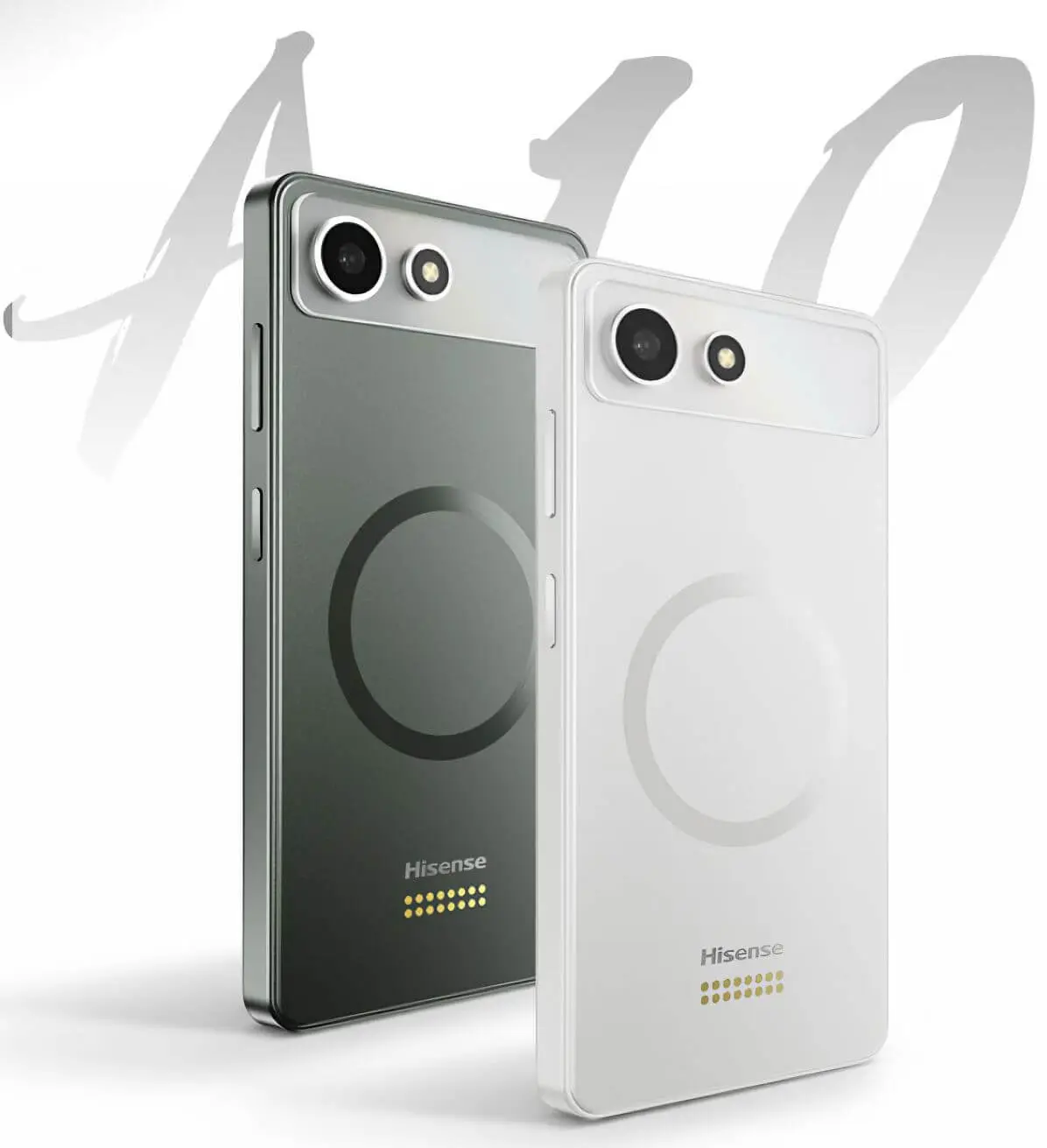
Enter Hisense. Following months of industry speculation and carefully orchestrated teasers, the consumer electronics brand has officially launched its groundbreaking A10 E-Ink smartphone series in China. Comprising two distinct models—the standard Hisense A10 and the flagship A10 Ultra—this launch represents a bold reimagining of what an e-paper mobile device can achieve.
Priced competitively between $476 and $576 depending on storage and RAM configurations, the A10 series introduces a radical architectural concept: a native, high-definition monochrome E-Ink primary display paired with an innovative, detachable magnetic color screen. By bridging the gap between the eye-friendly nature of electronic paper and the dynamic requirements of modern multimedia applications, Hisense is not merely updating its niche product line; it is challenging the traditional smartphone paradigm. This report provides an exhaustive, journalistic examination of the Hisense A10 series, breaking down its hardware specifications, software ecosystem, market implications, and what this launch signals for the future of mobile technology.
Read Also
Detailed Chronology: From Teaser Campaigns to Retail Shelves
The journey of the Hisense A10 series to the commercial market has been a masterclass in calculated product rollout and consumer anticipation. Understanding the trajectory of this device requires examining the strategic phases that brought it from conceptual engineering to retail availability.
Phase 1: The Early Whispers and Hardware Teasers (Early 2026)
Rumors regarding Hisense’s next-generation e-paper smartphone began circulating across tech forums and supply chain leaks early in the year. Having previously established a loyal global following with devices like the Hisense A9 and various dual-screen iterations, the brand faced mounting pressure from enthusiasts to deliver a modern processor and improved display tech. For months, Hisense utilized social media channels and industry exhibitions in Asia to drip-feed details, teasing a device that would shatter preconceived notions of e-ink speed and versatility.
Phase 2: Solving the Color Dilemma
One of the most profound historical challenges for Hisense engineers was balancing the desire for color content (such as comic books, web browsing, and social media feeds) with the superior contrast and crispness of black-and-white E-Ink panels. Color e-paper technologies, while improving, still suffer from darker backgrounds and washed-out saturation compared to standard LCDs.
Instead of compromising the primary reading experience with a permanent color e-paper layer, Hisense opted for an engineering pivot: a modular, detachable magnetic secondary screen. This development phase required precision manufacturing to ensure seamless wireless data transmission, robust magnetic alignment, and a secure physical fit that could withstand daily pocket carry without detaching prematurely.
Phase 3: Official Chinese Market Launch
The culmination of these development cycles arrived with the official commercial release of the A10 and A10 Ultra in the Chinese domestic market. Positioned strategically to capture both hardcore digital minimalists and productivity-focused professionals, the initial release offers tiered pricing models:
- Base Configuration: Starting at approximately $476 USD, offering 8GB of RAM and 128GB of internal storage.
- High-End Configuration: Retailing at approximately $576 USD, upgrading storage capacity to 256GB while retaining 8GB of RAM.
- The Ultra Distinction: While the internal specifications remain identical across both the standard A10 and the A10 Ultra, the primary differentiator lies out of the box—the A10 Ultra includes the innovative detachable color screen bundled standard, whereas standard model buyers must navigate purchasing accessories separately or opting for the complete package.
Hardware Architecture: Engineering the Ultimate E-Ink Phone
At the heart of the Hisense A10 series is a meticulously designed hardware ecosystem tailored specifically to overcome the traditional limitations of electronic paper displays.
Display Technology: Carta 1300 and Precision Lighting
Both the A10 and A10 Ultra are anchored by a striking 6.13-inch Carta 1300 E-Ink display panel. Delivering a crisp resolution of 1648 x 824 pixels, the screen achieves a density of 300 PPI (Pixels Per Inch), ensuring that text renders with laser-sharp clarity, rivaling the finest physical paperbacks.
Crucially, the primary display is strictly black-and-white, a deliberate design choice that maximizes contrast ratio and text legibility. The panel supports 256 distinct levels of grayscale, allowing for smooth gradients in images and PDF documents. To ensure usability in low-light environments, Hisense has integrated a sophisticated front-lit display system featuring 36 adjustable levels split between warm and cool lighting tones. This prevents the eye strain associated with blue-light-emitting OLED panels while offering comfortable reading late into the night.
The Modular Innovation: The Magnetic Color Screen
The crowning hardware achievement of the A10 Ultra is its 4.96-inch secondary LCD panel. This accessory attaches effortlessly to the rear chassis of the phone using a robust magnetic ring coupled with precision metal contacts.
When snapped into place, the device transforms. Users gain a secondary interface capable of rendering rich, full-spectrum color. This modular approach solves a fundamental dilemma: users can enjoy a distraction-free, monochrome reading experience during work hours or morning commutes, and then snap on the color screen to view high-resolution charts, browse color comics, stream short-form video content, or check social media feeds. When multimedia consumption concludes, the panel can be detached instantly, restoring the device to a slim, lightweight e-reader profile.
Processing Power and Thermal-E-Ink Optimization
Under the hood, the A10 series breaks away from the underpowered chipsets that have historically plagued e-paper devices. Hisense has equipped the smartphones with Qualcomm’s QCM6690 octa-core processor, built upon an advanced 4nm manufacturing process.

This chip not only brings native 5G cellular connectivity to the device but has also been deeply optimized for the unique refresh characteristics of electronic paper. Hisense has implemented dynamic clock-scaling algorithms:
- Static Reading States: When the user is reading a static eBook or viewing a stationary document, the system automatically dials down the processor frequency, drastically slashing power consumption.
- Dynamic Performance States: When launching resource-heavy applications or navigating the user interface, the processor ramps up instantly to maintain snappy responsiveness and fluid gesture tracking.
Complementing the processor suite are modern connectivity standards, including Bluetooth 5.1, high-speed Wi-Fi, and a universal USB-C port for charging and data transfer. Imaging capabilities are handled by a surprisingly robust camera array: a 48-megapixel primary rear sensor capable of capturing detailed photographs and document scans, paired with an 8-megapixel front-facing camera for video calls. Energy is supplied by a dependable 4,000mAh internal battery, which, when combined with the extreme efficiency of the E-Ink display, translates into multi-day endurance under normal usage patterns.
Software Ecosystem: Navigating Android 16 on Electronic Paper
Hardware is only as effective as the software driving it. The Hisense A10 series ships running Google Android 16, representing one of the most up-to-date operating system implementations found on any e-paper device globally.
However, the software experience comes with specific nuances that prospective buyers must navigate. Mirroring previous generations of Hisense hardware, the A10 series does not ship with the Google Play Store preinstalled. Out of the box, the user interface is streamlined and minimalist, featuring a handful of localized, pre-installed applications optimized for Chinese consumers, such as WeChat Reading.
For international users and power users outside of mainland China, the device’s open architecture provides a workaround: sideloading. Users can easily install third-party application package files (APKs) directly onto the device. This capability ensures that global consumers can bypass the lack of native Google services by sideloading alternative e-reading and productivity ecosystems, including:
- Amazon Kindle: For accessing extensive cloud libraries and personal document archives.
- OverDrive Libby: For seamless integration with public library networks for digital book and audiobook borrowing.
- Kobo, Moon+ Reader, and Tachiyomi: For reading various local and cloud-based file formats with advanced e-ink refresh optimizations.
Hisense’s proprietary launcher software includes specialized refresh-rate toggles, allowing users to choose between high-clarity modes (reducing ghosting at the expense of speed) and high-speed modes (sacrificing some text crispness to enable smoother scrolling within web browsers and messaging apps).
Supporting Context & Metrics
To fully appreciate the market positioning of the Hisense A10 and A10 Ultra, it is valuable to examine the broader technical and economic metrics surrounding the device:
| Feature / Specification | Hisense A10 Standard | Hisense A10 Ultra |
|---|---|---|
| Release Pricing (CNY / USD Conversion) | From ~$476 USD (8GB/128GB) | Up to ~$576 USD (8GB/256GB) |
| Primary Display | 6.13-inch Carta 1300 E-Ink | 6.13-inch Carta 1300 E-Ink |
| Primary Resolution & PPI | 1648 x 824 pixels (300 PPI) | 1648 x 824 pixels (300 PPI) |
| Grayscale & Front Light | 256 Levels, 36-level Warm/Cool | 256 Levels, 36-level Warm/Cool |
| Secondary Color Display | Optional / Sold Separately | Included Out of the Box (4.96-inch LCD) |
| Processor | Qualcomm QCM6690 (4nm, Octa-core) | Qualcomm QCM6690 (4nm, Octa-core) |
| Memory & Storage Options | 8GB RAM + 128GB / 256GB Storage | 8GB RAM + 128GB / 256GB Storage |
| Operating System | Android 16 (No Google Play Store) | Android 16 (No Google Play Store) |
| Battery Capacity | 4,000mAh | 4,000mAh |
| Optics | 48MP Rear / 8MP Front | 48MP Rear / 8MP Front |
The integration of the Qualcomm QCM6690 processor marks a watershed moment. Older e-ink phones often utilized aging mid-range or low-end chipsets, resulting in frustrating user experiences when performing basic multitasking. By utilizing a modern 4nm architecture, Hisense ensures that the A10 series remains future-proofed for several years of software evolution.
Industry Implications and Future Outlook
The launch of the Hisense A10 and A10 Ultra carries significant implications for the mobile technology sector. For over a decade, major smartphone manufacturers have treated displays as a monolithic entity: brighter, faster, and more saturated color panels. Yet, as screen fatigue, digital burnout, and battery anxiety become increasingly prevalent concerns among consumers, a quiet counter-movement is gaining momentum.
The Rise of Digital Minimalism
Consumers are increasingly seeking ways to reclaim their attention spans. Devices that minimize distracting animations, eliminate addictive infinite-scroll social media feeds (unless intentionally bypassed via modular accessories), and promote long-form reading are finding a dedicated audience. The Hisense A10 series capitalizes directly on this trend. By offering an uncompromised reading environment that can selectively expand into a multimedia device via the magnetic color screen, Hisense addresses the paradox of modern device ownership: the desire to stay connected without being constantly overwhelmed.
Global Availability and Import Culture
As has been the case with previous Hisense e-ink phones, the A10 series is primarily targeted at the Chinese domestic market. However, a thriving global import ecosystem—facilitated by specialty electronics retailers and enthusiast communities—ensures that these devices routinely find their way into the hands of Western consumers. The ability to sideload standard Android APKs makes the A10 remarkably adaptable for international users willing to bypass the absence of pre-installed Google Mobile Services.
What Lies Ahead
Looking forward, the success of the Hisense A10 and A10 Ultra will likely dictate whether other mainstream or specialized manufacturers adopt modular display paradigms. If the magnetic second-screen concept proves durable and popular among consumers, we may see competing brands experiment with hybrid electronic paper technologies.
For now, Hisense stands undisputed at the vanguard of E-Ink mobile innovation. By pairing cutting-edge processing silicon, modern Android 16 software architecture, a pristine Carta 1300 display, and a brilliantly executed modular color screen, the A10 series redefines what is possible when the timeless comfort of paper meets the power of modern mobile computing.

Comments
Facebook App ID not configured. Please add it in the Customizer.