
Executive Overview
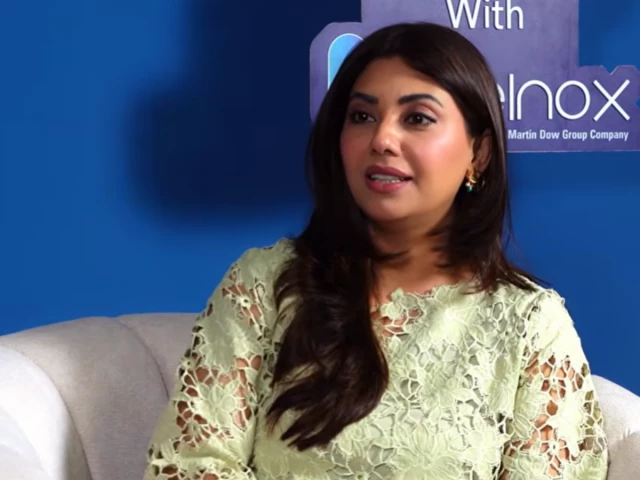
In a society where deeply ingrained cultural taboos continue to dictate the boundaries of public discourse, prominent Pakistani actor and model Sunita Marshall has stepped forward to challenge one of the most persistent cultural silences: menstruation. In a candid and wide-ranging interview, Marshall articulated a progressive vision for domestic education, asserting that the systemic stigma surrounding menstrual health can only be dismantled if boys are included in early educational conversations at the exact same developmental milestones as girls.
Marshall’s remarks reposition menstruation not as a private, isolating trial exclusive to women, but as a foundational human health issue that requires collective familial understanding, empathy, and active support. By advocating for the early instruction of young boys—future brothers, husbands, and fathers—she addresses the root cause of domestic insensitivity: a lack of exposure and shared understanding.
This feature-length report examines the cultural resonance of Marshall’s statements, exploring the broader socio-cultural landscape of menstrual stigma in Pakistan, the psychological and physical realities of Premenstrual Syndrome (PMS) and dysmenorrhea, the workplace realities highlighted by her on-set experiences, and the transformative potential of inclusive reproductive health education.
Read Also
Detailed Chronology & Context of the Discourse
The conversation surrounding Marshall’s remarks unfolded against the backdrop of an evolving media landscape in Pakistan, where public figures are increasingly utilizing digital platforms to address socio-cultural blind spots. During a recent digital interview that has since garnered widespread attention across social media platforms, Marshall addressed the pervasive culture of secrecy that shrouds menstruation in South Asian households.
The Evolution of the Interview
- The Core Premise: Marshall opened the discussion by identifying the double standard inherent in traditional upbringing, where young girls are hurriedly and often covertly informed about menarche while boys are kept entirely in the dark.
- The Developmental Timeline: She argued that the age at which a young girl receives guidance regarding her changing body should precisely mirror the age at which a young boy is introduced to the concept. This synchronization, she noted, prevents the formation of psychological barriers and unnatural mystification of female biology.
- The Lifelong Impact: Marshall mapped out the male life cycle—from brother to husband to father—emphasizing that men equipped with early, unashamed knowledge of biological realities are fundamentally better equipped to offer emotional safety and operational support within the domestic sphere.
This chronological unfolding of her argument highlights a deliberate shift from viewing menstrual hygiene management (MHM) as merely a logistical challenge of access to products, to understanding it as an urgent psychological and sociological imperative.
Supporting Context & Cultural Metrics: The Weight of Taboo in South Asia
To fully comprehend the gravity of Sunita Marshall’s public appeal, one must examine the socio-cultural architecture that sustains menstrual stigma in Pakistan and the broader South Asian region.
The Culture of Secrecy
In many traditional Pakistani households, menstruation is discussed in whispers, coded language, or absolute silence. Pads and sanitary products are routinely wrapped in opaque black plastic bags or dark newspapers by shopkeepers and buyers alike, reinforcing the dangerous cultural messaging that a natural biological function is somehow obscene, dirty, or shameful. This secrecy is not merely cosmetic; it has profound implications for health, education, and gender dynamics.
[Traditional Household Stigma]
       │
       ├──> Secrecy & Shame (Coded language, opaque packaging)
       ├──> Educational Segregation (Boys kept ignorant, girls isolated)
       ├──> Domestic Burden (Expectation to work through severe pain)
       └──> Emotional Isolation (Lack of PMS understanding & support)
Health and Hygiene Implications
According to various public health assessments concerning reproductive health in developing regions, the lack of open dialogue directly correlates with poor menstrual hygiene management. Girls often lack access to accurate information regarding safe products, changing frequencies, and infection prevention. When boys and men remain entirely uneducated about these realities, they inadvertently perpetuate an environment where women and girls feel compelled to hide their discomfort, leading to untreated infections, chronic stress, and systemic disadvantage in both academic and professional spheres.
The Emotional and Psychological Toll
Beyond hygiene, the psychological burden of managing Premenstrual Syndrome (PMS) and dysmenorrhea (severe menstrual cramps) in an unsupportive environment is immense. Hormonal fluctuations can precipitate significant mood shifts, fatigue, and physical pain. When male family members lack the emotional literacy to recognize these symptoms, ordinary behavioral shifts are frequently met with impatience, skepticism, or trivialization, deepening the psychological isolation experienced by women.
Official Statements and Personal Insights
Marshall’s interview was characterized by candid reflections, practical guidance, and a compelling anecdote drawn from her professional life in the Pakistani television industry.
Redefining Male Roles and Domestic Empathy
Marshall stressed that true empathy cannot be expected from individuals who have been shielded from basic biological truths. She detailed the precise responsibilities of men when female family members are navigating difficult menstrual cycles:
"Your son is also going to grow up to become a father; he is someone’s brother, and he will become someone’s husband. When they are educated about this, empathy will automatically be created within them."
Expanding upon the emotional needs of women during their cycles, Marshall challenged the conventional male instinct to fix or dismiss emotional distress, advocating instead for validation and active listening:
"During periods, women experience PMS and mood swings, and their patience levels drop significantly. Men need to understand what happens during that specific week. Women don’t want a solution; they only want extra love and someone to listen to them at that time."
Translating Awareness into Practical Action
Awareness, in Marshall’s view, must never remain purely theoretical. It must manifest in tangible adjustments to domestic labor divisions. She argued that knowing a family member is unwell should instantly trigger proactive assistance:
"First of all, our men need to get educated about this. If it’s your sister, mother, wife, or daughter, and you know she is on her period and unwell yet still working through it, empathy will make you get up and help her with the chores yourself."
A Real-World Case Study from the Production Set
Bringing the conversation into the public workspace, Marshall recalled an incident from a recent drama set that exposed the lingering stigma even within professional, urban environments:
"On the set of a recent drama, there was a young girl who suffered from severe cramps—so severe that we had to halt shoots. She had to tell everyone, ‘I am on my period and I’m not feeling well.’ What bothers me about that environment is why we should feel embarrassed or disgusted by it. It is a natural biological process."
This narrative underscores the reality that institutional workplaces in Pakistan—including the media and entertainment sector—frequently lack formal accommodation, flexibility, or empathetic frameworks for menstrual health, forcing women to publicly declare vulnerable private health details simply to secure basic relief.
Future Outlook: Dismantling the Stigma
The intervention by Sunita Marshall—an established celebrity with a mainstream audience across households—marks a critical juncture in the cultural discourse on gender and health in Pakistan. Moving forward, transforming the paradigm of menstrual education requires a multi-pronged approach involving families, educational institutions, media creators, and policy makers.
1. Curriculum Reform in Educational Institutions
While domestic education is vital, formal educational institutions must step up. Reproductive health and menstrual biology must be integrated into school curricula in a manner that is scientifically accurate, age-appropriate, and co-educational. By removing the practice of segregating boys and girls during health classes, schools can normalize the topic from an early age, eradicating the foundational mystery and shame associated with the subject.
2. The Role of Popular Media and Entertainment
As an actor with credits in major television serials such as Mera Saaein, Khuda Aur Mohabbat 3, and the hit family drama Baby Baji (where she starred alongside her husband, actor and director Hassan Ahmed), Marshall understands the profound cultural reach of television. Pakistani dramas have historically reinforced patriarchal domestic tropes; however, incorporating healthy, supportive dialogues surrounding reproductive health and mental well-being into mainstream scripts can normalize these conversations in millions of living rooms nationwide.
3. Corporate and Workplace Policies
The discomfort witnessed by Marshall on a professional television set points to an urgent need for progressive human resource policies across Pakistani industries. Modern workplaces must consider introducing flexible working arrangements, accessible sanitary facilities, and menstrual leave policies that recognize physiological pain without demanding invasive disclosures or subjecting employees to social embarrassment.
4. Cultivating Generational Shifts
Ultimately, Marshall’s message points toward a generational shift. By teaching sons that menstruation is neither a secret to be hidden nor a weakness to be mocked, Pakistani households can raise a new generation of men who view gender equity not as an abstract ideological concept, but as a practical, daily commitment to care, understanding, and mutual respect.
Conclusion
Sunita Marshall’s public commentary serves as a timely reminder that cultural transformation often begins with the willingness to speak uncomfortable truths. By challenging the normalization of menstrual silence in Pakistani households, she has reframed a fundamental biological reality as a litmus test for familial empathy and social progress.
If her call to action is heeded—by parents, educators, media producers, and policy makers alike—the future may well witness the dismantling of a centuries-old taboo, replacing shame with solidarity and ignorance with informed, compassionate partnership.





Comments
Facebook App ID not configured. Please add it in the Customizer.