
Executive Overview
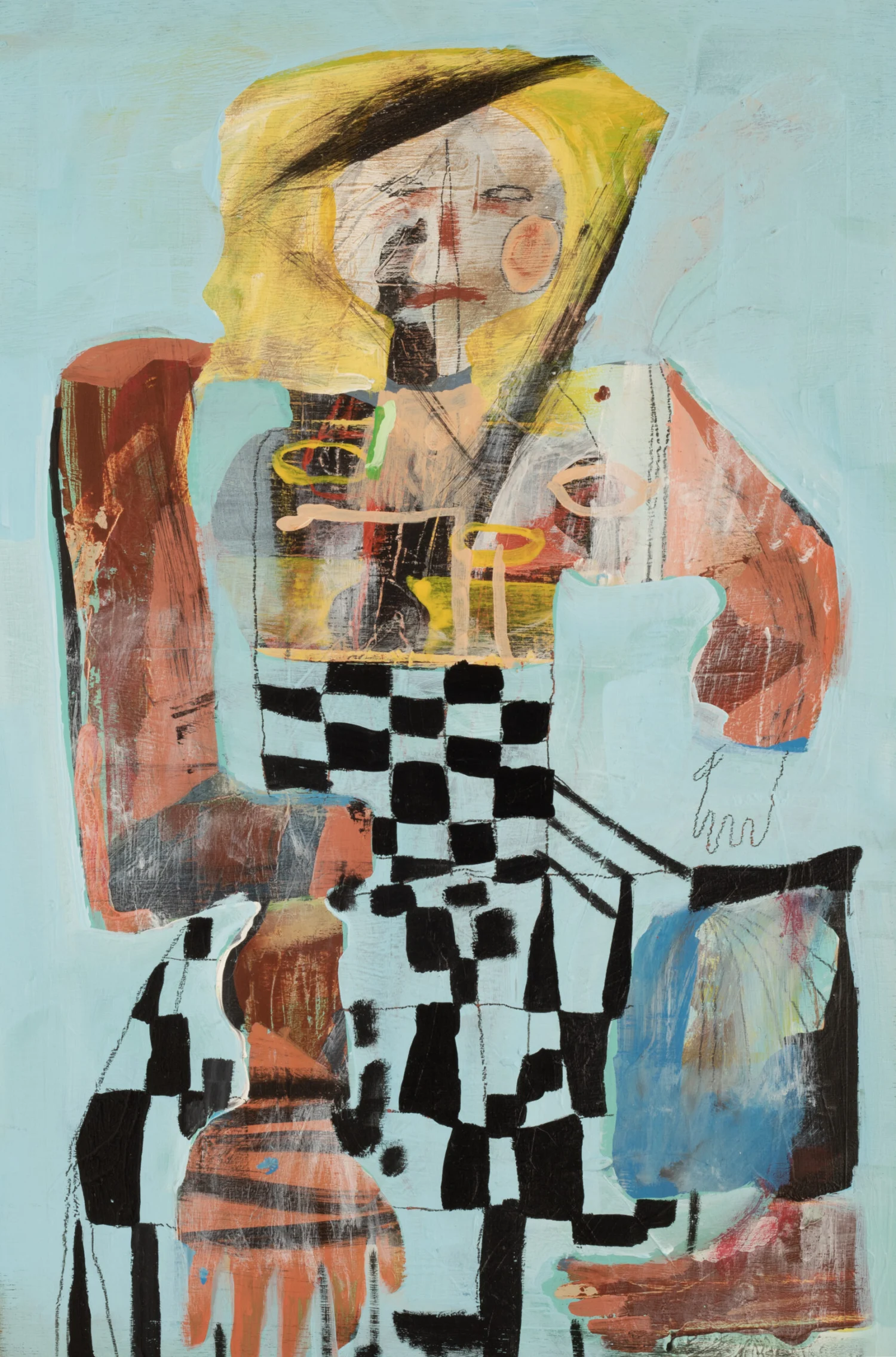
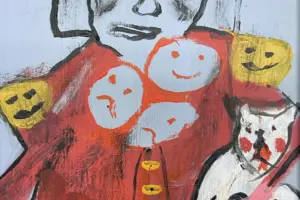
In contemporary literary and artistic discourse, few works manage to capture the chilling intersection of trauma, memory, and domestic surrealism quite as effectively as the recent collaborative publication featured in Guernica Magazine. At the center of this presentation is a haunting poetic excerpt by acclaimed Hungarian poet, writer, and translator Anna T. Szabó, translated into English by Ági Bori, and accompanied by the evocative, tactile visual art of multidisciplinary artist Melissa Monroe.
The text presents a harrowing narrative vignette: a man meticulously navigates the fragile, deeply ingrained rituals of a shattered morning. He attends to a fallen lamp, fastidiously covers the body of his deceased wife, and prepares his young daughter for school—momentarily suspended in a psychological state where the boundary between life and death blurs. This deeply unsettling domestic tableau serves as an exploration of how human consciousness responds to catastrophic grief, retreating into the comforting architecture of habit when reality becomes entirely unnavigable.
This report provides a comprehensive examination of the artistic components behind this publication. We explore the structural and thematic resonance of Szabó’s verse, analyze the translational nuances brought forth by Bori, contextualize Monroe’s sculptural and textile artwork, and evaluate the broader cultural implications of presenting such deeply vulnerable, psychological literature in modern literary journals.
Read Also
Detailed Chronology: Anatomy of a Surreal Morning
To fully understand the artistic achievement of Szabó’s poetry, one must examine the precise, step-by-step chronology established within the verse. The poem acts as a cinematic slow-motion sequence, documenting a domestic space upended by tragedy yet stubbornly governed by muscle memory.
1. The Legacy of Gesture
“He ties the strap on his left hand, as he had seen / his grandfather do it during his childhood, then / puts the knocked-down lamp back in its place, / covers up his dead wife with fastidious care, / and raises the shutters in the kitchen.”
The poem opens not with an emotional exclamation, but with an inherited physical ritual—tying a strap in a manner learned generations ago. This invocation of lineage grounds the protagonist in a deeply rooted sense of generational identity just as his immediate world collapses. The casual juxtaposition of domestic restoration (righting a knocked-down lamp, raising kitchen shutters) with absolute horror (covering a deceased wife with "fastidious care") immediately establishes a tone of dissociation. The protagonist does not scream or collapse; instead, he organizes his environment, seeking order within chaos.
2. The Suspension of Disbelief
“He opens the door to the children’s bedroom, / and quietly pulls the floral curtain to the side, / sunlight pours in. He turns around, he bends down. / But she is breathing, he thinks. He cradles / the dead little girl, dresses her nicely, / puts her in the car seat, carefully buckles her in, / takes her to school. It’s seven o’clock.”
As the scene shifts to the children’s bedroom, the psychological fracture deepens. Sunlight enters the space, contrasting starkly with the underlying morbidity of the narrative. The protagonist experiences a profound cognitive dissonance: “But she is breathing, he thinks.” This single line encapsulates the psychological defense mechanism of denial, where the mind rewrites reality to protect itself from unbearable truth.
With heartbreaking tenderness, he dresses the child, secures her in her car seat, and embarks on a school run at seven o’clock in the morning. The inclusion of the precise time—"It’s seven o’clock"—anchors this surreal nightmare in the mundane reality of everyday life, creating an eerie tension between the ordinary ticking of the clock and the extraordinary devastation of the human spirit.
Supporting Context & Metrics: The Creative Forces Behind the Work
The resonance of this piece relies heavily on the collaborative synergy between the author, translator, and visual artist. Understanding their backgrounds illuminates the thematic depth of the publication.
Anna T. Szabó: A Literary Voice of Trans-European Heritage
Born in Transylvania, Romania, in 1972, Anna T. Szabó has established herself as a cornerstone of contemporary Hungarian literature. Her extensive bibliography includes:

- Poetry: Eleven volumes for adult readers, celebrated for their lyrical precision and emotional candor.
- Prose & Children’s Literature: Eight books for children and four short story collections, demonstrating versatility across demographics.
- Accolades: Recipient of numerous prestigious literary prizes; elected member of the Széchenyi Academy of Letters and Arts (part of the Hungarian Academy of Sciences).
- Public Engagement: Active essayist, lecturer, and lyricist whose poetry frequently crosses over into musical performance.
Living near Budapest alongside her husband, the acclaimed novelist György Dragomán, Szabó’s work often investigates memory, displacement, language, and the intricate dynamics of familial love and loss.
Ági Bori: Bridging Linguistic Worlds
The delicate, devastating tone of Szabó’s Hungarian verse is preserved in English through the sensitive translation of Ági Bori. Originally from Hungary and based in the United States for over three decades, Bori has carved out a vital space as a cultural conduit between Hungarian and English literatures.
Her translations and critical writings have appeared in some of the most respected literary outlets globally, including The Baffler, Asymptote, Words Without Borders, The Rumpus, and The Los Angeles Review, where she serves as a translation editor. Bori’s ability to maintain the rhythmic cadence and psychological undercurrents of Szabó’s original text is central to the English-speaking audience’s reception of the work.
Melissa Monroe: The Visual Counterpart
Accompanying the literary text is visual art by Melissa Monroe, whose striking textile and sculptural work complements the poem’s thematic exploration of identity, masking, and survival. Monroe describes her artistic philosophy as an exploration of "the intensity of being alive," transforming raw emotion into sculptural forms that slow time and invite contemplation.
Working across disciplines—including textiles, sculpture, acrylic painting, and handmade rugs—Monroe uses mask-making as a spiritual and performative practice. Her work embodies the tension between aesthetic beauty and harsh existential truths. In the context of Guernica Magazine, Monroe’s visual contribution serves as an externalized mask for the grief explored in Szabó’s poetry: vibrant, textured, and vibrating with a complex mix of sadness, love, and resilience just beneath the surface.
Official Statements and Critical Reception
While the piece speaks largely through its evocative imagery and stark juxtaposition, cultural critics and literary editors have noted the profound cultural significance of publishing translated Central European literature alongside contemporary American multidisciplinary art.
In literary circles, publications like Guernica continue to serve as vital bridges for international voices. Scholars of Central European literature have observed that post-totalitarian and post-transitional artistic landscapes often harbor a unique fluency in addressing generational trauma, quiet endurance, and domestic surrealism. Szabó’s vignette does not offer political commentary; instead, it drills down to the atomic level of human suffering—examining how an individual endures when the foundational pillars of family are suddenly obliterated.
Critics have particularly praised the translation’s restraint. Bori avoids over-dramatizing the text, allowing Szabó’s sparse, telegraphic lines to carry their own crushing weight. The absence of heavy-handed emotional adjectives forces the reader to inhabit the protagonist’s paralyzed psychological state, making the experience immersive and intensely moving.
Future Outlook: The Evolution of Transnational Literary Collaboration
The presentation of Szabó, Bori, and Monroe’s collective work points toward an increasingly interconnected future for global arts and letters. As digital literary platforms break down geographical boundaries, readers are granted unprecedented access to cross-cultural dialogues that synthesize poetry, translation, and visual art into unified multimedia experiences.
Key Takeaways for the Literary Landscape:
- The Rise of Multimedia Storytelling: Literary magazines are increasingly pairing translated poetry with bespoke visual art (such as Monroe’s textile sculptures) to create a multi-sensory reading experience.
- The Vital Role of Translation: As global geopolitical tensions fluctuate, literary translation remains one of the most effective instruments for cultivating empathy across linguistic borders.
- Exploration of Universal Vulnerability: Works that tackle domestic trauma, psychological dissociation, and grief with clinical precision resonate deeply with modern audiences navigating an increasingly complex and unpredictable world.
As Anna T. Szabó continues to write from her home near Budapest, and as translators like Ági Bori bring these vital Hungarian texts into the global Anglophone sphere, readers can anticipate further explorations into the quiet, often terrifying corners of the human heart. Through art, translation, and poetry, the fragmented pieces of the self are continuously refitted, examined, and understood.

Comments
Facebook App ID not configured. Please add it in the Customizer.