
Executive Overview
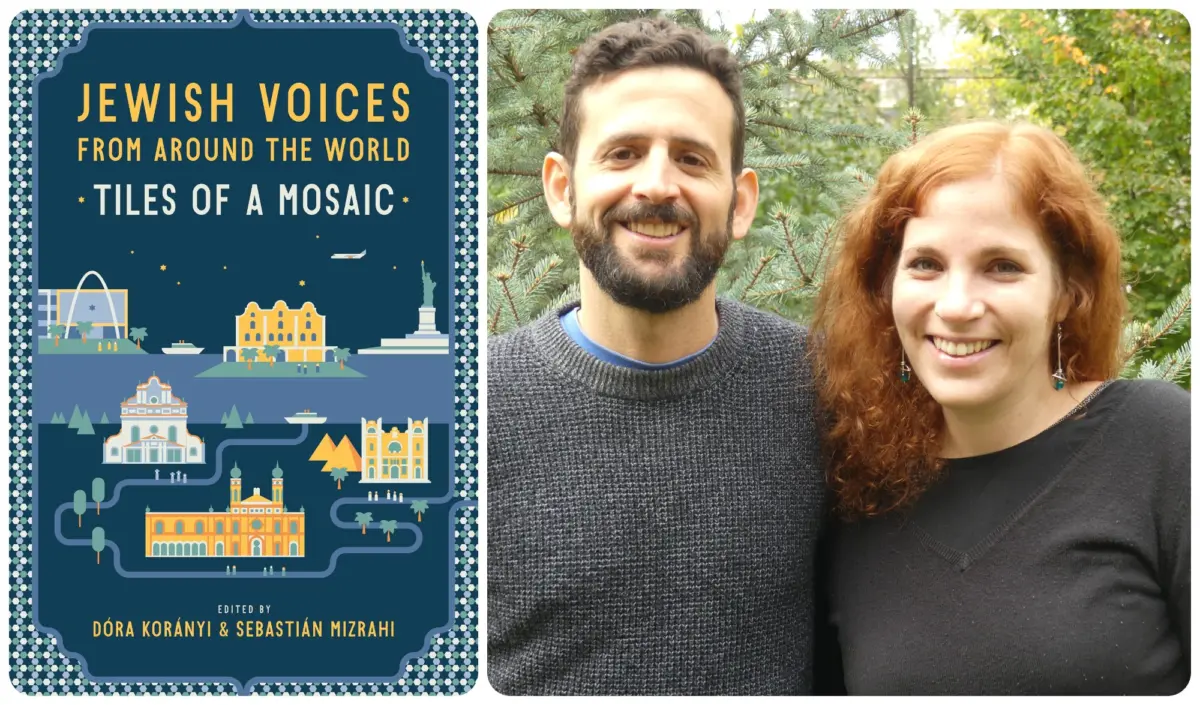
In an era defined by physical isolation and digital pivots, cultural preservation took on unprecedented forms. When global lockdowns halted international travel in early 2020, Dóra Korányi, a Hungarian Jewish psychologist and tour guide, and her partner, Sebastián Mizrahi—raised in Venezuela by Argentinian parents of Syrian-Jewish and Russian-Jewish descent—found themselves grounded. Korányi could no longer lead tours through the historic Jewish quarter of Budapest, and Mizrahi had to indefinitely postpone his Sephardic heritage tours in Spain. Rather than retreating into stagnation, the couple combined their profound passions for history, culture, and community to launch Qesher—derived from the Hebrew word for "connection."
What began as an ad-hoc, five-part virtual lecture series designed to keep heritage education alive during a global crisis has swiftly evolved into a monumental cultural enterprise. Today, Qesher stands as a premier digital platform dedicated to making the histories and traditions of overlooked, diverse Jewish communities accessible to a global audience. This remarkable trajectory has now culminated in a forthcoming anthology published by Vallentine Mitchell: Jewish Voices from Around the World: Tiles of a Mosaic (November).
Featuring eighteen meticulously curated essays, the volume details the rich, multi-faceted perspectives of Jewish populations from Uganda, Cuba, India, Libya, Curaçao, and beyond. Far more than a simple collection of historical accounts, the book serves as a living testimony to the resilience, adaptability, and breathtaking diversity of the Jewish diaspora. By highlighting communities whose narratives are rarely centered in mainstream Ashkenazi- or Eurocentric-dominated Jewish discourse, Korányi and Mizrahi are actively reshaping how the world understands Jewish identity. This comprehensive report explores the origins of Qesher, the expansive growth of its global network, the fascinating historical anomalies uncovered during its creation, and the broader implications of documenting a diaspora that spans continents, languages, and centuries.
Read Also
Detailed Chronology: From Pandemic Pivot to Global Movement
The Genesis: March–April 2020
As the COVID-19 pandemic paralyzed international mobility, the tourism industry ground to an absolute halt. For Dóra Korányi and Sebastián Mizrahi, travel was not merely a vocation; it was the primary medium through which they connected people to history. Korányi, leveraging her background in psychology, had spent years bringing the storied alleyways of Budapest’s Jewish quarter to life for curious travelers. Mizrahi, drawing on his intricate multicultural upbringing, specialized in mapping the deep-rooted Sephardic footprints across Spain.
Faced with sudden professional confinement, the couple recognized an immediate void in the digital landscape. While large institutions struggled to move traditional educational programs online, Korányi and Mizrahi possessed a sprawling, informal network of international scholars, guides, and cultural preservationists. They decided to bridge the gap independently.
"We thought, we have all this knowledge; let’s do something online," Korányi recalls. "First, we created just a series of five online lectures about the unique history, culture, and people of Jewish communities from people that we knew."
The initial lineup was intentionally intimate yet geographically diverse. Korányi delivered a presentation on Budapest; other sessions were spearheaded by local contacts in Spain, Turkey, Bulgaria, and Finland. These pilot lectures tested a vital hypothesis: that individuals isolated in their homes worldwide were hungry for authentic, localized cultural education that bypassed standard academic gates.
The North American Surge and Exponential Expansion: Mid-2020–2021
The response to the initial five-part lecture series far exceeded expectations. Organizers quickly noticed that the vast majority of their digital audience hailed from North America. Many of these attendees were descendants of immigrants who understood their families originated from specific foreign locales, yet they possessed virtually zero knowledge regarding contemporary developments, socioeconomic shifts, or deeper historical contexts within those regions.
Capitalizing on this profound thirst for ancestral reconnection, Korányi and Mizrahi expanded their scope. They began actively scouting international researchers, activists, and community leaders capable of speaking authoritatively about lesser-known Jewish enclaves.
What began as a modest webinar series snowballed into a transnational intellectual hub. Within a matter of months, the initiative formally adopted the name Qesher, establishing regular virtual panels, cultural salons, and educational modules. The platform successfully broke down the geographical silos that traditionally separated Jewish communities in South Asia, Latin America, North Africa, and Eastern Europe, creating a virtual cross-cultural town square.
The Anthological Milestone: Jewish Voices from Around the World
As the digital lectures accumulated deep, rich testimonies from diverse contributors, the natural next step was physical and literary permanence. The transition from ephemeral Zoom recordings to a permanent textual archive materialized in Jewish Voices from Around the World: Tiles of a Mosaic.
Scheduled for publication by Vallentine Mitchell in November, the anthology synthesizes the core ethos of Qesher into eighteen comprehensive essays. The book captures the multifaceted realities of Jews living in the Global South, the Caribbean, the Middle East, and beyond, ensuring that these narratives are permanently enshrined in global Jewish historiography. The journey from local Budapest tours and Spanish heritage walks to an internationally reviewed academic and cultural volume stands as one of the most organic community-building success stories of the pandemic era.
Supporting Context & Metrics: Mapping the Global Jewish Mosaic
To fully appreciate the scope of Qesher and its accompanying anthology, one must examine the demographic and geographic realities of the modern Jewish diaspora. While dominant historical narratives often center on European Ashkenazi experiences or modern Israeli society, the Jewish people have formed vibrant, distinct civilizations across every inhabited continent for millennia.
Global Diaspora Breakdown Featured in Qesher’s Work:
- Latin America & The Caribbean: Encompassing deep explorations of communities in Cuba, Curaçao, Argentina, and Venezuela. These regions showcase a fascinating blend of early Sephardic trading networks, Inquisition-era crypto-Jewish survivals, and later 19th- and 20th-century Ashkenazi arrivals fleeing European persecution.
- South Asia & Africa: Highlighting unique historical enclaves such as the Bene Israel and Cochin Jews of India, as well as emerging and historical communities in Uganda and South Africa. These chapters challenge monolithic assumptions of Jewish ethnicity, demonstrating rich traditions of skin color, liturgy, and localized integration.
- The Middle East & North Africa (Mizrahi & Maghrebi Heritage): Documenting the millennia-old cultures of Jews from Libya, Syria, Iraq, and beyond—communities that, prior to the mid-20th-century mass migrations, formed the bedrock of cosmopolitan urban centers from Baghdad to Tripoli.
- European Peripheries: Moving beyond central European capitals to examine the nuanced survival stories of Jews in Finland, Bulgaria, Turkey, and Hungary, each bearing the scars and triumphs of shifting imperial powers, the Holocaust, and Soviet-era suppression.
Digital Reach and Engagement Metrics
- Audience Demographics: Over 65% of Qesher’s active digital audience originates from North America, with significant secondary clusters in Western Europe and Latin America.
- Contributor Diversity: The anthology features voices spanning four continents, representing indigenous, Sephardic, Ashkenazi, Mizrahi, and emerging Jewish identities.
- Accessibility Impact: By utilizing digital infrastructure, Qesher has connected isolated rural or micro-communities (such as regional African and Caribbean groups) with global Jewish institutions and curious lay audiences.
Official Statements & Insights from the Founders
In exclusive commentary detailing the philosophy and discoveries behind Qesher and their new book, co-founders Dóra Korányi and Sebastián Mizrahi shed light on the driving forces of their work.
On the Purpose of Selection and Amplification
When asked how the contributors for Jewish Voices from Around the World were chosen, Sebastián Mizrahi emphasized the imperative of elevating marginalized narratives:
"We wanted this book to emphasize Jewish communities whose stories are less often told, so that readers from such communities could find, through this book, both something they can personally connect to, and things that were totally new to them."
Adding to this, Dóra Korányi stressed the experiential and genealogical depth required for the anthology:
"We looked for contributors who really have deep roots in a place, who could include their family stories. But our aim is that someone who reads it will have the sensation of the variety of the Jewish communities, of Jewish languages and of Jewish histories."
On Common Threads Across the Diaspora
Despite the vast geographical distances and cultural divergences separating a Jew from Curaçao and a Jew from Budapest, Mizrahi points out striking historical echoes:
"There are patterns that kept repeating, of exile and forced migrations, of how specific places received migrants from different communities that end up connecting, for example, leading to marriages between Sephardic and Ashkenazi Jews."
On Surprising Historical Revelations
Researching and compiling eighteen distinct global perspectives unspooled unexpected historical anomalies that complicate neat definitions of religious law and communal governance. Mizrahi shared a striking account from the Dutch colony of Curaçao and Amsterdam:
"Two communities placed such an emphasis on pronunciation that it caused serious internal rifts in them. Both the Jewish communities of Curaçao… and Amsterdam experienced splits over a mispronounced syllable—whether the last word of the blessing over the wine, the Kiddush, should be pronounced ‘hageffen,’ or ‘haggafen.’ In Curacao, one faction even appealed to the king of Holland, seeking approval to found their own separate Jewish community. After their request was denied, that faction founded a second, unofficial and unauthorized Jewish community. They just prayed in their homes. This group eventually disappeared."
Reflecting on this anecdote, Korányi noted how it contrasts sharply with her own native Hungarian background, underscoring the vast spectrum of religious stringency within the global fold:
"That essay illustrated how a kind of religious exactness had such a big role in their lives, which certainly wasn’t the case everywhere. In Hungary, where I was born, for example, it’s completely accepted in most communities that if your father’s Jewish and you want to be Jewish, you can be Jewish, whereas traditionally, to be Jewish, someone must have a Jewish mother."
Future Outlook: Preserving the Mosaic for Generations to Come
As Jewish Voices from Around the World: Tiles of a Mosaic hits bookstore shelves this November, Dóra Korányi and Sebastián Mizrahi show no signs of slowing down. What started as an emergency digital pivot during a global health crisis has matured into an enduring cultural institution.
The success of Qesher highlights a broader, highly encouraging trend within modern Jewish education and identity formation: a growing rejection of monolithic definitions of Jewishness in favor of pluralism, curiosity, and cross-cultural dialogue. As younger generations of Jews increasingly seek out their complex ancestral roots—often discovering multi-ethnic heritages that span Spanish exile, Middle Eastern expulsion, and European migration—platforms like Qesher provide the vital scaffolding required to understand those journeys.
Looking ahead, the founders plan to expand Qesher’s digital curriculum, forge partnerships with academic institutions and community centers worldwide, and explore subsequent publishing projects that can capture even more untolled histories. In an interconnected yet frequently polarized world, Qesher’s mission remains profoundly simple yet radically necessary: to prove that the Jewish people are not a monolith, but a magnificent, resilient mosaic of interconnected voices, bound by shared memory and sustained by infinite variety.





Comments
Facebook App ID not configured. Please add it in the Customizer.