
Executive Overview
For a quarter of a century, the American Christian Fiction Writers (ACFW) conference has served as the premier crucible for authors dedicated to faith-based storytelling. From August 27–29, the organization marked its milestone 25th annual gathering in Memphis, Tennessee, drawing a vibrant community of 328 writers, publishing executives, and literary agents to the historic Peabody Hotel.
Amid an evolving literary landscape, this year’s conference proved that faith-based publishing is both resilient and expanding. Far from a mere social gathering, the three-day event functioned as a high-stakes marketplace and an intensive masterclass. Attendees converged on Memphis to hone their narrative mechanics, navigate the shifting priorities of traditional and independent publishing houses, and celebrate the pinnacle of achievement in Christian fiction.
The gathering underscored a central tension and opportunity in contemporary Christian publishing: balancing a rich heritage of traditional genres—such as historical romance—with a burgeoning appetite for high-concept contemporary subgenres, including romantic suspense, rom-coms, and the burgeoning "romantasy" market. With approximately 500 one-on-one appointments executed between writers and industry gatekeepers, the 25th annual ACFW conference reinforced its status as an indispensable engine for professionalizing faith-infused literature, offering both spiritual encouragement and hard-nosed commercial strategy.
Read Also
Detailed Chronology and Event Dynamics
Day One: Arrival, Orientation, and First Impressions
The energy inside the Peabody Hotel on opening day was palpable, charged with the nervous anticipation typical of creative conventions, heightened by the tight-knit camaraderie unique to the faith-based writing community. For many, the journey began long before the registration desks opened, fueled by months—and often years—of solitary labor behind glowing screens.
The initial hours were dedicated to orientation, breaking the ice for a substantial cohort of first-time attendees. Workshops on Day One focused heavily on foundational mechanics and psychological endurance. Sessions like Enduring on the Writer’s Journey addressed the emotional stamina required to sustain a career in a demanding industry, while Your First Five Pages offered acute, line-level critiques designed to help manuscripts survive the ruthless slush piles of modern publishing.
Evening events transitioned from technical instruction to community-building. Novice writers mingled with veterans who have amassed dozens of published titles, exchanging war stories about rejection letters, plotting breakthroughs, and the spiritual calling that underpins their work.
Day Two: The Marketplace of Ideas and Pitch Sessions
The second day formed the operational core of the conference, dominated by the high-stakes pitch appointments. With six literary agents and 14 editors from major publishing houses—including industry heavyweights like Tyndale, Bethany House, and HarperCollins Christian, alongside agile independent presses like Scrivenings Press and Whitefire Publishing—sitting across from anxious authors, the energy shifted from academic to commercial.
Appointment coordinator Casey Miller managed a staggering logistical feat, overseeing an estimated 500 individual pitch sessions. Writers had mere minutes to pitch their novels, capture the interest of acquisition editors, and secure requests for partial or full manuscripts.
Concurrent with the pitch sessions, a robust slate of skill-building workshops ran throughout the day. Notably, The Austen Method: Writing Romance According to Jane Austen deconstructed the timeless pacing and social dynamics of Regency-era plotting, while Research Like a Pro provided rigorous non-fiction methodologies for historical and thriller novelists alike. For authors eyeing the alternative route to market, Get a Great Start as an Indie demystified the business architecture of self-publishing, platform building, and direct-to-consumer sales strategies.
Day Three: Gala Honors, Keynote Pivots, and Closing Reflections
The final day culminated in the prestigious annual gala, a glittering affair celebrating the year’s finest literary achievements across multiple categories of published and unpublished works.
The emotional climax of the event was tempered by an unexpected pivot. Bestselling author Karen Kingsbury, slated to receive the organization’s highest honor—the Lifetime Achievement Award—was forced to cancel her keynote address due to sudden illness. Stepping into the breach with characteristic grace and razor-sharp insight, acclaimed author Angela Hunt delivered a masterclass on the structural architecture of storytelling. Hunt’s impromptu address earned a resounding, roof-raising standing ovation, encapsulating the spirit of mutual support that defines the ACFW community.
As the conference drew to a close on August 29, participants packed their notebooks and manuscript drafts, returning to their respective corners of the globe with renewed purpose. Plans were immediately set in motion for the 2027 gathering, slated to return to the Peabody Hotel in Memphis from August 26–29.
Supporting Context and Metrics
Quantifying the Gathering
A rigorous examination of the data surrounding the 25th ACFW conference reveals an organization operating with remarkable efficiency and targeted impact:
- Total Attendance: 328 participants, representing a healthy mix of seasoned veterans and debut authors.
- Industry Representation: 20 key gatekeepers (6 literary agents and 14 editors) actively seeking fresh talent.
- Market Reach: Representation spanned the spectrum from massive corporate houses (Tyndale, HarperCollins Christian, Bethany House) to nimble independent presses (Scrivenings Press, Whitefire Publishing).
- Pitch Volume: An estimated 500 one-on-one editorial and agency appointments conducted over the course of the conference.
- Award Categories: 11 distinct categories for published novels recognized via the Carol Awards, alongside multiple accolades for unpublished manuscripts-in-progress (including the Genesis and First Impressions awards).
Genre Trends and Editorial Appetites
Interviews with acquisitions editors at the conference provided a fascinating window into what publishing houses are currently commissioning and where consumer demand is heading.
Rochelle Gloege, senior acquisition editor for Bethany House, noted a heavy concentration of pitches geared toward suspense, romantic suspense, thrillers, and mysteries. However, Gloege also signaled a strategic broadening of Bethany House’s catalog. While the imprint remains the gold standard for historical romance—a commitment Gloege emphasized will continue—editors are actively seeking to diversify their contemporary romance portfolios.
Furthermore, editorial appetites are adapting to broader secular publishing trends. Gloege confirmed that Bethany House is actively seeking "romantasy" (romantic fantasy) manuscripts and is cautiously exploring the viability of publishing straight fantasy once again. This represents a significant evolution for a traditional Christian publishing imprint, signaling a willingness to lean into speculative elements that have dominated the broader YA and adult fiction markets in recent years.
Meanwhile, fellow Bethany House editor Jessica Sharpe reported a strong influx of pitches for contemporary romantic comedies (rom-coms), reflecting reader demand for lighter, humorous, character-driven narratives that offer emotional release without sacrificing foundational moral frameworks.
Official Statements and Stakeholder Perspectives
Leadership Vision
Kathleen Y’Barbo Turner, president and CEO of ACFW, articulated the core mission of the organization in an interview with Publishers Weekly.
"ACFW plays a big part in training up professional, talented writers," Turner stated. "We are helping take what God gave these writers and giving them direction and encouragement. Connections have always been our strength."
Turner’s remarks underscore the dual mandate of the organization: maintaining rigorous professional standards while nurturing the personal and spiritual calling of the practitioner. In an industry where art and commerce frequently collide, ACFW positions itself as a stabilizing bridge.
The Debut Perspective: Validation and Community
For first-time attendees, the conference offered a profound sense of validation in a profession famously characterized by isolation and rejection.
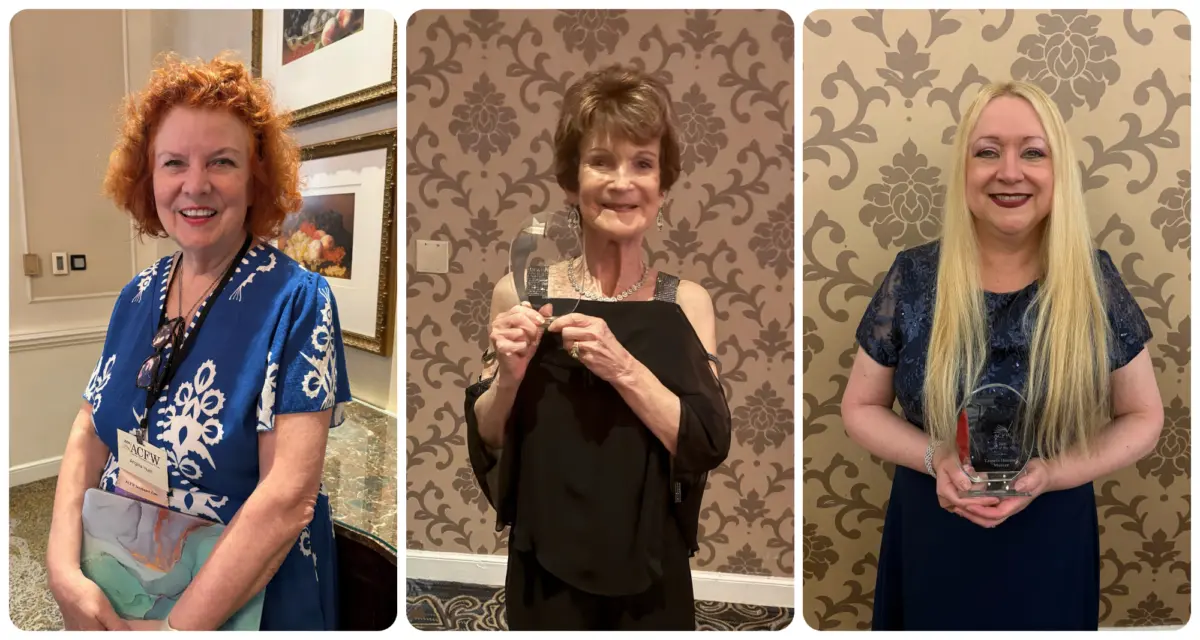
Alisa Hall, an attendee from Chattanooga, Tennessee, captured the sentiment of many newcomers after winning the ACFW First Impressions award in the contemporary category for the opening five pages of an unpublished manuscript. (Her manuscript was also a semi-finalist for the Genesis Award, which evaluates the first 15 pages.)
"Writing is such a solitary thing," Hall reflected. "I really enjoy meeting other people who think like me and see the world like I do."
Similarly, Jen Brown—who writes under the pen name Elise Browning and hails from Hastings, Michigan—took home the Genesis Award in the contemporary category for her manuscript Chasing Light. Attending her first ACFW conference, Brown described the accolade as transformative:
"It feels like a validation that I should keep going with my writing. God gave me a story that I feel like needs to be told."
The Veteran Voice: Quirky Kinship
Even for authors who have conquered the industry, the conference retains an irreplaceable magnetic pull. Dana Mentink, an ACFW member of two decades with nearly 60 published books to her name—including her recent release Murders in the Marquee (Love Inspired Trade)—emphasized the unique culture of the gathering.
"There is nothing like spending time with a group of writers where we’re all kind of the same in our quirky ways," Mentink remarked.
This blend of veteran institutional memory and fresh, debut enthusiasm creates an ecosystem where mentorship happens organically in hotel lobbies, over coffee cups, and during late-night critique sessions.
Future Outlook
As the American Christian Fiction Writers organization looks toward its next quarter-century, the landscape it navigates is markedly different from the one it encountered at its founding 20 years ago. The proliferation of digital self-publishing, the rapid evolution of audiobooks, and shifting cultural definitions of faith and morality present both challenges and opportunities for Christian fiction authors.
Yet, the success of the Memphis conference demonstrates that the demand for well-crafted, values-driven storytelling remains robust. Publishing houses are actively seeking to expand their boundaries—experimenting with fantasy, leaning into romantic comedy, and refining their suspense catalogs—while maintaining the historical staples that built the genre.
The willingness of major houses to entertain hybrid formats, alongside the explosive growth of independent publishing workshops at events like ACFW, points toward a more decentralized, entrepreneurial future for faith-based authors. Writers are no longer merely waiting for validation from traditional gatekeepers; they are arming themselves with market research, professional networks, and rigorous craft training.
By continuing to foster community, facilitate high-level industry access, and champion excellence in writing, ACFW remains the indispensable lighthouse for Christian fiction writers navigating uncharted waters. The roadmap established in Memphis guarantees that the next generation of faith-based storytellers will be better equipped, more professionally minded, and deeper rooted than ever before.




Comments
Facebook App ID not configured. Please add it in the Customizer.