
Executive Overview
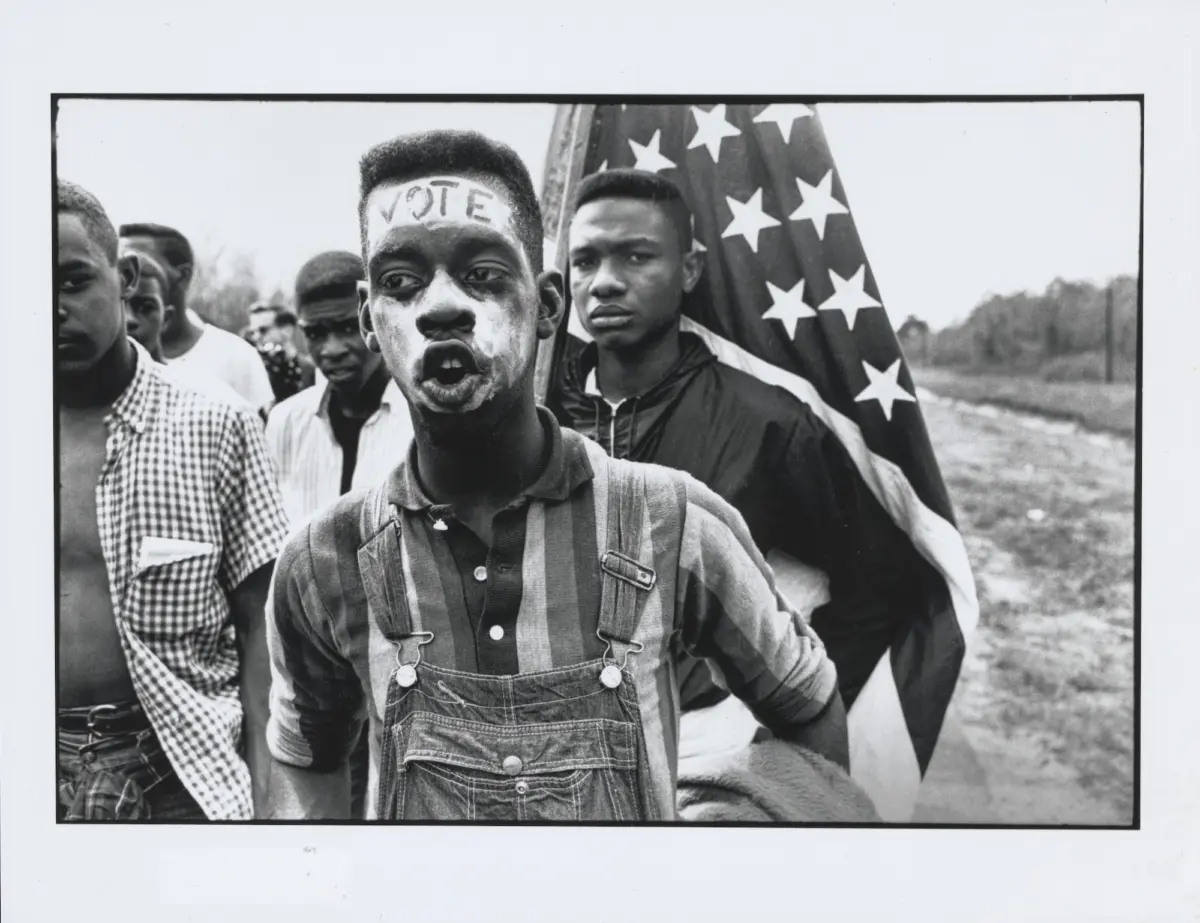
At a moment when the intersection of artistic expression and political engagement is heavily scrutinized, Duke University’s Nasher Museum of Art has unveiled one of its most ambitious conceptual projects to date. Titled “Turn the Volume Up!” and running through July 2027, the exhibition surveys a century-spanning archive of posters, paintings, sculptures, and photographs to explore how art shapes, records, and fuels social justice.
Curated by Xuxa Rodríguez, the exhibition rejects the simplistic confines of the "protest art" label in favor of a richer, more expansive thesis: that art acts as a primary vehicle for civic discourse, communal organizing, and historical reckoning. Timed to coincide with the ideological backdrop of the United States’ 250th anniversary and the rhythms of recent midterm election cycles, the exhibition transforms historical artifacts into urgent, contemporary imperatives. Visitors are met not just with passive visual culture, but with calls to action—to vote, to petition, and to re-engage with their neighbors.
Featuring heavyweights of contemporary and historical art—including Kara Walker, Bruce Davidson, Marlene Dumas, the Guerrilla Girls, Robert Colescott, and Carlos Vega—“Turn the Volume Up!” bridges the gap between grand sociopolitical movements and the mundane, everyday moments that make up the fabric of civil rights. Through an innovative exhibition design that seamlessly integrates the viewer into the artistic narrative, Rodríguez challenges museum-goers to recognize that politics is fundamentally personal, infrastructure is malleable, and historical progress is built on the cumulative actions of everyday people.
Read Also
Detailed Chronology: From Mayoral Upsets to Museum Galleries
The conceptual genesis of "Turn the Volume Up!" is deeply rooted in contemporary political history and the iterative nature of curatorial research. Tracing the trajectory of the exhibition reveals how modern democratic milestones directly influenced the shaping of gallery spaces at the Nasher Museum.
The Spring 2024 Foundations
The project began taking shape in the spring of 2024 as Rodríguez looked ahead to the United States midterm elections. Having spent extensive time immersed in the Nasher’s permanent collection while developing an earlier exhibition titled By Dawn’s Early Light, Rodríguez noticed a recurring visual motif: a wealth of works dedicated to public demonstrations and civil unrest. Initially conceptualized as a straightforward exhibition about protest, the project evolved dynamically over the subsequent year and a half.

The Fall 2025 Turning Point
A critical catalyst for the exhibition’s final iteration occurred in the fall of 2025 during the New York City mayoral election. While local municipal elections rarely command national and financial headlines outside their immediate regions, this particular race captured unprecedented national attention when voter turnout surged to two million participants—numbers not witnessed in the city since 1969.
Watching history unfold live from Durham, North Carolina, Rodríguez tuned into the election night speech of the winning candidate, who famously quoted a line from hip-hop group KRS-One: "I have four words for this administration: ‘Turn the volume up.’"
For Rodríguez, the quote served as a vital conceptual bridge. The KRS-One lyric addresses the dissemination of marginalized histories and stories to wider audiences through hip-hop. The mayoral platform, which deliberately centered voices that had historically been left out of municipal governance, mirrored the expansive ethos Rodríguez wanted to bring to the Nasher. This singular moment provided the exhibition with its title and its core metaphor: the two million voters who flooded the polls had collectively turned the volume up on their civic voices.
Supporting Context & Metrics: The Architecture of Civic Engagement
"Turn the Volume Up!" is organized into five distinct thematic sections: Remarks, Organized, Records, Petitions, and a final category integrated into the institutional frameworks. Each section utilizes terminology shared by both high-level federal governance and grassroots community organizing.
| Section | Conceptual Focus | Real-World Parallel | Key Visual / Artistic Examples |
|---|---|---|---|
| Remarks | Artists commenting on and responding to historical and sociocultural events. | Congressional and senatorial records ("I’d like my remarks recorded"). | Kara Walker, Carol Summers |
| Organized | How artists mobilize for change, producing works that function as tangible flyers or fundraising tools. | Grassroots neighborhood organizing ("We need to organize"). | Carlos Vega (Who is Malala), Guerrilla Girls |
| Records | Documentation through various mediums and artistic counter-narratives that challenge official history. | Archival record-keeping and investigative journalism. | Leonard Freed, Robert Colescott |
| Petitions | Presenting contemporary crises and compelling audiences to advocate for localized action. | Public city hall meetings and legislative petitions. | Multi-media installations and interactive wall prompts |
Interactive Exhibition Design
The architectural and visual layout of the exhibition, developed in close collaboration with head of graphic design Joel Johnson, plays an active role in visitor engagement. Rather than viewing the works from a detached distance, visitors encounter life-sized silhouettes of demonstrators holding blank placards.

As guests navigate the galleries and read reflective wall prompts—such as "How are you showing up for your communities every day?" and "What actions are you and your neighbors taking to support your shared welfare?"—the blank placards visually transform into personal tokens of responsibility. The design forces an inward gaze, compelling viewers to ask what issues they would carry onto the streets themselves.
Official Statements and Curatorial Philosophy
In an exclusive interview, curator Xuxa Rodríguez elaborated on the foundational philosophies driving the exhibition, emphasizing the inherent political nature of human creativity and the vital role of institutional memory.
On the Inherent Politics of Art
Addressing the common friction between artistic production and political intent, Rodríguez noted:
"Just because an artist is not thinking directly about politics while making a work does not mean they are outside the political context. A human being is behind it. That person is shaped—whether they intend to be or not—by the structures of the nations and states in which they live."
Drawing from her doctoral dissertation research on the experiences of exiled artists, Rodríguez underscored how political structures, legislation, and policies inevitably impact an artist’s ability to navigate the world. Whether actively engaged in partisan politics or simply recording their lived environments, creators operate within a socio-political continuum.

On Demystifying Power and History
Reflecting on the psychological barrier that often distances ordinary citizens from historical change, Rodríguez challenged the notion that political efficacy is reserved for the elite:
"It’s important to me that visitors understand that they matter, that what they care about matters, and that using their voice to advocate for issues they care about matters… People have power. Just because it looks in the news as though only a handful of people have power, that doesn’t mean it’s true."
Furthermore, Rodríguez highlighted the historical weight embedded in masterworks featured in the show, such as Robert Colescott’s The Wreckage of Medusa (1978). By subverting Théodore Géricault’s romanticized 1819 painting The Raft of the Medusa, Colescott populates the aftermath of a shipwreck with racialized caricatures while the ship’s captain looks on with eyes entirely covered. Rodríguez interprets this as an incisive commentary on willful ignorance and institutionalized racism—specifically addressing historical evasions like "I don’t see race"—and demonstrating how unaddressed prejudices continually manifest in physical harm.
Future Outlook: Radical Hope and Institutional Legacy
As "Turn the Volume Up!" settles into its extended run at the Nasher Museum of Art through July 2027, its broader implications extend far beyond the campus of Duke University or the current political cycle. The exhibition serves as a testament to the institutional trajectory of the Nasher, which has prioritized contemporary art, African diasporic perspectives, and socially engaged practices since its formal establishment in 2005.
The Practice of Radical Hope
Reflecting on the overarching emotional takeaway she envisions for visitors, Rodríguez frames museum curation not as a morbid archiving of the past, but as an act of forward-looking faith:

"Curation and caring for permanent collections is a practice of radical hope. It is predicated on the conviction that there is a future beyond the time in which we exist, that we are working toward and imagining that future, and that people in that future will look back, remember, and learn from what we leave behind."
Looking Ahead to 2029
Building on the thematic urgency of "Turn the Volume Up!", Rodríguez is already conceptualizing her next major curatorial project: a 2029 exhibition centered on the climate catastrophe. Rather than succumbing to environmental nihilism, the upcoming show will interrogate how society can retain cultural touchstones, navigate systemic collapse, and imagine rebuilding in the wake of ecological transformation.
Ultimately, "Turn the Volume Up!" functions as an authoritative reminder that infrastructure is not an immutable monolith—infrastructure is made of people. By positioning historical struggles side-by-side with contemporary civic imperatives, the exhibition empowers audiences to recognize their own agency, affirming that democracy, art, and community survival depend entirely on the active, everyday participation of those willing to make their voices heard.

Comments
Facebook App ID not configured. Please add it in the Customizer.