
Executive Overview
In an era where the live music ecosystem is overwhelmingly defined by soaring ticket tiers, dynamic pricing mechanics, and predatory resale markets, the modern music festival often operates less as a sanctuary for music lovers and more as an altar to hyper-capitalism. Fans routinely face algorithmic queue battles, exorbitant concession markups, and aggressive corporate brand integrations before a single chord is struck. Compounding these financial pressures are mounting operational hazards: dangerous crowd densities, extreme weather events exacerbated by climate instability, and the physical toll of summer heatwaves.
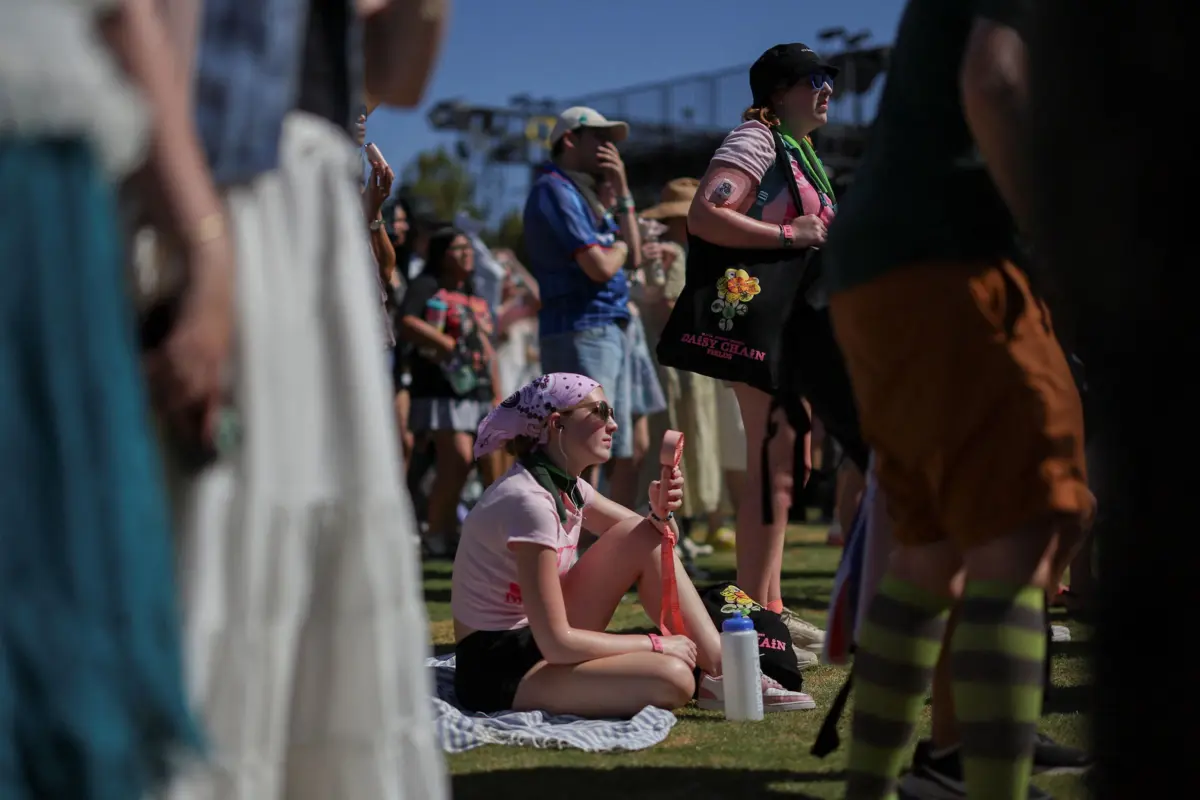
Against this turbulent backdrop, 23-year-old pop icon Olivia Rodrigo orchestrated Daisy Chain Fields, a single-day, multi-stage benefit festival held at Great Park in Irvine, California. Attracting an estimated 45,000 attendees, the event was offered free of charge and featured a curated lineup of fourteen female-fronted acts alongside surprise guest appearances.
The festival served dual purposes: operating as a high-production cultural gathering and a massive philanthropic vehicle for non-profit organizations dedicated to the health, rights, and bodily autonomy of women and girls. By the conclusion of the event, Daisy Chain Fields had secured $20 million in funding, galvanized by an initial $10 million raised through philanthropic partnerships and doubled via a matching grant from billionaire philanthropist Melinda French Gates.
Read Also
While the event demonstrated the power of pop-led activism to raise unprecedented capital, it also highlighted the paradoxes of executing radical socio-political gatherings within the machinery of corporate concert production.
Detailed Chronology
[Friday Press Conference]
 └── Rodrigo announces Daisy Chain Fields and initial $10M raised for 10 charities.

[Saturday - 11:00 AM]
 └── Gates Open at Irvine's Great Park; initial crowds rush the barricades.
 └── Opener set by Quiet Light; ambient temperatures approach 100°F.

[Midday - 12:00 PM - 3:00 PM]
 └── Escalating heat hazards; distribution of cold towels, boxed water, and "nipple ice."
 └── Sets by Die Spitz, Rachel Chinouriri, and Doechii across Marigold and Dandelion stages.
 └── Lines form for brand activations (Brooks, Taco Bell, REVERB) and artistic exhibits.

[Late Afternoon - 3:00 PM - 6:00 PM]
 └── Mitski performs; addresses extreme weather precautions from the stage.
 └── Performances by punk and alternative veterans: Garbage and The Breeders.
 └── Katseye members introduce representatives from Baby2Baby.

[Evening - 6:00 PM - 10:00 PM]
 └── Kathleen Hanna and Bikini Kill perform; heavy political messaging on stage.
 └── Rodrigo takes the headlining spot; introduces surprise duets with Sarah McLachlan,
     Alanis Morissette, and Stevie Nicks.
 └── Closing announcement: Melinda French Gates matches funds, bringing total to $20M.
Pre-Event Mobilization
On the Friday preceding the event, Rodrigo held a press conference dressed in a custom pink minidress designed by the Palestinian fashion brand Nöl Collective. She formally introduced the mission of Daisy Chain Fields, confirming that $10 million had already been committed to ten selected beneficiary organizations. The festival was framed not merely as a concert, but as a direct response to systemic rollbacks of reproductive freedom and social safety nets across the United States.
Morning Operations and the Barricade Rush
On Saturday morning, festival gates at Great Park opened at 11:00 AM to tens of thousands of waiting attendees. Despite heat index warnings, dedicated fans engaged in the established festival ritual of "barricading"—camping for hours outside the gates before sprinting across the grounds to secure spots directly against the perimeter fence of the primary stages.
The musical program commenced on the Dandelion stage with a performance by Quiet Light, the dream-pop project of a Texas-based medical student. Concurrently, crowds began navigating the extensive physical grounds spanning the dual-stage layout (Marigold and Dandelion stages), designed to alternate performances seamlessly without overlapping schedules.
Midday Heat Hazards and Infrastructure Strain
By midday, ambient temperatures in Irvine approached 100°F alongside high humidity. The environment placed significant pressure on festival safety operations managed by production giant C3 Presents (a subsidiary of Live Nation). Ground staff deployed boxed water distributions and cold, wet towels to the crowds while medical personnel managed heat exhaustion incidents, including an intervention near the Lego-sponsored installation.
During her 4:00 PM set, indie-pop artist Mitski directly addressed the climate conditions from the stage, urging attendees to prioritize physical safety over standing position: "If you feel faint, no shame, just sit down where you are… It’s better than falling."
Afternoon Sets and Corporate Integration
Throughout the afternoon, the crowd moved between music sets and interactive installations. Commercial activations operated adjacent to philanthropic and artistic exhibits:
- Brand Activations: Brooks Running offered promotional items via its "Run Club" sign-ups; Taco Bell served branded beverages; REVERB facilitated hot-pink reusable water bottle distributions linked to green-initiative donations.
- Artistic Installations: Kelly Wall’s functional penny press exhibit (Fata Morgana [Lost & Found]) and Yoko Ono’s interactive Wish Tree provided experiential touchpoints.
- Political & Educational Exhibits: The Daisy Chain Reaction pavilion offered educational materials on reproductive justice and labor rights, drawing hour-long wait times that left some attendees unable to access the space before moving to subsequent musical sets.
Between 3:00 PM and 7:00 PM, the musical programming pivoted toward classic alternative and punk acts, attracting multi-generational audiences with sets by Garbage, The Breeders, and Bikini Kill. Lead singer Kathleen Hanna delivered a high-energy performance, reinforcing the festival’s thematic roots in 1990s riot grrrl feminist movements.
Evening Climax and Surprise Collaborations
As night fell, Rodrigo took the Marigold stage for the headlining performance. Her set functioned as a bridge across generations of female songwriters, featuring sequential guest appearances:
- Sarah McLachlan: Performed alongside Rodrigo, honoring the historical legacy of Lilith Fair and offering a tribute to the late Dolly Parton.
- Alanis Morissette: Joined for a high-intensity performance of classic 1990s angst-pop anthems.
- Stevie Nicks: Performed classic tracks alongside Rodrigo, receiving widespread acclaim from the multi-generational audience.
During the final moments of the night, Rodrigo announced that philanthropist Melinda French Gates had agreed to match the initial $10 million raised, elevating the total funds raised to $20 million.
Supporting Context & Metrics
The Economic Crisis in Live Entertainment
Daisy Chain Fields occurred during a period of structural instability within the global live music market. While promoters frame post-pandemic touring as an era of unprecedented demand, artists and independent organizers face severe headwinds:
- "Blue Dot Fever": Named after the unsought blue icons representing unsold seats on Ticketmaster primary seat maps, the phenomenon reflects widespread consumer exhaustion driven by dynamic pricing strategies and inflation.
- Operational Overhead: Rising supply chain costs, gear freighting fees, and insurance spikes have rendered medium-to-large festival operations increasingly precarious.
- Climate Vulnerability: Extreme weather events have severely disrupted long-running industry staples. A notable example is Bonnaroo, which announced a hiatus for its 2027 cycle to reassess operational strategy despite millions spent on weather-resiliency infrastructure.
Financial and Humanitarian Impact Metrics
Total Capital Raised: $20,000,000
├── Initial Philanthropic Commitments: $10,000,000
└── Matching Grant (Melinda French Gates): $10,000,000
The $20 million yield was allocated evenly among ten vetted non-profit organizations operating at the intersections of health, law, labor, and systemic advocacy:
| Non-Profit Beneficiary Organization | Primary Focus Area |
|---|---|
| Baby2Baby | Providing essential material goods and diapers to children in poverty. |
| Black Mamas Matter Alliance | Advancing maternal health equity and reducing Black maternal mortality. |
| Center for Reproductive Rights | Global legal advocacy for reproductive autonomy and healthcare access. |
| FreeFrom | Financial security and resource distribution for survivors of domestic violence. |
| Jhpiego | Global healthcare access, maternal survival, and community health worker training. |
| Johns Hopkins Center for Indigenous Health | Public health solutions tailored for Native American and Indigenous communities. |
| National Domestic Workers Alliance | Advocating for labor protections, fair wages, and rights for domestic workers. |
| National Institute for Reproductive Health | State and local policy advocacy expanding abortion and contraceptive access. |
| National Women’s Law Center | Legal defense and litigation advancing gender justice in federal/state courts. |
| Planned Parenthood | Direct clinical care, healthcare provision, and reproductive rights advocacy. |
Generational Lineage: Lilith Fair vs. Daisy Chain Fields
The explicit historic precedent for Daisy Chain Fields is Lilith Fair, the touring festival founded by Sarah McLachlan in 1997 in response to radio format quotas and industry sexism that limited back-to-back female performers.
       LILITH FAIR (1997–1999)                  DAISY CHAIN FIELDS (Present)
┌──────────────────────────────────────┐     ┌──────────────────────────────────────┐
│ • Model: Ticketed touring festival   │     │ • Model: Free single-day event       │
│ • Hierarchy: "Music First, Politics  │     │ • Hierarchy: Art as a direct,        │
│   Second" (McLachlan ethos)          │     │   catalytic agent for advocacy       │
│ • Total Raised: $10M+ over 3 years   │     │ • Total Raised: $20M in single day   │
│ • Generation: Gen X / Early Boomer   │     │ • Generation: Gen Z / Gen Alpha      │
└──────────────────────────────────────┘     └──────────────────────────────────────┘
While Lilith Fair operated as a ticketed commercial enterprise that donated a fraction of ticket proceeds to local shelters (accumulating over $10 million across three summers), Daisy Chain Fields inverted the financial structure by securing upfront philanthropic backing to host a free event while generating double the total capital in a single day.
Official Statements
Artist & Founder Perspectives
In the festival’s official mission statement, Olivia Rodrigo highlighted the connective intent behind the event:
"Daisy Chain Fields was founded on the belief that joy, community, and creativity can inspire meaningful change. Beyond its philanthropic impact, Daisy Chain’s core purpose is to cultivate joy and shared understanding, creating space for meaningful moments of connection across generations and communities."
Addressing criticisms regarding her outspoken stance on socio-political issues—including public statements supporting abortion access, criticisms of ICE, and solidarity with Palestinian relief efforts—Rodrigo reiterated her perspective on artistic responsibility during press availabilities:
"This is what artists do. Music isn’t isolated from the realities of the world we live in."
Historical Perspective
Reflecting on the evolution of female-led festivals, Sarah McLachlan offered context on the ideological differences between the 1990s movement and today’s Gen Z-driven initiatives. Recalling her 1998 interview statements ("I think any social or political issues are secondary, although very important, because it is a music festival first and foremost"), McLachlan acknowledged the shift toward direct, unabashed political organizing championed by Rodrigo’s generation.
Advocacy Organizations
A representative from the Center for Reproductive Rights, speaking from the Marigold stage prior to The Breeders’ set, framed attendee participation as an act of solidarity:
"Just by being here, you are shedding light on these issues at a time when bodily autonomy is under unprecedented attack across this country. The support generated today fuels direct legal battles on the front lines."
Future Outlook
Daisy Chain Fields established a compelling proof-of-concept for the modern music industry: high-tier production values, major pop talent, and radical social advocacy can coexist outside the traditional paywalled mega-festival format.
The Paradox of Capitalist Infrastructure
Despite its philanthropic success, the event illuminated the operational challenges inherent in organizing large-scale "counter-events" within corporate frameworks:
- Corporate Dependencies: Execution required partnership with Live Nation/C3 Presents—the very corporate oligopoly often criticized for ticket inflation and anti-competitive practices.
- Commercial Activations: The presence of corporate brand installations (e.g., Brooks, Taco Bell, Lego) generated critique from some political attendees who noted the contrast between anti-capitalist messaging on stage and corporate marketing on the grounds.
                  THE EVENT PARADOX

       Anti-Capitalist &          Corporate Sponsorship
       Advocacy Messaging           & Commercial Logic
       ┌────────────────┐         ┌────────────────┐
       │ - Free entry   │         │ - C3 Presents  │
       │ - $20M raised  │  VS.    │ - Corporate    │
       │ - Direct labor │         │   activations  │
       │   & health aid │         │ - Long queues  │
       └────────────────┘         └────────────────┘
Industry Sustainability & Replication
As artist-led initiatives continue to test alternatives to standard tour routing and commercial festivals, the legacy of Daisy Chain Fields will likely depend on whether it can be sustained over time:
- Replicability: The model relies heavily on the individual cultural capital of a mega-star like Rodrigo to secure matching gifts from billionaires like Melinda French Gates. Smaller independent artists may find it difficult to replicate this level of high-dollar fundraising.
- Climate Resiliency: Like all outdoor summer gatherings, future iterations must account for accelerating climate threats, extreme heat risks, and the physical safety of dense crowds.
- Political Momentum: While the $20 million raised offers immediate financial support to non-profits, translating cultural joy and music-driven unity into long-term policy changes remains an ongoing challenge for organizers and advocacy groups alike.
Rodrigo has hinted at future iterations of the event. If Daisy Chain Fields becomes a recurring platform, it could offer a viable blueprint for how high-profile artists leverage their influence to subvert commercial concert norms and deliver direct material support to public causes.


Comments
Facebook App ID not configured. Please add it in the Customizer.