
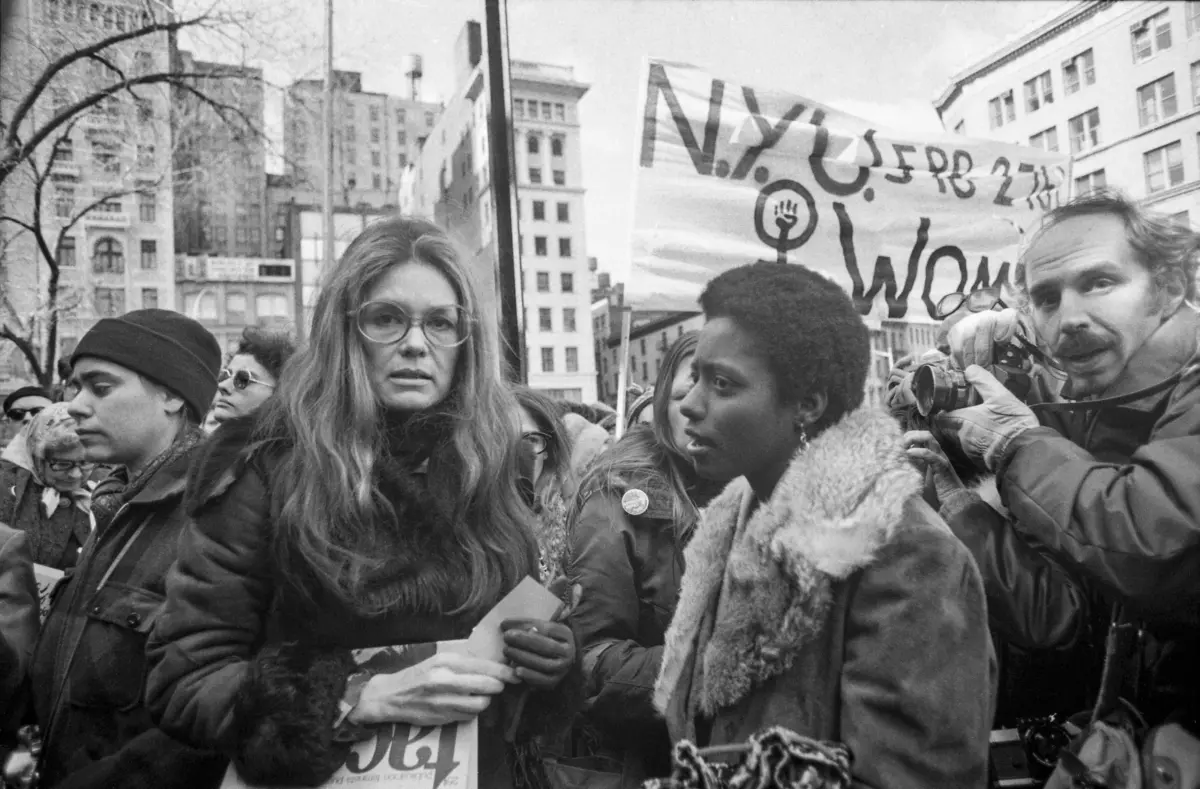
Executive Overview
The global struggle for gender equity is undergoing a profound reassessment as contemporary activists, policy experts, and veteran organizers reflect on decades of progress alongside persistent structural inequalities. What began for many post-war advocates as an individual pursuit of expression has evolved into a worldwide, itinerant movement dedicated to dismantling systemic hierarchies across race, class, and gender.
At the core of this ongoing transformation is a stark reality: despite significant legal and cultural advances, severe socio-economic disparities continue to oppress women globally. According to international labor and land registry data, women perform the majority of global work—when combining paid and unpaid labor—yet receive only roughly one-third of total global labor income and own under 20 percent of land worldwide. Furthermore, women remain disproportionately vulnerable to illiteracy, food insecurity, human trafficking, and domestic violence, while major democratic nations, including the United States, have yet to achieve gender parity at the highest levels of executive governance.
This report examines the evolution of modern gender advocacy, tracing its ideological roots from post-colonial nonviolent movements to contemporary socio-political frameworks. By synthesizing historical reflections, economic metrics, and ideological debates over terminology—ranging from classic "feminism" to "womanism," "mujerista," and "egalitarianism"—this analysis outlines the trajectory of human rights organizing and provides an authoritative outlook on the future of global democracy.
Read Also
Detailed Chronology: The Evolution of Itinerant Organizing
[1950s] Post-Colonial Awakening
  └── Living in post-independence India; exposure to Gandhian nonviolence & racial diversity.

[1960s–1970s] Shift from Literature to Activism
  └── Transition from private writing to campus tours and global speaking coalitions.

[1980s–1990s] Institutionalization & Linguistic Reform
  └── Emergence of inclusive frameworks ("Womanism", "Mujerista"); challenging historical invisibilization.

[2000s–Present] Modern Disparities & Democratic Resilience
  └── Addressing systemic economic gaps, lack of female heads of state, and democratic regression.
The 1950s: Post-Colonial India and the Gandhian Paradigm
The foundational ethos of modern cross-cultural organizing emerged significantly in the decade following World War II. Advocates traveling to newly independent nations, such as post-1947 India, encountered socio-political paradigms radically distinct from the Western status quo.
In India, emerging Western organizers were exposed to a society actively untangling itself from colonial rule. This immersion broke the "monochromatic" worldview prevalent in mid-century America, establishing a vital realization: white populations represented a distinct minority globally, and true human rights advocacy required deep engagement with racial diversity.
Crucially, collaboration with Gandhian social activists—walking through rural villages and attending local educational forums—introduced Western observers to nonviolent resistance as a practical methodology for structural change. These experiences demonstrated that nonviolence was not merely a passive ideal, but an active, transformative strategy particularly suited to women, who historically bore the heaviest burdens of societal violence.
The 1960s–1970s: From Solitary Writing to Campus Agitation
By the late 1960s, many intellectuals who had initially chosen writing as a retreat from public speech found themselves drawn into public dialogue. As personal memoirs and investigative reporting regarding gender discrimination gained traction, invitations to speak at academic institutions and community centers surged.
This shift catalyzed the role of the "itinerant organizer." Recognizing that solitary commentary was insufficient to drive legislative and cultural change, organizers formed cross-racial, multi-issue speaking teams. Traveling extensively across the United States and abroad, these coalitions built the infrastructure of the second-wave feminist movement, translating individual grievances into collective political force.
The 1980s–1990s: Challenging "Invisibilization" and Refining Terminology
During the final decades of the 20th century, the movement focused heavily on naming and dismantling systemic erasure, or "invisibilization." Historically, women had been routinely excluded from public spaces, media narratives, and language itself—a phenomenon illustrated by mid-century journalists reporting an absence of "anyone" in rooms populated entirely by women, or female ideas being validated only when articulated by male colleagues.
Simultaneously, the movement experienced crucial ideological expansion. Activists of color increasingly challenged the term "feminism" as insufficient or exclusionary, giving rise to alternative frameworks:
- Womanism: A term coined by Alice Walker to center the experiences of Black women and intersectional anti-racist struggles.
- Mujerista: A theoretical framework developed by Latina theologians and activists to emphasize the liberation of Hispanic women through community-based action.
- Women’s Liberation: A phrase favored by radical reformers seeking to dismantle underlying economic and political structures.
The 21st Century: Defending Gains Amid Global Backlash
In the contemporary era, the movement faces a complex landscape. While women have broken historical barriers—serving as union leaders, astronauts, peacemakers, and heads of government worldwide—a political and social backlash threatens to reverse hard-won progress. Organizers now operate in a global environment characterized by dynamic digital advocacy alongside renewed authoritarian attempts to restrict reproductive rights, labor equity, and democratic participation.
Supporting Context & Metrics: Analyzing Global Gender Inequality
To understand why gender advocacy remains an urgent international priority, structural inequalities must be examined through concrete economic, social, and political indicators. Despite decades of activism, key metrics highlight an enduring global imbalance.
| Metric / Dimension | Global Reality & Disparity Index | Primary Structural Driver |
|---|---|---|
| Labor & Income | Women perform over 50% of global labor (paid & unpaid) but earn only ~33% of global income. | Unpaid domestic labor, gender pay gaps, occupational segregation. |
| Asset Ownership | Women own less than 20% of agricultural and residential land globally. | Inheritance laws, restricted credit access, patriarchal legal structures. |
| Literacy & Food Security | Females constitute the majority of the world’s 773+ million illiterate adults and face higher food insecurity rates. | Systemic educational deprivation, intra-household resource allocation bias. |
| Political Executive Power | The United States has never elected a female head of state, lagging behind dozens of global democracies. | Institutional gatekeeping, campaign finance barriers, ingrained bias. |
| Personal Safety | Females are disproportionately targets of human trafficking and fatal domestic violence. | Systemic impunity, lack of protective infrastructure, patriarchal dominance. |
Economic Exploitation and Land Rights
The economic foundation of modern society remains heavily reliant on the uncompensated labor of women. Caregiving, domestic management, and agricultural support are frequently excluded from official Gross Domestic Product (GDP) calculations, effectively subsidizing national economies without compensating the workers. This dynamic directly correlates with real-world poverty: without land ownership—which remains below one in five property titles globally—women lack the necessary collateral to secure loans, launch enterprises, or establish financial independence.
Global Labor vs. Revenue Share
[====================] Total Global Labor Performed (~50%+ by women)
[======              ] Share of Global Income Received by Women (~33%)
[===                 ] Share of Global Land Owned by Women (<20%)
The Psychology of Opposition
Advocates emphasize that resistance to gender equity is rarely based on merit; rather, it stems from a desire to protect unearned structural advantages. Dominant social groups—whether defined by sex, race, class, or ethnicity—frequently view equality as a net loss rather than a mutual gain.
This anxiety arises from a belief in social hierarchy, where individual worth is tied to inherited privilege rather than personal effort. Organizers argue that this mindset harms the privileged as well, trapping them within rigid societal expectations and preventing them from discovering their true personal identity outside of enforced dominance.
Official Statements & Conceptual Frameworks
Defining the Core Principles
Advocates and organizers across various traditions maintain that the essential goal of gender organizing is straightforward: establishing absolute social, economic, and political equality.
"For me, saying that I am a feminist has always meant that I believe in the social, economic, and political equality of all males and females of all races and groups. Equality is still the exception, not the rule."
— Primary Advocacy Position
The Nomenclature Debate: Feminism, Humanism, and Egalitarianism
The terminology surrounding gender equity continues to provoke debate within academic and organizing communities. While some propose shifting to broader terms such as "egalitarianism" or "humanism," seasoned strategists caution against abandoned terms that directly confront patriarchal power.
                        ┌── Feminism (Directly addresses gender hierarchy)
                        ├── Womanism / Mujerista (Intersectional & culturally specific)
HUMAN EQUALITY STRATA ──┼── Egalitarianism (Broad universal equality)
└── Humanism (Focuses on human agency; occasionally critique-bound)- Humanism: While theoretically inclusive, the term historically carries secular associations that may alienate religious communities. Furthermore, it risks obscuring the specific gendered nature of structural oppression.
- Egalitarianism: Broadly accepted as a philosophy of universal human dignity, yet often lacks the specific diagnostic tools needed to identify and dismantle patriarchal systems.
- Feminism / Womanism / Mujerista: Explicitly identifies the historical source of systemic inequality, insisting that human identity—while constructed and changeable across race and class—remains fundamentally sacred and worthy of equal protection under the law.
Future Outlook: Micro-Actions, Structural Reform, and Democratic Resilience
As global societies navigate periods of political volatility, senior activists argue that elder generations play a critical role: providing historical context and reminding communities of how much progress has already been achieved. The path forward requires a two-pronged strategy combining broad legislative reform with individual, daily accountability.
                   STRATEGIC IMPERATIVES FOR EQUALITY
                                    │
         ┌──────────────────────────┴──────────────────────────┐
         ▼                                                     ▼
 MACRO-LEVEL REFORMS                                   MICRO-LEVEL ACTIONS
 ├─ Legal Equity & Protection                          ├─ Domestic Labor Redistribution
 ├─ Pay Transparency & Parity                          ├─ Internal Unlearning of Bias
 └─ Political Gender Parity                            └─ Community Leadership Support
1. Institutional and Macro-Level Imperatives
- Normalizing Legal and Economic Equity: Nations must move beyond non-binding guidelines to enforce equal pay, protect land rights for women, and establish robust legal frameworks against gender-based violence.
- Feminism as a Precondition for Democracy: Modern geopolitical research increasingly indicates that states with higher rates of gender equality are more stable, economically prosperous, and less prone to violent conflict. Gender parity must therefore be treated as a foundational element of national security and democratic stability.
2. Micro-Level Actions and Personal Agency
Organizers stress that systemic change is impossible without personal transformation. True reform requires individuals to audit their daily lives, homes, and workplaces for ingrained bias. Recommended micro-actions include:
- Redistributing Unpaid Labor: Challenging traditional domestic roles by ensuring household tasks and caregiving responsibilities are shared equitably.
- Supporting Autonomy: Encouraging women within families and local communities to pursue independent personal, educational, and professional goals.
- Reclaiming Early Intuitions of Fairness: Drawing upon childhood concepts of basic fairness, before rigid societal gender expectations are internalized.
Conclusion
The journey from solitary writing to global organizing illustrates a fundamental truth: lasting social change relies on collective action. While the modern landscape presents serious challenges, the global recognition of gender equality as an essential human right marks a permanent shift in human history. By uniting micro-level personal commitment with macro-level institutional reform, the ultimate goal of the movement remains within reach: transforming equality from a rare exception into a universal, undeniable fact of life.





Comments
Facebook App ID not configured. Please add it in the Customizer.