In an era where the memoir genre increasingly demands raw vulnerability intertwined with structural innovation, author Rabha Ashry’s forthcoming book, Hope You Still Love Me, stands out as a formidable addition to contemporary literary non-fiction. Set for release on May 4, 2027, by the Santa Fe Writers Project (SFWP), Ashry’s memoir charts a fraught, courageous trajectory across geographical, psychological, and identity-based borders. Traversing the distance between a suffocating domestic life in the United Arab Emirates and the grueling realities of seeking asylum in Chicago, Ashry provides a candid account of living as a queer, bipolar Arab woman navigating exile, psychiatric institutions, and the complex process of self-reconstruction.
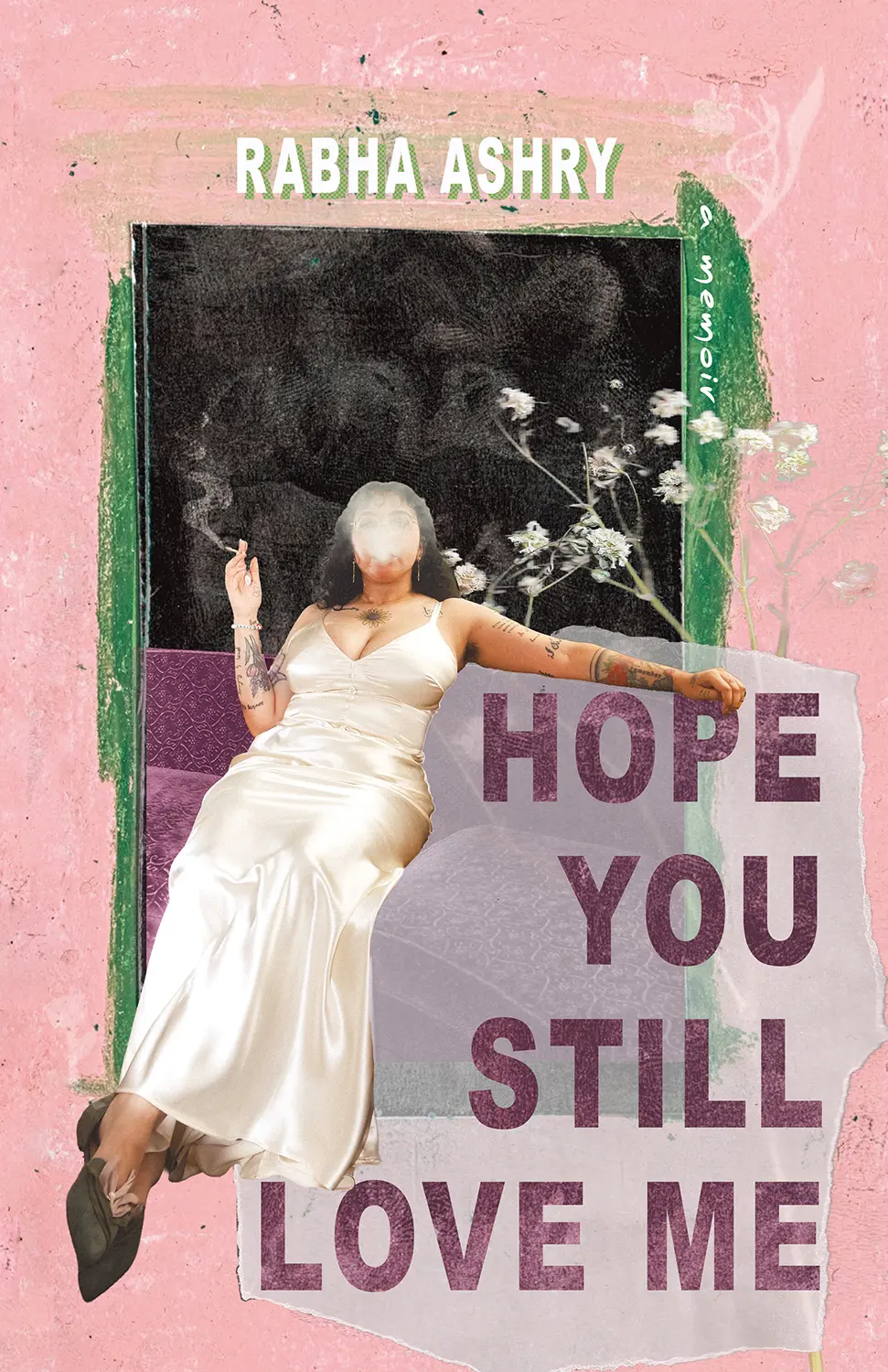
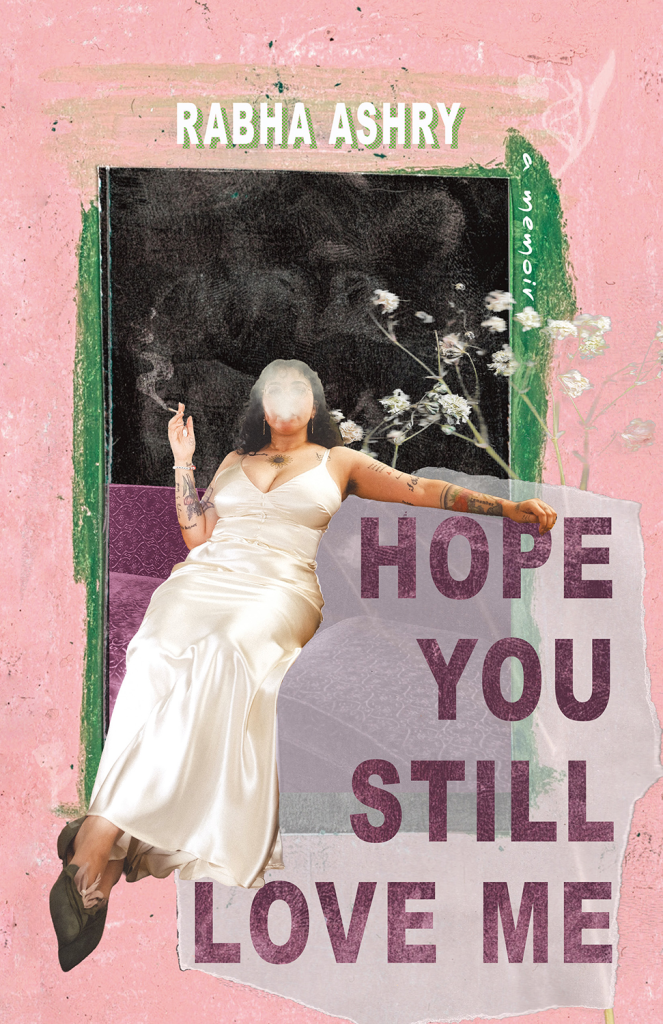
Coinciding with the book’s announcement, Electric Literature has unveiled the official cover art for Hope You Still Love Me. Far from a standard commercial design, the cover represents a decade-long artistic synthesis between Ashry and cover designer Laura Waltje, incorporating original photography by Elizabeth A Rosales. By collaging tangible artifacts from Ashry’s life—ranging from pastels rendered during her first manic episode to photographs of her wedding—the visual packaging of the book functions as a direct extension of its text. This report provides an in-depth examination of the narrative architecture of Ashry’s memoir, the socio-literary context surrounding its publication, and the collaborative visual design process that brought its cover to life.
Detailed Chronology: The Journey Across Borders and Mindscapes
The narrative structure of Hope You Still Love Me traces a multi-stage migration defined by physical escape, psychological turmoil, and eventual stabilization. The timeline of Ashry’s journey underscores the intricate challenges faced by displaced individuals coping with severe mental health conditions.
+-----------------------------------------------------------------------------------+
| CHRONOLOGY OF NARRATIVE EVENTS                                                    |
+-----------------------------------------------------------------------------------+
| [Initial Period]  • Domestic confinement in the UAE under maternal control        |
|                   • Initial onset of severe mania; creation of early mixed-media  |
|                     artworks and visual experiments                               |
|                   • Creative partnership with designer Laura Waltje begins        |
+-----------------------------------------------------------------------------------+
| [Transitional]    • Escape from the UAE, leaving behind family structures         |
|                   • Arrival in Chicago, Illinois; initiation of asylum claim      |
+-----------------------------------------------------------------------------------+
| [Crisis & Trial]  • Institutionalization across multiple psychiatric facilities   |
|                   • Complex cycles of medication adjustment and manic episodes    |
|                   • Navigation of legal and bureaucratic hurdles of asylum status |
+-----------------------------------------------------------------------------------+
| [Reconstruction]  • Development of chosen family networks in Chicago               |
|                   • Civil marriage ceremony hosted in collaborator Waltje’s home  |
|                   • Finalization and publication agreement with SFWP (May 2027)   |
+-----------------------------------------------------------------------------------+
1. Confinement and Initial Breakdown in the UAE
The memoir opens in the United Arab Emirates, detailing an environment marked by intense familial surveillance and domestic distress. Ashry describes an oppressive household dominated by a narcissistic maternal figure, a setting that exacerbated her worsening mental health. During this period, approximately ten years prior to the book’s upcoming publication, Ashry experienced her first major manic episode—an event she characterizes as entering "the world behind the world." It was during this period of heightened psychological distress that Ashry began using visual art, mixed-media collages, and oil pastels as a primary mechanism for grounding her fractured perceptions.
2. Flight to Chicago and the Asylum Process
Recognizing the impossibility of living authentically as a queer woman within her immediate domestic and legal framework, Ashry made the painful decision to flee the UAE. Leaving her sisters behind, she traveled to Chicago to seek asylum in the United States. However, the physical relocation did not yield immediate peace. Instead, the acute stress of exile merged with the onset of severe Bipolar I/II symptoms. Ashry found herself cycling through multiple psychiatric wards in Illinois, struggling with ineffective pharmacological interventions and repeated manic and depressive cycles while navigating the legal complexities of immigration enforcement and asylum applications.
3. The Path to Healing and Chosen Family
The final arc of Ashry’s narrative shifts focus from survival to active reconstruction. Rather than framing "home" as an inherited geographic or genetic state, Hope You Still Love Me demonstrates how home can be systematically built from the ground up. Central to this phase was the establishment of a robust chosen family. This network provided the emotional foundation necessary for Ashry to achieve psychiatric stability, leading eventually to her marriage—an event hosted inside the home of her long-time artistic collaborator, Laura Waltje—and the completion of this literary project.
Supporting Context & Metrics: Navigating Intersectionality in Publishing
Ashry’s work emerges at a critical juncture in independent publishing, where narratives combining queer identity, global displacement, and neurodivergence are reframing the boundaries of life writing.
The Intersection of Asylum and Mental Health
Data from global refugee and human rights organizations consistently highlights the compounded vulnerabilities faced by neurodivergent LGBTQ+ asylum seekers:
Psychological Distress Rates: Studies indicate that asylum seekers experiencing severe psychiatric conditions face significantly higher rates of legal destabilization due to the burden of proof required by immigration courts, which often misinterprets manifestations of trauma or mania as inconsistency.
Queer Arab Representation: Contemporary Arab literature in translation and written in the diaspora has seen a marked shift over the past decade. Ashry’s narrative contributes to a growing body of work by writers who reject both Western orientalist tropes and home-country censorship, presenting nuanced depictions of mental illness and non-normative sexuality.
+-----------------------------------------------------------------------------------+
| THEMATIC INTERSECTIONS IN ASHRY'S MEMOIR                                         |
+-----------------------------------------------------------------------------------+
|                                                                                   |
|    [ QUEER IDENTITY ] <-------> [ GLOBAL DISPLACEMENT ]                           |
|            ^                             ^                                        |
|            |                             |                                        |
|            v                             v                                        |
|    [ NEURODIVERGENCE ] <------> [ CHOSEN FAMILY ]                                 |
|                                                                                   |
+-----------------------------------------------------------------------------------+
Independent Publishing Dynamics
The acquisition of Hope You Still Love Me by the Santa Fe Writers Project highlights the vital role played by independent presses in elevating non-traditional memoirs. Independent houses frequently lead the industry in publishing formal experiments—such as memoirs that incorporate visual art, fragmented prose, and non-linear timelines—that major commercial imprints may view as financial risks.
Official Statements and Visual Aesthetics: The Cover Design
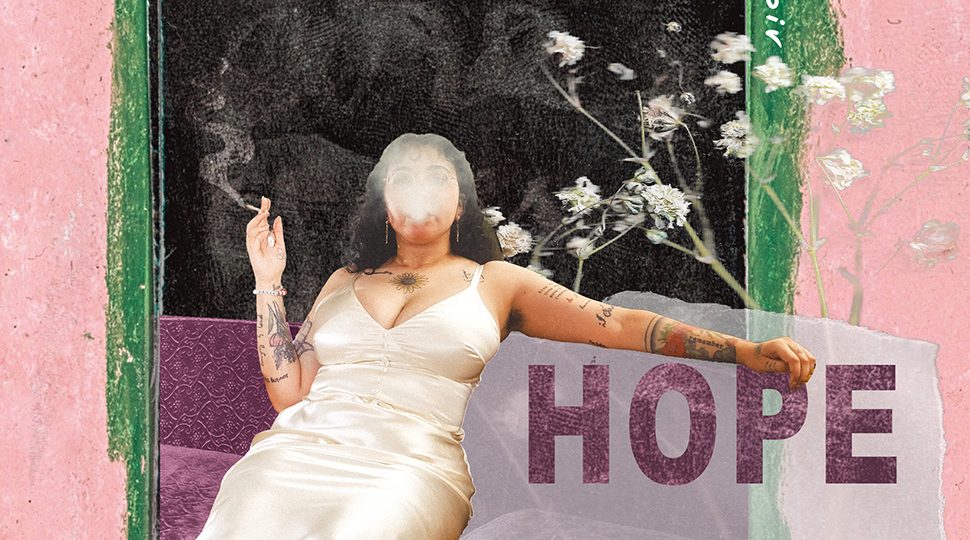
The design of the cover for Hope You Still Love Me serves as a primary artifact of the book’s overarching theme: transforming raw trauma into structured, artistic expression. Designed by Laura Waltje—who currently serves as the in-house Cover Designer and Production Editor for Sentient Publications—the artwork relies on a deeply personal collage methodology.
+-----------------------------------------------------------------------------------+
| COVER DESIGN COMPONENT MAP                                                        |
+-----------------------------------------------------------------------------------+
| Component               | Source / Origin           | Narrative Significance      |
+-------------------------+---------------------------+-----------------------------+
| Background Layer        | Original 2017 Art Piece   | Created during author's     |
|                         | (Pink canvas, green pastel| first manic episode in UAE  |
|                         | and black central ink)    |                             |
+-------------------------+---------------------------+-----------------------------+
| Central Photograph      | Photo by Elizabeth A      | Captures wedding day in     |
| (Front Cover)           | Rosales                   | Chicago; signifies healing  |
+-------------------------+---------------------------+-----------------------------+
| Tonal Line Art          | Author's Personal Tattoos | Motifs of smoke, flowers,   |
|                         | (Rendered by Waltje)      | and butterfly wings         |
+-------------------------+---------------------------+-----------------------------+
| Archival Material       | Scanned Pressed Flowers & | Nods to college zine era    |
|                         | Tracing Paper Overlay     | ("Second Draft Press")      |
+-------------------------+---------------------------+-----------------------------+
| Contrast Element        | Childhood Photo           | Depicts author dressed up   |
| (Back Cover)            | (Provided by Mother)      | by biological family        |
+-------------------------+---------------------------+-----------------------------+
Reflections from the Author
Reflecting on the cover’s unveiling, Rabha Ashry emphasized the deep trust and shared history embedded within the artwork:
"Laura and I have been creative collaborators for the 13 years we have known each other. Some of my fondest memories in college are of us running around the mixed arts studio making art, collaging and scanning and printing on different kinds of paper. My favorite thing about the cover is that it captures our style of visual art and the enthusiasm with which we made it.
Hope You Still Love Me is a book about madness and healing, and this cover features relics of my madness, and evidence of my healing. It is deeply personal and intimate. The backdrop art piece is one that I created during my first manic episode 10 years ago… The photograph was taken by Elizabeth A Rosales for my wedding, which took place in Laura’s house. The cover also features line art Laura created out of my tattoos, and scanned flowers I collected from Laura’s garden… Every few days I pull up the cover on my phone to gaze at it as though it is a photograph of a beloved child."
Insights from the Designer
Designer Laura Waltje provided detailed context regarding the visual language she and Ashry developed over more than a decade, tracing its evolution from student zines to formal book design:
"We met in college in the UAE about a decade ago where we both studied creative writing and lived across the hall from each other… Rabha and I further developed our shared visual language when we created and published a series of zines as ‘Second Draft Press.’ We used a lot of scans of polaroids, printed and torn images, magazines, type written text, and fabric and flowers. The visual language we developed parallels Rabha’s writing: highly energetic, using fragments/vignettes, confessional in its rawness, but very intentional in its placement, arrangement, and elements.
In order to create the cover, I wanted to pull from that visual language Rabha and I had developed together and draw on elements that mapped Rabha’s journey in this book. The pink background, with the black central image, and the green oil pastels comes directly from an artist book Rabha created during the time of the first manic episode… The front cover features a picture of Rabha in her wedding dress… while the back cover features a small image of Rabha dressed up like a doll by her mother in a little wedding dress. By using the picture of Rabha as a small child, the art Rabha created during that first manic episode, the tattoos that she grounded herself with, and the photograph from her wedding, the cover mirrors the journey of the book from biological to chosen family."
Future Outlook and Literary Impact
As the May 4, 2027 publication date approaches, Hope You Still Love Me is positioned to make a meaningful impact across several literary sectors:
Memoir and Life Writing: The book’s structural integration of manic episodes, legal displacement, and chosen kinship offers a refined model for writers documenting complex personal histories without resorting to simplistic resolution arcs.
Visual and Graphic Literature: The collaboration between Ashry and Waltje highlights the value of intimate, author-designer relationships in independent publishing, demonstrating how visual aesthetics can authentically mirror narrative themes.
Institutional Distribution: Santa Fe Writers Project plans an extensive pre-release campaign targeting independent booksellers, academic institutions with programs in Middle Eastern studies, gender studies, and disability studies, as well as community-based mental health organizations.
By capturing the complex intersections of exile, illness, and artistic collaboration, Hope You Still Love Me stands as both an enduring record of personal survival and a testimony to the transformative power of chosen family. Pre-orders for the volume are currently open through the Santa Fe Writers Project official storefront.




Comments
Facebook App ID not configured. Please add it in the Customizer.