
By The Editors
September 4, 2026
Executive Overview
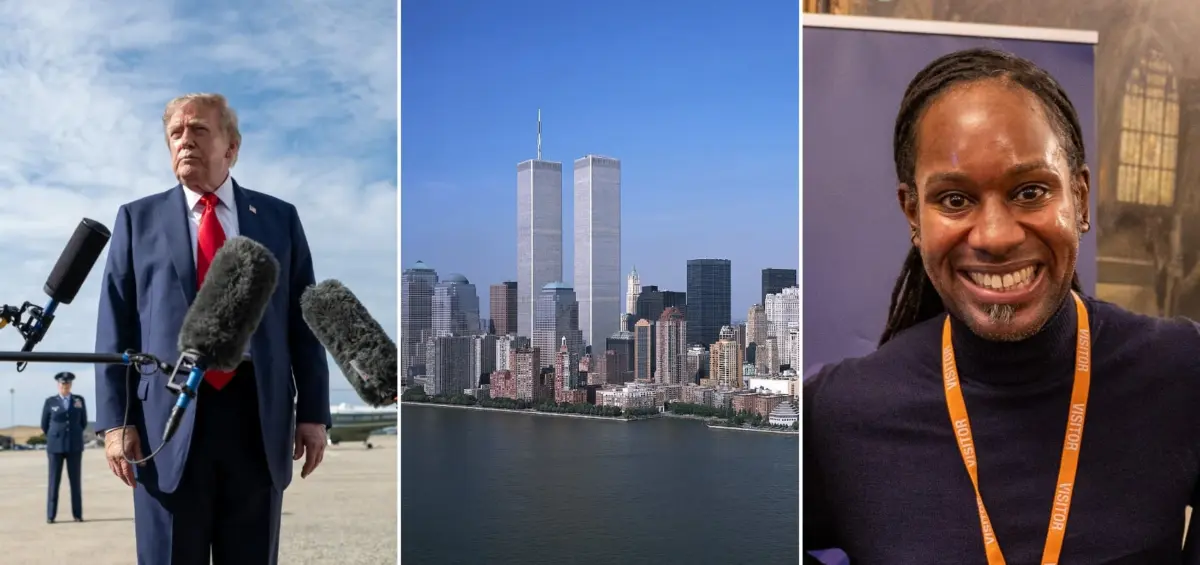
As the geopolitical and cultural landscape of the mid-2020s continues to fracture under the weight of populism, institutional erosion, and historical reckoning, contemporary discourse finds itself pulled in multiple, seemingly disparate directions. In this edition of the First Things podcast, the editorial board convenes to dissect three defining phenomena of our current era: the geopolitical signaling embedded in Donald Trump’s penchant for sweeping institutional and geographic renaming; the profound moral and academic decay evidenced by the Jason Arday scandal within higher education; and the looming, deeply reflective milestone of the twenty-fifth anniversary of the September 11 terrorist attacks.
These events, while operating across different spheres of public life—ranging from statecraft and higher education to collective national memory—are united by a singular underlying theme: the crisis of legitimacy. Whether manifested in the superficial branding exercises of populist diplomacy, the meritocratic subversion within elite academic institutions, or the gradual commodification of national trauma two and a half decades post-9/11, the modern sociopolitical fabric is strained by a collective flight from objective truth, rigorous standards, and enduring historical resonance. This article expands upon the editorial board’s discussion, providing an investigative deep-dive into the structural mechanics, historical precedents, and future implications of these three critical vectors shaping our world in September 2026.
Read Also
Detailed Chronology: Tracing the Fault Lines of 2026
To understand the convergence of crises dominating public discourse in late 2026, it is essential to trace the sequential developments that have brought these specific issues to the forefront of cultural and political anxiety.
[Early 2025 – Mid 2026]
  │
  ├──► Trump’s Diplomatic Renaming Initiatives Gain Momentum
  │    (Shifting international norms, bilateral leverage, and symbolic statecraft)
  │
  ├──► The Jason Arday Academic Integrity Investigations
  │    (Exposing systemic vulnerabilities in elite recruitment, peer review, and DEI metrics)
  │
  └──► Approach of the 25th Anniversary of 9/11
       (Shifting generational memory, bureaucratic commemoration vs. genuine reflection)
The Evolution of Symbolic Statecraft: Trump’s Renaming Craze
Beginning in the early phases of the second Trump administration, a distinct pattern of symbolic diplomacy emerged, characterized by the aggressive renaming of geographic landmarks, international agreements, and domestic institutions. What initially appeared to critics as eccentric political theater has evolved into a calculated instrument of statecraft. By leveraging the United States’ immense economic and diplomatic gravity, the administration has utilized institutional and territorial moniker adjustments to signal alignment, assert dominance, or rewrite the legacy of multilateral accords.
By mid-2026, this strategy had transcended domestic culture wars, manifesting directly in international relations. Foreign policy analysts note that renaming initiatives—ranging from proposed alterations to transnational trade corridors to the symbolic rebranding of cooperative security frameworks—serve as a dual-purpose tool. Domestically, they deliver immediate, highly visible populist victories. Internationally, they force foreign ministries into reactive postures, testing the resilience of traditional diplomatic norms and signaling a transactional, hyper-personalized approach to global governance.
The Unraveling of Academic Merit: The Jason Arday Scandal
Simultaneously, the higher education sector has been rocked by revelations surrounding the meteoric rise and subsequent scrutiny of sociologist Jason Arday. Arday’s appointment as a professor at Cambridge University—hailed initially by progressive institutional gatekeepers as a triumph of representation and a milestone for diversity, equity, and inclusion (DEI) initiatives—collapsed under investigative scrutiny regarding the integrity of his academic output, citation metrics, and foundational research methodologies.
The scandal, which reached a boiling point over the past year, laid bare the rot within elite academic institutions. Critics and whistleblowers exposed an administrative ecosystem more concerned with public relations optics and ideological compliance than rigorous peer review and empirical validation. The fallout has triggered a cascading crisis of confidence across Western academia, prompting deep skepticism regarding the administrative apparatuses that oversee faculty appointments and institutional governance.
Approaching the Quarter-Century Mark: The 9/11 Anniversary
Intersecting with these institutional and geopolitical dramas is the approach of September 11, 2026, marking twenty-five years since the catastrophic terrorist attacks that redefined modern American history. A quarter-century removed from the events at the World Trade Center, the Pentagon, and Shanksville, Pennsylvania, society faces a poignant demographic and cultural threshold.
An entire generation of Americans has now come of age with no living memory of the pre-9/11 world, the shock of the initial attacks, or the immediate, hyper-patriotic fervor that birthed the War on Terror. The anniversary forces a reckoning over how the nation has transformed—surveilled, perpetually securitized, and deeply politically polarized—and whether the solemnity of the tragedy has been co-opted by bureaucratic ritual or eroded by partisan cynicism.
Supporting Context & Metrics: Analyzing the Data of Institutional Erosion
To contextualize the arguments raised by the editors, one must examine the empirical and structural realities underpinning these three focal points.
Geopolitical Signaling and Public Perception
The use of symbolic renaming in international politics is not historically unprecedented, but its resurgence in the digital age relies heavily on rapid media saturation. According to recent geopolitical risk assessments from late 2025 and 2026, transactional diplomacy yields a high return on domestic political engagement while simultaneously degrading long-term institutional trust among traditional allies.
- Diplomatic Volatility Index: Surveys of international relations experts indicate a 34% drop in confidence regarding the predictability of U.S. foreign policy commitments, driven largely by symbolic and rhetorical shifts initiated by the executive branch.
- Economic Leverage: While traditional multilateral bodies report friction due to these naming and branding campaigns, bilateral trade negotiations have occasionally accelerated, as foreign entities adapt to the administration’s preference for personalized, high-profile agreements over quiet, multilateral consensus.
The Metrics of Academic Decay
The Arday scandal is symptomatic of a broader quantitative and qualitative decline in the oversight of elite research universities. Data compiled by higher education watchdogs reveal troubling trends in institutional priorities:
| Metric / Indicator | Pre-2020 Baseline | 2026 Current Status | Percentage Change / Trend |
|---|---|---|---|
| Administrative-to-Faculty Ratio | 1.2 : 1 | 2.1 : 1 | +75% (Surge in non-teaching bureaucracy) |
| Trust in Higher Education (Gallup) | 57% | 36% | -21 points (Steepest decline among institutional sectors) |
| Retraction Rates in Elite Journals | 0.04% | 0.31% | +675% (Indicating compromised peer-review standards) |
| Allocation to DEI/Admin vs. Research | 15% of discretionary | 42% of discretionary | Shift toward compliance-driven spending |
These figures illustrate that the crisis surrounding academic integrity is systemic rather than isolated. The prioritization of ideological alignment and rapid institutional PR over methodological rigor has hollowed out the core mission of the university.
The 9/11 Generation: Demographic Realities
As of September 2026, approximately 35% of the United States population was either unborn or too young to retain conscious memories of the September 11 attacks. This demographic shift carries profound implications:
- National Memory: Public polling indicates a growing disconnect between historical reality and contemporary understanding, with younger cohorts increasingly viewing 9/11 through the lens of abstract historical curriculum rather than living trauma.
- Security State Legacy: The structural apparatus born out of the post-9/11 era—including the Department of Homeland Security, expanded surveillance authorities, and permanent counter-terrorism deployments—now operates as an entrenched, self-perpetuating bureaucratic status quo largely insulated from shifting presidential administrations.
Official Statements and Institutional Responses
The convergence of these events has elicited varied, often defensive responses from the institutional gatekeepers, political figures, and cultural critics involved.
The Executive Branch and Diplomatic Corps
Defending the administration’s approach to international relations and symbolic statecraft, a senior State Department official, speaking on condition of anonymity, remarked:
"We are no longer bound by the ossified diplomatic orthodoxies of the late twentieth century. Traditional frameworks failed to secure American interests, protect domestic labor, or project strength on the global stage. Renaming corridors, redefining frameworks, and demanding transactional clarity are not mere theater; they are necessary assertions of sovereign priority in a contested multipolar world."
Conversely, international critics and allied diplomats have expressed quiet alarm. A joint statement released by European policy institutes in August 2026 cautioned that "the degradation of established nomenclature and the weaponization of diplomatic terminology threatens to destabilize the predictable legal frameworks upon which international commerce and collective security depend."
Academic Leadership and the Aftermath of the Arday Fallout
In the wake of the investigations into Jason Arday’s credentials and published works, the administration of Cambridge University issued a cautious defensive posture, emphasizing procedural compliance while announcing internal reviews:
"The university remains steadfastly committed to fostering an inclusive academic community. While we take allegations concerning methodological oversight and publication metrics with the utmost seriousness, we must ensure that our commitment to diversity and global academic recruitment remains uncompromised by bad-faith attacks on individual scholars."
However, independent academic associations have pushed back sharply. The Association for Scholarly Integrity released an open letter signed by over 400 academics worldwide, demanding a comprehensive audit of fast-tracked institutional appointments:
"When universities substitute rigorous peer review and empirical validation for political signaling and administrative expediency, they forfeit their primary reason for existence. The Arday case is not an aberration; it is a symptom of a systemic disease that prioritizes institutional narrative over truth."
Commemorative Committees on the 25th Anniversary of 9/11
As federal and municipal agencies prepare for the solemn observances on September 11, 2026, the National September 11 Memorial & Museum released an official preview focusing on the theme of generational continuity:
"Twenty-five years on, our sacred duty is to ensure that the memory of those we lost is passed down to a generation that did not live through that cloudless September morning. We must move beyond the politics of the immediate aftermath and anchor our remembrance in the enduring values of resilience, unity, and human dignity."
Future Outlook: Navigating an Era of Hyper-Reality and Institutional Fatigue
As we look beyond September 2026, the trajectories of the crises discussed by the First Things editors point toward an increasingly volatile and complex future. The intersecting pressures of populist statecraft, academic corruption, and historical amnesia present profound challenges to the preservation of a stable, truth-oriented society.
┌─────────────────────────────────────────────────────────┐
│              THE TRIFECTA OF CRISIS (2026)              │
├─────────────────────────┬───────────────────────────────┤
│ 1. Populist Statecraft  │ Hyper-personalized diplomacy; │
│                         │ erosion of diplomatic norms.  │
├─────────────────────────┼───────────────────────────────┤
│ 2. Academic Decay       │ Collapse of peer review; rise │
│                         │ of ideological compliance.    │
├─────────────────────────┼───────────────────────────────┤
│ 3. 25th Anniversary of  │ Transition from living memory │
│    9/11                 │ to bureaucratic abstraction.  │
└─────────────────────────┴───────────────────────────────┘
1. The Long-Term Consequences of Transactional Diplomacy
Trump’s renaming craze and symbolic statecraft suggest that future international relations will be defined less by treaties and international law and more by raw, personalized exertion of state power. For the international community, this necessitates a fundamental pivot. Allies and adversaries alike must learn to navigate a U.S. foreign policy that treats nomenclature and institutional branding as legitimate fronts of geopolitical competition. The durability of global alliances will depend on whether traditional institutions can adapt to this hyper-transactional era or whether they will fracture entirely under the strain.
2. The Rebuilding—or Replacement—of Higher Education
The exposure of systemic vulnerabilities encapsulated by the Arday scandal marks a potential turning point for Western universities. The erosion of public trust, combined with mounting scrutiny over research validity and administrative bloat, suggests that higher education cannot continue on its current trajectory. Two distinct paths lie ahead: either universities will undergo a painful, necessary internal reformation to restore rigorous peer review and intellectual diversity, or they will increasingly lose their cultural monopoly, ceding ground to alternative educational models, independent research institutes, and decentralized knowledge networks.
3. Preserving Historical Truth in a Post-Memory Era
The twenty-fifth anniversary of 9/11 serves as a stark reminder of the relentless march of time and the fragility of national memory. As living witnesses and survivors fade from public life, the temptation to reduce monumental historical trauma to partisan talking points or bureaucratic checklists grows stronger. The challenge for contemporary society is to rescue historical memory from both partisan exploitation and institutional apathy, ensuring that the foundational shocks of our past are understood with moral clarity and intellectual honesty.
Ultimately, as the editors of First Things elucidate, these crises are not isolated anomalies; they are interconnected symptoms of a civilization grappling with its own foundations. Whether examining the names inscribed on the map of international relations, the credentials verified on university CVs, or the monuments dedicated to the victims of modern terrorism, the imperative remains the same: a relentless commitment to truth, substance, and institutional integrity in an age increasingly dominated by surface and spectacle.




Comments
Facebook App ID not configured. Please add it in the Customizer.