
In the contemporary literary marketplace, large publishing conglomerates and independent presses alike grapple with an overarching, defining hurdle: discoverability. As digital algorithms shift, media ecosystems fragment, and the sheer volume of annual releases swells, capturing the fleeting attention of readers requires extraordinary editorial vision. While corporate houses often lean toward formulaic blockbusters guaranteed to mitigate risk, this fall’s slate of independent press releases proves that indie publishers are steering the industry forward through sheer audacity.
From the rugged landscapes of rural Ireland to the competitive subcultures of quilting and extreme strength athletics, independent publishers this season are championing casts of unconventional characters—muscle men, rogue inn owners, grieving sons, and devoted creators. This comprehensive examination explores how visionary indie presses are bypassing conventional risk-aversion, leveraging niche cultural anthropology, and betting on unclassifiable literary hybrids to redefine contemporary storytelling. By prioritizing bold creative curation, community-driven marketing, and distinct regional and global perspectives, these publishers are not only surviving the discoverability crisis; they are thriving in it.
Detailed Chronology: Fall Releases and Publishing Milestones
The publishing calendar for the upcoming fall season is exceptionally dense, featuring strategic rollouts from legacy independent publishers and scrappy newer imprints alike. The editorial timeline reveals a diverse tapestry of works that bridge ancient history with modern anxieties.
Read Also
September: Feats of Strength, Woven Tales, and Border Crossings
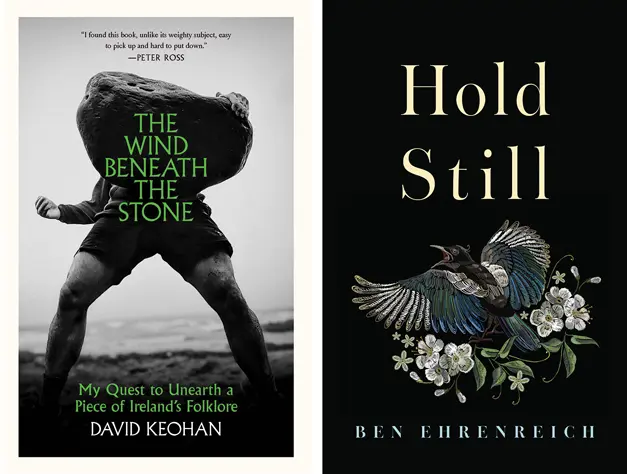
- Chelsea Green Publishing: Kicks off September with David Keohan’s memoir, The Wind Beneath the Stone. The Vermont-based publisher also releases Neha Sinha’s My Wild City and Edward Cutler’s This Beautiful Country, anchoring the month in deep connections to place and cultural anthropology.
- Torrey House Press: Launches Eli McCann’s debut novel, Stitched, in September. Following a direct-message exchange on social media between cofounder Kirsten Johanna Allen, executive director Will Neville-Rehbehn, and McCann, the Utah-based nonprofit pressed forward on a story about competitive quilting despite conventional industry hesitation.
- Verso: Publishes Itamar Vieira Junior’s Saving the Fire, translated by Johnny Lorenz, in September. This second entry in the Brazilian author’s ambitious literary project follows his 2023 international breakout, Crooked Plow.
- Milkweed Editions: Releases Fady Joudah’s Exhibit G in September. The hybrid visual and poetic work combines photography from the Gaza Soup Kitchen with Joudah’s poetry, prose, and translations, representing a pinnacle of fine book design under creative director Mary Austin Speaker.
- Spiegel & Grau: Debuts Barry Michels’s memoir, Ahead of All Parting, in September. Written following Michels’s 2023 diagnosis with Lewy body dementia, the book chronicles a celebrated therapist’s creative liberation and embrace of radical openness in the face of a terminal prognosis.
October: Gothic Campuses, Institutional Conspiracies, and Grief
- Hub City Press: Releases Drew Buxton’s debut novel, Daytona Teddy Riggs (August/early fall window). The South Carolina press selected the testosterone-fueled, 1990s Texas-set narrative through its rigorous open submissions period, which accounts for roughly 30% of its annual output.
- New York Review Books (NYRB): Publishes Tom McCarthy’s The Rhyl Poster in October. The institutional thriller set within the E.U.’s Court of Justice underscores the imprint’s ongoing commitment to publishing living novelists who are actively remaking the form.
- Grove Atlantic: Debuts Will Maclean’s second novel, Solace House, in October. Billed as a trippier, more intricate take on dark academia, the campus gothic investigates a university student’s warping sense of reality while clearing out a former mental asylum and an eccentric recluse’s mansion.
- Prometheus Books: Releases Reece Jones and Greg Boos’s Smuggler: Drugs, Gangs, and Refugees at America’s Northern Border in October. The non-fiction work details the legal travails and humanitarian dilemmas of Bob Boulé, owner of Washington State’s Smuggler’s Inn.
- City Lights Books: Publishes Ben Ehrenreich’s Hold Still in October. Born from daily memorial writings following the 2022 death of his mother, writer and activist Barbara Ehrenreich, this unclassifiable blend of fable, diary, and prose poetry offers a profound meditation on personal renewal through loss.
November: Midwester Tales and Legal-Literary Frontiers
- Grove Atlantic: Rounds out its major fall releases with Tom Drury’s West of Loveland in November. The visiting professor at the Iowa Writers’ Workshop returns to his fictional Grouse County, delivering the soulful, comic storytelling his devoted readership has eagerly anticipated.
Supporting Context & Metrics
Independent publishing operates under financial constraints that make every acquisition a high-stakes venture, yet the metrics of success for these houses often defy conventional publishing logic.
Consider the case of Torrey House Press and Eli McCann’s Stitched. The preorder velocity for the novel was so unprecedented that the nonprofit independent press was forced to revise its print run five times prior to launch. Co-founder Kirsten Johanna Allen noted that this single title accounts for roughly one-and-a-half times the press’s entire annual print budget—an astonishing logistical hurdle that highlights the unpredictable power of organic audience connection.
Similarly, presses like Hub City Press rely on democratic structures to discover breakout hits. By maintaining open submission windows—a practice increasingly abandoned by risk-averse corporate publishers—Hub City sources approximately 30% of its annual list from unagented manuscripts. This open-door policy directly yielded Drew Buxton’s Daytona Teddy Riggs, proving that untapped literary talent frequently resides outside traditional New York networking circles.
Geographical and cultural specificity has also emerged as a powerful economic driver. Chelsea Green’s focus on the "cloch nirt" (lifting stones) of rural Ireland taps into a global community of historical and athletic enthusiasts, while Verso’s fiction list—bolstered by Marlowe Granados’s 2021 breakout Happy Hour and Itamar Vieira Junior’s translations—proves that international literature with strong political and colonial critiques can find a robust, paying readership in the English-speaking market.
Official Statements
Industry leaders point to editorial fearlessness as the ultimate weapon against the discoverability crisis.
- Peter Blackstock (VP and Deputy Publisher, Grove Atlantic): Emphasizes the universal nature of the industry’s primary hurdle, noting, "I think the challenge that we all face, big houses and small, is discoverability." Regarding Will Maclean’s campus gothic Solace House, Blackstock adds that while every dark academia book is inevitably compared to Donna Tartt’s The Secret History, Solace House is the first to genuinely deserve the comparison, describing it as "trippier" and more akin to David Mitchell’s intricate narrative architectures.
- Matthew Derr (Deputy Publisher, Chelsea Green Publishing): Highlights the anthropological resonance of David Keohan’s memoir The Wind Beneath the Stone: "It shows how there are still these opportunities to find something ancient that attracts new generations… There’s tradition, there’s history, there’s complexity, but there’s also this deep connection to place, which is what Chelsea Green loves to publish."
- Kate McMullen (Associate Publisher, Hub City Press): Recalls pitching Drew Buxton’s boorish yet empathetic strongman novel to an office environment composed entirely of women: "We’re an office full of women, so I was like, Trust me, this is really good." She praises the protagonist’s voice, noting, "Here’s this kind of idiot, but there’s also so much empathy and consideration in how he’s depicted."
- Will Neville-Rehbehn (Executive Director, Torrey House Press): Discusses acquiring Eli McCann’s novel about competitive quilting: "I just pounced into direct messages to say we’re interested." When McCann warned them the book was about elderly women quilting, Neville-Rehbehn replied that Torrey House was "the only press founded to publish this book."
- Edwin Frank (Editorial Director, New York Review Books): Praises the living authors shaping the NYRB list, such as Tom McCarthy, describing McCarthy as having an "essayistic mind and a wonderful way of making you see the texture of reality rather differently." Frank likens The Rhyl Poster‘s institutional deep-dive to the great 19th-century realists, noting its focus on "the institutional portraits of Balzac and Dickens, their attention to social surroundings."
- Daniel Slager (Publisher and CEO, Milkweed Editions): Emphasizes the unique intersectional identity of Fady Joudah regarding Exhibit G: "Only Joudah could have written this book because of his intersecting identities" as a Palestinian, an American, and a medical caregiver, underscoring Milkweed’s commitment to elite book design directed by creative director Mary Austin Speaker.
- Julie Grau (Co-CEO, Spiegel & Grau): Reflects on Barry Michels’s transformation following his terminal diagnosis: "There was something transformative happening… It was like watching this diagnosis liberate him creatively and put him more in touch with this intuitive side."
Future Outlook
The landscape of independent publishing heading into the latter half of the decade is defined by structural agility, editorial fearlessness, and a willingness to embrace unclassifiable hybrids. While corporate publishing houses navigate consolidation and algorithmic homogenisation, independent presses are carving out sustainable, highly dedicated readerships by championing books that refuse to fit neatly into marketing silos.
Whether it is Ben Ehrenreich’s grief-wrought prose poetry at City Lights, Fady Joudah’s visual-poetic reckoning with humanitarian crises at Milkweed, or Tom McCarthy’s institutional critique at NYRB, the common thread among these houses is an unwavering commitment to literary risk-taking. To nurture a legacy as enduring and culturally significant as these independent publishers have demonstrated, modern presses must continue to step outside comfort zones. Based on this season’s extraordinary catalog, the independent publishing community understands that assignment profoundly.



Comments
Facebook App ID not configured. Please add it in the Customizer.