
Executive Overview
The consumer electronics landscape has long sought the ideal intersection between digital convenience and physical aesthetics. For years, digital picture frames have suffered from a distinct design paradox: while offering dynamic, rotating photo galleries, traditional LCD and OLED displays demand constant power, create intrusive glare under ambient room lighting, and often look like glaring computer monitors hanging on a living room wall. They break the illusion of fine art and traditional framing.
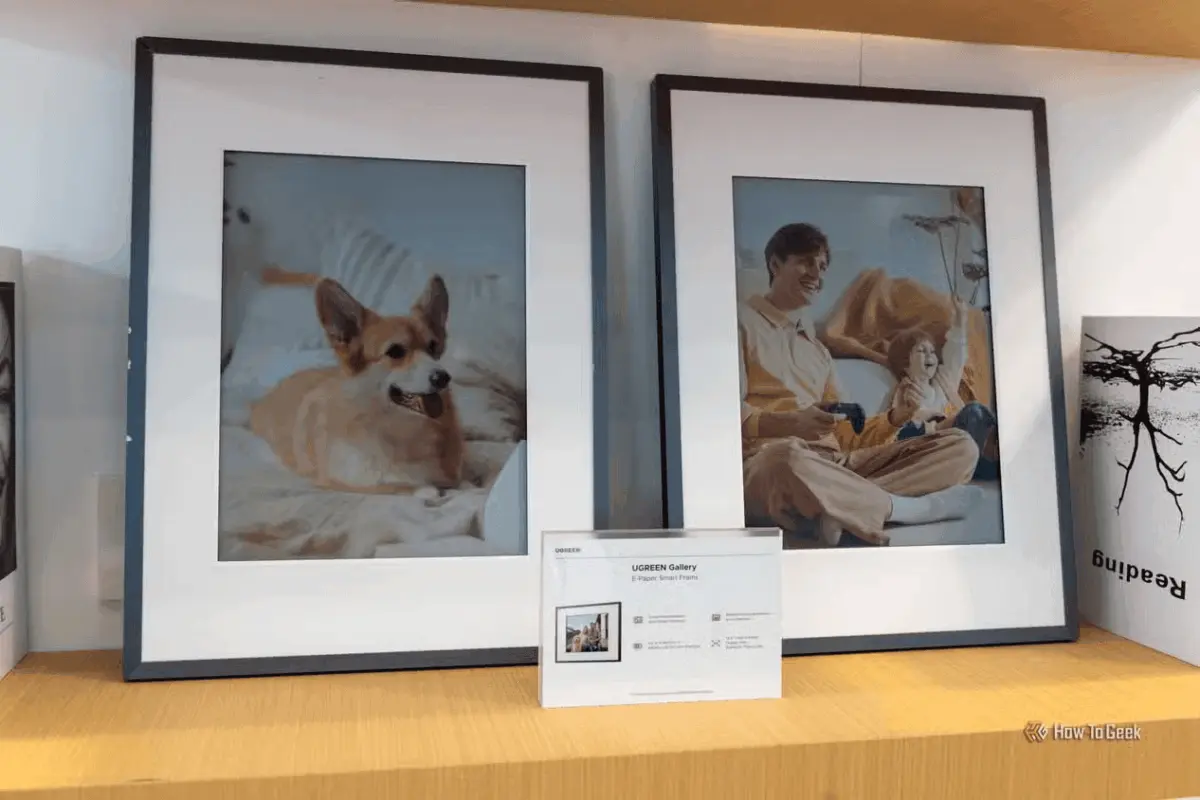
At the Internationale Radio- und Fernseh-Ausstellung (IFA) 2026 in Berlin, technology manufacturer Ugreen introduced a compelling solution to this long-standing design challenge. The Ugreen Gallery is a 13.3-inch full-color E Ink digital picture frame that leverages cutting-edge e-paper technology to mimic the appearance of a physical, ink-printed photograph. More than just a standalone hardware gadget, the Gallery serves as a cornerstone device for Ugreen HomeAgent, the company’s newly unveiled, privacy-focused local artificial intelligence smart home ecosystem.
By combining the low-power, glare-free optical properties of E Ink Spectra 6 technology with local, on-device AI curation, Ugreen is positioning the Gallery not merely as a peripheral screen, but as an intelligent, autonomous canvas. This comprehensive report examines the technological specifications, architectural design philosophies, ecosystem integration, market positioning, and future outlook of the Ugreen Gallery, exploring how it signals a paradigm shift in how households interact with personal media and ambient smart home interfaces.
Read Also
Detailed Chronology: From Concept to IFA 2026 Debut
The journey toward the Ugreen Gallery’s debut at IFA 2026 reflects broader industry shifts regarding data privacy, energy efficiency, and the maturation of color electrophoretic display technologies.
The Shift Toward Local Processing and Ambient Design
In the years leading up to 2026, the smart home market faced significant consumer pushback regarding cloud-dependent architectures. Homeowners increasingly expressed discomfort with uploading private photo libraries, voice recordings, and spatial data to remote corporate servers for AI processing and facial recognition. Concurrently, energy consciousness became a primary design driver for consumer hardware, prompting manufacturers to re-evaluate devices that maintained high standby power draws.
Ugreen, historically renowned for its robust ecosystem of charging accessories, power banks, and data storage solutions, quietly expanded its research and development into ambient computing and local networking devices. Recognizing that its user base possessed vast digital archives stored on Network Attached Storage (NAS) devices and personal computers, the company conceptualized a display device that could bridge the gap between secure local storage and elegant home decor.
The IFA 2026 Reveal
Unveiled during the opening keynotes at IFA 2026 in Berlin, the Ugreen Gallery immediately drew crowds and critical praise from tech journalists and interior designers alike. Positioned prominently within Ugreen’s newly minted smart home showcase, the frame demonstrated how advanced e-paper could transition from industrial warehousing tags and e-readers into the high-end consumer interior market.
Industry analysts noted that the timing of the announcement aligned perfectly with the commercial viability of next-generation color e-paper panels, which finally offer the color saturation, contrast ratios, and refresh reliability required for high-end photography display. During the exhibition, Ugreen confirmed that the device would enter an initial preorder phase at a promotional price of $299 USD, ahead of a planned standard retail launch at $439 USD.
Technical Specifications and Architectural Breakdown
To fully understand the appeal and engineering complexity of the Ugreen Gallery, one must examine the underlying hardware, display mechanics, and software integration that power the device.
+-------------------------------------------------------------------+
|                        UGREEN GALLERY ARCHITECTURE                |
+-------------------------------------------------------------------+
|                                                                   |
|  [ Local Storage ] <---> [ Ugreen HomeAgent Hub ]                 |
|   - MicroSD (to 512GB)    - On-Device AI Curation                 |
|   - Wi-Fi Transfer        - Facial Recognition / Deduplication    |
|                                     |                             |
|                                     v                             |
|                        [ E Ink Spectra 6 Panel ]                  |
|                         - 13.3-inch Full-Color                    |
|                         - 1600 x 1200 Resolution (4:3)            |
|                         - Zero-Glare Ambient Viewing              |
|                         - Zero Power Static Image Retention       |
+-------------------------------------------------------------------+
The Display: E Ink Spectra 6 Technology
At the heart of the Ugreen Gallery is a state-of-the-art 13.3-inch E Ink Spectra 6 full-color e-paper display. Unlike older generation color electronic paper technologies—which often relied on color filter arrays that reduced overall brightness and muted color fidelity—Spectra 6 utilizes advanced particle migration techniques to deliver a richly saturated color palette directly within the electrophoretic medium.
- Native Resolution: The panel boasts a crisp 1600 x 1200 pixel resolution, optimized for a classic 4:3 aspect ratio. This aspect ratio is historically significant and practically advantageous, as the vast majority of digital cameras and smartphone sensors capture images natively in 4:3 (or easily crop to it), eliminating the awkward letterboxing or cropping required by wide-screen 16:9 displays.
- Optical Characteristics: Because e-paper relies on ambient light reflection rather than self-illuminating pixels (such as OLED or LCD panels), the Ugreen Gallery produces zero display glare. Users can view family portraits, pet photographs, and artistic prints from wide viewing angles under direct sunlight or harsh indoor illumination without encountering distracting reflections.
- Energy Dynamics: The fundamental physics of electrophoretic displays mean that power is consumed only when the electrical charge rearranges the colored pigment particles to form a new image. Once the image is rendered, the frame draws zero power to maintain the static picture. This extreme energy efficiency allows the device to operate cordlessly for extended periods, freeing interior designers and homeowners from the aesthetic nuisance of dangling power cords.
Storage, Connectivity, and Local Architecture
While many digital frames require constant cloud connectivity to stream photos from online repositories or subscription services, the Ugreen Gallery adopts a decentralized, local-first philosophy.
- Local Storage Capacity: The frame is equipped with a dedicated microSD card slot supporting capacities up to 512GB. This allows users to store hundreds of thousands of high-resolution images locally on the device, ensuring instant loading times and uninterrupted operation even during internet outages.
- Wireless Connectivity: Built-in Wi-Fi connectivity facilitates seamless wireless data transfers from computers, smartphones, and local home servers, allowing users to effortlessly push new albums or individual snapshots to the frame without physically removing the storage card.
Ecosystem Integration: The Ugreen HomeAgent AI Framework
The Ugreen Gallery is not designed to exist in a vacuum; it serves as a primary visual node within Ugreen HomeAgent, the manufacturer’s ambitious local artificial intelligence smart home ecosystem.
Moving Away from Cloud Dependency
In an era marked by rising concerns over corporate data harvesting and cloud server breaches, Ugreen HomeAgent takes a fundamentally different architectural path. Rather than uploading private photo libraries to third-party cloud servers for AI tagging, facial recognition, and curation, the ecosystem relies on a local processing hub installed within the user’s home network.

On-Device AI Curation
Managing a digital photo library containing decades of memories can be overwhelming. Standard digital frames often default to dumping thousands of disorganized images into a random slideshow, resulting in repetitive duplicates, poorly exposed shots, or unwanted images.
The Ugreen Gallery solves this through intelligent automation driven by the HomeAgent hub:
- Intelligent Deduplication: The local AI scans the connected photo repositories, automatically identifying and filtering out blurry shots, accidental screenshots, duplicate bursts, and poorly framed images.
- Contextual Curation: Leveraging on-device machine learning models, the system recognizes key life moments, anniversaries, seasonal milestones, and favorite subjects (such as family members and pets).
- Dynamic Daily Highlights: The frame automatically curates and casts daily highlights, ensuring that waking up each morning reveals a fresh, emotionally resonant memory without requiring manual playlist management from the user.
Market Positioning, Pricing, and Competitive Landscape
The introduction of the Ugreen Gallery at IFA 2026 places the company into a sophisticated and rapidly expanding niche within the consumer electronics market.
Pricing Strategy
Ugreen has structured the commercial rollout of the Gallery to capture early adopters while establishing a clear value proposition relative to premium smart home displays:
- Preorder Phase: $299 USD promotional price point.
- Standard Retail Price: $439 USD expected upon full market release.
At this price point, the Ugreen Gallery sits above mass-market, cloud-dependent LCD photo frames, reflecting the premium cost of large-scale, high-resolution color E Ink panels. However, it competes directly with high-end digital art canvases (such as the Meural Canvas or Netgear smart frames), while offering distinct advantages in power autonomy, glare reduction, and local privacy.
Target Demographics
The Ugreen Gallery appeals to several distinct consumer segments:
- Privacy-Conscious Homeowners: Individuals who refuse to store personal family photo archives on public cloud servers.
- Interior Design Enthusiasts: Consumers who reject the industrial look of glowing LCD screens in favor of frames that genuinely mimic paper prints.
- Smart Home Integrators: Users already invested in local-first automation ecosystems who desire aesthetically pleasing ambient status and media displays.
Official Statements and Industry Insights
Speaking on the conceptualization and launch of the Ugreen Gallery at IFA 2026, company representatives emphasized Ugreen’s transition from a utility-focused brand to an integrated lifestyle technology provider.
"With the Ugreen Gallery, we wanted to challenge the assumption that smart home displays must look like miniature televisions," noted a senior product development lead during the IFA presentation. "By harnessing the unique optical properties of E Ink Spectra 6 and combining them with our secure, local Ugreen HomeAgent AI ecosystem, we have created a device that respects both the user’s aesthetic environment and their fundamental right to digital privacy."
Industry analysts attending the Berlin exhibition praised the device’s build quality and the remarkable color vibrancy of the Spectra 6 panel, noting that color E Ink has officially crossed the threshold from novelty status to mainstream commercial viability for home decor applications.
Future Outlook: The Next Wave of Ambient Computing
The debut of the Ugreen Gallery points toward a broader transformation in how living spaces interact with digital information. As local artificial intelligence chips become more powerful and energy-efficient, the reliance on remote cloud infrastructure for mundane smart home tasks is expected to decline rapidly.
Potential Future Iterations
While the 13.3-inch Gallery model marks an impressive market entry, industry watchers anticipate several avenues for future expansion within Ugreen’s ambient display lineup:
- Diverse Form Factors: Introduction of larger gallery-sized frames (such as 21-inch or 27-inch variants) and smaller desktop companions.
- Interactive Smart Home Dashboards: Expanding the HomeAgent software interface to display real-time local weather, calendar events, and home automation controls without sacrificing the paper-like aesthetic.
- Open API Support: Opening local development kits for tech-savvy users to integrate custom data feeds, RSS streams, and personal art portfolios directly onto the e-paper canvas.
Conclusion
The Ugreen Gallery represents a mature synthesis of art, privacy, and technology. By successfully merging the zero-glare, ultra-low power consumption of E Ink Spectra 6 displays with the robust, local-first artificial intelligence of the Ugreen HomeAgent ecosystem, Ugreen has delivered one of the standout hardware concepts of IFA 2026. As consumers increasingly prioritize data sovereignty and aesthetic harmony in their living spaces, devices like the Ugreen Gallery suggest a future where digital technology enhances our homes quietly, intelligently, and beautifully.




Comments
Facebook App ID not configured. Please add it in the Customizer.