
Executive Overview
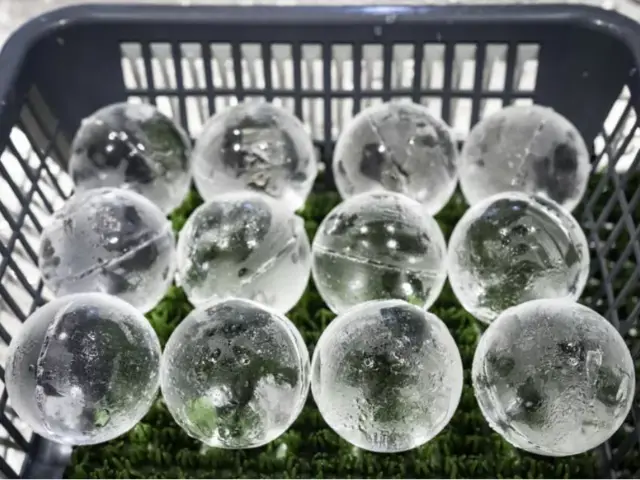
In the historic, preservation-zoned alleys of Kanazawa, Japan, a quiet manufacturing revolution is taking place—one that has little to do with high-tech robotics or automotive engineering, and everything to do with frozen water. Here, inside the unassuming facilities of Kuramoto Ice, a century-old enterprise on the Ishikawa coast of the Sea of Japan, artisans painstakingly carve crystal-clear blocks of ice. Destined for high-end cocktail bars from Singapore to San Francisco, these meticulously crafted cubes and spheres do far more than simply chill a drink; they represent a pinnacle of culinary craftsmanship, transforming the humble ice cube into a luxury export.
As the global cocktail renaissance continues to mature, patrons and mixologists alike are scrutinizing every component of their glassware. No longer is ice treated as a mere afterthought or a thermal utility pulled haphazardly from a commercial ice machine. Instead, it is being recognized as a foundational ingredient that dictates dilution rates, textural mouthfeel, and visual elegance.
Kuramoto Ice, spearheaded by fifth-generation director Kazuhiko Kuramoto, is at the vanguard of this movement. Utilizing a meticulous, multi-day freezing and purification process that traces its philosophical roots back to historical techniques, the firm has watched its international sales more than double since it began exporting in 2019. Today, top-tier establishments across the globe are willing to pay upwards of 200 yen ($1.25) per individual cube. This comprehensive investigative report examines the intricate science, cultural reverence, and economic dynamics behind Japan’s booming ultra-clear ice export market.
Read Also
Detailed Chronology: From Historic Roots to Global Export
To understand how a block of ice travels thousands of miles from the coast of Japan to chill a Negroni in a trendy overseas lounge, one must look back through the generational shifts of the ice-making industry.
The Evolution of Kuramoto Ice
- The Early Decades (Early 20th Century): Established over a hundred years ago in Ishikawa prefecture, Kuramoto Ice initially served local commercial fisheries and regional food preservation needs. In an era long before ubiquitous mechanical refrigeration, harvesting and storing natural winter ice was an essential seasonal trade.
- The Post-War Industrial Shift: As mechanical refrigeration took hold globally, the firm transitioned to manufactured block ice, supplying local vendors and early Japanese drinking establishments with cleaner, more reliable products.
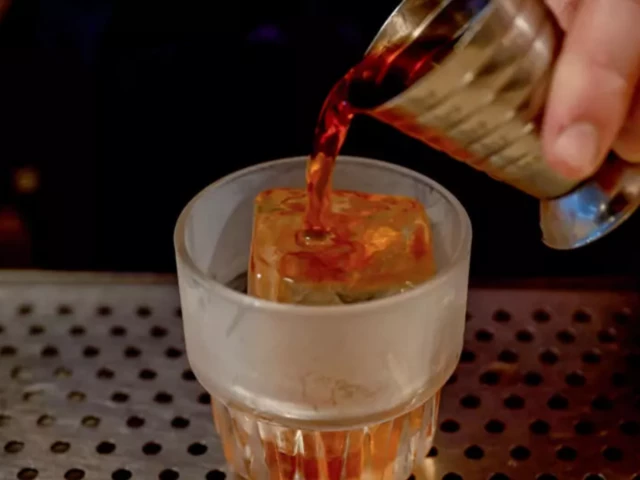
- The Epiphany in Las Vegas (Early 2010s): A critical turning point occurred more than a decade ago when Kazuhiko Kuramoto visited Las Vegas, Nevada. While frequenting high-end American bars, he observed that expensive, expertly crafted cocktails were routinely compromised by low-quality, cloudy ice that melted rapidly and watered down the complex flavor profiles. He noted that the time-consuming, high-quality directional freezing techniques once common in the United States had been largely phased out in favor of rapid, industrial production. This realization planted the seed for an international export vision.
- The 2019 Export Breakthrough: Capitalizing on the global rise of craft mixology and the increasing prestige of Japanese bar culture, Kuramoto Ice officially launched its international shipping operations in 2019. By packaging and flash-freezing their luxury cubes to withstand long-haul logistics, the company opened up a direct pipeline to the world’s most discerning beverage markets.
- Present Day (2026): Today, Kuramoto Ice stands as a premier exporter in a specialized niche market, supplying award-winning mixology dens—such as Singapore’s famed Native bar—with thousands of kilograms of ultra-dense ice annually.
The Science and Craft: Behind the 72-Hour "Junpyo" Process
The stark visual and functional difference between standard commercial ice and Japanese artisanal ice—known as junpyo (completely transparent ice)—is not an accident of nature; it is the result of rigorous physics, patience, and meticulous intervention.
The Problem with Rapid Freezing
Standard domestic freezer trays and high-output industrial ice machines freeze water within minutes to a few hours. This rapid crystallization traps microscopic air bubbles, minerals, and suspended impurities throughout the entire structure of the ice. These trapped imperfections are what give standard ice its cloudy, opaque white appearance. Furthermore, because impurities lower the structural integrity of the ice matrix, cloudy ice contains structural fractures that cause it to melt prematurely, diluting the beverage it was meant to preserve.
The Japanese Directional Freezing Method
Specialist Japanese ice makers operate on an entirely different timeline, freezing water over a grueling 48 to 72-hour period.
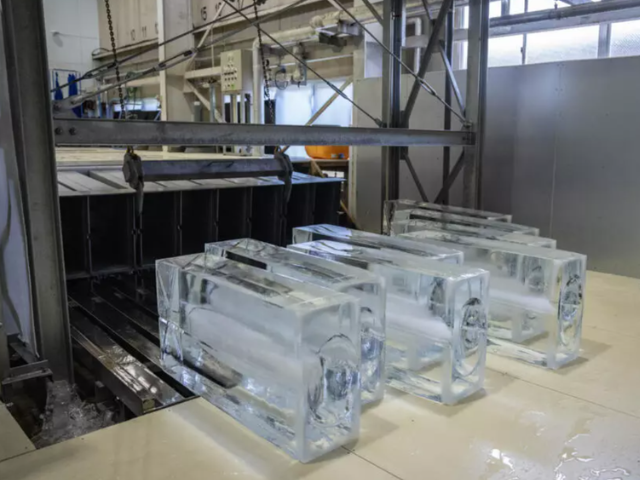
- Controlled Directional Freezing: Water is introduced into specialized tanks and frozen slowly from the outside inward. As the ice crystals form along the outer perimeter, dissolved minerals and air bubbles are naturally pushed toward the center of the block.
- The Purging Phase: Rather than allowing these impurities to freeze permanently into the core, the manufacturing process involves periodically extracting the tainted, mineral-dense core water and replacing it with a fresh batch of purified water.
- Agitation and Clarification: Throughout the prolonged freezing cycle, specialized mechanisms keep the water in constant, gentle motion. This persistent movement prevents air bubbles from adhering to the growing crystal lattice.
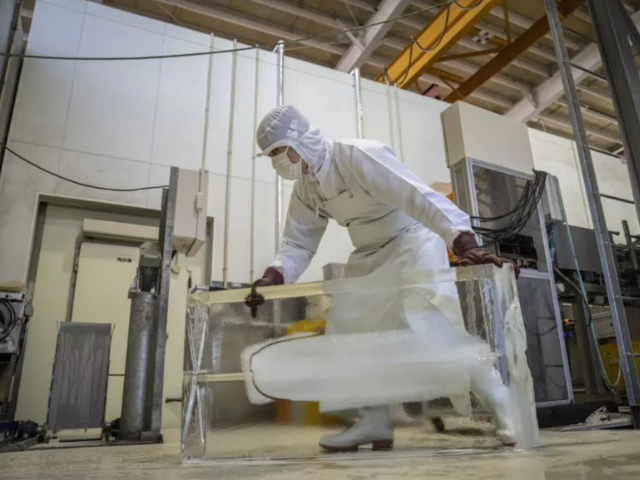
- Thermal Conditioning: Once the block is fully formed and extracted, it undergoes precise carving by skilled artisans wearing full-body thermal overalls. Using specialized saws and chisels, workers shape the massive blocks into flawless spheres, exact cubes, or precision-angled rectangular prisms tailored to fit specific glassware geometries. The finished products are then stored in deep-freeze vaults held at a stable minus 10 degrees Celsius before being packaged for global distribution.
Supporting Context & Metrics
The economics of luxury ice production involve a delicate balance between high manufacturing overhead, international logistics, and specialized consumer demand.
Market Metrics and Operational Scale
- Cost per Cube: Premium Japanese export ice commands a price of approximately 200 yen ($1.25 USD) per individual cube at scale, representing a significant premium over domestic or locally produced alternatives.
- Growth Trajectory: Since initiating international shipping in 2019, Kuramoto Ice has experienced a more than 100% increase in total sales, propelled primarily by demand from cosmopolitan hubs across the United States, Australia, and Southeast Asia.
- International Consumption: High-profile cocktail destinations, such as Singapore’s Native (a fixture on the prestigious Asia’s 50 Best Bars list), import roughly 900 kilograms of Kuramoto ice annually to maintain their uncompromising drink standards.
- Temperature Parameters: Finished inventory must be carefully managed in industrial cold-storage facilities maintained at a constant -10°C (14°F) to prevent micro-melting and surface degradation prior to international transport.
Environmental Considerations
Transporting frozen blocks of water thousands of miles across oceans and continents naturally raises questions regarding carbon footprints and ecological sustainability. Addressing these concerns, company leadership notes that because the products are dense, highly concentrated luxury goods packed efficiently in small volumes, their overall environmental impact per unit remains relatively low compared to bulk freight. Nonetheless, the firm continuously evaluates its cold-chain logistics to minimize energy loss.
Official Statements and Industry Perspectives
The cultural weight placed on ice in Japan extends far beyond mere hospitality; it is viewed as an extension of the bartender’s philosophy and respect for the guest.
"We take our time and freeze water slowly, keeping it in motion. That’s how we end up with good ice. My heart leaps with joy when I see ice that looks like a jewel."
— Kazuhiko Kuramoto, Fifth-Generation Head of Kuramoto Ice
For master mixologists, the physical properties of the ice directly dictate the evolution of a cocktail from the first sip to the last. Shingo Miyachi, a seasoned bartender at a prominent Hilton Hotel bar near Tokyo, emphasizes the functional necessity of high-density ice when preparing classics like the Negroni.
"Ice really has a huge impact on the taste of a cocktail. If it melts too quickly, it especially affects the lingering aftertaste once you’ve taken a sip."
— Shingo Miyachi, Bartender
Miyachi notes that in Japanese bartending traditions, ice handling is considered a foundational discipline. Trainees often spend months mastering the precise mechanics of breaking down raw blocks of ice by hand before they are ever permitted to mix a drink for a patron.
"When you look at the ice and see the level of attention to detail, you can pretty much tell how seriously the bartender takes the flavour of the cocktail and how much care they’ve put into it. A cocktail only really comes into being when the glass, the ice, and the liquid become one as a single unified whole."
— Shingo Miyachi
From the import side, co-owner Yong Wei of Singapore’s Native bar underscores why establishments are willing to shoulder the heavy financial and logistical burdens of importing ice from Ishikawa.
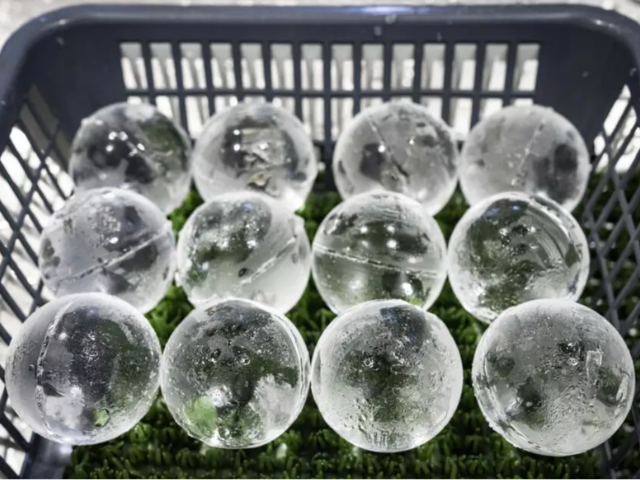
"Local ice is more economical, but Kuramoto Ice is clearer, denser and melts more slowly. It protects the integrity of our spirits."
— Yong Wei, Bar Co-Owner
Future Outlook
As the global hospitality sector recovers and evolves, the demand for hyper-specialized artisanal components shows no sign of abating. The success of Kuramoto Ice signals a broader paradigm shift in international gastronomy: consumers and purveyors alike are no longer willing to accept shortcuts in the preparation of premium food and beverage experiences.
Looking ahead, the primary challenges for heritage ice artisans will lie in scaling production without compromising the rigorous 48-to-72-hour freezing cycles that define their product, all while navigating tightening environmental regulations surrounding cold-chain logistics. However, with an ever-expanding footprint in world-class bars across Western and Asian markets, Japanese junpyo has successfully transitioned from an esoteric local craft into an indispensable global standard of modern mixology.





Comments
Facebook App ID not configured. Please add it in the Customizer.