
Executive Overview
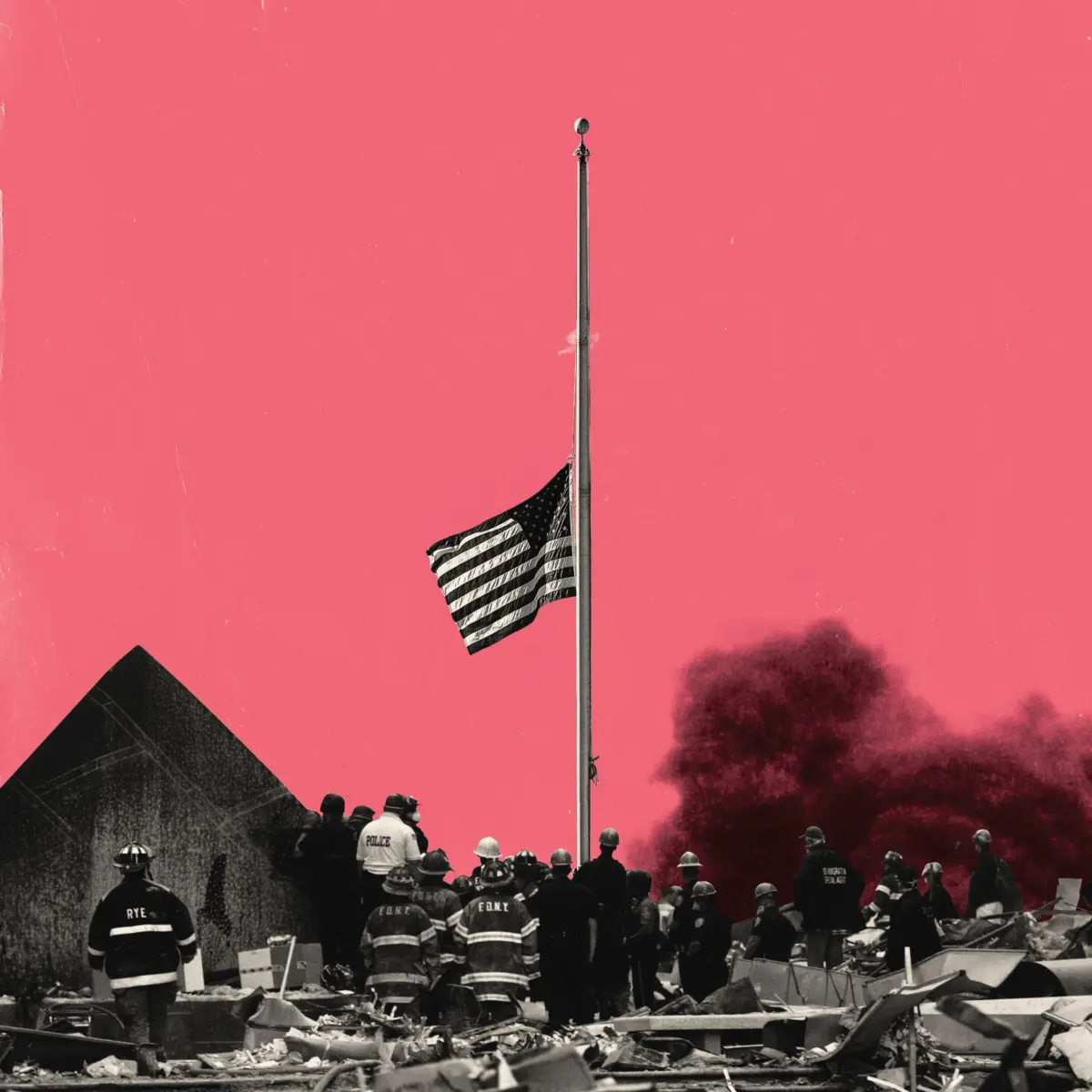
Twenty-five years after coordinated terrorist attacks destroyed the Twin Towers, damaged the Pentagon, and brought down Flight 93 in a Pennsylvania field, the United States stands transformed by the long-term fallout of that single Tuesday morning. What began as a national tragedy—resulting in the immediate deaths of nearly 3,000 people—initiated an unprecedented restructuring of American foreign policy, domestic security apparatuses, and public consciousness.
Over the past quarter-century, the initial national consensus and shared grief have given way to profound geopolitical, legal, and social fractures. The global "War on Terror," launched in September 2001, expanded across multiple theaters, taking an estimated one million lives and costing trillions of dollars. Domestically, the passage of the USA PATRIOT Act enabled broad surveillance operations and community dragnets that disproportionately targeted Arab and Muslim Americans, while thousands of combat veterans returned from overseas deployments burdened with severe post-traumatic stress disorder (PTSD), in some cases feeding into domestic radicalization pipelines.
At the 25-year mark, official memorial ceremonies have evolved to reflect not only those who perished on September 11, 2001, but also the thousands who have subsequently died from toxic exposures and trauma-induced afflictions. Through investigative accounts, academic data, and institutional whistleblowers, a clearer picture emerges of how a moment intended to unite the nation ultimately exposed deep vulnerabilities in its democratic institutions and accelerated an era of intense domestic polarization.
Read Also
Detailed Chronology of Events and Aftermath
+-----------------------------------------------------------------------------------+
|                        CHRONOLOGY OF 9/11 & ITS AFTERMATH                         |
+-----------------------------------------------------------------------------------+
| SEPT 11, 2001   Four hijacked commercial airliners crash in NY, VA, and PA.      |
| SEPT 20, 2001   President Bush officially declares the global "War on Terror."    |
| OCT 07, 2001    U.S. military invasion of Afghanistan commences.                  |
| OCT 26, 2001    USA PATRIOT Act signed into law, expanding federal surveillance.   |
| MARCH 2003      U.S.-led coalition invades Iraq.                                  |
| JULY 2004       The 9/11 Commission Report is published.                          |
| MAY 2011        U.S. Special Operations Forces eliminate Osama bin Laden.           |
| MAY 2014        National September 11 Memorial & Museum officially opens.        |
| AUGUST 2021     U.S. completes military withdrawal from Afghanistan after 20 yrs.  |
| PRESENT         25th Anniversary marked with 7th bell toll for post-9/11 deaths.  |
+-----------------------------------------------------------------------------------+
The Ticking Clock: September 11, 2001
The morning of September 11 began as an ordinary late-summer day across the Eastern Seaboard. In academic lecture halls, corporate boardrooms, and residential neighborhoods, daily routines were underway:
- 08:00 AM: Classes began across the country, including early-morning history lectures at institutions like Boston University, where instructors were covering 19th-century American history.
- 08:46 AM: American Airlines Flight 11 struck the North Tower of the World Trade Center in Lower Manhattan.
- 09:03 AM: United Airlines Flight 175 struck the South Tower, confirming to a shocked global audience that the nation was under a coordinated attack.
- 09:37 AM: American Airlines Flight 77 crashed into the Pentagon in Arlington, Virginia.
- 09:59 AM: The South Tower of the World Trade Center collapsed in 10 seconds.
- 10:03 AM: United Airlines Flight 93 crashed into a field in Shanksville, Pennsylvania, after passengers fought back against the hijackers.
- 10:28 AM: The North Tower collapsed, leaving Lower Manhattan blanketed in a toxic cloud of debris.
Within four hours, air traffic across North America was grounded, federal government facilities were evacuated, and public spaces cleared as citizens sought shelter and news of family members.
       08:46 AM              09:03 AM              09:37 AM              09:59 AM              10:03 AM              10:28 AM
   North Tower Hit       South Tower Hit         Pentagon Hit       South Tower Collapses    Flight 93 Crashes    North Tower Collapses
----------|---------------------|---------------------|---------------------|---------------------|---------------------|----------
The Policy Escalation and Legal Frameworks (2001–2004)
On September 20, 2001, President George W. Bush addressed a joint session of Congress, formally announcing a global War on Terror. On October 7, U.S. forces launched military operations in Afghanistan. Internally, the Bush administration pushed for sweeping executive power, leading to the enactment of the USA PATRIOT Act in October 2001. This legislative package expanded the law enforcement and intelligence communities’ authority to conduct warrantless surveillance, perform financial audits, and detain non-citizens.
By March 2003, the scope of the War on Terror widened dramatically with the U.S.-led invasion of Iraq, predicated on intelligence claims regarding weapons of mass destruction that were subsequently disproven. In July 2004, the bipartisan National Commission on Terrorist Attacks Upon the United States published The 9/11 Commission Report. While offering a comprehensive narrative of the logistics surrounding the attack, the document faced criticism from victims’ families for failing to assign individual administrative accountability for systemic intelligence lapses prior to the tragedy.
The Long Aftermath and Institutionalization (2011–Present)
The decade following the attacks saw the physical clearance of Ground Zero, the May 2011 killing of Al-Qaeda leader Osama bin Laden in Pakistan, and the May 2014 opening of the National September 11 Memorial & Museum in Lower Manhattan. Despite these milestones, the conflict persisted. The U.S. war in Afghanistan endured for two decades before concluding with a chaotic withdrawal in August 2021, leaving the Taliban back in power.
Annual commemorations near Ground Zero historically featured six distinct bell tollings corresponding to the key moments of September 11:
- 08:46 AM – North Tower impact
- 09:03 AM – South Tower impact
- 09:37 AM – Pentagon impact
- 09:59 AM – South Tower collapse
- 10:03 AM – Flight 93 crash
- 10:28 AM – North Tower collapse
At the quarter-century mark, event organizers instituted a seventh bell tolling. This addition formally recognizes the thousands of first responders, recovery workers, and local residents who have died in the decades since from toxic exposure-related cancers, chronic illnesses, and trauma-induced suicides.
Supporting Context & Metrics: The Human and Geopolitical Toll
+----------------------------------------------------------------------------------+
|                SUMMARY OF POST-9/11 HUMAN & FINANCIAL METRICS                   |
+----------------------------------------------------------------------------------+
| Immediate Casualties (Sept 11, 2001)     | 2,977 civilian lives lost             |
| Total Post-9/11 War Deaths (Global)      | ~940,000 to 950,000 Direct Deaths     |
| Civilian Casualties (War Zones)          | >400,000 civilians killed             |
| U.S. Military Fatalities                 | 7,000+ service members                |
| Military Contractor Fatalities           | 8,000+ contractors                    |
| Allied Force Fatalities                  | 12,000+ allied troops                 |
| U.S. Veteran & Service Member Suicides   | >28,000 suicides post-9/11            |
| Domestic Dragnet Deportation Hearings    | 13,000+ Muslim/Arab non-citizens      |
| Cost of Ground Zero Museum Facility      | $350 million (110,000 sq ft)          |
+----------------------------------------------------------------------------------+
Direct Casualties and Unidentified Remains
The initial attacks claimed 2,977 lives. Among the victims were a two-year-old child en route to Disneyland, an 85-year-old traveling to his son’s wedding, and more than 400 first responders who entered the burning towers.
For hundreds of surviving families, the grief was compounded by the inability of forensic authorities to recover intact remains. As detailed in journalist Mike Kelly’s book, After Ground Zero: Everyday Americans and the Unhealed Scars of 9/11, families experienced a protracted, piecemeal notification process that stretched across decades:
Case Study: Kristen Breitweiser
- October 2001: Received formal notification that her husband Ron’s left arm had been recovered from Ground Zero.
- 2004: Informed that a shoulder fragment had been positively identified through advancing DNA profiling techniques.
- Ongoing Trauma: Left facing decades of uncertainty over whether additional phone calls would arrive regarding remaining bone fragments.
More than 1,000 victims from Lower Manhattan have never had any remains identified, leaving their families without traditional burial closures.
Global Human Cost of the War on Terror
According to data compiled by Brown University’s Costs of War project, post-9/11 U.S. military operations across Afghanistan, Iraq, Syria, Yemen, Pakistan, and other regions resulted in staggering direct casualties between 2001 and 2023:
- Total Direct Deaths: Nearly 1,000,000 people killed due to direct war violence.
- Civilian Fatalities: Exceeds 400,000 civilians.
- U.S. Military Personnel: Over 7,000 dead.
- U.S. Contractors: Over 8,000 dead.
- Allied Security Forces: Over 12,000 dead.
- U.S. Veteran Health Crisis: Over 28,000 post-9/11 veterans and active-duty service members have died by suicide—more than four times the number of service members killed in active combat operations during the same period.
Post-9/11 Military & Veteran Deaths
┌─────────────────────────────────────────────────────────┐
| Active Combat Fatalities (~7,000)                       |
├─────────────────────────────────────────────────────────┤
| Veteran & Active-Duty Suicides (>28,000)                |
└─────────────────────────────────────────────────────────┘
0          5,000      10,000     15,000     20,000     25,000     30,000
Institutionalization of Memory vs. Commercialization
The physical memorialization of the tragedy has drawn mixed reactions from victims’ families and cultural critics. The 110,000-square-foot National September 11 Memorial & Museum, built at a cost of $350 million, displays artifacts including damaged emergency vehicles, singed personal identification badges, and ownerless possessions preserved under glass cases.
Critics, including surviving family members, have pointed out the dissonance between solemn memory and public commodification. Steve Kandell, whose 28-year-old sister Shari was killed in the South Tower and whose remains were never found, expressed the psychological burden imposed on survivors by high-profile memorial sites:
"Everyone should have a museum dedicated to the worst day of their life and be forced to attend it with a bunch of tourists… Annotated divorce papers blown up and mounted, interactive exhibits detailing how your mom’s last round of chemo didn’t take… And you should have to see for yourself how little your pain matters to a family of five who need to get some food before the kids melt down."
Official Statements, Whistleblowers, and Institutional Critiques
The quarter-century following 9/11 witnessed a systemic expansion of federal authority, domestic counterterrorism surveillance, and civil rights rollbacks. Investigative works, such as Janet Reitman’s The Inheritance: An American Tragedy in Five Acts, detail how government policy reverberated through courtroom battles, federal agency operations, and returning combat veterans.
                             POST-9/11 DOMESTIC IMPACT PIPELINE
                                             │
      ┌──────────────────────────────────────┼──────────────────────────────────────┐
      ▼                                      ▼                                      ▼
LEGAL & DRAGNETS                     FEDERAL WHISTLEBLOWING                 VETERAN RADICALIZATION
• PATRIOT Act enforcement            • FBI counterterrorism tactics         • PTSD & combat trauma
• 13,000 deportation cases           • Repeated exposure to attack media    • Post-service disaffection
• Mass arrest of Muslim Americans     • Leaks to press under Espionage Act   • Rise of white nationalist groups
Mass Surveillance and Domestic Legal Dragnets
In the months following the attacks, federal authorities deployed civil and criminal enforcement tools to detain and investigate thousands of foreign nationals and citizens of Middle Eastern, South Asian, and Arab descent. Between 2002 and 2003 alone, more than 13,000 individuals faced formal deportation proceedings under post-9/11 emergency enforcement orders.
Marlo Cadeddu, an East Dallas defense attorney who had previously worked on the 46th floor of the North Tower, described the atmosphere in local immigrant communities as federal agencies launched sweeping enforcement actions:
"The Lebanese stock boy at Kroger. The assistant professor of Middle Eastern history. The Palestinian grocer. The Pakistani computer scientist who spent every single night and weekend with his family. Sometimes they’d vanish for a few hours, or a day; other times they’d be gone for good."
Cadeddu went on to represent numerous Muslim Americans targeted in federal dragnets, including Mufid Abdulqader, who was arrested by the FBI in 2004 during a high-profile raid on the Holy Land Foundation. Charged with raising funds that indirectly supported terrorism, Abdulqader was sentenced to 20 years in federal prison before his release in 2024.
Internal FBI Disillusionment and Whistleblowing
The cultural shift within domestic law enforcement was equally pronounced inside the Federal Bureau of Investigation. Terry Albury, a former FBI special agent who joined the Minneapolis field office in 2001 as a counterterrorism specialist, reported that agency training routines relied on psychological conditioning that framed American Muslim communities as inherent security threats.
Albury noted that agents were repeatedly shown graphic, loop-edited footage of the attacks—a process he likened to "watching a snuff film"—to maintain high operational urgency. After years of conducting door-to-door interrogations and operating informants based on low evidentiary thresholds, Albury leaked internal FBI documents to the media organization The Intercept in 2016 to expose illegal surveillance tactics and systemic profiling. He was subsequently prosecuted under the Espionage Act and sentenced to four years in federal prison.
Veteran Trauma and Domestic Radicalization
The protracted foreign conflicts also created unexpected domestic security challenges upon the return of combat veterans. High rates of combat exposure, compounded by inadequate reintegration infrastructure, left many former service members vulnerable to extremist movements.
A notable example cited in post-9/11 domestic radicalization studies is Nathan Damigo, a former Marine who served two tours in Iraq. Damigo returned to the United States suffering from severe PTSD, attempted suicide, and subsequently served prison time for violent armed robbery. While incarcerated, Damigo was exposed to white nationalist literature, including the writings of David Duke.
Following his release, Damigo founded Identity Evropa, a white supremacist organization that targeted college campuses. In 2017, he helped organize the "Unite the Right" rally in Charlottesville, Virginia, where marchers chanted the white nationalist slogan he coined: "You will not replace us!" His trajectory highlights the direct line between foreign counterinsurgency campaigns and the rise of domestic political violence.
Future Outlook: The Quarter-Century Legacy and Cultural Fracture
As the United States reaches twenty-five years since the September 11 attacks, the event has transitioned from a lived, immediate trauma to a historical epoch documented in textbooks and museum archives. A full generation of citizens has reached adulthood with no personal memory of the day itself, inheriting a nation fundamentally reshaped by its aftermath.
+----------------------------------------------------------------------------------+
|                    THE GENERATIONAL SHIFT: 2001 VS. PRESENT                      |
+----------------------------------------------------------------------------------+
| CATEGORY             | SEPTEMBER 2001               | PRESENT DAY                |
+----------------------+------------------------------+----------------------------+
| Foreign Policy       | Interventionalist Consensus | Retrenchment & Fatigue     |
| Civil Liberties      | Broad Security Trade-Offs    | Deep Institutional Distrust|
| National Psyche      | Fleeting National Unity      | Severe Domestic Polarization|
| Public Surveillance  | Emerging PATRIOT Act Powers  | Ubiquitous Digital Dragnet |
| Victim Demographics  | Immediate WTC/Pentagon Dead  | Growing Toxic Fallout Dead |
+----------------------+------------------------------+----------------------------+
From External Security Threat to Internal Fragmentation
The primary national security anxieties facing the United States have shifted from external non-state terror networks to internal ideological polarization and institutional erosion. The militarized surveillance frameworks developed during the War on Terror have increasingly been integrated into domestic enforcement operations.
In cities across the country, federal immigration agencies and militarized law enforcement units continue to deploy tactics and equipment originally developed for overseas counterinsurgency operations. The rhetoric of counterterrorism has frequently been repurposed by political leaders to describe domestic political opponents, social movements, and civil dissenters, pointing to a persistent blurring of boundaries between military operations abroad and police action at home.
The Historical Shift in Civic Consciousness
For educators and historians, teaching September 11 presents new challenges. Where early instruction focused on national resilience and shared civic duty, contemporary historical assessments incorporate the broader context of intelligence failures, civil liberties erosions, civilian losses abroad, and domestic radicalization.
The initial moment of national solidarity that characterized mid-September 2001 has largely dissipated, replaced by an era marked by heightened anger, systemic division, and skepticism toward public institutions. Twenty-five years after the towers fell, the legacy of 9/11 is defined not only by the physical destruction wrought on a single morning, but by the long, complex trail of conflict and social transformation that continues to shape modern American life.




Comments
Facebook App ID not configured. Please add it in the Customizer.