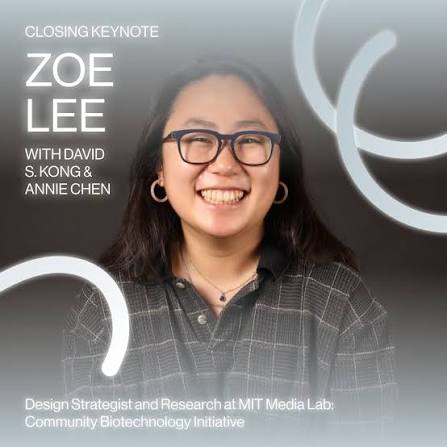
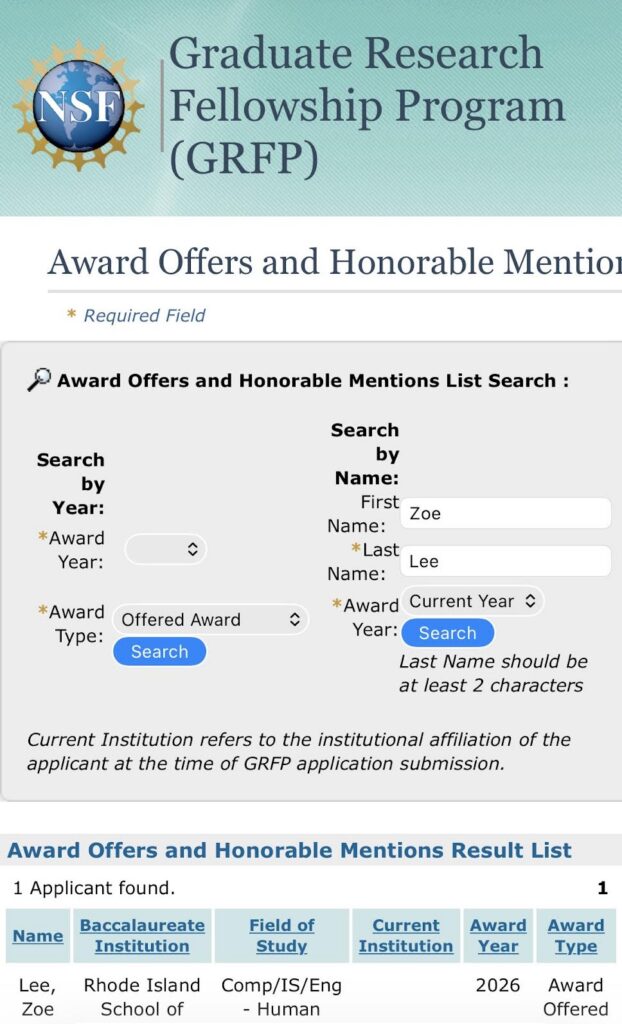
In a milestone achievement that bridges the worlds of creative arts and advanced scientific research, Zoe Lee—an alumna of the prestigious Rhode Island School of Design (RISD) and a rising star in the field of industrial design—has been awarded a highly competitive National Science Foundation (NSF) Graduate Research Fellowship. This elite federal grant will fully support her transition into graduate studies this fall at the Massachusetts Institute of Technology (MIT).
More than a traditional tuition award, the NSF fellowship provides a comprehensive, multi-year financial package that will extend beyond her master’s program to fully fund her doctoral (PhD) studies. Lee’s trajectory represents a growing recognition of the vital intersection between human-centered design, engineering, and scientific innovation. As academic institutions increasingly value interdisciplinary problem solvers who can translate aesthetic and functional concepts into empirical research, Zoe Lee stands out as a pioneering talent poised to make deep contributions to her field at one of the world’s foremost technological research universities.
Detailed Chronology: A Trajectory of Design and Innovation
Zoe Lee’s academic and professional journey has been marked by a relentless pursuit of creative excellence and practical impact. Her path to MIT and the National Science Foundation is built upon a foundation of rigorous studio work, entrepreneurial ventures, and civic innovation challenges.
Lee’s academic journey began at the Rhode Island School of Design (RISD), widely regarded as one of the premier art and design institutions in the world. Specializing in Industrial Design, she immersed herself in a curriculum that demands both rigorous conceptual thinking and hands-on material fabrication. Industrial design at RISD goes far beyond aesthetics; it challenges students to understand human behavior, ergonomics, manufacturing processes, and sustainable systems.
Throughout her undergraduate years, Lee explored how design could be harnessed to solve tangible human challenges. Her projects ranged from consumer products optimized for everyday use to exploratory conceptual designs aimed at improving accessibility and wellness. Her education at RISD cultivated an ability to look at complex, systemic problems through a spatial and material lens—a skill set that would soon attract the attention of regional innovation challenges and national fellowship committees alike.
Regional Recognition and Entrepreneurial Ventures
Even before completing her undergraduate degree, Lee began making waves in the professional design and innovation ecosystems. In 2021, her collaborative team swept the Rhode Island BlueGreen Innovation Challenge, a competitive arena that tasks emerging designers and scientists with creating sustainable solutions for marine and environmental challenges. Her team’s success highlighted her capacity to merge ecological awareness with functional industrial design.
Building on this momentum, Lee expanded her footprint into the startup world. In late 2024, she helped launch BEAM, an innovative startup that secured a coveted residency at NEW INC, the first museum-led incubator for art, design, and technology, incubated by the New Museum in New York City. Through BEAM, Lee demonstrated how early-career designers could successfully commercialize forward-thinking technologies and cultural products.
Her entrepreneurial and creative endeavors further expanded into publishing and literature. In late 2025, she launched a successful Kickstarter campaign for her book project, Eating the Whole Fish, exploring narratives that resonated deeply with her creative community. Her artistic achievements were further validated in early 2026 when she was awarded a prestigious MacDowell Fellowship, joining a historic lineage of writers, composers, and visual artists granted time and space to pursue their creative visions.
The NSF Breakthrough and the Transition to MIT
The culmination of these diverse achievements arrived with her selection as a National Science Foundation Graduate Research Fellow. The NSF selection committee evaluates candidates not only on their academic records but on their potential to contribute globally significant advancements to STEM fields and science-informed design.
By securing this fellowship, Lee has cleared one of the most rigorous academic hurdles in higher education. This fall, she relocates to Cambridge, Massachusetts, to matriculate into her Master’s program at MIT, with a guaranteed, seamless pipeline extending directly into her doctoral research.
Supporting Context & Metrics: Understanding the NSF Fellowship and Industrial Design
To fully appreciate the magnitude of Zoe Lee’s achievement, it is essential to examine the competitiveness of the National Science Foundation Graduate Research Fellowship Program (GRFP) and the shifting paradigm of industrial design within elite research institutions.
The National Science Foundation GRFP: By the Numbers
Established in 1952, the NSF GRFP is the oldest graduate fellowship of its kind. Its mission is to help ensure the vitality and diversity of the scientific and engineering workforce in the United States.
Selectivity: The GRFP is notoriously competitive. Annually, tens of thousands of applicants from across the United States apply across various STEM and designated social science and interdisciplinary fields. Acceptance rates typically hover between 12% to 16%.
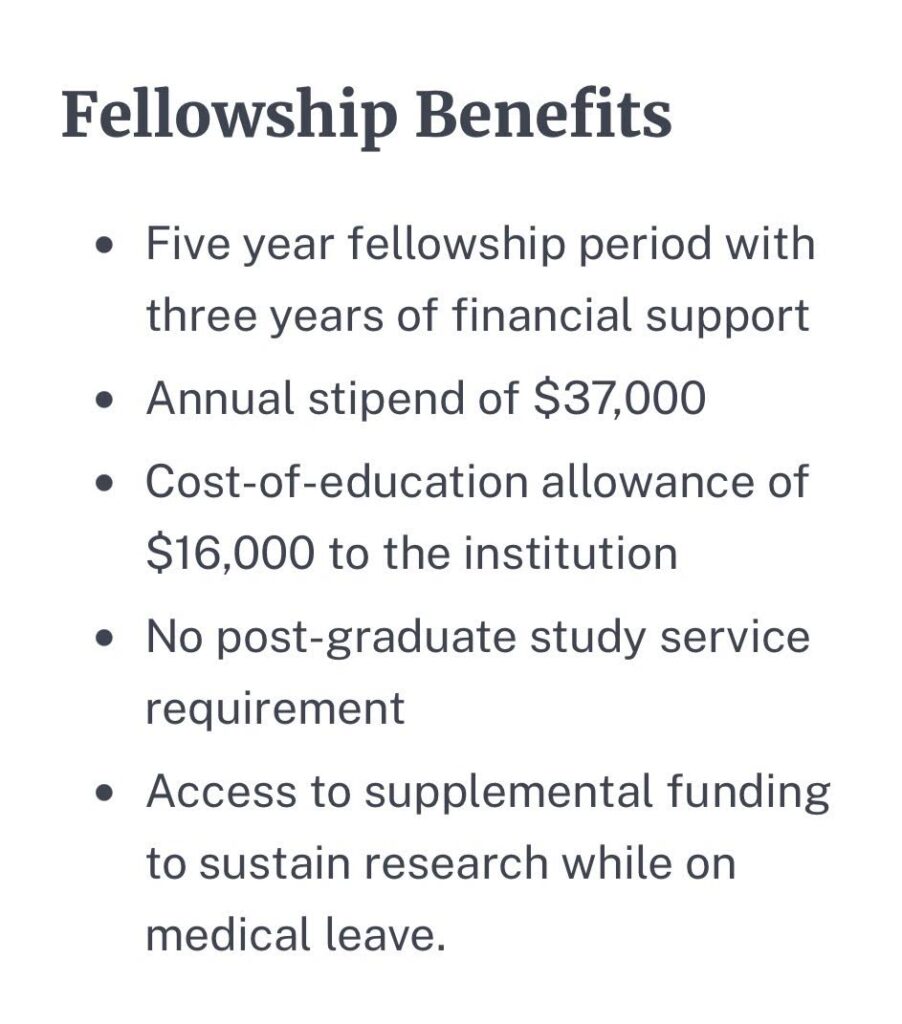
Financial Scope: The fellowship provides a three-year annual stipend of approximately $37,000, alongside a $12,000 cost-of-education allowance paid directly to the institution (MIT), freeing the fellow from traditional teaching or research assistantship burdens during the fellowship window.
Long-Term Impact: Past NSF fellows include numerous Nobel laureates, former U.S. Cabinet members, and thousands of academic and industry leaders. Securing this grant places Lee in an elite tier of emerging researchers early in their academic careers.
The Evolution of Industrial Design at the Doctoral Level
Traditionally, industrial design has been viewed as a terminal undergraduate or master’s-level professional degree. Practitioners entered the workforce directly after completing a Bachelor of Fine Arts (BFA) or Bachelor of Industrial Design (BID).
However, contemporary challenges—ranging from human-robot interaction and sustainable material science to healthcare technology and smart infrastructure—require deep academic research. Institutions like MIT are pioneering the integration of design thinking with hard sciences and engineering. By funding an industrial designer through a premier science foundation, the academic community is signaling that rigorous design methodology is a critical component of scientific inquiry and technological development.
Official Statements and Academic Implications
While specific details of Lee’s incoming MIT research lab and dissertation focus remain under wraps as she prepares for her inaugural semester, academic advisors and mentors within the design community have expressed immense enthusiasm for her future.
"Zoe represents a rare breed of contemporary thinkers who can move effortlessly between the intuitive, human-centered world of art and design and the empirical, data-driven domain of scientific research. Securing an NSF fellowship for graduate study in industrial design and engineering at MIT is a testament to the profound value of interdisciplinary education."
— Academic Mentor & Design Critic (Anonymous)
The implications of Lee’s fellowship extend beyond personal accolades. For schools like RISD, her success underscores the rigorous intellectual foundation embedded within their studio-based curricula. For MIT, welcoming an industrial designer with federal research backing reinforces the institute’s commitment to "mens et manus" (mind and hand)—uniting theoretical knowledge with practical application.
Future Outlook: What Lies Ahead at MIT and Beyond
As Zoe Lee steps onto the MIT campus this fall, her immediate focus will be establishing her foundational research framework within her master’s curriculum. With the financial security of the NSF fellowship guaranteeing both her master’s and subsequent PhD studies, she is uniquely positioned to take intellectual risks, explore unorthodox intersections of technology and materiality, and contribute original research to the global academic community.
Key areas of impact for her future research may include:
Sustainable Material Innovation: Investigating circular economies and biodegradable composites through an industrial design lens.
Human-Technology Interaction: Designing intuitive physical interfaces for complex autonomous systems and emerging scientific hardware.
Design-Led Scientific Discovery: Utilizing prototyping and spatial visualization to accelerate empirical research methodologies in laboratory settings.
The academic community will undoubtedly watch closely as Zoe Lee embarks on this next chapter. Her journey from RISD studios to MIT laboratories serves as an inspiring blueprint for a new generation of creatives who refuse to be boxed into traditional disciplinary silos, proving that imagination backed by rigorous scientific inquiry can reshape the future.










Comments
Facebook App ID not configured. Please add it in the Customizer.